Jeanna Bauck
1840 – 1926
In short
Jeanna Bauck (1840–1926) was a Swedish‑German painter celebrated for her landscape and portrait works and her role as an educator, active mainly in Munich where she died. She is remembered for her skillful handling of light and her friendships with fellow artists such as Bertha Wegmann and Paula Modersohn‑Becker.
Notable works
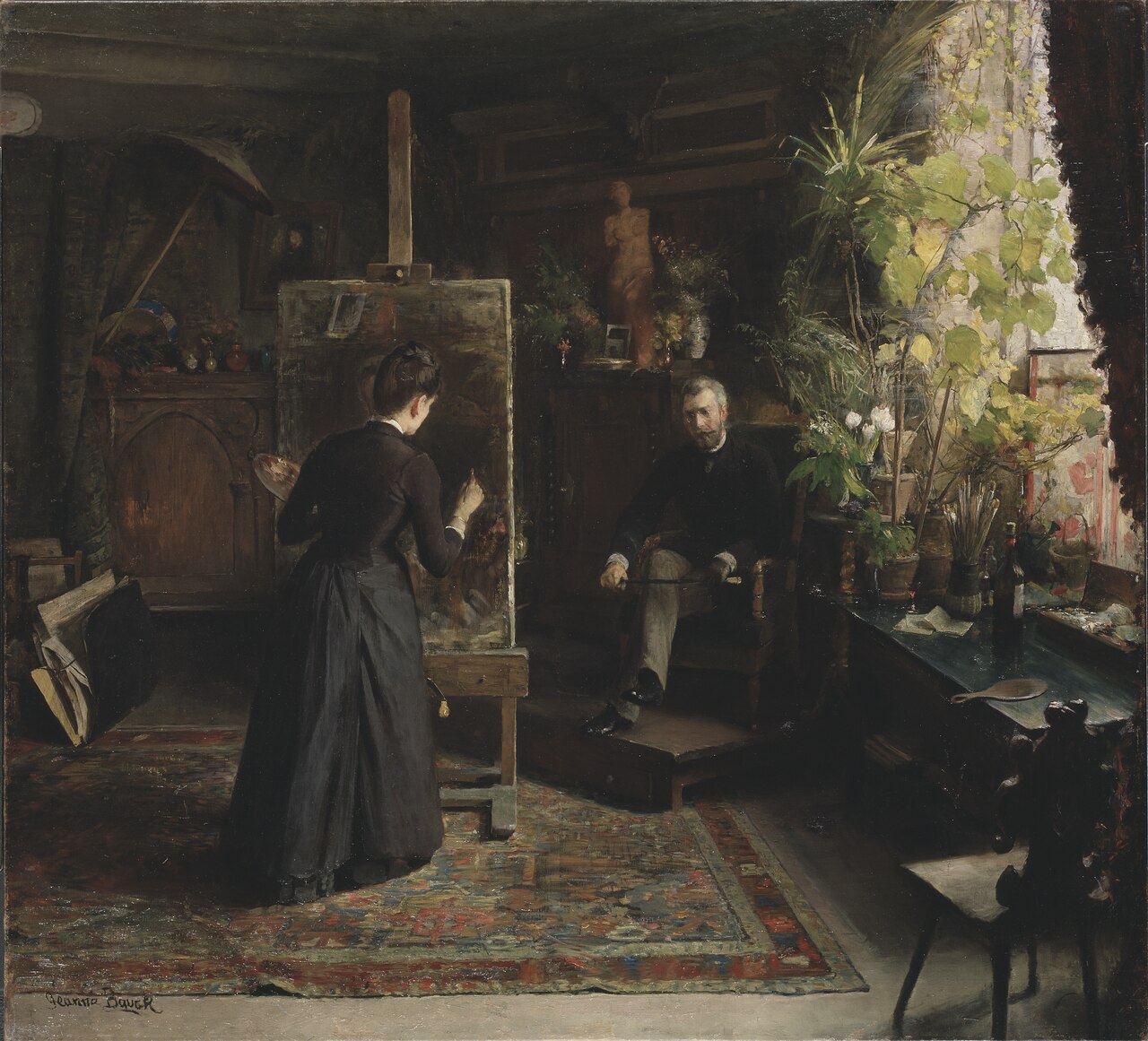
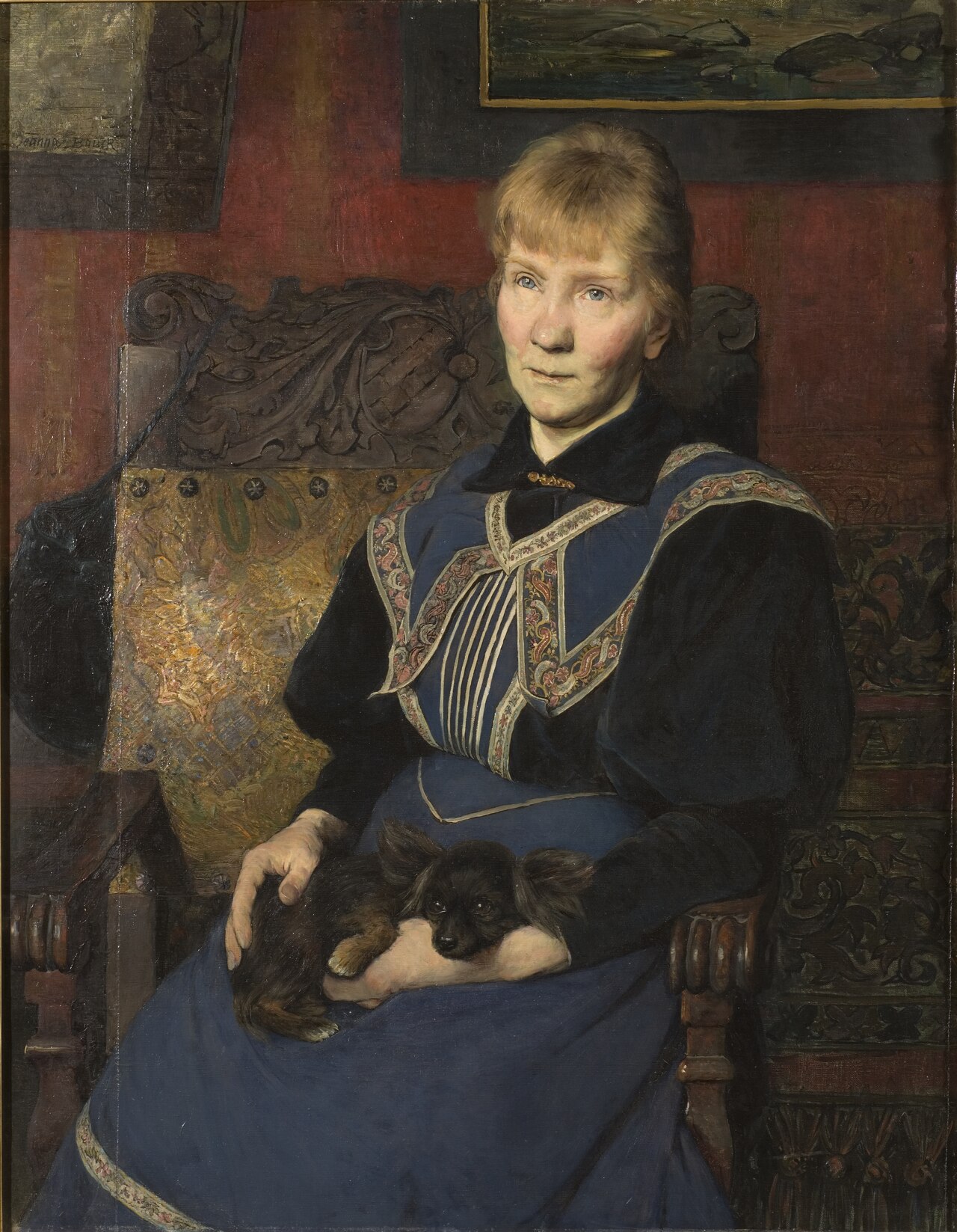


Early life Jeanna Bauck was born in Stockholm in 1840 into a family that valued artistic pursuits. While specific details of her childhood education are scarce, it is known that she received early training in drawing and painting, a foundation that would later enable her to pursue a professional artistic career. In the mid‑19th century, Stockholm’s art scene was beginning to open to women, and Bauck benefitted from this gradual shift, gaining exposure to both Swedish artistic traditions and emerging European trends.
Career and style Bauck’s professional life unfolded primarily in Germany, where she settled in Munich, a hub for artists from across Europe. The city’s vibrant artistic community offered her opportunities to exhibit her work and to teach. Her oeuvre straddles portraiture and landscape painting, reflecting a realist sensibility tempered by a nuanced appreciation of atmosphere. Bauck’s portraits are noted for their psychological depth, capturing subjects with a quiet intensity, while her landscapes convey a lyrical sense of place, often emphasizing the interplay of light and water.
Although she is not formally linked to a single movement, Bauck’s work aligns with the broader realist and naturalist currents that dominated late‑19th‑century European art. Her paintings exhibit a restrained palette and careful compositional balance, hallmarks of the academic training she likely received in Munich’s art academies. Throughout her career, she remained committed to portraying both the external world and the inner lives of her sitters with fidelity and sensitivity.
Signature techniques Bauck’s technique is characterised by a delicate handling of brushwork and a subtle modulation of colour. In her landscapes, she often employed thin glazes to suggest atmospheric depth, allowing distant forms to recede softly into the background. Her portraiture, by contrast, utilizes more decisive strokes to define facial features, while still maintaining a softness that avoids harsh chiaroscuro. Light plays a pivotal role across her body of work; she frequently positioned her subjects against natural light sources, enabling a luminous quality that enhances the three‑dimensionality of form.
Another recurring element in Bauck’s paintings is the careful rendering of texture—whether the rough bark of a tree, the sheen of water, or the fabric of a sitter’s clothing. This attention to surface detail contributes to a tactile realism that invites viewers to engage physically with the depicted scene.
Major works - **The Danish portrait painter Bertha Wegmann at work (1870)** – This early work demonstrates Bauck’s ability to capture a fellow artist in the act of creation. The composition centres the figure of Wegmann, palette in hand, set against a modest studio interior. The subtle lighting highlights Wegmann’s focused expression, while the surrounding space conveys a sense of artistic concentration.
- The artist's sister (1900) – In this intimate portrait, Bauck portrays her sister with a calm, contemplative demeanor. The work showcases her mature handling of colour, with muted tones that underscore the sitter’s introspection. The background is rendered with soft, unfocused brushstrokes, allowing the subject’s face to remain the focal point.
- Portrait of a man (1905) – This painting reflects Bauck’s later style, where she adopts a slightly looser brushwork while preserving the psychological acuity of earlier portraits. The sitter is positioned against a neutral backdrop, his gaze directed outward, suggesting a narrative beyond the canvas. The subtle play of shadow across his cheek adds depth without overt dramatism.
- A Woodland Lake (1905) – One of Bauck’s notable landscape pieces, this work captures a tranquil lake surrounded by trees at the edge of a forest. The surface of the water mirrors the sky, while the surrounding foliage is rendered with delicate, layered strokes that evoke the quiet rustle of leaves. The painting exemplifies her skill in depicting natural light and atmospheric conditions.
These works collectively illustrate Bauck’s versatility, ranging from tightly composed portraits to expansive natural scenes, each unified by her consistent approach to light and texture.
Influence and legacy Jeanna Bauck’s legacy rests on both her artistic output and her contributions as an educator. By establishing herself in Munich, she helped bridge Swedish and German artistic circles, fostering cross‑cultural exchange at a time when women artists were still negotiating their professional status. Her friendships with contemporaries such as Bertha Wegmann and the younger Paula Modersohn‑Becker underscore her role within a network of pioneering women artists who supported one another’s careers.
Although Bauck did not found a distinct movement, her dedication to realistic representation and her nuanced treatment of light influenced younger painters who sought to balance academic rigour with personal expression. Her teaching activities—though less documented—provided aspiring artists with technical guidance and an example of a successful, women‑led artistic practice.
Today, Bauck’s paintings are held in several European collections, and her works continue to be studied for their compositional clarity and emotive resonance. As scholarship on women artists expands, her contributions are increasingly recognised as integral to the broader narrative of 19th‑ and early‑20th‑century European art.
Frequently asked questions
Who was Jeanna Bauck?
Jeanna Bauck (1840–1926) was a Swedish‑German painter known for her landscape and portrait paintings, as well as her work as an art educator.
What artistic style or movement is she associated with?
Bauck is not linked to a single movement but worked within the realist and naturalist traditions of late‑19th‑century European art.
What are her most famous works?
Her notable works include *The Danish portrait painter Bertha Wegmann at work* (1870), *The artist's sister* (1900), *Portrait of a man* (1905) and *A Woodland Lake* (1905).
Why is Jeanna Bauck important in art history?
She helped bridge Swedish and German art circles, mentored younger artists, and exemplified the professional possibilities for women painters in a male‑dominated field.
How can I recognise a Jeanna Bauck painting?
Look for a restrained palette, careful handling of light, subtle texture, and a balance between realistic detail and a soft, atmospheric ambience.