Jacob Hägg
1839 – 1931
In short
Jacob Hägg (1839–1931) was a Swedish rear admiral and marine artist whose detailed watercolours and oil paintings documented historic naval scenes and helped shape Sweden’s maritime visual heritage.
Notable works


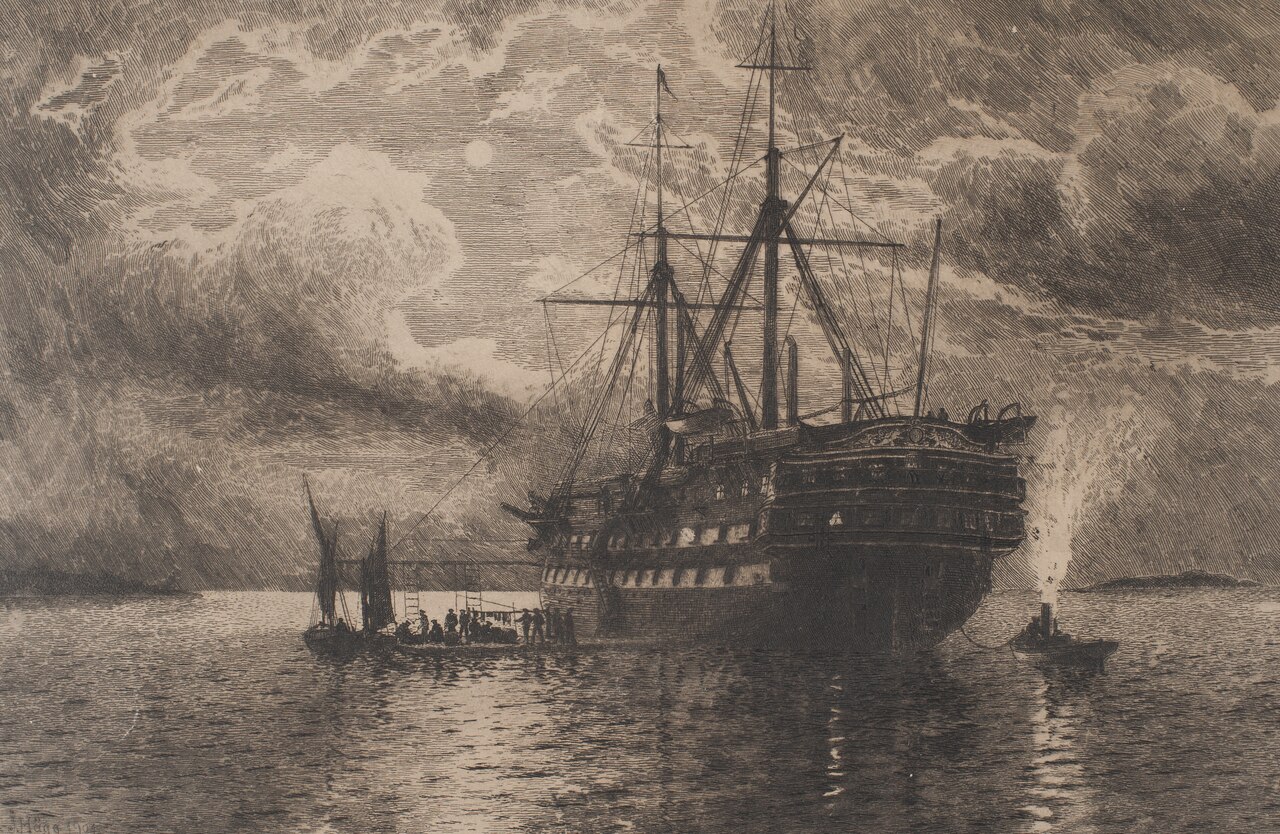

Early life Jacob Hägg was born in 1839 in the parish of Östergarn on the island of Gotland, Sweden. He grew up in a family with artistic inclinations; his brother, Axel Haig, later became a noted architect and illustrator. From an early age Hägg displayed a fascination with the sea, a passion that was reinforced by Gotland’s maritime environment. In 1858 he entered the Royal Swedish Naval Academy, beginning a dual trajectory that would combine naval service with artistic practice.
Career and style Hägg’s naval career progressed steadily. He was commissioned as an officer in 1863 and participated in several long voyages, including a circumnavigation that broadened his exposure to diverse seascapes and ship types. By 1888 he had joined the Fleet Staff, and in 1895 he was appointed head of the Naval Academy. His promotion to rear admiral came in 1899. Throughout these duties he continued to produce art, largely in the form of drawings, watercolours and oil paintings, all focused on marine subjects.
His artistic style is characterised by a rigorous attention to historical accuracy and an almost documentary quality. Hägg preferred realistic representation over the more expressive or impressionistic trends that were emerging in the late nineteenth century. This approach reflected his naval background: he understood the technical details of ship construction, rigging, and naval tactics, and he translated that knowledge into his visual work. The result is a body of art that serves both aesthetic and educational purposes, documenting the appearance of vessels, ports, and naval engagements with a level of precision valued by historians and collectors alike.
Signature techniques Hägg’s technique combined meticulous draftsmanship with a nuanced handling of light. In his drawings he employed fine ink lines to render the complex geometry of hulls, masts, and rigging. His watercolours demonstrated a controlled palette, often dominated by muted blues, greys and ochres, allowing the atmospheric conditions—fog, sunrise, or storm—to emerge without overwhelming the structural details. When working in oil, he layered thin glazes to achieve depth, particularly in the representation of water and sky. A recurring element across media is his use of horizon lines that anchor the composition, providing a clear spatial reference that enhances the viewer’s sense of scale.
Major works - **The Norrköping off Kronborgs Castle at Helsingör (1918)** – This oil painting captures the Swedish steamship *Norrköping* sailing near the historic Danish fortress of Kronborg. Hägg renders the ship’s hull and superstructure with exacting detail, while the surrounding waters are depicted in calm, reflective tones that suggest early morning light. The work exemplifies his ability to juxtapose a modern vessel against a centuries‑old landmark, highlighting continuity in maritime trade.
- Danish naval forces attacking the Swedish fortress New Älvsborg in the harbour of Gothenburg in 1717 (1860) – Executed as a large watercolour, this piece portrays a historic naval battle with dramatic clarity. Hägg reconstructs the 18th‑century ships and fortifications based on archival sources, presenting the clash from a slightly elevated viewpoint that allows the viewer to observe both the naval formations and the defensive structures of New Älvsborg. The composition’s dynamic diagonal lines convey the intensity of the engagement.
- Sunset over the inlet to Stockholm (1916) – In this tranquil watercolour, Hägg moves away from narrative content to focus on atmosphere. The painting shows the golden‑orange glow of a setting sun reflected on the inlet’s surface, with silhouetted ships moored in the distance. The subtle gradations of colour demonstrate his mastery of atmospheric perspective, and the work is often cited as an example of his capacity to capture mood while maintaining technical accuracy.
- The Ship of the Line as School ship in Bol Berg (1880) – This oil work documents a ship of the line repurposed as a training vessel at the Norwegian port of Bol Berg. Hägg includes precise details of the rigging and the ship’s hull form, while the surrounding harbour is rendered with muted tones that keep the focus on the vessel. The painting reflects his interest in the educational role of naval ships, a theme that resonated with his later responsibilities at the Naval Academy.
- Draft for Dance Program (1883) – Although not a marine scene, this graphic draft illustrates Hägg’s versatility. Created as a design for a dance programme, the work features elegant line work and decorative motifs, suggesting that his artistic training extended beyond strictly nautical subjects. The piece demonstrates his facility with composition and his ability to adapt his precise drawing technique to different contexts.
Influence and legacy Jacob Hägg’s dual identity as a senior naval officer and a marine artist positioned him uniquely within Swedish cultural history. He used his influence to advocate for the establishment of the Maritime Museum in Stockholm, recognising the need for an institutional home for Sweden’s seafaring heritage. His artworks continue to be valuable resources for historians, providing visual documentation of ships, ports and naval engagements that are often corroborated by written records.
Through his teaching at the Naval Academy, Hägg imparted an appreciation of marine art to a generation of officers, reinforcing the idea that visual representation could complement technical training. His brother Axel Haig’s success in architectural illustration further underscored the family’s contribution to visual culture.
In the art market, Hägg’s works are sought after by collectors of maritime art, and they are frequently exhibited in museums focused on naval history. The precision of his technique, combined with his commitment to historical fidelity, has ensured that his paintings remain reference points for scholars studying Scandinavian naval history of the eighteenth and nineteenth centuries.
Today, Jacob Hägg is remembered not only as a distinguished admiral but also as an authoritative chronicler of Sweden’s maritime past. His legacy endures in the continued relevance of his paintings as both artistic achievements and historical documents, and in the ongoing prominence of the Maritime Museum he helped to realise.
Frequently asked questions
Who was Jacob Hägg?
Jacob Hägg (1839–1931) was a Swedish rear admiral and marine artist who combined a distinguished naval career with a prolific output of detailed maritime paintings and drawings.
What style or movement is his work associated with?
His work is associated with realistic marine art, emphasizing technical accuracy and historical documentation rather than the impressionist or modernist trends of his time.
What are his most famous works?
Among his best‑known pieces are *The Norrköping off Kronborgs Castle at Helsingör* (1918), *Danish naval forces attacking the Swedish fortress New Älvsborg in the harbour of Gothenburg in 1717* (1860), and *Sunset over the inlet to Stockholm* (1916).
Why does Jacob Hägg matter in art history?
He provided an authoritative visual record of Swedish naval history, influencing both maritime scholarship and the development of Sweden’s Maritime Museum, while his paintings set a high standard for accuracy in marine art.
How can you recognise a Jacob Hägg painting?
His paintings are marked by meticulous ship detail, a restrained colour palette, precise line work, and a clear emphasis on historical authenticity, often depicting ships in realistic harbour or battle settings.