J.A.G. Acke
1859 – 1924
In short
Johan Axel Gustaf Acke (1859–1924) was a Swedish painter, illustrator and sculptor who worked across landscape, portrait and genre subjects, and was an early member of the Önningeby artists' colony in Finland.
Notable works
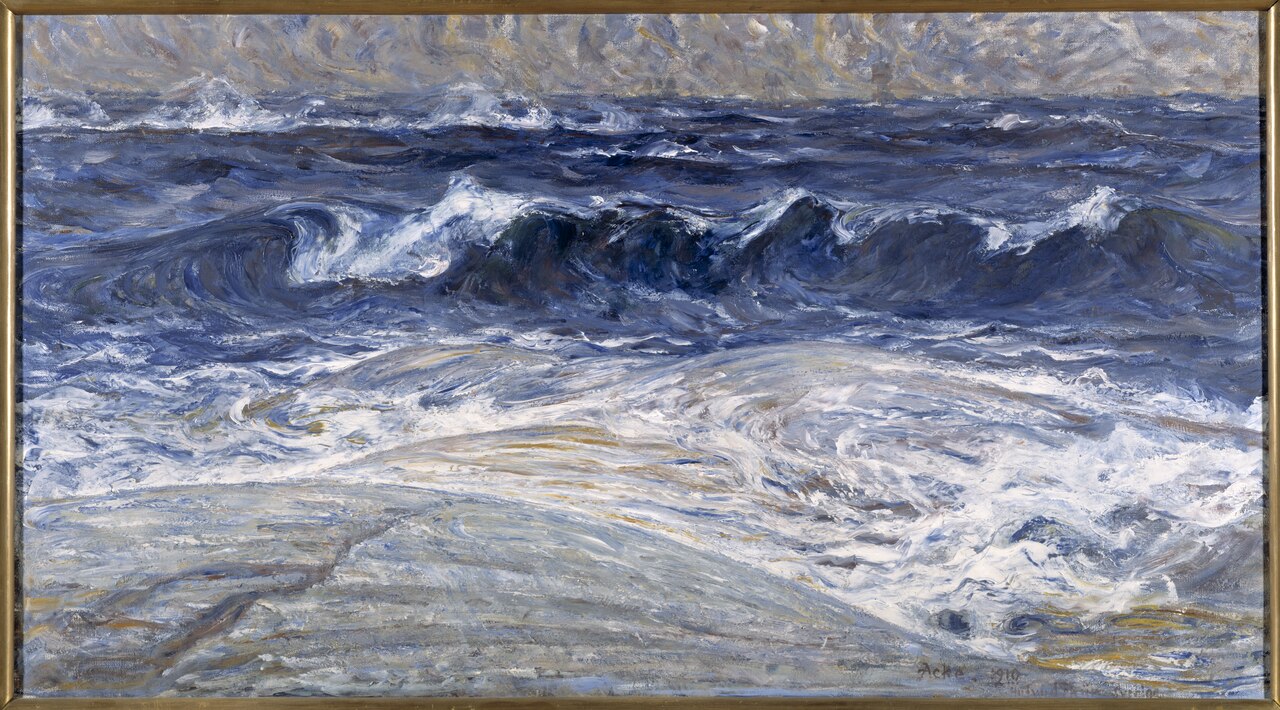

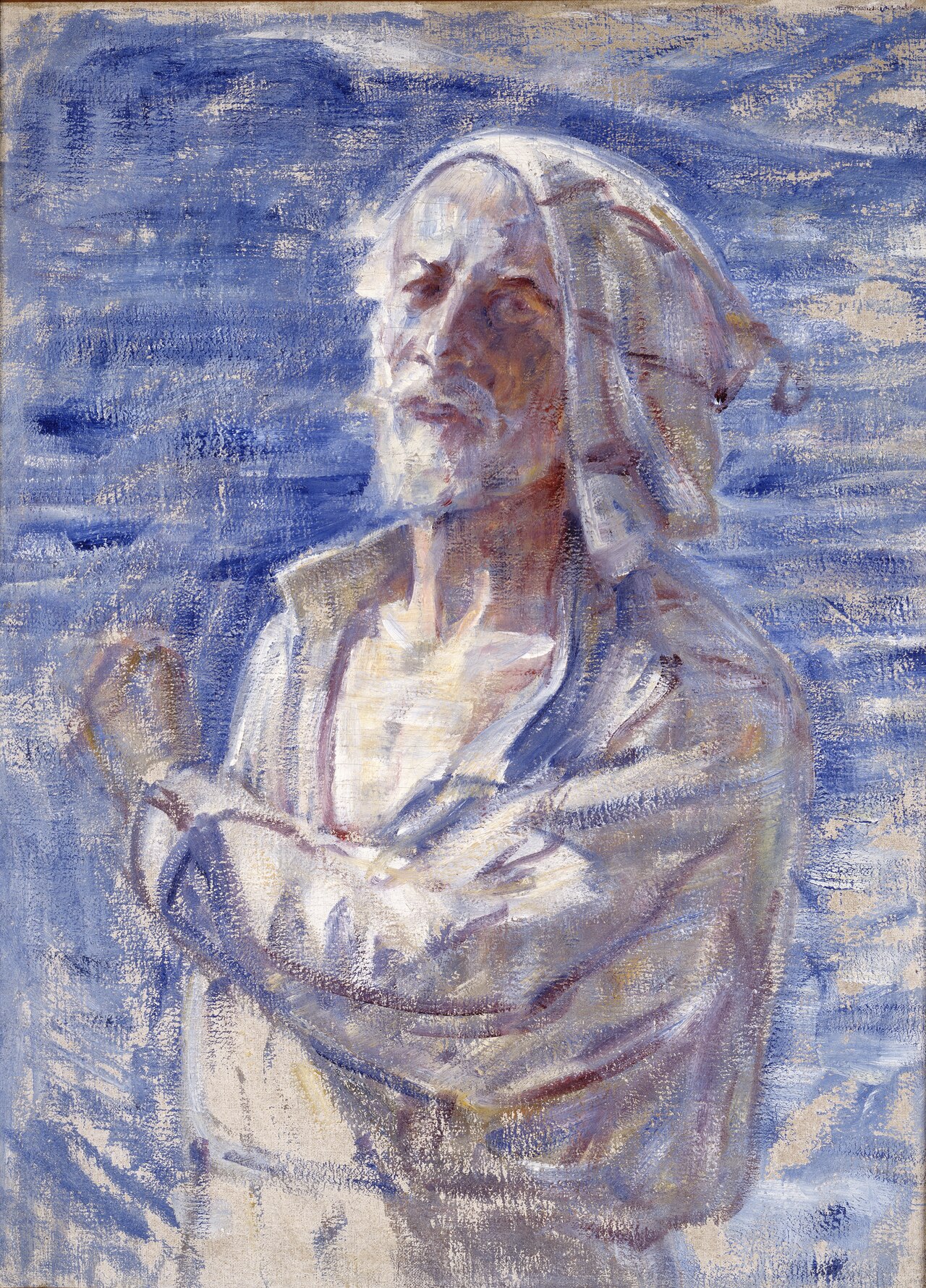
_-_Eva_Maria_Topelius,_1855-1929,_konstn%C3%A4r,_gift_med_konstn%C3%A4ren_Johan_Axel_Gustaf_Acke_-_NMGrh_3797_-_Nationalmuseum.jpg)
_-_Ellen_Josephson,_1871-1965,_gift_med_aff%C3%A4rsman_John_Josephson_-_NMGrh_3363_-_Nationalmuseum.jpg)
Early life Johan Axel Gustaf Acke was born in 1859 in the parish of Adolf Fredrik, Stockholm. He grew up in a culturally engaged family; his sister, the artist Eva Maria Topelius, also pursued a career in the visual arts. Acke’s formative years were spent in the capital, where he was exposed to the burgeoning Swedish art scene of the late nineteenth century. He received his artistic education in Stockholm, undertaking studies that combined drawing, painting and sculptural techniques. This grounding provided him with a versatile skill set that would later inform his diverse body of work.
Career and style Acke began his professional career in the early 1880s, initially working as an illustrator for Swedish periodicals. His illustrations displayed a keen eye for detail and a subtle humour that appealed to a broad readership. By the 1890s he had established himself as a painter, producing both oil and watercolour works that often depicted the Swedish countryside and the archipelagic landscape surrounding Stockholm. His style combined realism with an impressionistic sensitivity to light and colour, reflecting the influence of both Nordic naturalism and the broader European turn towards plein‑air painting. Acke was also a competent sculptor, creating small bronzes and figurative pieces that echoed the same observational fidelity found in his two‑dimensional work.
In addition to his studio practice, Acke was an active participant in artists’ colonies, most notably the Önningeby colony on the Finnish island of Åland. The colony, founded by Finnish painter Victor Westerholm, attracted a number of Scandinavian artists seeking inspiration from the sea‑air and communal exchange. Acke’s involvement placed him in contact with contemporaries such as Albert Edelfelt and Hanna Rönnberg, fostering a collaborative spirit that enriched his artistic outlook.
Signature techniques Acke’s paintings are characterised by a clear, disciplined drawing underpinning a luminous colour palette. He often employed a restrained underpainting in earth tones before applying layers of transparent colour, a technique that allowed the light to penetrate the surface and create a sense of atmospheric depth. In his watercolours, he favoured wet‑on‑wet washes to capture the fleeting qualities of sky and water, a method that gave his seascapes a soft, almost ethereal quality. As a sculptor, Acke preferred modestly sized works, using the lost‑wax casting process to achieve fine surface details. His illustrations frequently featured cross‑hatching and stippling to convey texture, demonstrating his adaptability across media.
Major works Acke’s oeuvre includes several works that have entered the canon of Swedish art history. **In the Stockholm Archipelago (1910)** presents a tranquil view of the archipelago’s islands, rendered in a delicate balance of muted blues and greens that convey both the stillness of the water and the subtle movement of clouds. The composition is anchored by a small boat, suggesting human presence without dominating the scene. **The Poet. Verner von Heidenstam, Author (1911)** is a portrait that captures the Swedish Nobel laureate in a contemplative pose, the artist employing a restrained palette to focus attention on the poet’s expression and the soft illumination of his face. **Självporträtt (1918)** is a self‑portrait that marks a later stage in Acke’s career; the work shows him with a direct gaze, rendered in a more introspective style that hints at the personal reflections of an artist approaching the end of his productive years.
Acke also produced portraiture of notable individuals. The painting of Eva Maria Topelius (1855‑1929) depicts his sister, herself an artist, seated against a neutral background that emphasises her thoughtful demeanor. In Ellen Josephson (1915), Acke rendered the wife of businessman John Josephson with a dignified poise, using fine brushwork to suggest the textures of her clothing and the subtle play of light on her features. These portraits exemplify Acke’s ability to convey character through careful observation and a refined, understated technique.
Influence and legacy Johan Axel Gustaf Acke’s contribution to Swedish art lies in his synthesis of realistic observation with an emerging impressionistic sensibility. His landscapes helped to articulate a visual language for the Swedish archipelago that influenced younger artists seeking to capture the region’s unique light. As a member of the Önningeby colony, he played a part in fostering cross‑border artistic exchanges that enriched Scandinavian art in the early twentieth century. Although not as widely known internationally as some of his contemporaries, Acke’s work remains represented in the collections of the Nationalmuseum in Stockholm and regional museums, where his paintings and illustrations continue to be studied for their technical proficiency and subtle narrative quality. His legacy is also evident in the continued appreciation of his architectural designs, two modest villas that illustrate his interest in integrating artistic principles into everyday spaces. Overall, Acke stands as a versatile figure whose multidisciplinary practice embodies the transitional spirit of his era.
Frequently asked questions
Who was J.A.G. Acke?
Johan Axel Gustaf Acke (1859–1924) was a Swedish painter, illustrator and sculptor known for his landscapes, portraits and participation in the Önningeby artists' colony.
What artistic style or movement is Acke associated with?
Acke worked in a realist tradition enriched with impressionistic handling of light and colour, reflecting both Nordic naturalism and the broader European turn to plein‑air painting.
What are his most famous works?
His most recognised pieces include *In the Stockholm Archipelago* (1910), *The Poet. Verner von Heidenstam, Author* (1911), the self‑portrait *Självporträtt* (1918), and notable portraits of Eva Maria Topelius and Ellen Josephson.
Why is Acke important in art history?
Acke helped define Swedish landscape painting, contributed to cross‑Scandinavian artistic exchange through the Önningeby colony, and demonstrated a versatile mastery across painting, illustration and sculpture.
How can I recognise an Acke painting?
Look for a clear, disciplined drawing, a muted yet luminous colour palette, subtle atmospheric effects, and a calm, observational tone that often depicts Swedish coastal or interior scenes.