Hugo Birger
1854 – 1887
In short
Hugo Birger (1854–1887) was a Swedish painter who worked mainly in Paris, producing genre scenes and city views that blend naturalistic detail with a subtle impression of light, and is remembered for works such as The Scandinavian Artists’ Lunch at Café Ledoyen and A Gipsy.
Notable works

Early life Hugo Birger was born in Stockholm in 1854 into a modest middle‑class family. From an early age he displayed a keen interest in drawing, encouraged by his parents who recognised his talent. He received his first formal instruction at the Royal Swedish Academy of Arts, where the curriculum emphasized drawing from casts and life models, a foundation that would shape his later approach to composition and figure work. By his early twenties Birger had absorbed the academic principles of line and form that dominated Swedish art education in the mid‑nineteenth century.
Career and style In the mid‑1870s Birger moved to Paris, the epicentre of European artistic activity, to further his training. The capital offered exposure to a vibrant mix of academic studios, the burgeoning Impressionist exhibitions, and the lively cafés where artists gathered. While he never aligned himself with a single avant‑garde movement, his work reflects a synthesis of naturalist realism and the softer tonalities that were gaining favour in Parisian circles. He painted both en plein air scenes of everyday life and studio interiors, favouring subjects that conveyed a quiet narrative rather than overt symbolism. The influence of French genre painters such as Jean‑Louis-Ernest Meissonier and the emerging Impressionists can be seen in his balanced handling of light and colour.
Signature techniques Birger’s technique rested on a disciplined underdrawing, typically executed in charcoal or graphite, which established the compositional skeleton. He then built up layers of oil paint, employing a restrained palette of earth tones, muted greens and blues, punctuated by occasional bright accents. A hallmark of his style is the soft modelling of flesh and fabric, achieved through delicate glazing that creates depth without heavy impasto. In many of his cityscapes, he used a limited, almost monochromatic, tonal range to evoke atmospheric effects such as misty mornings or the glow of evening street lamps. His brushwork varies between tight, controlled strokes for figures and looser, suggestive marks for background elements, allowing the viewer’s eye to move fluidly through the picture.
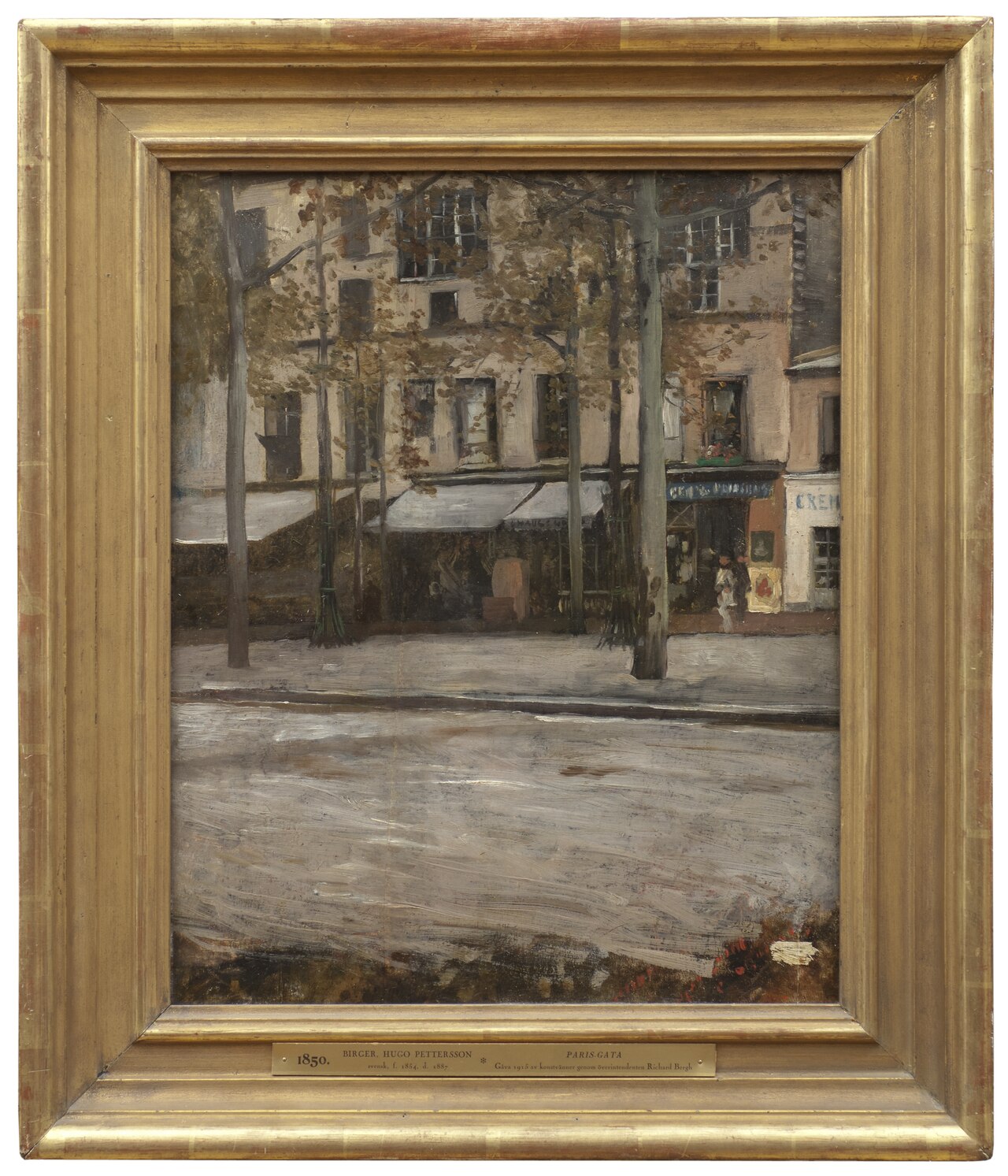
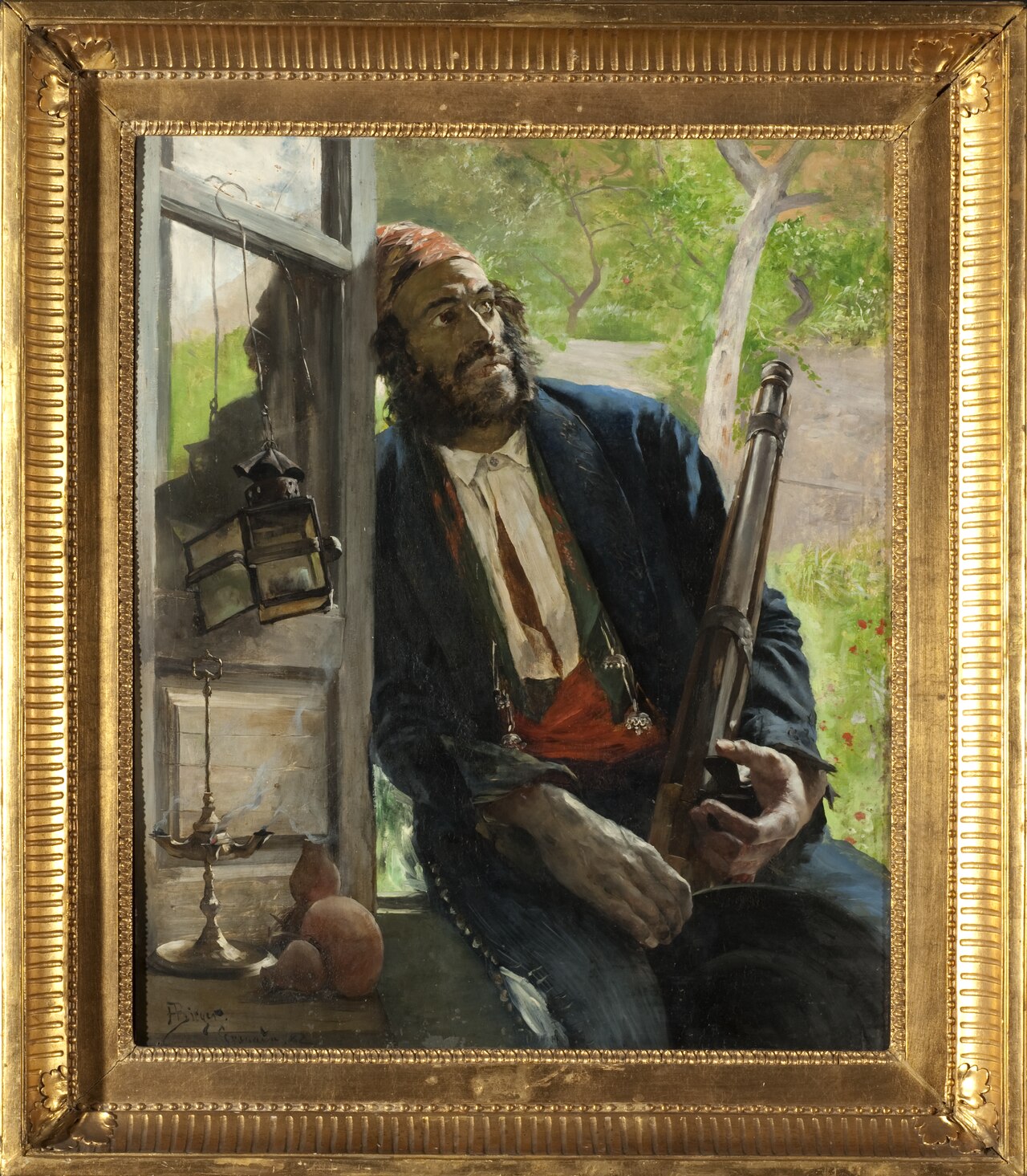
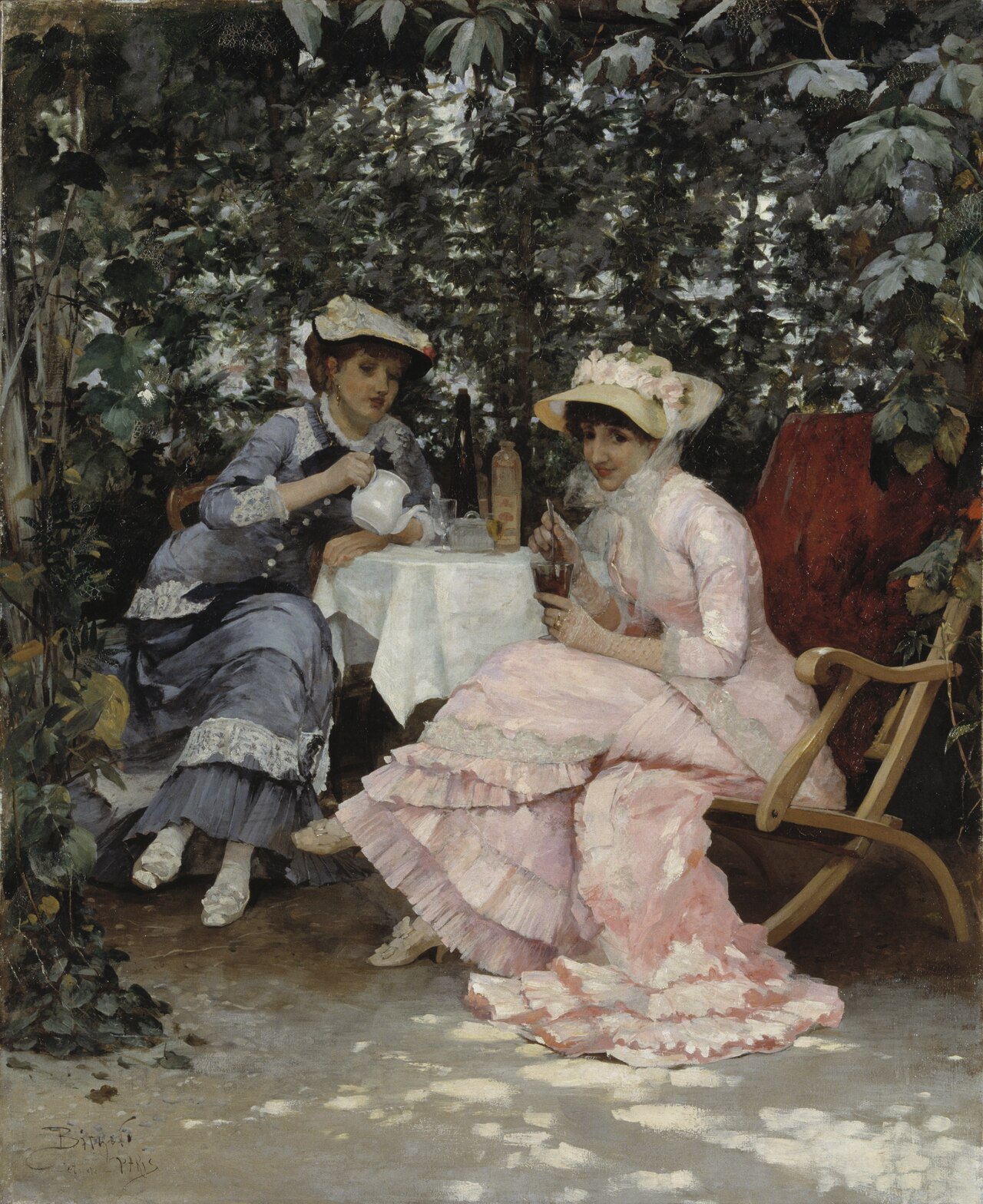
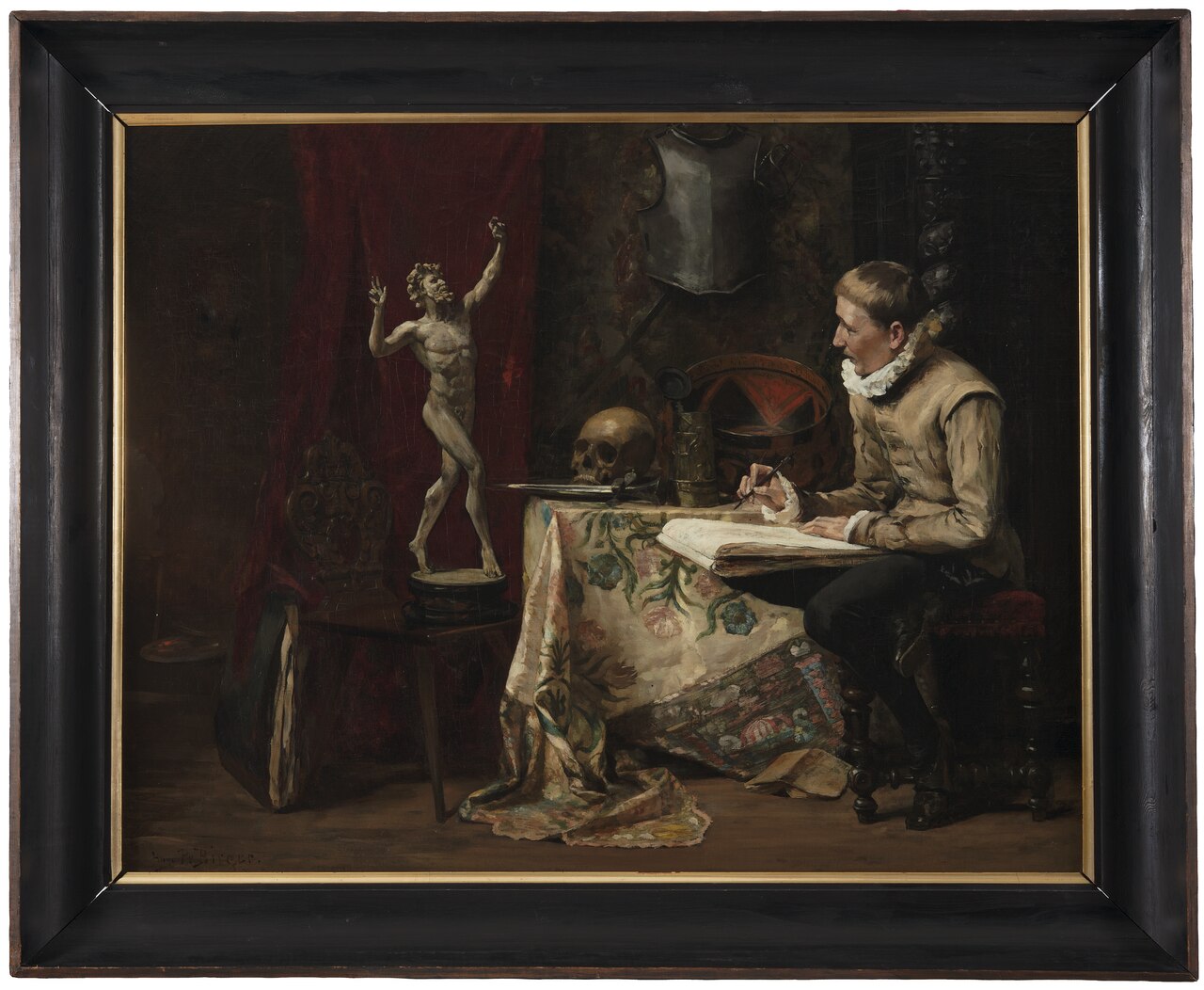
Major works - **The Scandinavian Artists’ Lunch at Café Ledoyen, Paris: Varnishing Day 1886 (1886)** – This large group portrait captures a convivial gathering of Swedish expatriate artists in a Parisian café. Birger renders each figure with individualized expression, while the surrounding interior is illuminated by natural light from a large window, showcasing his skill in rendering reflective surfaces such as varnish jars. - **A Street in Paris. Study from Montmartre** – A compact oil study that records a bustling Montmartre boulevard. The work demonstrates Birger’s ability to suggest movement through the placement of pedestrians and horse‑drawn carriages, while the muted palette conveys the hazy ambience of a winter day. - **A Gipsy (1882)** – A portrait of a Romani woman seated against a dark backdrop. The painting is notable for its psychological depth; the subject’s direct gaze and the subtle play of light on her veil reveal Birger’s interest in capturing personal character within a modest compositional framework. - **Sitting under the Arbour (1880)** – This tranquil scene shows a young woman resting beneath a leafy arbor. The dappled sunlight filtering through the foliage creates a gentle chiaroscuro, and the work’s serene mood reflects the artist’s attraction to pastoral leisure. - **The Artist’s Studio, with Self‑portrait (1900)** – Although dated after Birger’s death, this piece is often cited as a posthumous attribution. It depicts an interior studio filled with canvases and implements, with a self‑portrait of the artist positioned at a central easel. The composition underscores his preoccupation with the act of creation itself, and the work is valued for its meta‑narrative rather than strict chronological accuracy.
Influence and legacy Hugo Birger’s career was brief; he died in Helsingborg in 1887 at the age of 33. Nevertheless, his paintings provide a valuable visual record of Swedish artists’ experience in late‑nineteenth‑century Paris. By bridging the disciplined approach of the Swedish academy with the more experimental spirit of the French art world, he helped introduce a more nuanced handling of light and atmosphere to his native artistic circles. His works were exhibited in Stockholm and Paris, influencing younger Swedish painters who later embraced Impressionism and Symbolism. Today, Birger’s paintings are held in several Swedish museum collections, and his name appears in studies of Nordic expatriate artists in France, where he is recognised as a conduit between two national traditions.
Frequently asked questions
Who was Hugo Birger?
Hugo Birger (1854–1887) was a Swedish painter who worked mainly in Paris, known for genre scenes and city views that blend naturalistic detail with a subtle impression of light.
What style or movement is he associated with?
He did not belong to a single movement but combined academic realism with naturalist and early Impressionist influences, creating works that balance precise draftsmanship with atmospheric colour.
What are his most famous works?
His best‑known paintings include The Scandinavian Artists’ Lunch at Café Ledoyen (1886), A Gipsy (1882), Sitting under the Arbour (1880) and A Street in Paris, Study from Montmartre.
Why does he matter in art history?
Birger provides a visual link between Swedish academic training and the vibrant Parisian art scene of the 1880s, influencing later Nordic artists who adopted more modern French techniques.
How can I recognise a Hugo Birger painting?
Look for carefully drawn figures, a restrained colour palette, soft glazing that models flesh, and an emphasis on light filtering through interiors or foliage, often with a quiet, narrative mood.