Helmer Osslund
1866 – 1938
In short
Helmer Osslund (1866–1938) was a Swedish painter noted for his evocative landscapes of Lapland and his unconventional use of grease‑proof paper as a painting surface. His best‑known works include Autumn (1907) and Autumn, Nordingrå (1910), which exemplify his muted palette and focus on northern light.
Notable works
Early life
Jonas Helmer Osslund was born in 1866 in the small parish of Tuna, located in the province of Västergötland, Sweden. Little is recorded about his family background, but like many Swedish artists of his generation he would have been exposed to a strong tradition of folk art and a burgeoning national interest in depicting the country's varied landscapes. Osslund’s formative years coincided with a period of rapid industrialisation and cultural nationalism, which encouraged young artists to explore both urban and rural subjects. He likely received his first artistic instruction in local schools before moving to a larger centre for formal training, as was customary for provincial painters seeking a professional career.
Career and style
By the late 1880s Osslund had relocated to Stockholm, the hub of Swedish artistic activity. There he would have encountered the Royal Swedish Academy of Arts and the progressive circles that surrounded it. While the exact details of his academic education remain undocumented, his later work demonstrates a solid grounding in drawing and colour theory, hallmarks of the Academy’s curriculum. Osslund’s style evolved within the broader context of Scandinavian Naturalism and the national‑romantic movement, which celebrated the stark beauty of the northern territories. He developed a particular affinity for the Lapland region, travelling there repeatedly to capture its expansive skies, birch‑wooded valleys and the subtle shifts of seasonal light.
His paintings are characterised by a restrained palette dominated by earth tones, muted greens and soft ochres, punctuated by occasional highlights of gold or amber that suggest the low‑angle sun of the far north. Osslund’s compositions tend to be intimate rather than grandiose; he frequently frames his subjects with a gentle foreground that leads the viewer’s eye into the atmospheric distance. This approach aligns him with contemporaries such as Albert Engström and Anders Zorn, who also explored the interplay of light and landscape without resorting to overt dramatism.
Signature techniques
One of Osslund’s most distinctive technical choices was his use of grease‑proof paper as a painting support. This material, originally intended for kitchen use, offered a smooth, non‑absorbent surface that allowed for fine control of pigment and a luminous finish. The paper’s impervious quality meant that Osslund could apply thin glazes of oil without the medium sinking into the support, preserving the clarity of his colour planes. This method also facilitated quick work in the field, enabling him to complete studies directly from observation, a practice common among plein‑air painters of the era.
Osslund employed a layered approach: an initial underdrawing in charcoal or graphite, followed by thin oil washes to establish colour fields, and finally richer, more opaque passages to model form. The result is a subtle depth that captures the fleeting qualities of weather and light. His brushwork varies from delicate stippling for foliage to broader, sweeping strokes for sky and water, reflecting a nuanced understanding of texture.
Major works
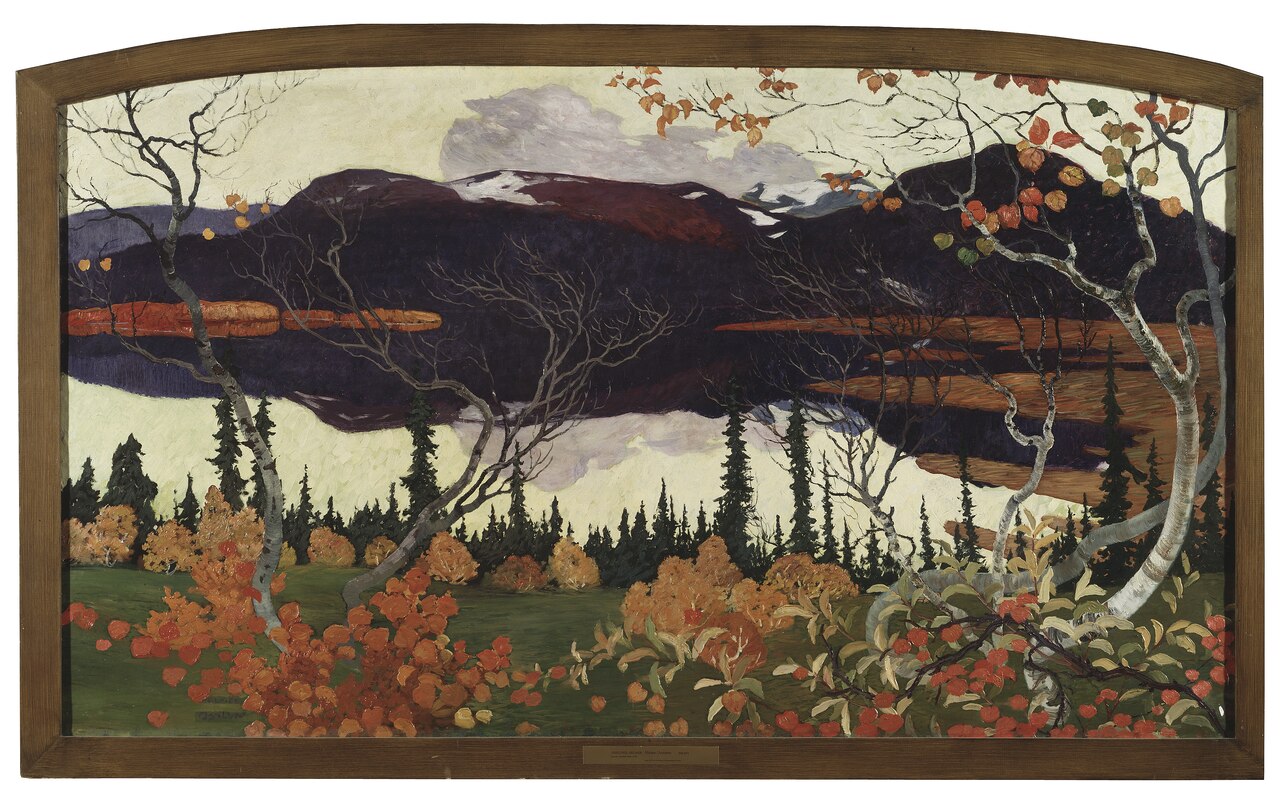
- Autumn (1907) – This painting exemplifies Osslund’s mature handling of colour and atmosphere. Rendered on grease‑proof paper, it depicts a forested scene bathed in the warm, amber light of late autumn. The composition balances a foreground of fallen leaves with a muted horizon, emphasizing the transition between season and the encroaching winter.
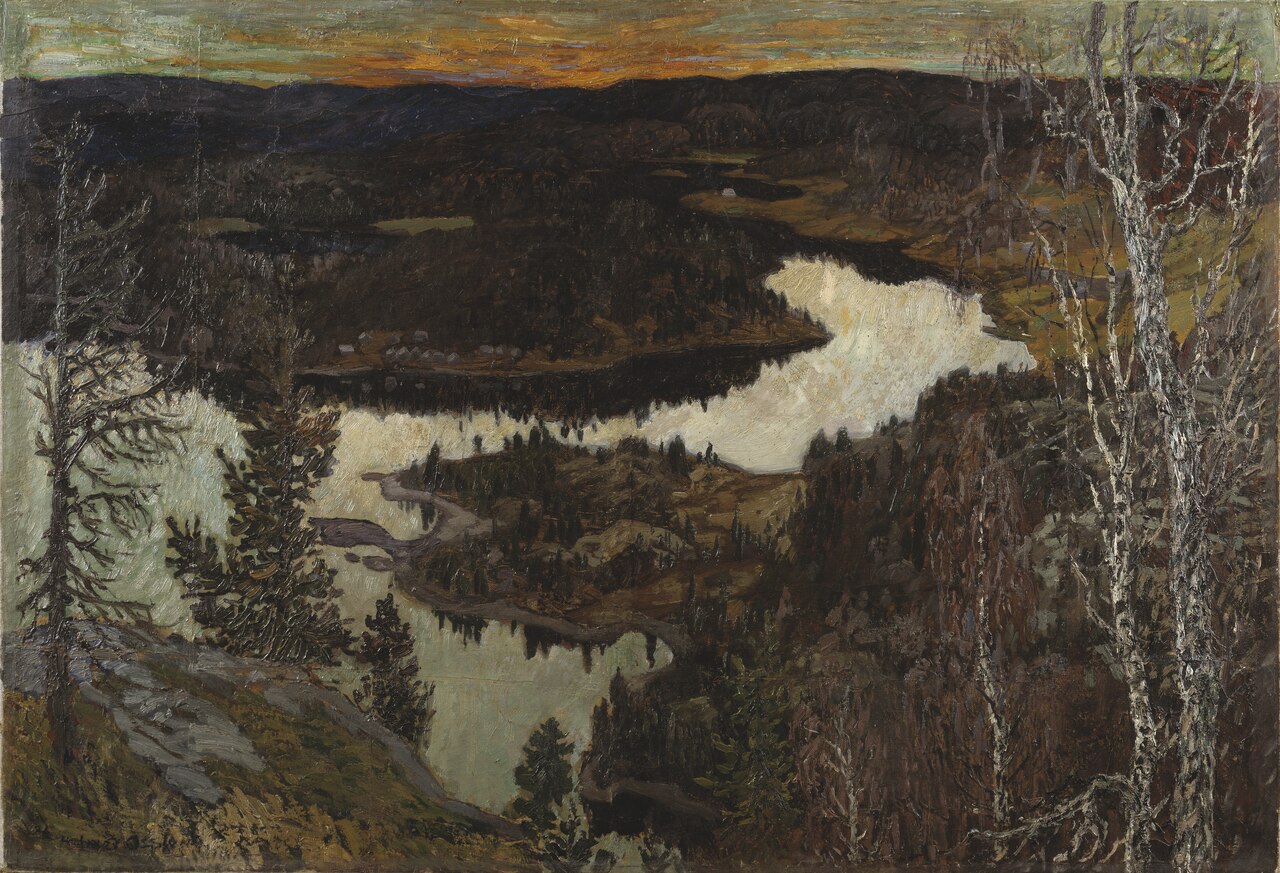
- Autumn, Nordingrå (1910) – In this work Osslund returns to the theme of seasonal change, this time focusing on the coastal village of Nordingrå. The piece captures the reflective quality of water against a backdrop of autumnal foliage, using a restrained palette that highlights the subtle interplay of sky and sea.
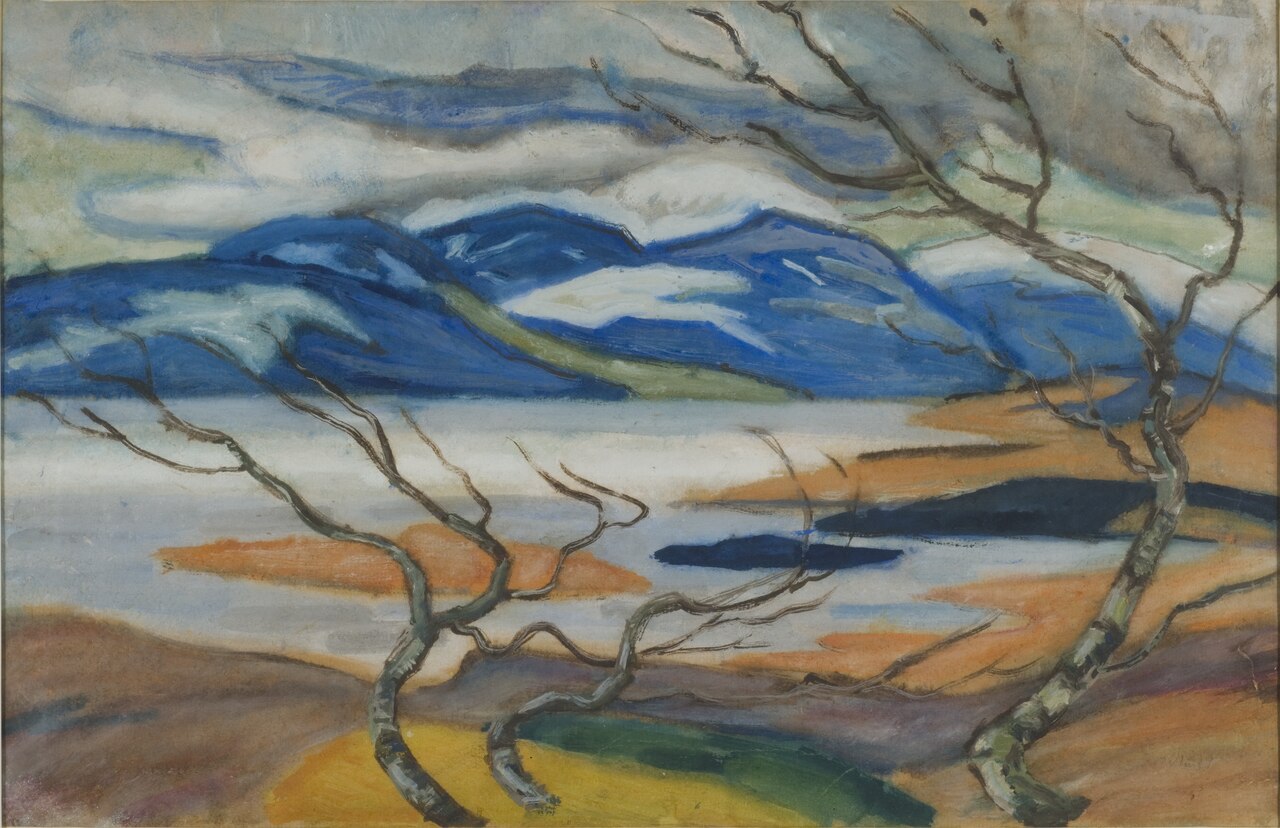
- Torne Marsh in Spring – Though the exact date is uncertain, this work illustrates Osslund’s ability to convey the rejuvenation of the northern wetlands. The painting’s soft greens and delicate pinks convey the fragile emergence of flora after the thaw, underscoring the artist’s sensitivity to seasonal nuance.
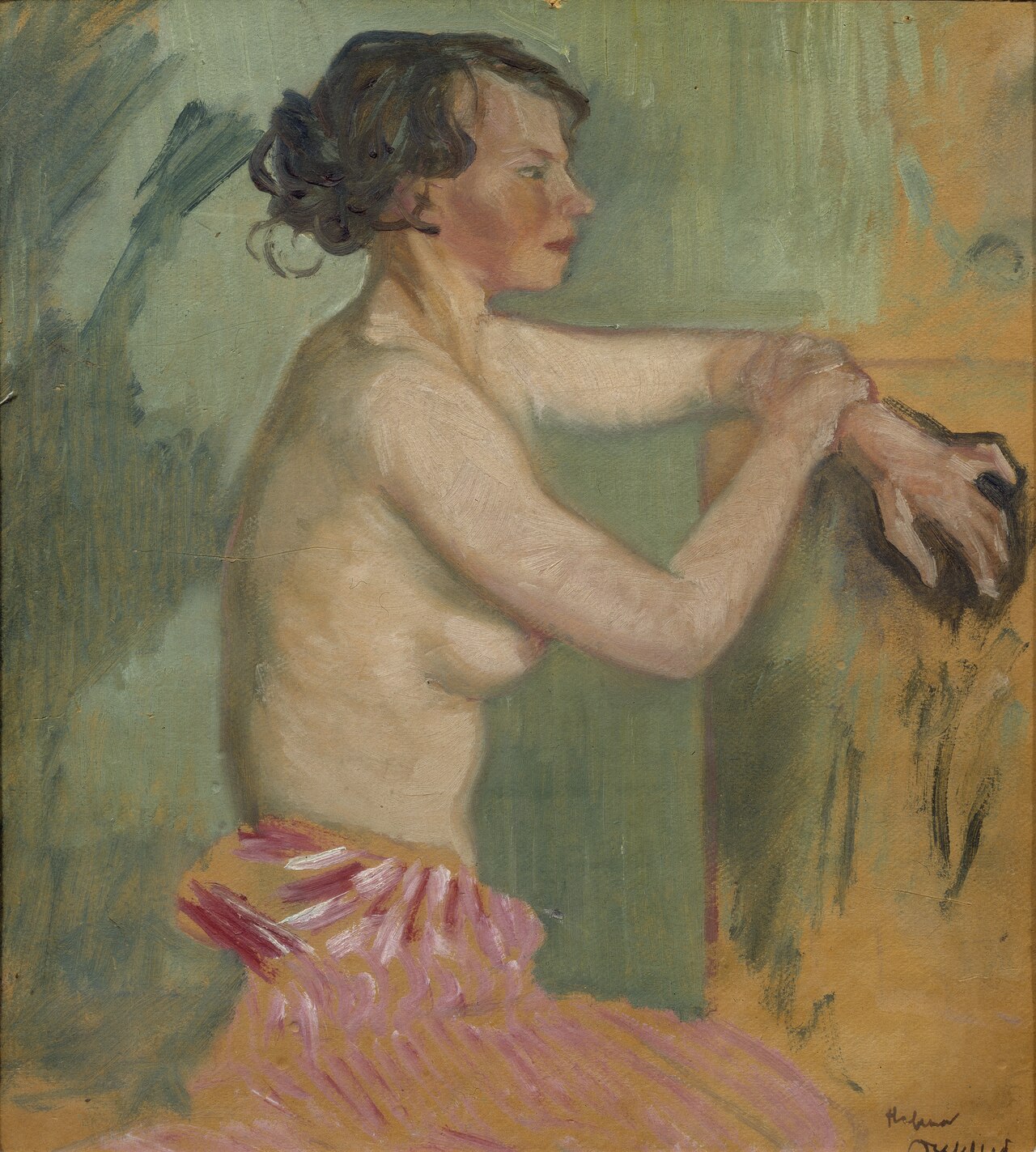
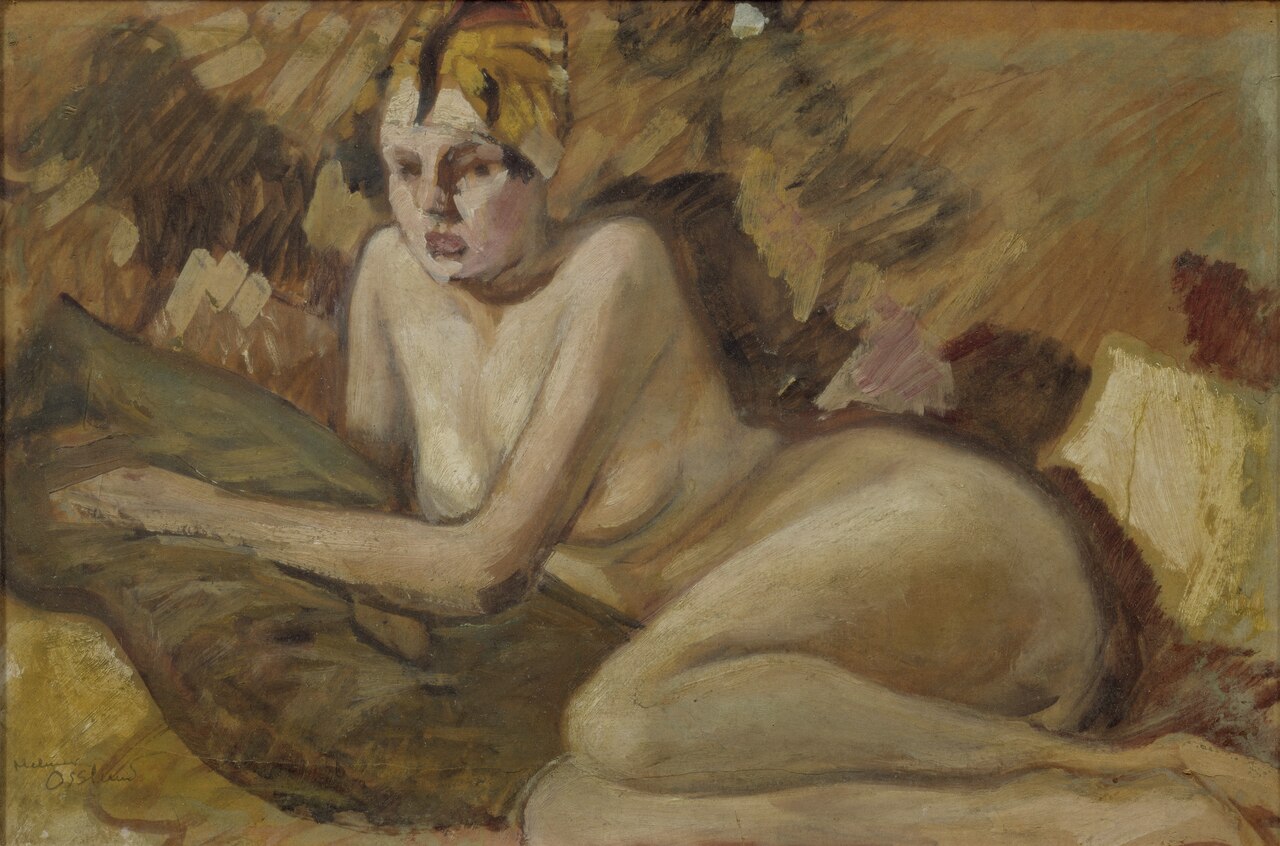
- Study of a Model (1920) – Diverging from his typical landscape subjects, this piece reveals Osslund’s skill in portraiture. Executed on the same grease‑proof paper, the work focuses on the nuanced modelling of the human figure, employing the same layered glazing technique that defines his landscapes.
- Recumbent Modell (1919) – Similar to the previous study, this composition portrays a reclining figure. The painting’s calm mood and the subtle handling of flesh tones demonstrate Osslund’s versatility and his capacity to translate the same atmospheric sensibility from natural to human subjects.
These works collectively illustrate Osslund’s consistent visual language: a muted tonal range, careful observation of light, and a preference for intimate, contemplative scenes.
Influence and legacy
Helmer Osslund’s contribution to Swedish art lies chiefly in his dedication to the northern landscape and his experimental use of unconventional materials. While he never achieved the international fame of some of his contemporaries, his paintings were exhibited regularly in Stockholm and received favourable reviews for their poetic rendering of Lapland’s environment. By employing grease‑proof paper, Osslund prefigured later modernist experiments with non‑traditional supports, suggesting a forward‑looking curiosity that resonated with early 20th‑century avant‑garde tendencies.
His work has continued to be collected by regional museums, particularly those focusing on Swedish naturalist and national‑romantic art. Scholars cite Osslund as an example of an artist who bridged the gap between academic training and a personal, region‑specific vision. The quiet, atmospheric quality of his paintings influenced subsequent generations of Swedish landscape painters who sought to depict the subtle moods of the north without resorting to overt romanticisation.
Today, Osslund is recognised within Swedish art history as a diligent observer of nature, whose careful technique and distinctive material choices offer a valuable perspective on the visual culture of early‑20th‑century Scandinavia.
Frequently asked questions
Who was Helmer Osslund?
Helmer Osslund (1866–1938) was a Swedish painter renowned for his landscapes of Lapland and his unconventional use of grease‑proof paper as a painting surface.
What artistic style or movement is he associated with?
His work aligns with Swedish Naturalism and the national‑romantic tradition, emphasizing muted colours, subtle light, and intimate depictions of northern scenery.
What are his most famous works?
Among his best‑known paintings are Autumn (1907), Autumn, Nordingrå (1910), Torne Marsh in Spring, Study of a Model (1920) and Recumbent Modell (1919).
Why does Helmer Osslund matter in art history?
He is notable for his focused portrayal of Lapland’s landscapes, his innovative use of grease‑proof paper, and his influence on later Swedish artists seeking to capture the region’s delicate light.
How can I recognise a Helmer Osslund painting?
Look for a muted, earth‑tone palette, a smooth, luminous surface typical of grease‑proof paper, and compositions that capture quiet, atmospheric moments of northern light and seasonal change.