Hanna Hirsch-Pauli
1864 – 1940
In short
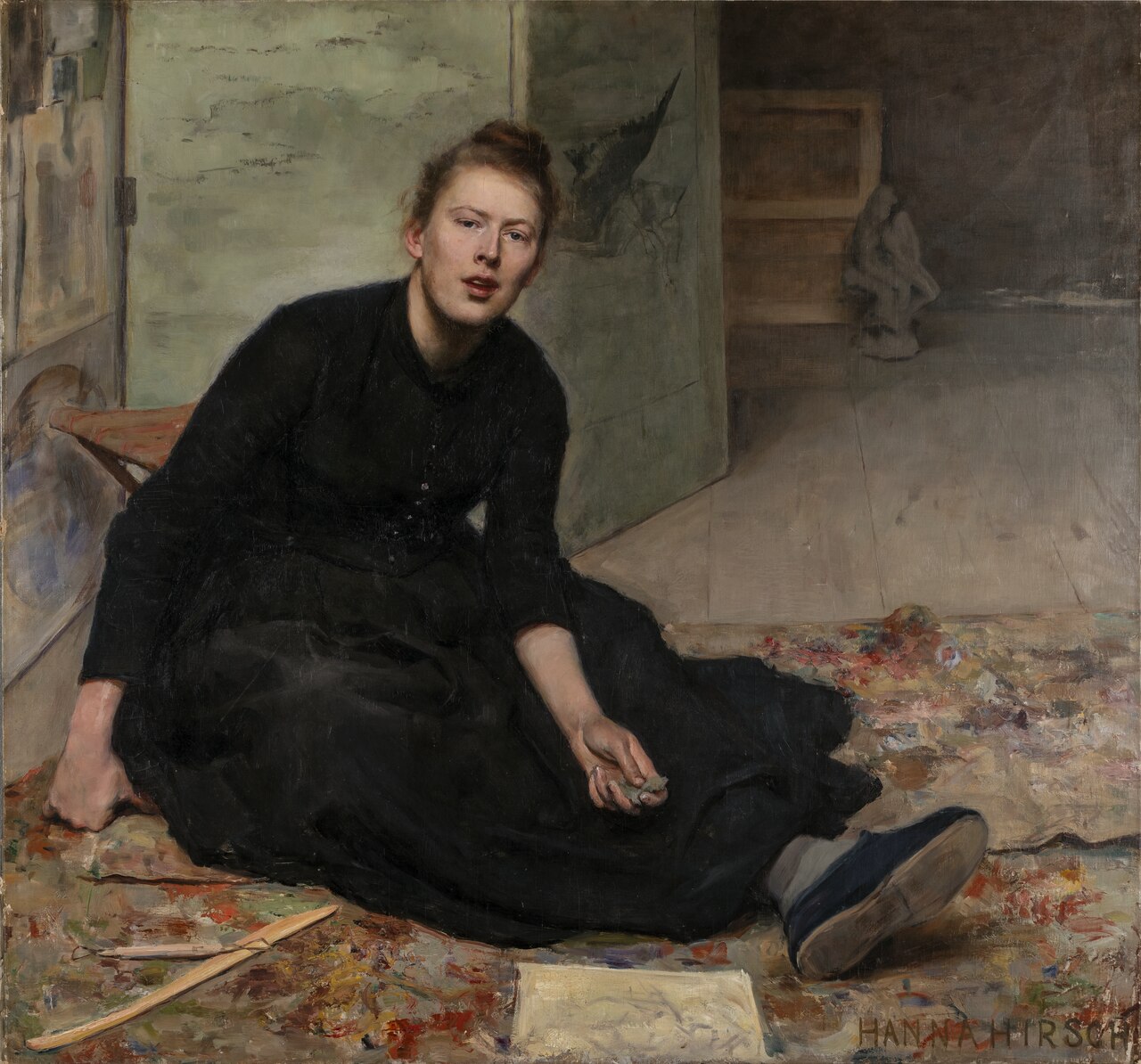
Hanna Hirsch‑Pauli (1864–1940) was a Swedish painter known for genre scenes and portraiture. Working mainly in the late 19th and early 20th centuries, she produced notable works such as Venny Soldan‑Brofeldt, Artist (1886) and Breakfast Time (1887).
Notable works


Early life Hanna Hirsch was born in Stockholm in 1864 into a family that valued education and the arts. Her father, a civil engineer, encouraged her early interest in drawing, and she received private lessons before entering formal training. In 1882 she enrolled at the Royal Swedish Academy of Fine Arts, one of the few institutions at the time that admitted women. The academy’s curriculum emphasized drawing from plaster casts and life‑model studies, giving Hirsch a solid foundation in academic technique.
Career and style After completing her studies in Stockholm, Hirsch travelled to Paris, the epicentre of contemporary art, where she continued her education at the Académie Julian. The mixed‑gender environment of Julian’s atelier exposed her to French naturalism and the emerging Impressionist movement. While she never aligned herself with a specific avant‑garde group, her work reflects a synthesis of Swedish realism and the looser brushwork seen in Parisian circles. Upon returning to Sweden in the late 1880s she began exhibiting at the Royal Academy’s annual shows, gaining recognition for her ability to capture everyday moments with psychological depth.
Hirsch’s subject matter centred on domestic interiors, café scenes, and portraiture. She favoured middle‑class settings, often depicting women engaged in quiet activities such as reading, sewing, or sharing a meal. This focus on the private sphere aligned her with the broader European trend of genre painting that sought to elevate mundane life to artistic status. In portraiture, she combined a realistic rendering of facial features with a subtle emphasis on character, allowing sitters to appear both recognizable and introspective.
In 1891 she married fellow artist Georg Pauli, adopting the hyphenated name Hanna Hirsch‑Pauli. The marriage provided collaborative opportunities, and the couple maintained a joint studio in Stockholm where they taught younger artists. Despite the partnership, Hirsch retained an independent reputation, and critics frequently highlighted the distinct sensibility of her work compared with her husband’s more allegorical pieces.
Signature techniques Hirsch‑Pauli’s technique is characterised by a restrained palette, often dominated by earth tones, muted greens and soft blues. She employed thin, layered washes to build atmospheric depth, a method reminiscent of French naturalists. Light is rendered with a delicate touch; in interior scenes she captures the play of daylight through windows, creating a gentle chiaroscuro that emphasises the texture of fabrics and the sheen of porcelain.
Her brushwork varies according to subject. In genre scenes the handling is relatively tight, allowing fine detail in objects such as teacups, books and lace. In contrast, her portraiture displays looser strokes around the hair and background, directing attention to the sitter’s expression. She frequently used a limited compositional space, positioning figures close to the picture plane to create an intimate connection with the viewer.
Major works - **Venny Soldan‑Brofeldt, Artist (1886)** – This early portrait of the Finnish painter Venny Soldan‑Brofeldt is notable for its unflinching realism. Hirsch‑Pauli captures Soldan‑Brofeldt at her easel, brush in hand, set against a modest studio backdrop. The work demonstrates the artist’s interest in portraying fellow women creators, a theme that recurs throughout her career.
- Breakfast Time (1887) – A genre scene depicting a family breakfast, the painting showcases Hirsch‑Pauli’s skill in rendering domestic light. The composition is balanced by the placement of figures around a central table, while the muted colour scheme conveys a sense of quiet routine.
- Verner von Heidenstam as Hans Alienus (1896) – In this portrait, the Swedish poet Verner von Heidenstam is presented in a mythic guise, evoking the literary character Hans Alienus. The work blends portraiture with a narrative element, illustrating Hirsch‑Pauli’s occasional forays into symbolic representation.
- Friends (1907) – This later piece presents a group of women in a garden setting, their relaxed postures suggesting camaraderie. The painting’s brighter palette and looser brushwork reflect the gradual influence of early modernist trends, while retaining her characteristic attention to interpersonal dynamics.
- Porträt des George Pauli (1910) – A portrait of her husband, this work balances affection with a measured realism. The subdued background and careful rendering of George Pauli’s features highlight the artist’s continued commitment to portraiture as a means of exploring personal identity.
Influence and legacy Hanna Hirsch‑Pauli occupies a distinctive place in Swedish art history as one of the few women of her generation to achieve professional recognition in both genre painting and portraiture. Her willingness to depict the everyday lives of women contributed to a broader cultural acknowledgment of domestic subjects as worthy of artistic treatment. Although she never joined a formal movement, her cross‑cultural training—combining Swedish academic rigor with Parisian naturalism—provided a model for later Scandinavian artists seeking an international outlook.
Her work is held in several Swedish public collections, including the Nationalmuseum in Stockholm, where her paintings continue to be displayed alongside contemporaries such as Carl Larsson and Anders Zorn. Art historians cite Hirsch‑Pauli as an early example of a female artist who negotiated the expectations of academic training while asserting a personal visual language. In recent decades, exhibitions focusing on women artists of the 19th century have revived interest in her oeuvre, positioning her as a bridge between traditional realism and the more experimental approaches that would dominate the early 20th century.
Through teaching, exhibitions, and a body of work that balances technical competence with empathetic observation, Hanna Hirsch‑Pauli helped expand the possibilities for Swedish women painters. Her legacy endures in the continued scholarly attention to her paintings and in the inspiration she provides to contemporary artists exploring themes of everyday life and female identity.
Frequently asked questions
Who was Hanna Hirsch‑Pauli?
Hanna Hirsch‑Pauli (1864–1940) was a Swedish painter renowned for genre scenes and portraits, active in the late 19th and early 20th centuries.
What artistic style or movement is she associated with?
She worked in a realist‑naturalist style, blending Swedish academic training with influences from French naturalism and early Impressionism, but did not belong to a specific movement.
What are her most famous works?
Key works include *Venny Soldan‑Brofeldt, Artist* (1886), *Breakfast Time* (1887), *Verner von Heidenstam as Hans Alienus* (1896), *Friends* (1907) and *Porträt des George Pauli* (1910).
Why is Hanna Hirsch‑Pauli important in art history?
She helped legitimise domestic and everyday subjects in Swedish art, served as a role model for women painters, and bridged traditional realism with emerging modernist tendencies.
How can I recognise a painting by Hanna Hirsch‑Pauli?
Look for muted earth tones, careful rendering of light entering interiors, intimate compositions focused on middle‑class figures, and a balance of tight detail with looser brushwork around faces and backgrounds.