Gustaf Wilhelm Palm
1810 – 1890
In short
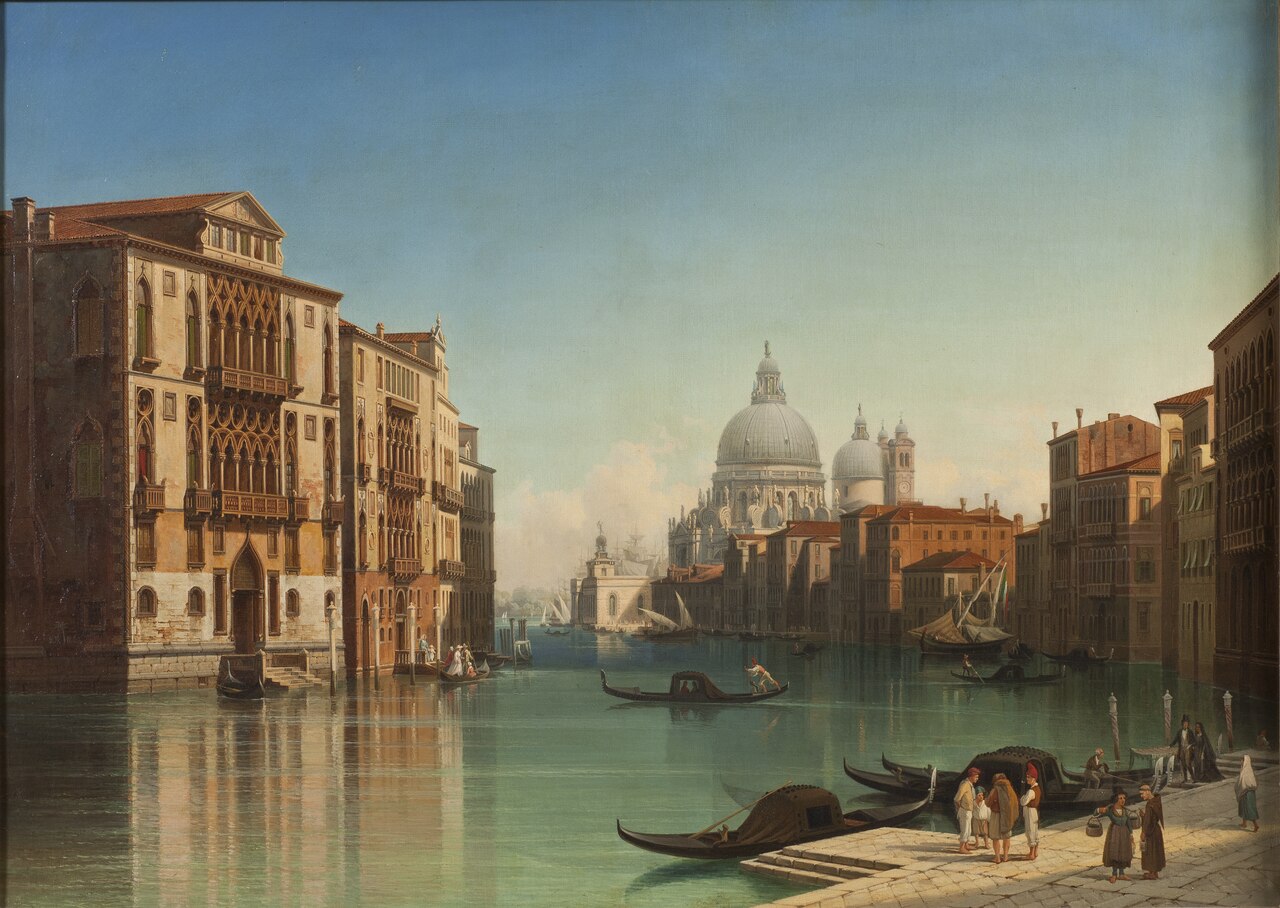
Gustaf Wilhelm Palm (1810–1890) was a Swedish landscape painter and professor who worked in the Romantic tradition, producing atmospheric cityscapes and Italian scenes. He is best known for works such as the Campanila di San Rocco a Frescati (1848) and the View of the Canal Grande in Venice (1860).
Notable works
.jpg)


Early life Gustaf Wilhelm Palm was born in 1810 in the southern Swedish town of Kristianstad. Little is recorded about his family background, but the cultural milieu of early‑19th‑century Sweden offered a growing appreciation for the visual arts, especially landscape painting, which was gaining prestige as a vehicle for national identity. Palm displayed an early aptitude for drawing, and he was admitted to the Royal Swedish Academy of Arts in Stockholm, where he received formal training in drawing, composition, and the study of nature. The Academy’s curriculum emphasized classical drawing techniques and the study of historic masters, providing Palm with a solid foundation that would inform his later academic career.
Career and style After completing his studies, Palm began exhibiting at the Academy’s annual salons. His early works reflected the Romantic fascination with the sublime in nature, combining precise draftsmanship with an emotive treatment of light and atmosphere. Throughout the 1830s and 1840s he travelled extensively, especially to Italy, a common pilgrimage for Swedish artists seeking inspiration from the Mediterranean landscape and the legacy of the Old Masters. The Italian sojourn deepened his palette, introducing warmer tones and a more luminous handling of sky and water. Palm’s style remained rooted in academic realism, yet he embraced the Romantic emphasis on mood, often portraying cities and waterways at dawn or dusk to capture fleeting light effects.
In 1850 Palm was appointed professor of landscape painting at the Royal Swedish Academy, a position he held for several decades. As an educator he advocated for direct observation, encouraging students to work en plein air while also respecting the compositional principles taught at the Academy. His own practice balanced field studies with studio refinement, a dual approach that contributed to the polished yet expressive quality of his mature paintings.
Signature techniques Palm’s paintings are recognisable for a handful of technical hallmarks. First, he employed a meticulous underdrawing, often executed in charcoal or fine ink, to establish strong linear perspective before applying colour. Second, his handling of atmospheric perspective—using progressively cooler and less saturated hues to convey depth—creates a convincing sense of distance, especially in cityscape vistas where water and sky dominate the composition. Third, Palm favoured a delicate glazing technique, layering thin washes of oil to build luminous surfaces that subtly shift with the viewer’s eye. Finally, his brushwork varies between tight, controlled strokes for architectural details and looser, broader passages for foliage and water, allowing the eye to move fluidly across the canvas.
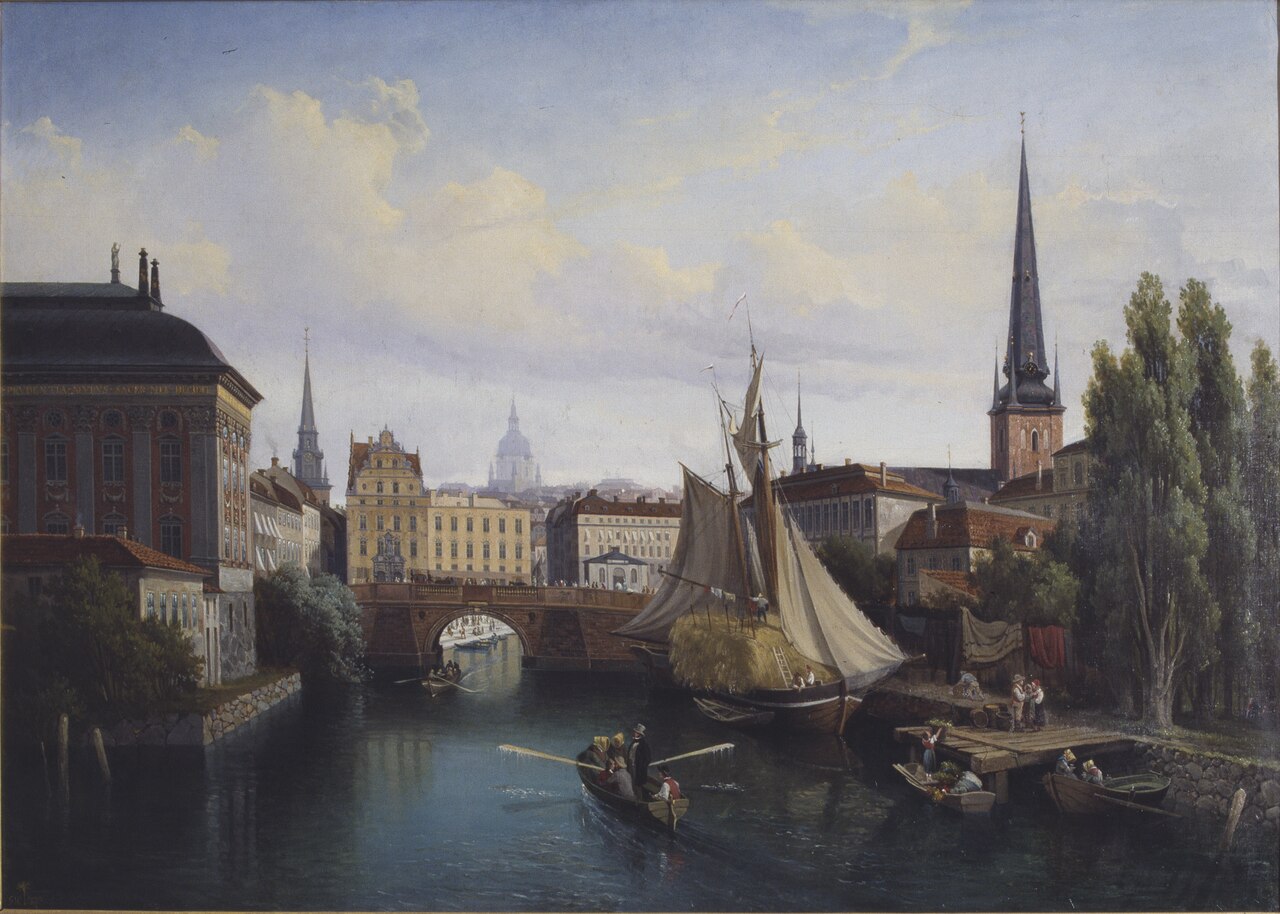
Major works - **Campanila di San Rocco a Frescati (1848)** – This painting captures the iconic bell tower of San Rocco as seen from the Swedish estate of Frescati. Palm juxtaposes the Italian architectural form with a northern light, creating a cross‑cultural dialogue that reflects his own travel experiences. The composition is anchored by a low horizon, emphasizing the tower’s verticality against a soft, cloud‑filled sky. - **Italian Landscape, Narni** – Though the exact date is undocumented, this work likely stems from Palm’s Italian period. It presents the medieval town of Narni perched atop a hill, bathed in warm, golden light. Palm’s treatment of the stone walls and distant hills demonstrates his skill in rendering texture while maintaining a harmonious colour harmony. - **View of Canal Grande in Venice (1860)** – One of Palm’s most celebrated pieces, it depicts the bustling Grand Canal at sunrise. The painting is notable for its accurate perspective of the canal’s curve, the reflective water surface, and the subtle gradations of pink and amber in the sky. Palm’s ability to convey the lively atmosphere of Venice without sacrificing structural accuracy illustrates his mature synthesis of Romantic mood and academic rigor. - **View of the Riddarholmskanalen, Stockholm, 1835 (1880)** – This work shows the historic canal that once linked Stockholm’s old town with the surrounding waterways. Palm painted the scene in 1835, but it was not exhibited until 1880, reflecting the lasting appeal of his early Swedish subjects. The composition balances the architectural silhouettes of the city with the shimmering water, employing the same luminous glazing technique that characterises his later works. - **View from the Cività Castellana (1846)** – Rendered from a hilltop overlooking the Roman neighbourhood of Castello, the painting captures a panoramic sweep of rooftops, domes, and distant hills. Palm’s use of aerial perspective and delicate tonal shifts conveys both the immediacy of the foreground and the expansive sense of space beyond.
These works collectively demonstrate Palm’s preoccupation with water‑bound cityscapes, his fascination with light at dawn or dusk, and his ability to blend Northern European sensibilities with Mediterranean subject matter.
Influence and legacy Gustaf Wilhelm Palm’s contribution to Swedish art lies in his role as a bridge between Romantic landscape painting and the emerging realist tendencies of the late 19th century. As a professor, he mentored a generation of Swedish artists who would later embrace naturalism and impressionism, passing on his emphasis on direct observation and disciplined composition. His paintings, held in the collections of the Nationalmuseum in Stockholm and several regional museums, continue to be cited for their technical mastery and their evocative representation of European cityscapes. While his name may not be as widely recognised internationally as some of his contemporaries, Palm remains an essential figure in Swedish art history, illustrating the country’s engagement with broader European artistic currents during a period of rapid cultural change.
Frequently asked questions
Who was Gustaf Wilhelm Palm?
Gustaf Wilhelm Palm (1810–1890) was a Swedish landscape painter and professor known for atmospheric cityscapes and Italian scenes.
What artistic style or movement is Palm associated with?
His work aligns with the Romantic landscape tradition, blending academic realism with an emphasis on mood and light.
What are Palm's most famous works?
Key paintings include Campanila di San Rocco a Frescati (1848), View of the Canal Grande in Venice (1860), and View of the Riddarholmskanalen, Stockholm (1835).
Why does Palm matter in art history?
He helped introduce Mediterranean subject matter to Swedish art, taught at the Royal Academy, and influenced later Swedish naturalist and impressionist painters.
How can I recognise a painting by Palm?
Look for meticulous linear perspective, subtle glazing, and a focus on water‑filled cityscapes rendered in soft dawn or dusk light.