Gustaf Wilhelm Finnberg
1784 – 1833
In short
Gustaf Wilhelm Finnberg (1784–1833) was a Finnish painter born in Pargas who worked primarily in portraiture and landscape studies. He spent much of his career in Sweden, where he died in Stockholm, and is known for works such as the portrait of Lieutenant Anton af Tengström (1826) and the family portrait of C.J. Lagercrantz (1830).
Notable works



Early life Gustaf Wilhelm Finnberg was born in 1784 in the coastal town of Pargas, which at the time lay within the Swedish‑ruled region of Finland. Little is recorded about his family background, but the cultural milieu of Pargas—a community with strong maritime and merchant ties—provided an environment where artistic pursuits could be encouraged. Finnberg likely received his initial artistic instruction locally, as was common for aspiring painters in peripheral towns, before moving to larger centres for formal training.
In the early years of the 19th century, Finland was undergoing significant political change, culminating in its separation from Sweden in 1809. This period of transition created a demand for visual documentation of the emerging Finnish elite and the broader Swedish‑Finnish aristocracy. Finnberg’s early exposure to these circles would shape his later focus on portraiture, a genre that offered both artistic prestige and reliable patronage.
Career and style Finnberg’s professional career unfolded primarily in Sweden, where he settled in Stockholm, the cultural heart of the Swedish kingdom. The city’s vibrant artistic community, centred around the Royal Swedish Academy of Arts, provided opportunities for commissions and artistic exchange. While concrete evidence of his formal affiliation with the Academy is lacking, Finnberg’s work reflects the academic standards of the period, emphasizing realistic representation, careful modelling of flesh tones, and a restrained colour palette.
His oeuvre is characterised by a sober, restrained realism that aligns with the broader Nordic portrait tradition of the early 19th century. Finnberg’s portraits tend to foreground the sitter’s status through subtle details—such as insignia, clothing, and setting—while maintaining a focus on the psychological presence of the subject. Landscape works, though fewer in number, reveal an interest in topographical accuracy and a quiet appreciation of the Finnish countryside, echoing the emerging Romantic sensibility without fully embracing its dramatic excesses.
Signature techniques Finnberg’s technique combines meticulous underdrawing with layered oil glazing to achieve depth and luminosity. He typically employed a limited preparatory palette of earth tones for the underpainting, allowing the flesh tones to emerge gradually through successive layers. This method produced a smooth, almost porcelain‑like finish that was prized in portraiture.
In his landscape studies, Finnberg utilised a more direct approach, often working alla prima (wet‑on‑wet) to capture atmospheric effects quickly. He favoured a restrained palette of muted greens, browns, and greys, which conveyed the subdued light of the northern latitudes. His handling of foliage and distant horizons demonstrates an understanding of atmospheric perspective, a technique that adds depth without relying on overtly dramatic contrasts.
Major works Finnberg’s most documented works include a series of portraits that illustrate his skill in rendering both likeness and social rank.
- Sublieutenant Anton af Tengström (1826) – This portrait captures the young officer in a formal uniform, with attention to the details of his epaulettes and insignia. The sitter’s expression is rendered with a calm resolve, reflecting the disciplined ethos of the Swedish military.
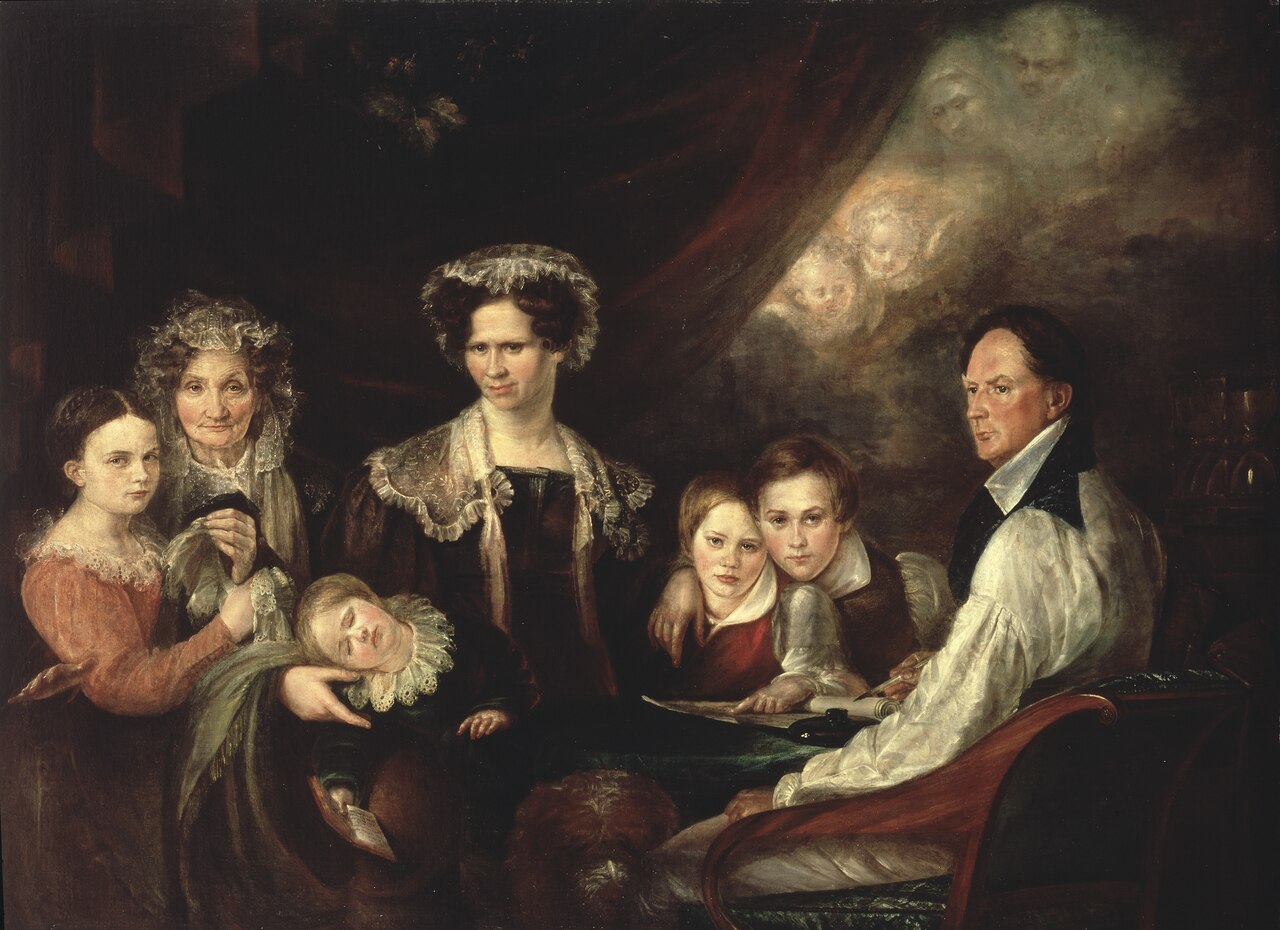
- C.J. Lagercrantz, Assessor, and his Family (1830) – A multi‑figure composition that showcases Finnberg’s ability to manage complex group dynamics. Each family member is portrayed with individualized features, while the overall arrangement conveys a harmonious domestic setting.
- Portrait of Baron R.F.G. Wrede – Though the exact date is uncertain, this work exemplifies Finnberg’s capacity to depict aristocratic bearing. The baron is presented with dignified posture, his attire subtly indicating his noble status.
- Portrait of Carl Gustaf Mannerheim (1797‑1854) (1823) – A portrait of the future Finnish statesman, rendered before Mannerheim’s rise to prominence. Finnberg captures a youthful vigor, with a focus on the sitter’s eyes that hints at the future leader’s resolve.
- Landscape from Louhisaari, Study – This landscape study, likely executed during a visit to the Louhisaari estate, demonstrates Finnberg’s skill in rendering the Finnish terrain. The work emphasizes a calm, contemplative atmosphere, with a muted colour scheme that reflects the natural lighting of the region.
These works collectively illustrate Finnberg’s versatility, ranging from formal portraiture to intimate landscape observation, and underscore his role as a documentarian of early‑19th‑century Swedish‑Finnish society.
Influence and legacy Gustaf Wilhelm Finnberg occupies a modest yet noteworthy place in the art history of Finland and Sweden. While he did not found a distinct school or movement, his portraits contributed to the visual record of the Finnish elite during a formative period of national identity formation. By preserving the likenesses of military officers, bureaucrats, and aristocrats, Finnberg provided future historians with valuable visual sources.
His landscape studies, though less celebrated, anticipate the later Romantic fascination with the Finnish wilderness that would emerge in the works of artists such as Werner Holmberg and later the Golden Age painters. In this sense, Finnberg can be seen as a precursor to the more expressive depictions of nature that characterised mid‑19th‑century Finnish art.
Finnberg’s death in Stockholm in 1833 marked the end of a career that bridged the cultural worlds of Finland and Sweden. Contemporary collections in both countries retain his works, and they continue to be cited in scholarly discussions of early Finnish portraiture. Though not a household name, Finnberg’s disciplined technique and faithful representation of his subjects ensure his enduring relevance within the canon of Nordic art.
Overall, Finnberg’s legacy rests on his role as a reliable chronicler of his era, offering insight into the visual culture of a region navigating the complexities of political change and artistic development.
Frequently asked questions
Who was Gustaf Wilhelm Finnberg?
Gustaf Wilhelm Finnberg (1784–1833) was a Finnish painter known for his portraiture and landscape studies, active mainly in Sweden.
What artistic style or movement is Finnberg associated with?
Finnberg worked in a restrained realist style typical of early‑19th‑century Nordic portraiture, without affiliation to a specific avant‑garde movement.
What are Finnberg’s most famous works?
His notable works include the portrait of Sublieutenant Anton af Tengström (1826), the family portrait of C.J. Lagercrantz (1830), the portrait of Carl Gustaf Mannerheim (1823), and his Landscape from Louhisaari study.
Why is Finnberg important in art history?
He provides a valuable visual record of early‑19th‑century Finnish and Swedish society, and his disciplined technique foreshadows later Romantic landscape trends in Finland.
How can I recognise a Finnberg painting?
Look for meticulous underdrawing, smooth oil glazing, a restrained colour palette, and careful attention to the sitter’s status symbols in portraits, as well as muted, atmospheric tones in his landscape studies.