Gustaf Cederström
1845 – 1933
In short
Gustaf Cederström (1845–1933) was a Swedish academic painter renowned for his meticulously rendered historical scenes, especially depictions of King Charles XII, and for his long‑standing role as a professor at the Royal Swedish Academy of Arts.
Notable works

.jpg)
Early life Gustaf Olof Cederström was born on 12 November 1845 in the Klara Church Parish of Stockholm, Sweden. He was the son of a modest middle‑class family; his father worked as a civil servant while his mother encouraged his early fascination with drawing. Cederström showed artistic promise as a child, copying illustrations from textbooks and sketching scenes of everyday life in Stockholm’s streets. In 1862, at the age of seventeen, he enrolled at the Royal Swedish Academy of Arts, where he received formal training in drawing, anatomy and the classical traditions that underpinned academic painting. The Academy’s rigorous curriculum, which combined life‑drawing classes with studies of Old Master works, laid the foundation for Cederström’s later focus on historical narrative and portraiture.
Career and style After completing his studies, Cederström travelled abroad on a series of scholarships that were typical for promising Swedish artists of the period. He spent several years in Munich, then moved to Paris, where he was exposed to the dominant academic circles of the French Salon. The influence of French academic masters such as Alexandre Cabanel and Jules Lefebvre can be discerned in Cederström’s polished modelling of figures and his careful handling of light. Upon his return to Sweden in the early 1870s, he began to establish a reputation as a painter of large‑scale historical subjects, a genre that enjoyed official patronage and public appeal. His work combined a meticulous attention to costume and military detail with a Romantic sensibility that heightened the emotional stakes of his scenes. Throughout his career he remained aligned with the academic tradition, favouring clear composition, balanced colour palettes and a narrative clarity that made his paintings readily understandable to a broad audience.
Signature techniques Cederström’s technique rested on a disciplined drawing foundation. He employed a tight underdrawing, often executed in charcoal or graphite, to map the placement of figures before applying layers of oil paint. His palette tended toward muted earth tones punctuated by strategic highlights of ochre, vermilion or ultramarine to draw the viewer’s eye to focal points. In his historical canvases, he paid close attention to the accuracy of uniforms, weapons and architectural elements, consulting contemporary military manuals and historical texts to ensure authenticity. The artist also favoured a smooth, almost invisible brushwork that reinforced the academic ideal of finish; surface textures are largely concealed, allowing the narrative content to dominate. Portraits reveal a subtle psychological depth, achieved through the careful rendering of facial expression and the interplay of light across the skin.
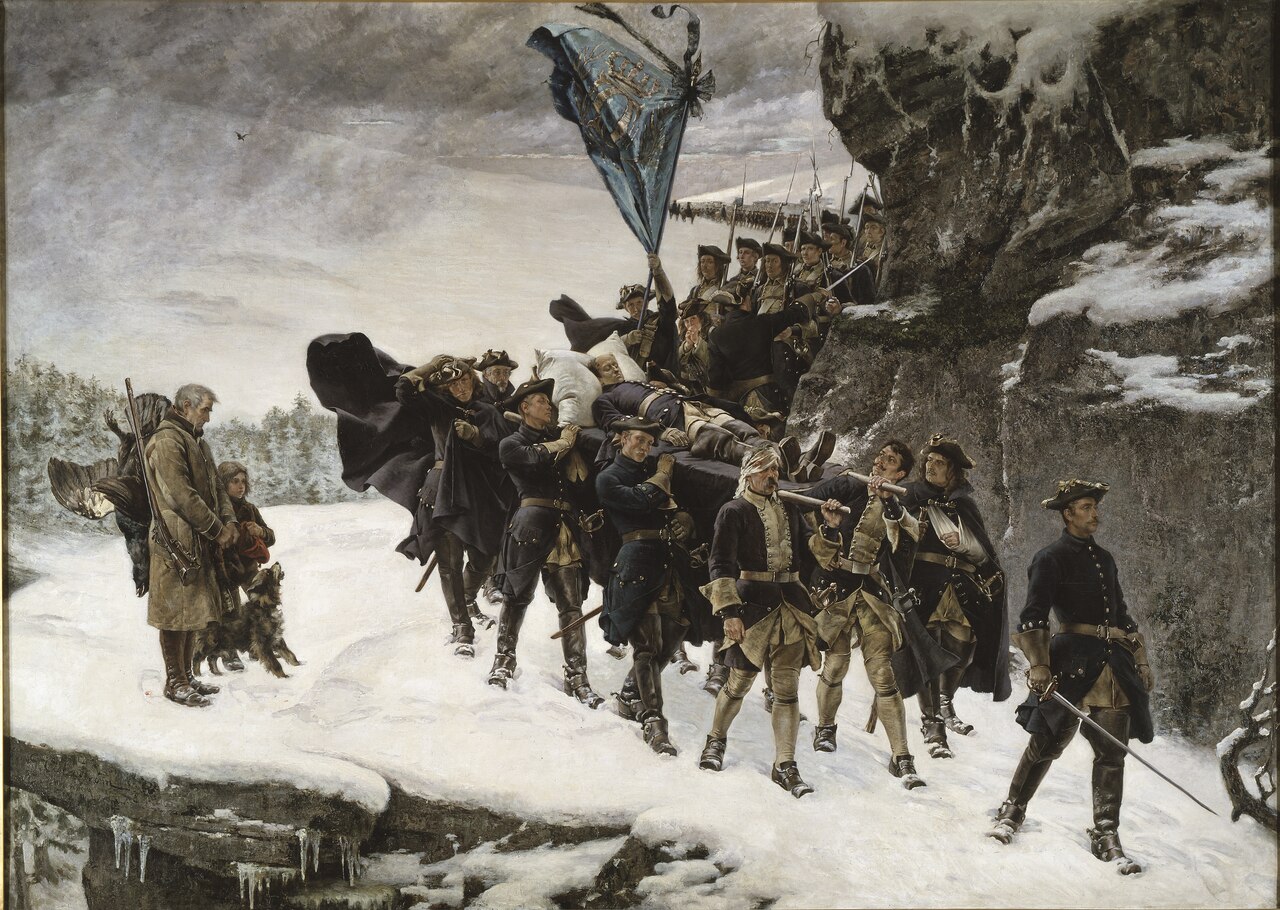
Major works The body of King Karl XII being carried home from Norway (1878) marks Cederström’s first major foray into the heroic‑military genre. The canvas captures the moment after the king’s death in 1718, with his body draped over a stretcher and surrounded by solemn soldiers. The composition is anchored by a stark, wintry landscape that underscores the tragedy of the event. Bringing Home the Body of King Karl XII of Sweden (1884) expands on this theme, presenting a larger, more theatrical scene in which the king’s corpse is borne through a snow‑bound forest by a procession of mournful figures. The work was exhibited at the Paris Salon and earned Cederström an international reputation for his ability to dramatise national history.
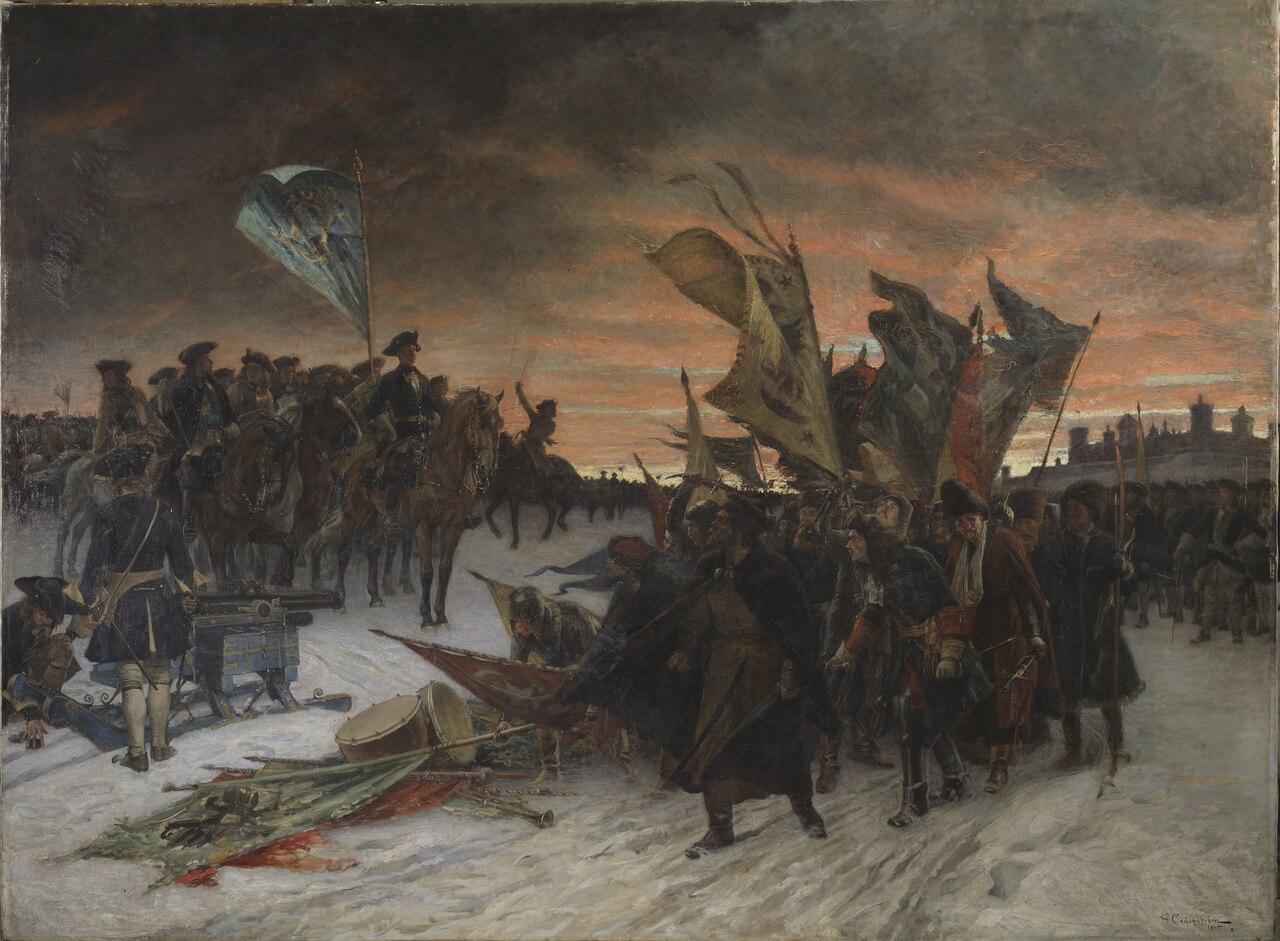
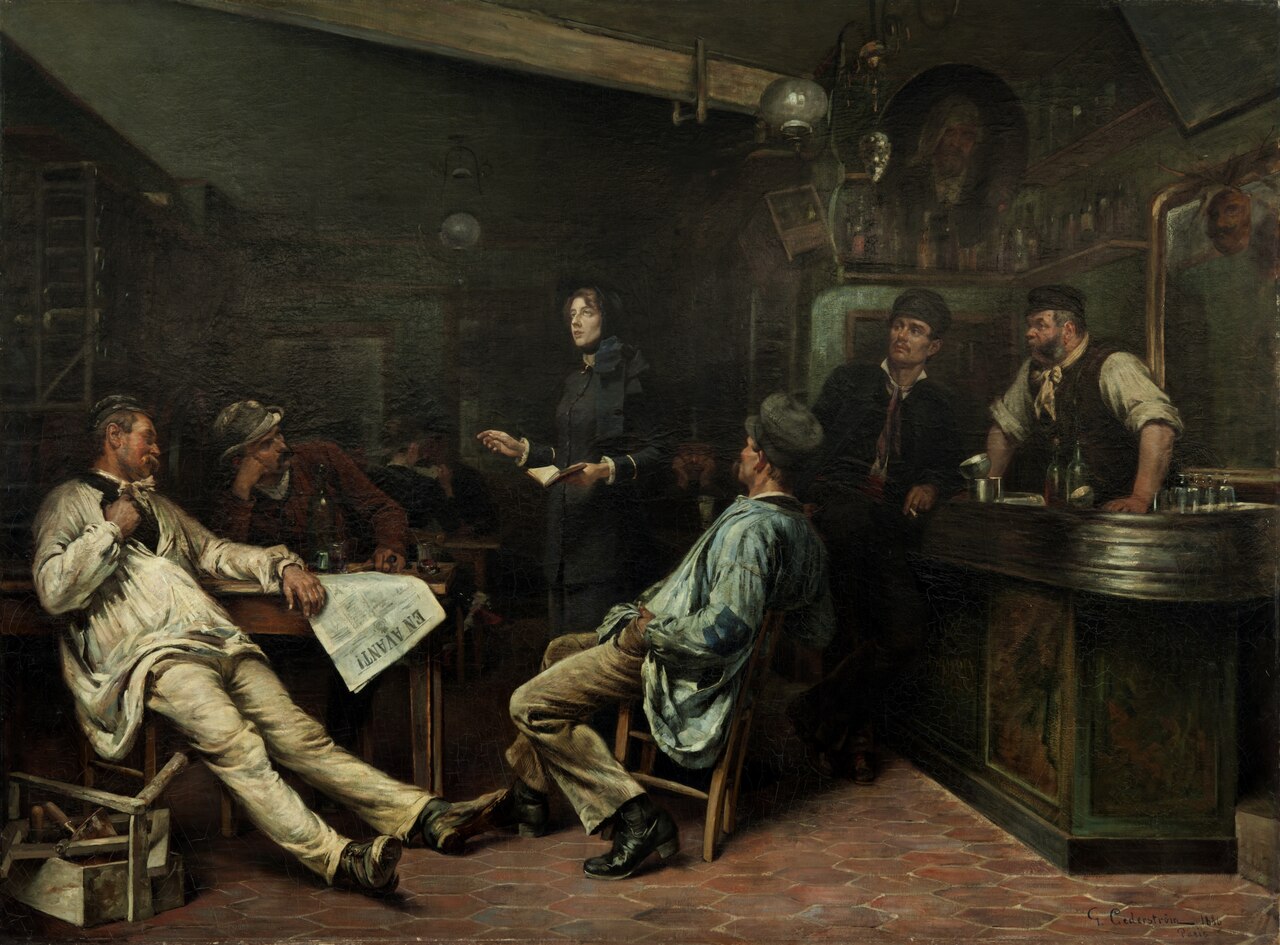
Victory at Narva (1905) commemorates the 1700 Battle of Narva, a decisive Swedish victory over Russian forces. Cederström depicts the Swedish commander Charles XII on a horse, sword raised, as his troops surge forward. The painting demonstrates his mature command of large‑scale composition, balancing a crowded battlefield with a clear central focus on the king. Baptists (1886) diverges from the military motif, portraying a modest interior scene of a Swedish Baptist congregation gathered for worship. The work reflects Cederström’s capacity to render contemporary social subjects with the same academic precision as his historical pieces. The Salvation Army. Miss Booth visiting a Paris Tavern (1886) captures a moment of charitable outreach, with the founder of the Salvation Army, William Booth, entering a Parisian tavern to distribute aid. Here Cederström combines narrative interest with a subtle moral commentary, illustrating his engagement with the social reform movements of his time.
Influence and legacy Gustaf Cederström remained an influential figure in Swedish art until his death in Stockholm on 21 January 1933. He served as a professor at the Royal Swedish Academy of Arts, where he mentored a generation of painters who continued the academic tradition into the early twentieth century. His historical canvases were reproduced as prints and became part of the visual vocabulary through which Swedes visualised their national past. Although modernist tendencies eventually eclipsed academic painting, Cederström’s works retain a prominent place in museum collections, notably at the Nationalmuseum in Stockholm. Art historians regard him as a key exponent of Swedish academic art, a bridge between the Romantic nationalism of the nineteenth century and the more restrained realism that followed. His legacy endures in the continued appreciation of his technically accomplished, historically resonant paintings.
Frequently asked questions
Who was Gustaf Cederström?
Gustaf Cederström (1845–1933) was a Swedish painter who specialised in academic, historically themed canvases, most famously portraying the late king Charles XII.
What style or movement did he work in?
He worked within the academic art tradition, combining classical training with a Romantic‑nationalist emphasis on precise narrative and meticulous detail.
What are his most famous works?
His best‑known paintings include Bringing Home the Body of King Karl XII of Sweden (1884), Victory at Narva (1905), The Body of Charles XII Being Carried Home from Norway (1878), Baptists (1886) and The Salvation Army: Miss Booth Visiting a Paris Tavern (1886).
Why is he significant in art history?
Cederström helped shape Sweden’s visual representation of its 17th‑ and 18th‑century history, taught at the Royal Swedish Academy of Arts, and his large‑scale historical canvases set a standard for academic painting in Scandinavia.
How can I recognise a Cederström painting?
Look for a smooth, highly finished surface, precise drawing, historically accurate costumes, and a clear, balanced composition that foregrounds a single narrative moment, often with a muted palette punctuated by strategic colour highlights.