Gustaf Ankarcrona
1869 – 1933
In short
Gustaf Ankarcrona (1869–1933) was a Swedish painter renowned for his rural, winter‑scene subjects and his pioneering work in preserving the cultural heritage of Dalarna.
Notable works
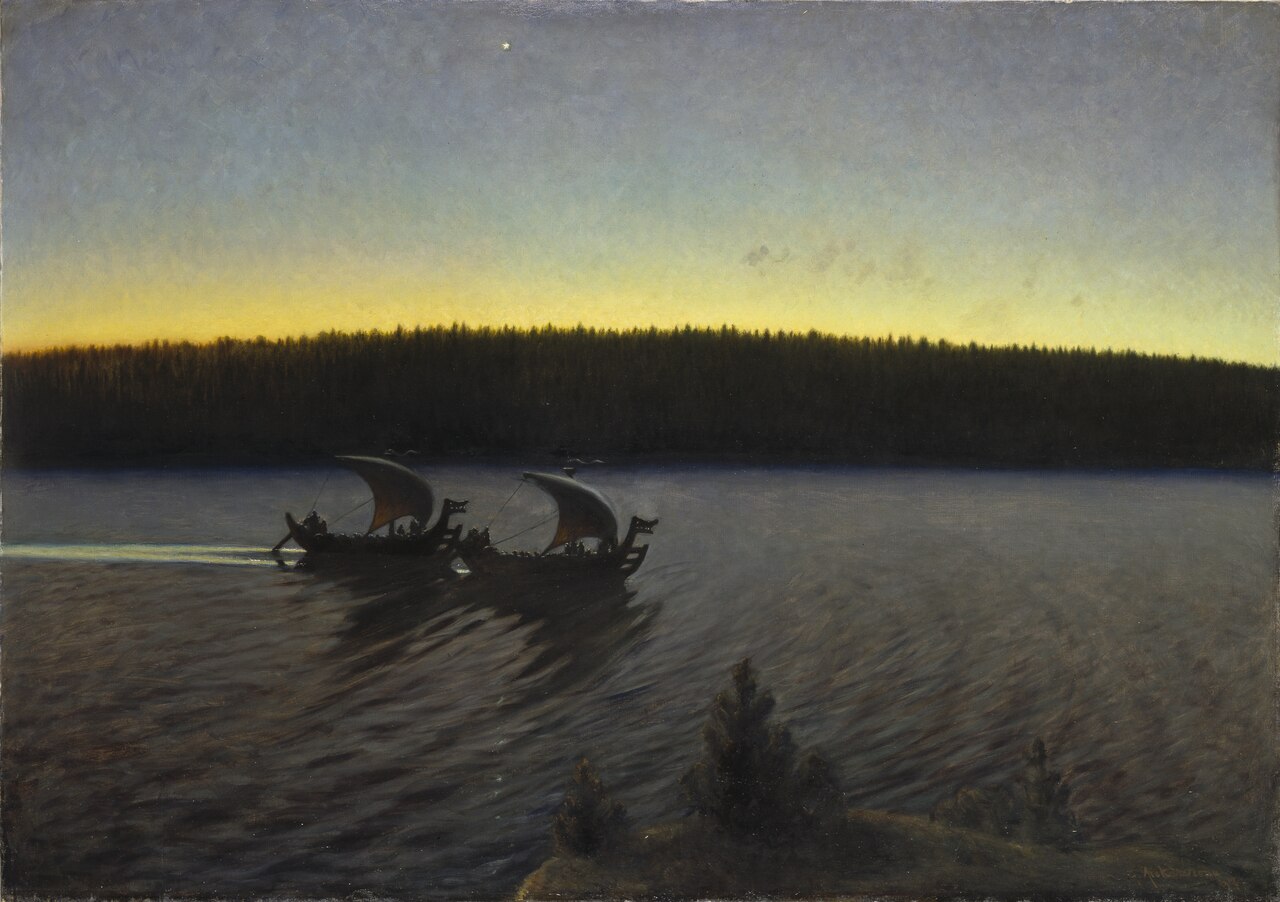


Early life Sten Gustaf Herman Ankarcrona was born in 1869 in the parish of Hakarp, a small community in the Dalarna region of central Sweden. Little is recorded about his family background, but the rural setting of his childhood left an indelible impression on his visual sensibilities. The stark, snow‑covered landscapes and the traditional ways of life that characterised Hakarp would later become recurring motifs in his paintings. Ankarcrona received his first artistic instruction locally, learning basic drawing techniques from a travelling instructor who visited the parish school. By his teenage years he had demonstrated a keen eye for detail and a fascination with the interplay of light and shadow on snowy fields.
Career and style In the early 1890s Ankarcrona moved to Stockholm to pursue formal training, enrolling at the Royal Swedish Academy of Arts. While the Academy’s curriculum was rooted in academic classicism, Ankarcrona gravitated towards subjects that reflected his native Dalarna. He never aligned himself with a specific avant‑garde movement; instead his work occupied a middle ground between naturalistic realism and the emerging national romanticism that celebrated Sweden’s folk culture. His paintings are characterised by a muted palette dominated by whites, greys and cool blues, punctuated by the occasional warm hue of a farmhouse roof or a farmer’s coat. The compositions often place solitary figures or working animals against expansive winter vistas, conveying both the harshness of the environment and the resilience of its inhabitants.
Signature techniques Ankarcrona’s technique was grounded in careful observation and a disciplined handling of oil paint. He employed a layered approach, beginning with a thin underpainting that established tonal values, then building up successive glazes to achieve depth and translucency in the snow. His brushwork varied from tight, controlled strokes for architectural details to broader, more expressive sweeps when rendering clouds or the texture of frozen ground. Light played a central role in his visual language; he frequently depicted the low winter sun low on the horizon, casting long, soft shadows that enhanced the sense of stillness. In addition to oil, Ankarcrona occasionally used watercolour for sketches, which he later refined into larger oil compositions.
Major works **In Days of Yore (1897)** – This canvas presents a nostalgic view of a Dalarna village during a winter festival. Figures in traditional costume gather around a central bonfire, while the surrounding houses are rendered with meticulous attention to timber framing. The work exemplifies Ankarcrona’s interest in cultural preservation, as he captured not only the visual but also the social atmosphere of a bygone era.
Oskar II, 1829‑1907, konung av Sverige och Norge (1897) – A formal portrait of King Oscar II, painted the same year as *In Days of Yore*. The king is shown in regal attire against a subdued background, allowing the focus to remain on his expression. The portrait reflects Ankarcrona’s ability to work within official commissions while maintaining his characteristic restrained palette.
Två oxar (1888) – One of his earlier pieces, this painting depicts a pair of oxen pulling a sled through a snow‑blanketed forest. The composition balances the massive, muscular forms of the animals with the delicate, powdery snow, showcasing Ankarcrona’s skill in rendering both texture and movement.
Slaget vid Narva (1886) – Though less directly linked to his Dalarna roots, this historical canvas illustrates the Battle of Narva (1700) during the Great Northern War. Ankarcrona approached the turbulent scene with the same winter‑light sensibility, using a cool colour scheme to underscore the bleakness of the battlefield. The work demonstrates his versatility in handling both genre and historical subjects.
Influence and legacy While Ankarcrona never achieved the international fame of some of his contemporaries, his contribution to Swedish art history is significant. He was an early advocate for the preservation of Dalarna’s vernacular architecture and folk traditions, documenting them through both paint and photography. His winter landscapes offered a visual record of a region undergoing rapid modernization, and they continue to serve as reference points for scholars studying rural Swedish life at the turn of the twentieth century. Moreover, his methodical approach to light and atmosphere influenced a generation of regional artists who sought to portray the northern Scandinavian environment with authenticity. Today, his works are held in several Swedish museum collections, and they remain popular among collectors interested in the intersection of art and cultural heritage.
Frequently asked questions
Who was Gustaf Ankarcrona?
Gustaf Ankarcrona (1869–1933) was a Swedish painter known for his rural, winter‑scene subjects and his early efforts to preserve Dalarna’s cultural heritage.
What artistic style or movement is he associated with?
He did not belong to a specific avant‑garde movement; his work blends naturalistic realism with elements of national romanticism, focusing on traditional Swedish life.
What are his most famous works?
Key works include *In Days of Yore* (1897), the royal portrait *Oskar II, 1829‑1907, konung av Sverige och Norge* (1897), *Två oxar* (1888), and the historical canvas *Slaget vid Narva* (1886).
Why is Ankarcrona important in art history?
He documented rural Dalarna at a time of rapid change, contributed to early cultural‑preservation initiatives, and influenced later Swedish artists interested in authentic northern landscapes.
How can I recognise an Ankarcrona painting?
Look for winter settings with a cool palette, careful rendering of snow’s translucency, and subjects drawn from Dalarna’s folk life—often featuring solitary figures, working animals, or traditional architecture.