Georg Pauli
1855 – 1935
In short
Georg Vilhelm Pauli (1855–1935) was a Swedish painter associated with Symbolism, noted for his portraits, figure paintings and a handful of significant works such as A Garden in Grez (1884) and Youths Bathing (1914). He also wrote several art‑related books and contributed proposals for public decoration, leaving a modest but lasting imprint on Swedish art history.
Notable works


Early life Georg Vilhelm Pauli was born on 12 October 1855 in the parish of Jönköpings Kristina, Sweden. Little is recorded about his family background, but his upbringing in the southern province of Småland exposed him to the region’s rich folk traditions and natural landscapes. He displayed an early aptitude for drawing, and after completing basic schooling he moved to Stockholm to pursue formal artistic training. In the capital, Pauli attended the Royal Swedish Academy of Fine Arts, where he was introduced to contemporary European trends and the emerging Symbolist aesthetic.
Career and style Pauli’s professional career began in the early 1880s, a period when Swedish art was shifting from academic realism toward more expressive, symbol‑laden approaches. His work quickly aligned with Symbolism, a movement that sought to convey metaphysical ideas through evocative imagery rather than literal representation. Pauli’s paintings often combine a muted colour palette with a subtle, dream‑like atmosphere, reflecting the movement’s preoccupation with inner states and allegory. While he is primarily remembered for portraiture and figure studies, his oeuvre also includes landscapes and narrative compositions that reveal a preoccupation with mythic and spiritual themes.
Throughout his career Pauli remained active in the Swedish art community. He exhibited regularly at the Royal Academy’s annual shows and participated in the prestigious Charlottenborg exhibitions in Copenhagen. In addition to painting, he authored several treatises on art theory and technique, contributing to the intellectual discourse surrounding modern Swedish art. His writings demonstrate a measured, scholarly perspective, emphasizing the importance of personal vision and symbolic content over strict academic conventions.
Signature techniques Pauli’s technique is characterised by a restrained yet expressive brushwork that balances fine detail with broader, atmospheric washes. He often employed a limited tonal range, favouring earth tones, deep blues and muted greens to create a sense of introspection. In portraiture, his handling of the human face is particularly nuanced; he captures subtle psychological cues through delicate modelling of light and shadow, allowing the sitter’s inner character to emerge. Pauli also made frequent use of chiaroscuro to heighten dramatic tension, especially in works that depict narrative or mythological subjects. The artist’s compositional choices—often centred on a solitary figure placed against a simplified background—enhance the symbolic weight of the scene.
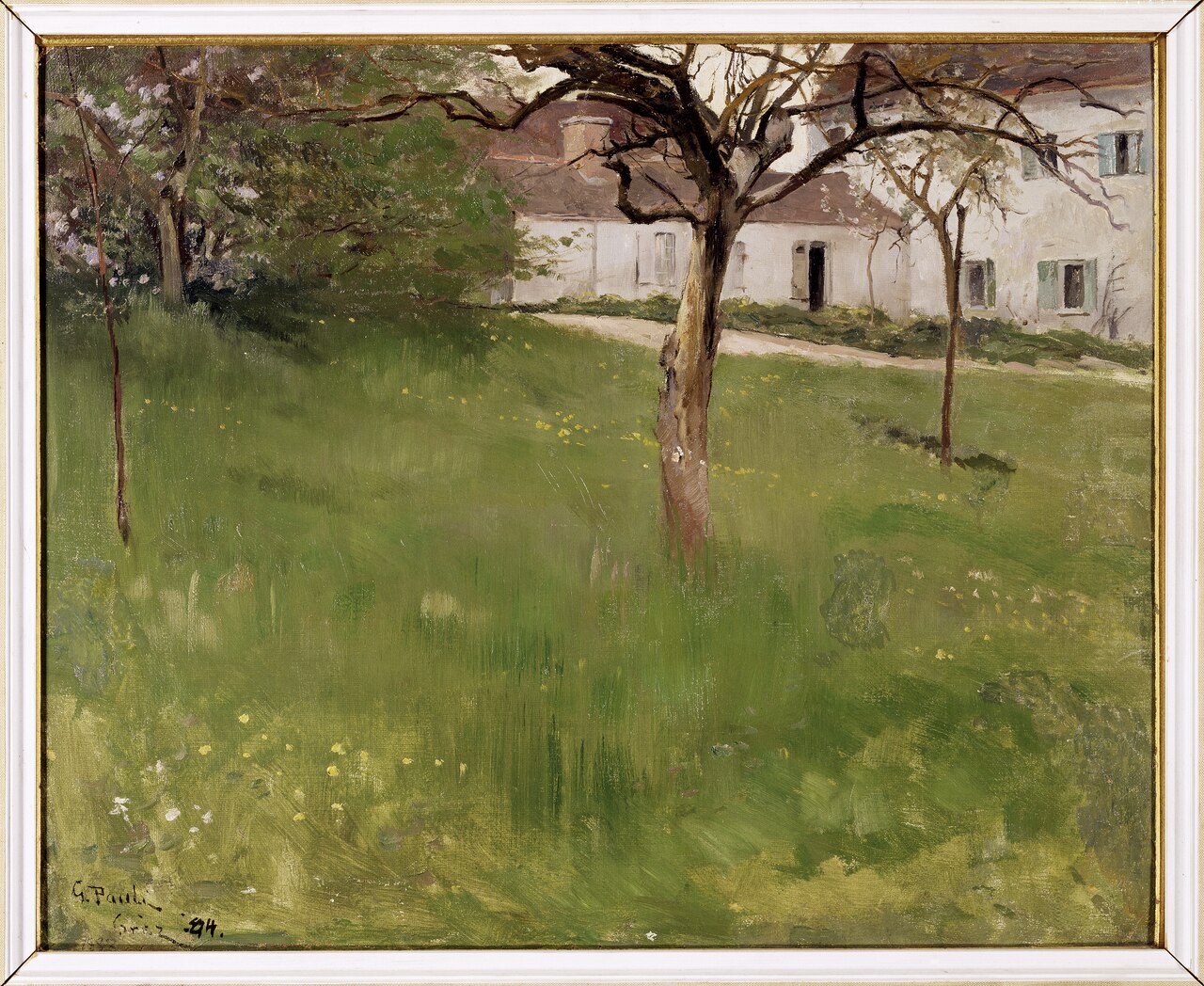
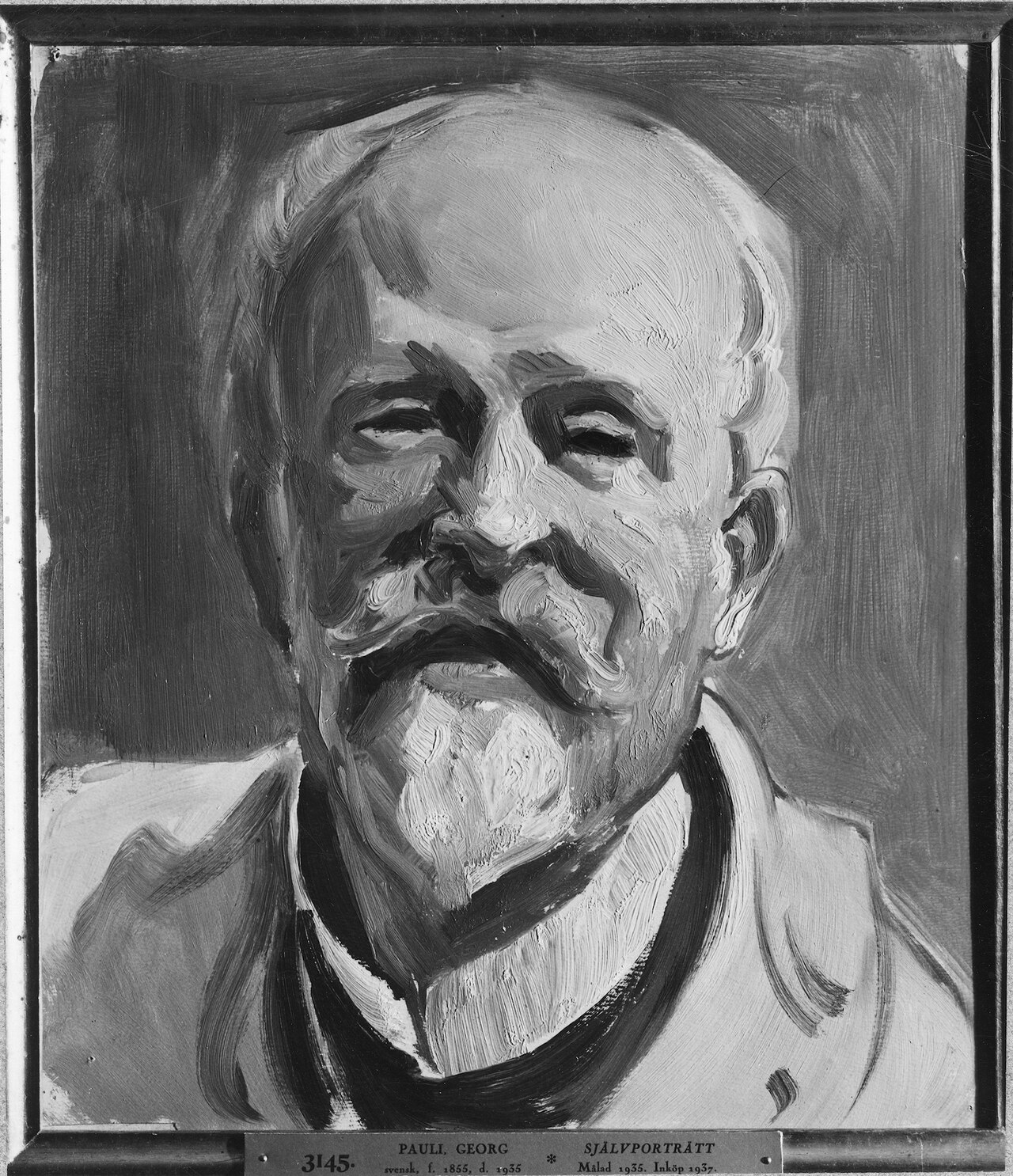
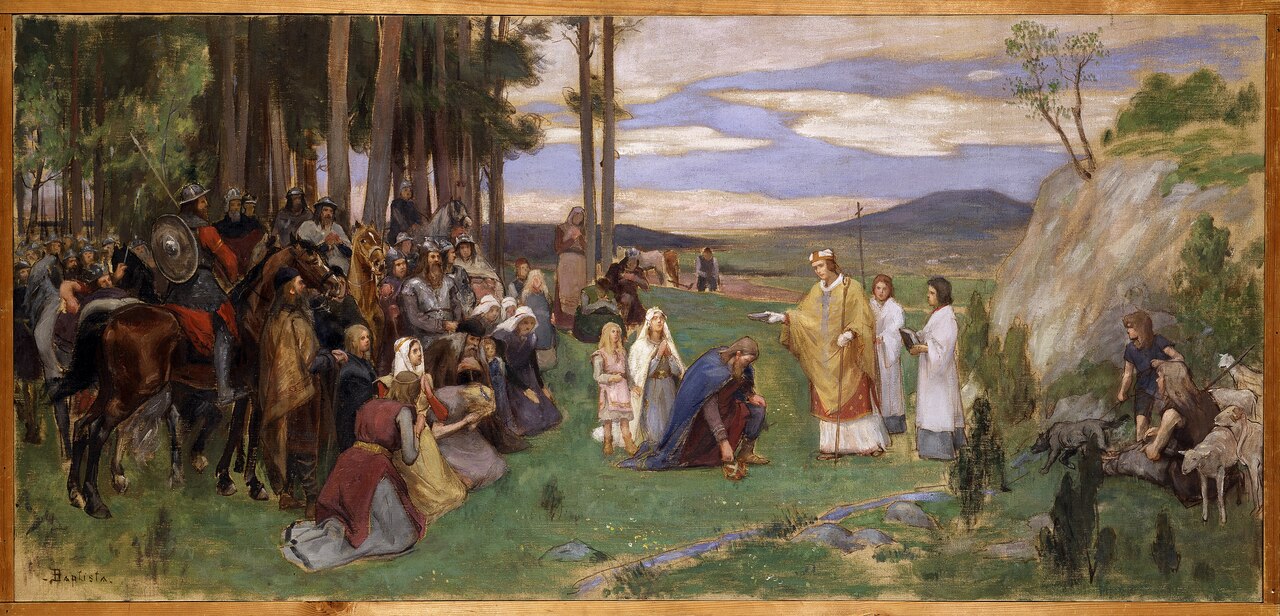
Major works Among Pauli’s most celebrated pieces is **A Garden in Grez** (1884), a tranquil scene that reflects both his early engagement with the French Barbizon school and his subsequent Symbolist leanings. The painting depicts a secluded garden, rendered with soft foliage and a muted light that suggests an intimate, almost contemplative space. **At the Bedside** (1885) follows a similar introspective mood, portraying a domestic interior where a figure tends to a patient, the composition imbued with a quiet sense of duty and compassion. In **Youths Bathing** (1914), Pauli returns to the human figure, presenting a group of young bodies in a natural setting; the work balances naturalistic observation with a subtle, idealised treatment that aligns with Symbolist ideals of purity and renewal. His self‑portrait, **Självporträtt** (1935), completed in the final year of his life, offers a candid yet dignified rendering of the artist, emphasizing the passage of time through gentle lines and a subdued colour scheme. Finally, Pauli’s proposal for the decoration of the Upper Hall of the National Museum—**Ansgar Preaching Christianity**—demonstrates his interest in historic and religious narratives, though the project remained unrealised. Together, these works illustrate Pauli’s evolving engagement with symbolism, portraiture, and narrative content.
Influence and legacy Georg Pauli’s influence on Swedish art is modest but discernible. By integrating Symbolist sensibilities with a strong foundation in academic training, he helped bridge the gap between nineteenth‑century realism and early twentieth‑century modernism in Sweden. His writings on artistic theory informed younger painters who sought a more intellectual approach to visual expression. Although he never achieved the international fame of contemporaries such as Anders Zorn, Pauli’s paintings continue to be exhibited in Swedish museums, and his contributions to the discourse on Symbolism remain a point of reference for scholars of Scandinavian art. His legacy endures primarily through the preservation of his works, which serve as exemplars of a period when Swedish painting was negotiating its place within broader European currents. Pauli died on 7 May 1935 in Botkyrka parish, leaving behind a body of work that, while not prolific, offers a clear window into the symbolic aspirations of his era.
Frequently asked questions
Who was Georg Pauli?
Georg Vilhelm Pauli (1855–1935) was a Swedish painter known for his Symbolist portraits and figure paintings, as well as for authoring several art‑related books.
What artistic movement is he associated with?
Pauli is most closely linked to Symbolism, a late‑19th‑century movement that emphasized the expression of ideas and emotions through symbolic imagery.
What are his most famous works?
His best‑known paintings include *A Garden in Grez* (1884), *At the Bedside* (1885), *Youths Bathing* (1914) and his self‑portrait *Självporträtt* (1935).
Why is Pauli important in art history?
He helped bridge Swedish academic realism with Symbolist modernism, and his theoretical writings influenced a generation of Swedish artists seeking a more intellectual approach to painting.
How can I recognise a Georg Pauli painting?
Look for a restrained colour palette, subtle chiaroscuro, and a focus on solitary or intimate figures set against simplified backgrounds that convey a quiet, symbolic mood.