Fredric Westin
1782 – 1862
In short
Fredric Westin (1782–1862) was a Swedish painter renowned for his history and portrait works, serving the royal court and aristocracy in the early 19th century. His oeuvre includes official royal portraits and mythological subjects, reflecting the neoclassical taste of his era.
Notable works

,_king_of_Sweden_and_Norway,_married_to_Desir%C3%A9e_Clary_-_NMGrh_1943_-_Nationalmuseum.jpg)
Early life Fredric Westin was born in Stockholm in 1782, a period when Sweden was emerging from the Age of Liberty and moving toward a more centralized monarchy. Little is recorded about his family background, but the capital’s vibrant artistic environment offered him early exposure to the visual arts. He likely began his formal training at the Royal Swedish Academy of Arts, the pre‑eminent institution for aspiring painters, where he would have studied drawing, anatomy, and the classical canon that dominated European academies at the time.
Career and style Westin’s career unfolded against the backdrop of the Napoleonic Wars and the ensuing political realignments that saw Sweden briefly united with Norway under a common monarch. By the 1810s he had established himself as a competent portraitist, gaining commissions from the royal household and the Swedish aristocracy. His style aligns with the late neoclassical tradition: clear modelling of forms, restrained colour palettes, and an emphasis on compositional balance. While the term "movement" is not applied to him in contemporary scholarship, his work reflects the broader European shift toward historicism, where painters sought to convey moral or national narratives through idealised representation.
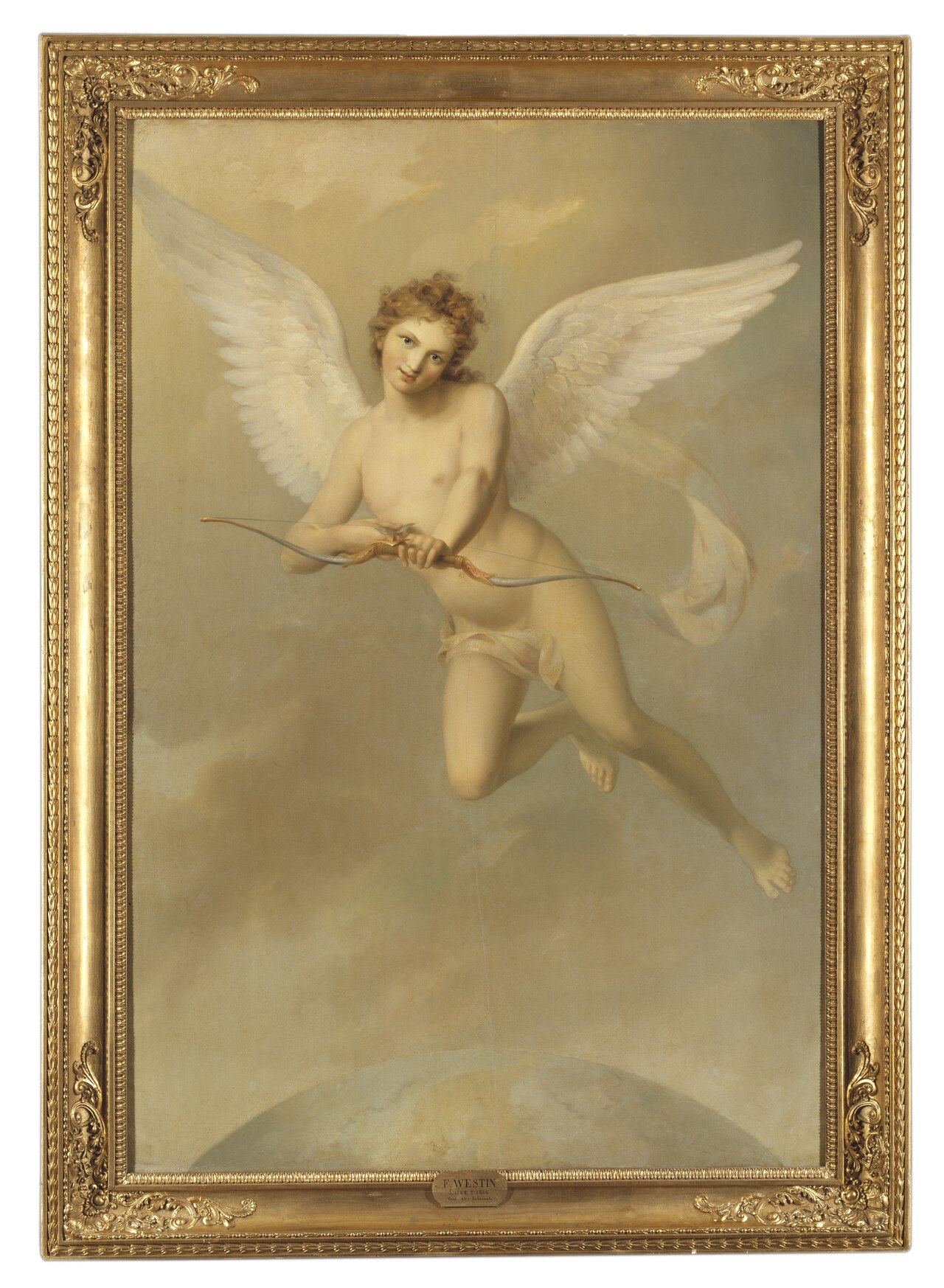
Signature techniques Westin’s technical hallmarks include meticulous underdrawing, often executed in fine charcoal or leadpoint, which provided a structural skeleton for his paintings. He favoured a layered glazing technique, applying thin, translucent oil layers to achieve depth in flesh tones and a luminous quality in fabrics. The subtle modulation of light across the figure’s anatomy—particularly in the rendering of cheekbones and the delicate play of shadow on drapery—became a recognisable trait. In his mythological pieces, such as the early work *Cupid* (1807), he employed a softer, more romantic brushstroke to convey the ethereal nature of the subject, contrasting with the tighter, more disciplined approach evident in his later royal portraits.
Major works Westin’s most celebrated royal portrait is that of **Oskar I**, painted in 1825. Oskar I (1799–1859) ruled Sweden and Norway, and Westin’s depiction captures the monarch’s regal bearing while adhering to the neoclassical ideal of dignified restraint. The portrait presents the king in a dark frock coat, with a subtly illuminated background that highlights the crown’s intricate detailing. The work was widely reproduced and served as an official image for state functions.
Another significant piece is Cupid (1807), an early foray into mythological subject matter. Here Westin portrays the winged deity with a youthful, almost mischievous expression, employing a delicate palette of pastel pinks and blues. The composition balances the figure against a muted sky, allowing the viewer to focus on the sculptural quality of the form.
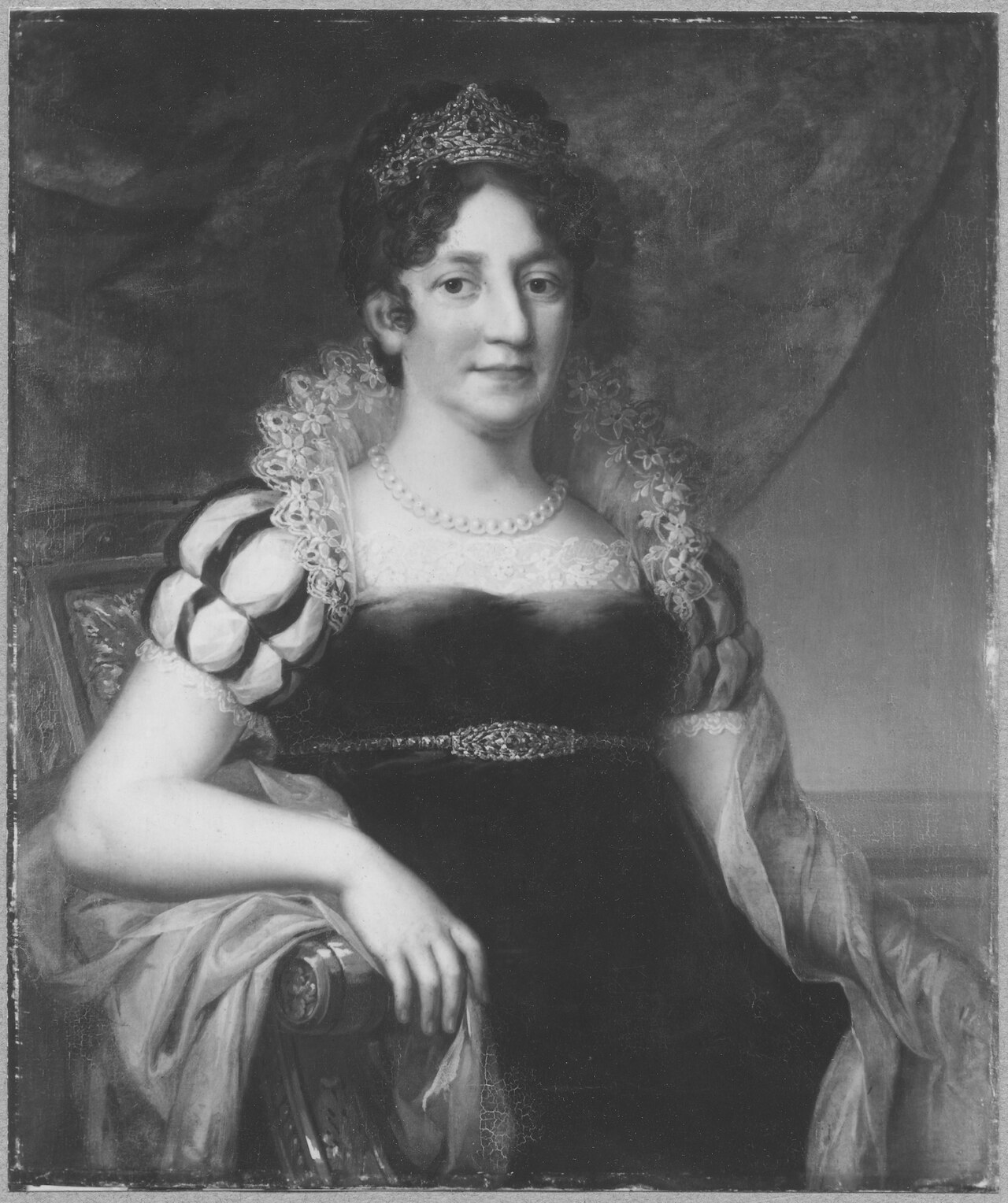
In 1816 Westin painted the Portrait of Hedvig Elisabeth Charlotte of Holstein‑Gottorp, a member of the Swedish royal family noted for her cultural patronage. The portrait reflects a softer, more intimate approach; Hedvig’s attire is rendered with fine attention to lace and silk textures, while her gaze conveys both poise and personal depth. This work underscores Westin’s ability to blend formal representation with a sense of individual character.
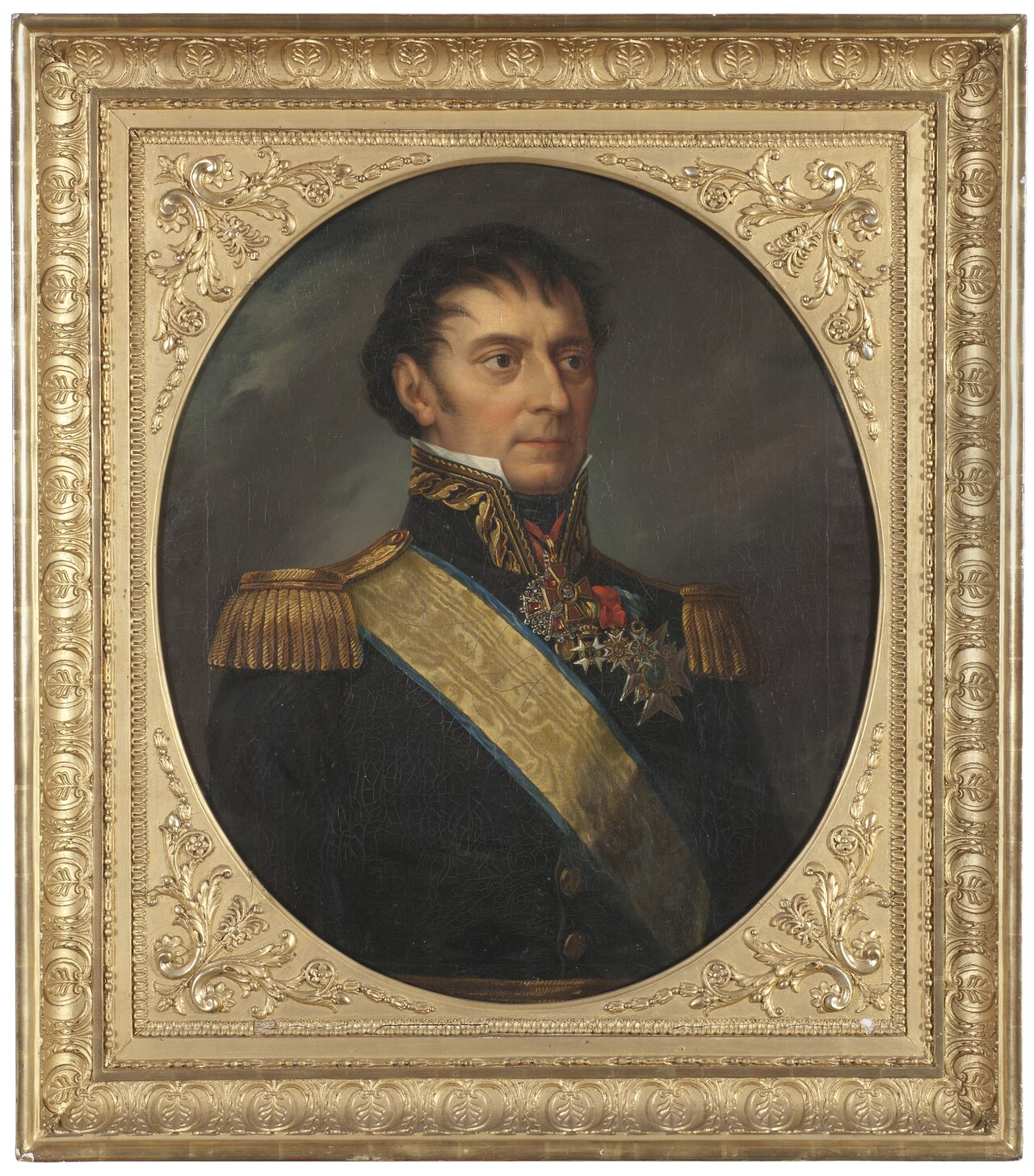
The portrait of Karl XIV Johan (1763–1844), king of Sweden and Norway, demonstrates Westin’s skill in rendering sovereign authority. Karl XIV Johan, formerly Jean‑Baptiste Bernadotte, was a French marshal who ascended to the Swedish throne. Westin’s depiction emphasizes the monarch’s military background through the inclusion of a uniform and insignia, while the backdrop features subtle references to both Swedish and Norwegian heraldry, symbolising the dual monarchy.
Lastly, the portrait of Louis Marie de Camps (1765‑1844), a Major General, offers insight into Westin’s treatment of military subjects. Louis Marie is shown in full dress uniform, his posture erect and commanding. The painting’s composition, with the general’s hands clasped in front of a darkened drapery, reinforces the dignity of the officer class and reflects Westin’s capacity to convey rank through visual cues.
Influence and legacy Although Westin never achieved the international fame of contemporaries such as Johan Christian Dahl, his contributions to Swedish court painting were substantial. By providing a visual record of the early 19th‑century Swedish monarchy, he helped shape the nation’s visual identity during a period of political consolidation. His works were displayed in royal palaces and later reproduced in prints, influencing subsequent generations of portrait painters who emulated his compositional clarity and disciplined technique.
Westin’s legacy persists in the collections of the Nationalmuseum in Stockholm, where several of his portraits are on permanent display. Art historians regard his oeuvre as a valuable barometer of Swedish neoclassicism, bridging the gap between the Enlightenment’s rational aesthetic and the emergent Romantic sensibility that would dominate later in the century. Though the art market today values his paintings modestly compared with more avant‑garde peers, his contributions remain essential for scholars tracing the evolution of Swedish portraiture and the visual representation of monarchy in the post‑Napoleonic era.
In sum, Fredric Westin stands as a representative figure of Sweden’s early‑19th‑century artistic establishment—an adept painter whose disciplined approach to portraiture and history painting provided the visual language for a nation redefining its identity on the European stage.
Frequently asked questions
Who was Fredric Westin?
Fredric Westin (1782–1862) was a Swedish painter known for his history and portrait works, especially official portraits of the Swedish royal family.
What artistic style or movement is Westin associated with?
Westin worked within the late neoclassical tradition, emphasizing balanced composition, clear modelling, and a restrained colour palette.
What are his most famous works?
His most notable paintings include the 1825 portrait of King Oskar I, the mythological *Cupid* (1807), the 1816 portrait of Hedvig Elisabeth Charlotte, the portrait of King Karl XIV Johan, and the portrait of Major General Louis Marie de Camps.
Why is Westin important in art history?
He provided a visual record of Sweden’s early‑19th‑century monarchy, helping to shape the nation’s visual identity and influencing later Swedish portrait painters.
How can I recognise a Fredric Westin painting?
Look for meticulous underdrawing, layered glazing that gives flesh a luminous quality, and a composed, dignified representation of subjects—often with subtle lighting and fine detail in clothing.