Fanny Brate
1861 – 1940
In short
Fanny Brate (1861–1940) was a Swedish painter renowned for intimate genre scenes of family life, whose work anticipated the domestic interiors later popularised by Carl Larsson.
Notable works

Early life Fanny Ingeborg Matilda Brate was born in 1861 in the Royal Court Parish of Stockholm, Sweden. She grew up in a middle‑class household that valued education and the arts, a background that provided her with early exposure to drawing and literature. After completing her primary schooling, Brate pursued formal artistic training in Stockholm, attending the Royal Swedish Academy of Fine Arts where she received instruction in drawing, composition, and the techniques of oil painting. The academy’s curriculum, which emphasized both academic rigour and observation of everyday life, shaped Brate’s later focus on genre scenes.
Career and style After graduating, Brate established herself as a professional painter in the late 19th century, a period when Swedish art was increasingly turning toward realism and the depiction of contemporary domestic life. She exhibited regularly at the Swedish Artists’ Association and at the annual exhibitions of the Royal Academy, gaining recognition for her ability to capture quiet moments within the home. Brate’s style is characterised by a clear, gentle realism; she employed a restrained palette dominated by earth tones and soft lighting, which conveyed a sense of warmth and intimacy. Her compositions often centre on women and children engaged in everyday tasks—cooking, sewing, playing—rendered with a calm observational eye rather than overt sentimentality.
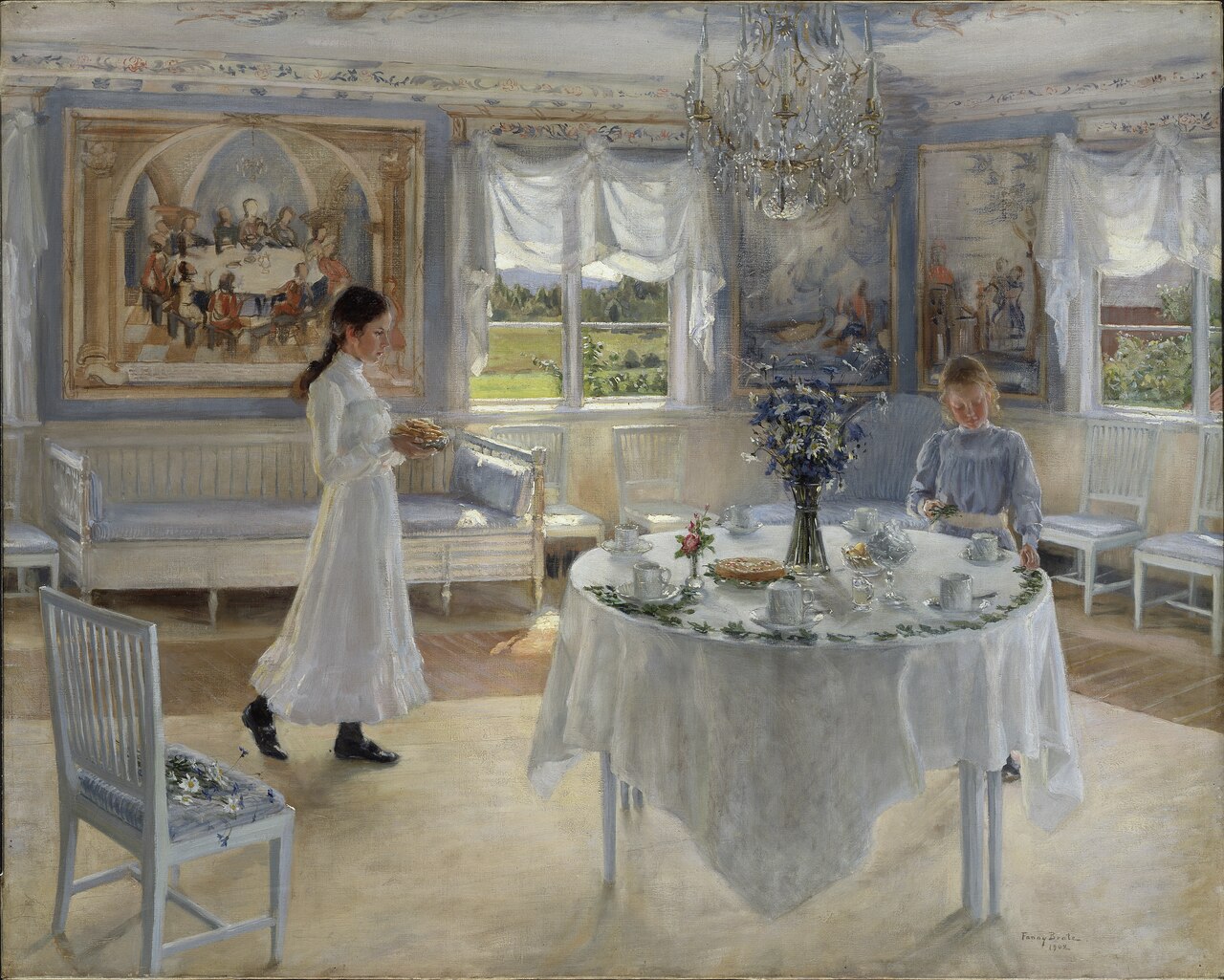
Signature techniques Brate’s paintings are distinguished by several technical hallmarks. She favoured a smooth, almost invisible brushstroke, allowing the narrative content of the work to dominate. Light is handled with subtle gradations, often entering the interior spaces through windows to create a delicate interplay of illumination and shadow. Brate paid close attention to the texture of fabrics and domestic objects, using fine layering to suggest the tactile qualities of clothing, wood, and porcelain. Her colour choices are typically muted, with occasional accent hues—such as a splash of red in a tablecloth—to draw the viewer’s eye to focal points within the scene. These techniques combine to produce a tranquil, almost photographic quality that reinforces the everyday realism of her subjects.
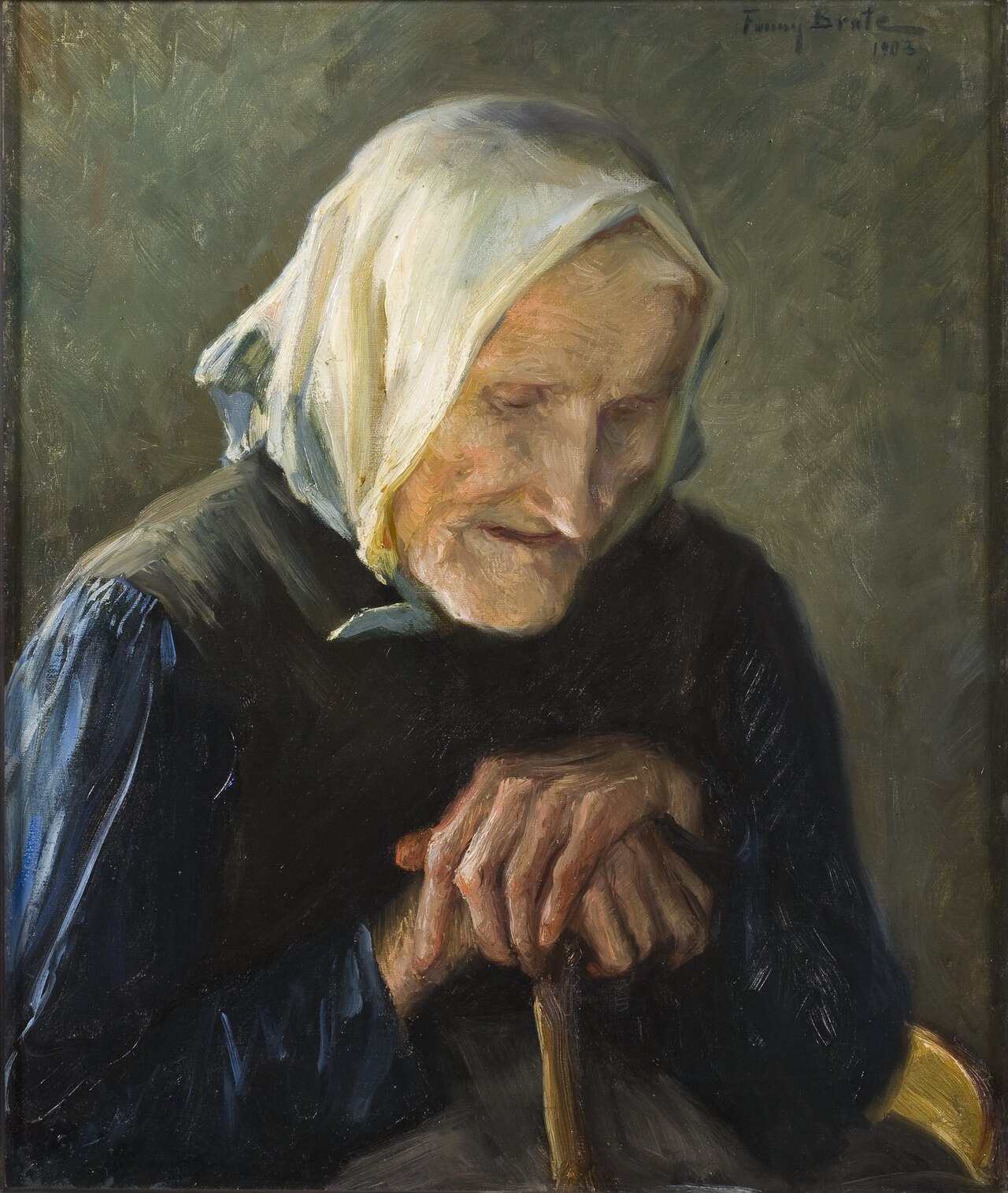
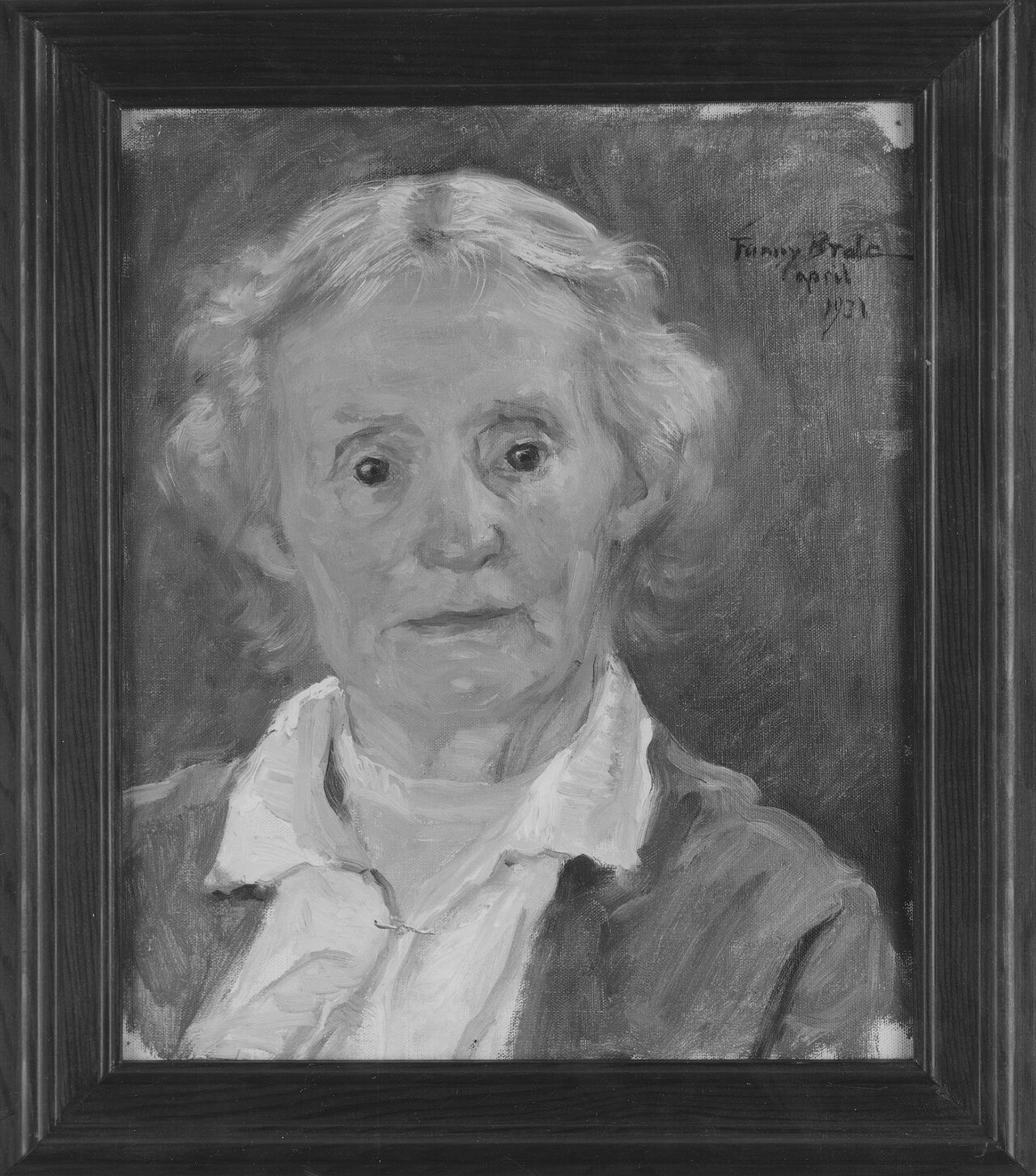
Major works - **Sunshine (1898)** – This early masterpiece depicts a sunlit kitchen where a mother and child are seated at a table. The title reflects the literal daylight flooding the room, while also symbolising the warmth of familial bonds. Brate’s handling of light, with bright patches on the walls and a soft glow on the figures’ faces, exemplifies her skill in rendering atmospheric effects. - **A Day of Celebration (1902)** – In this work, Brate portrays a festive domestic scene, likely a birthday or holiday gathering. The composition is bustling yet orderly, with multiple figures interacting around a central table laden with food and decorations. The painting’s narrative richness and attention to detail make it a key example of her genre focus. - **The Old Blind Woman (1903)** – Departing from the typical family tableau, this painting shows an elderly woman seated in a modest interior, her eyes closed. The work conveys compassion and dignity, highlighting Brate’s ability to render emotional depth without melodrama. The subdued colour scheme and careful rendering of the woman’s hands underscore the artist’s empathetic observation of everyday life. - **Eleonora Amalia Maria Adelborg (1931)** – This later portrait captures the likeness of a Swedish cultural figure, likely a patron of the arts. Though a departure from Brute’s usual domestic scenes, the portrait retains her characteristic softness and attentiveness to the subject’s expression, confirming her continued relevance in Swedish artistic circles well into the 1930s.
Influence and legacy Fanny Brate’s contribution to Swedish art lies in her nuanced portrayal of domestic interiors, a theme that would later be celebrated by Carl Larsson, whose own household scenes achieved international fame. While Larsson’s work is more colourful and decorative, scholars note that Brate’s earlier, more subdued compositions provided a visual template for the exploration of everyday Swedish life. Brate’s paintings also offer valuable insight into gender roles and family structures at the turn of the twentieth century, making them important resources for cultural historians. Though she did not align herself with a specific avant‑garde movement, her commitment to realism and narrative sincerity placed her within the broader Nordic realist tradition. Today, Brate’s works are held in the collections of Swedish museums such as the Nationalmuseum in Stockholm, and they continue to be exhibited in retrospectives that reassess the contributions of women artists to the development of modern Scandinavian art.
Frequently asked questions
Who was Fanny Brate?
Fanny Brate (1861–1940) was a Swedish painter noted for her realistic genre scenes of family life, particularly domestic interiors.
What artistic style or movement is she associated with?
She worked within a realist tradition, focusing on everyday domestic subjects rather than aligning with a specific avant‑garde movement.
What are her most famous works?
Key paintings include Sunshine (1898), A Day of Celebration (1902), The Old Blind Woman (1903) and the portrait Eleonora Amalia Maria Adelborg (1931).
Why is Fanny Brate important in art history?
Her intimate depictions of Swedish household life prefigured and influenced later artists such as Carl Larsson, and they provide valuable cultural insight into early‑20th‑century domestic life.
How can I recognise a painting by Fanny Brate?
Look for calm, realistic interiors with soft lighting, muted colours, smooth brushwork, and a focus on family members engaged in ordinary tasks.