Ester Almqvist
1869 – 1934
In short
Ester Almqvist (1869–1934) was a Swedish painter recognised as a pioneer of Expressionist painting in Sweden. Born in Bromma parish and dying in Lund Cathedral parish, she produced a body of work that combined vivid colour, emotive brushwork and a focus on rural and religious themes.
Notable works


Early life Ester Dorothea Almqvist was born in 1869 in the parish of Bromma, on the outskirts of Stockholm. She grew up in a modest family that valued education and the arts, which encouraged her early interest in drawing. After completing her primary schooling, Almqvist pursued formal artistic training at the Royal Swedish Academy of Arts in Stockholm, where she was introduced to the academic conventions of the time as well as emerging European trends.
Career and style Almqvist began exhibiting in the early 1890s, initially working within the realist tradition that dominated Swedish painting. Over the first decade of the twentieth century she encountered the work of French Fauves and German Expressionists, whose bold colour palettes and emotional intensity resonated with her own sensibilities. By the 1910s she had embraced a more expressive mode, characterised by heightened chromatic contrasts, thick impasto and a willingness to distort form for emotional effect. This shift placed her among the earliest Swedish artists to adopt Expressionist principles, predating the more widely recognised Swedish Expressionist group that coalesced after the First World War.
Almqvist’s subjects were often drawn from everyday life in the Swedish countryside—farmers, harvesters, and domestic interiors—yet she also tackled religious and allegorical themes. Her paintings convey a deep empathy for her subjects, using colour and brushstroke to articulate mood rather than literal description. While she never aligned herself with a formal movement, critics have frequently situated her work within the broader context of early Scandinavian Expressionism.
Signature techniques Almqvist’s technique is notable for several recurring elements:
* Vivid, non‑naturalistic colour – She employed saturated reds, blues and yellows to foreground emotional content, often juxtaposing complementary hues to create tension. * Thick, textured brushwork – Using a palette knife and heavy brushstrokes, she built a palpable surface that emphasizes the materiality of paint. * Simplified forms – Figures and objects are rendered with reduced detail, allowing the viewer to focus on the overall composition and atmosphere. * Dramatic lighting – Many of her works feature stark contrasts of light and shadow, reminiscent of the chiaroscuro of earlier masters but reinterpreted through a modern, expressive lens. * Narrative focus – Even when abstracted, her paintings retain a clear narrative intent, whether depicting a village scene or a biblical episode.
These techniques combine to produce images that are simultaneously grounded in familiar subjects and elevated through a highly personal visual language.
Major works Almqvist’s oeuvre includes several works that have become reference points for her style:
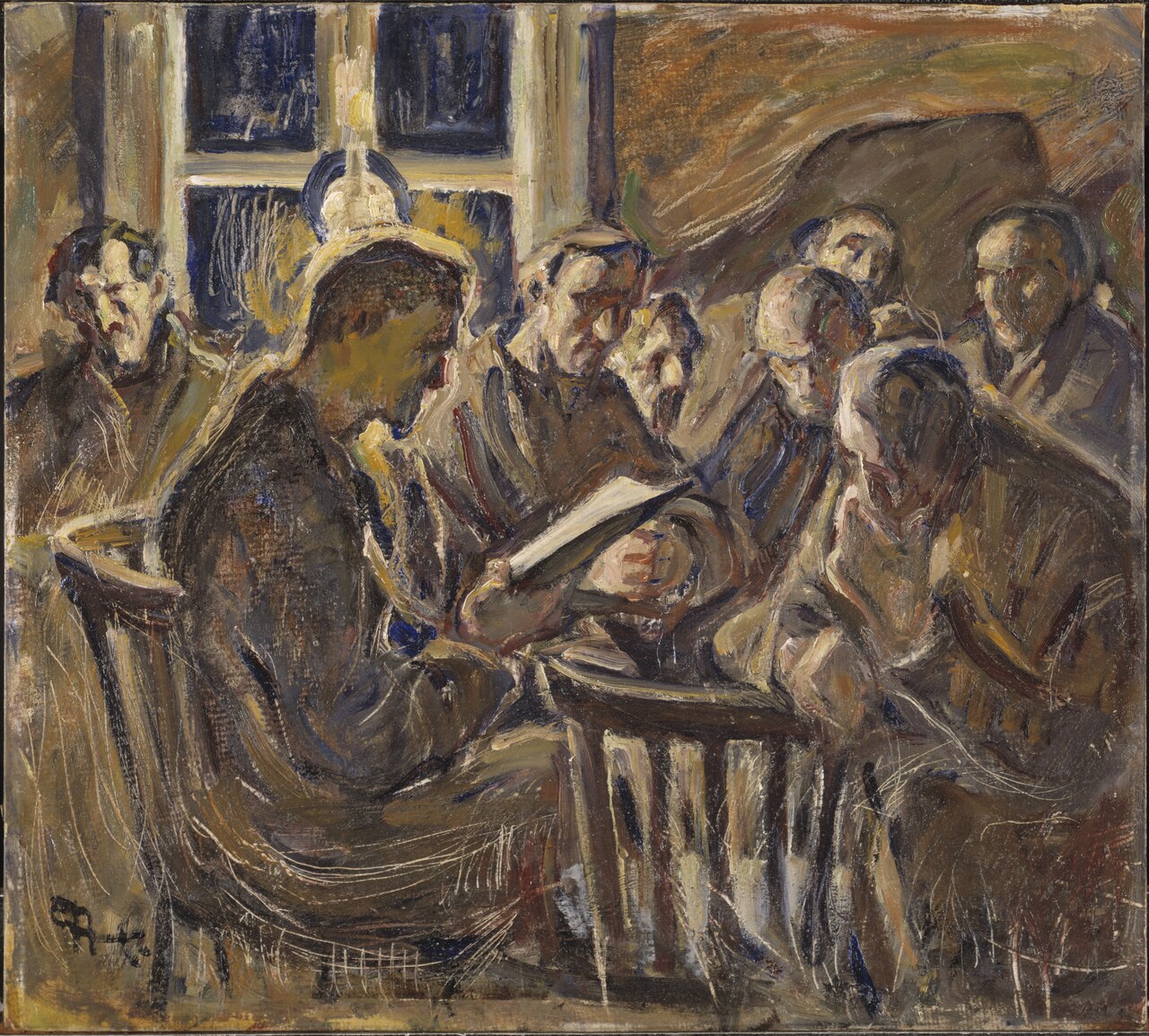
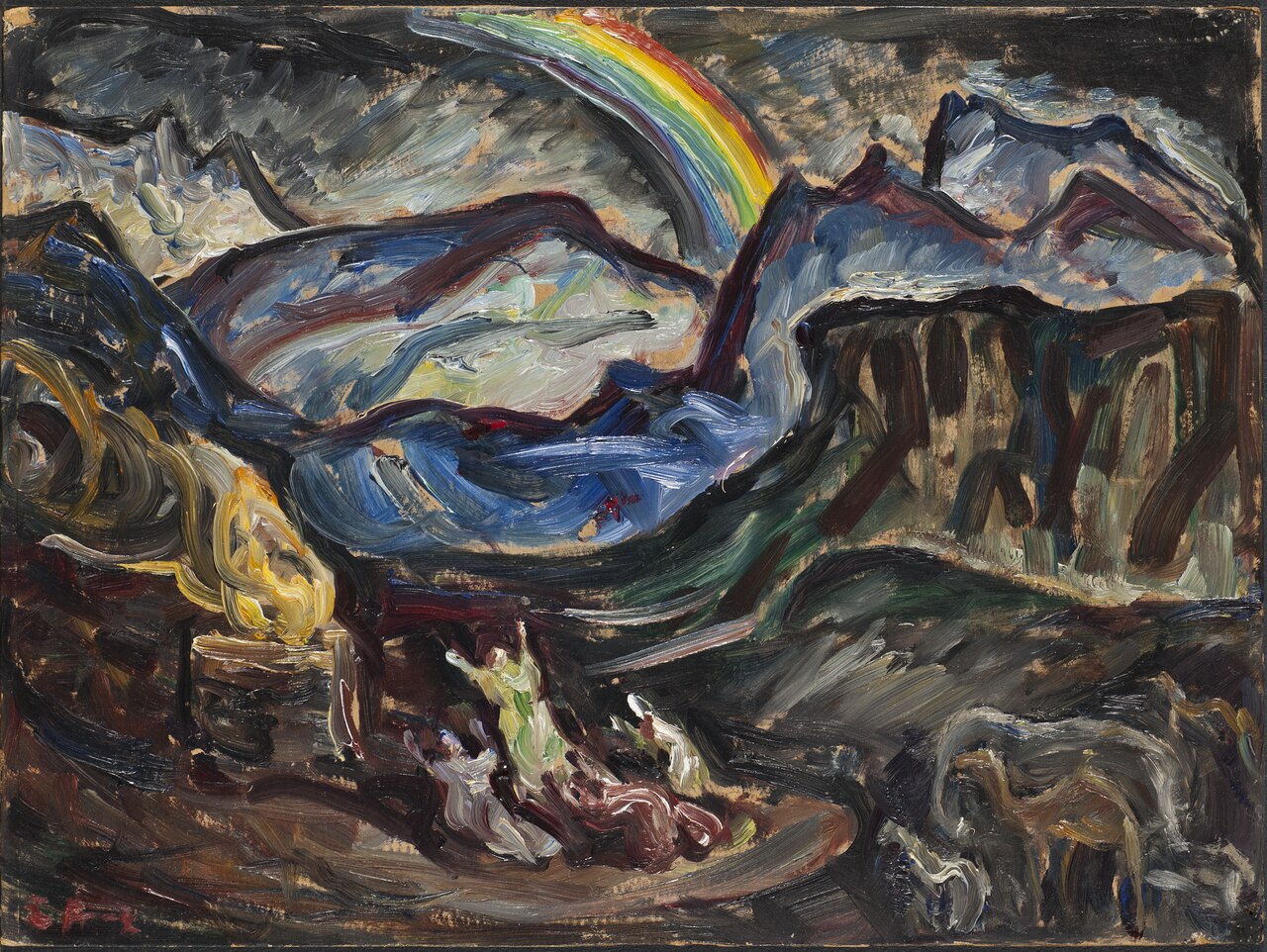
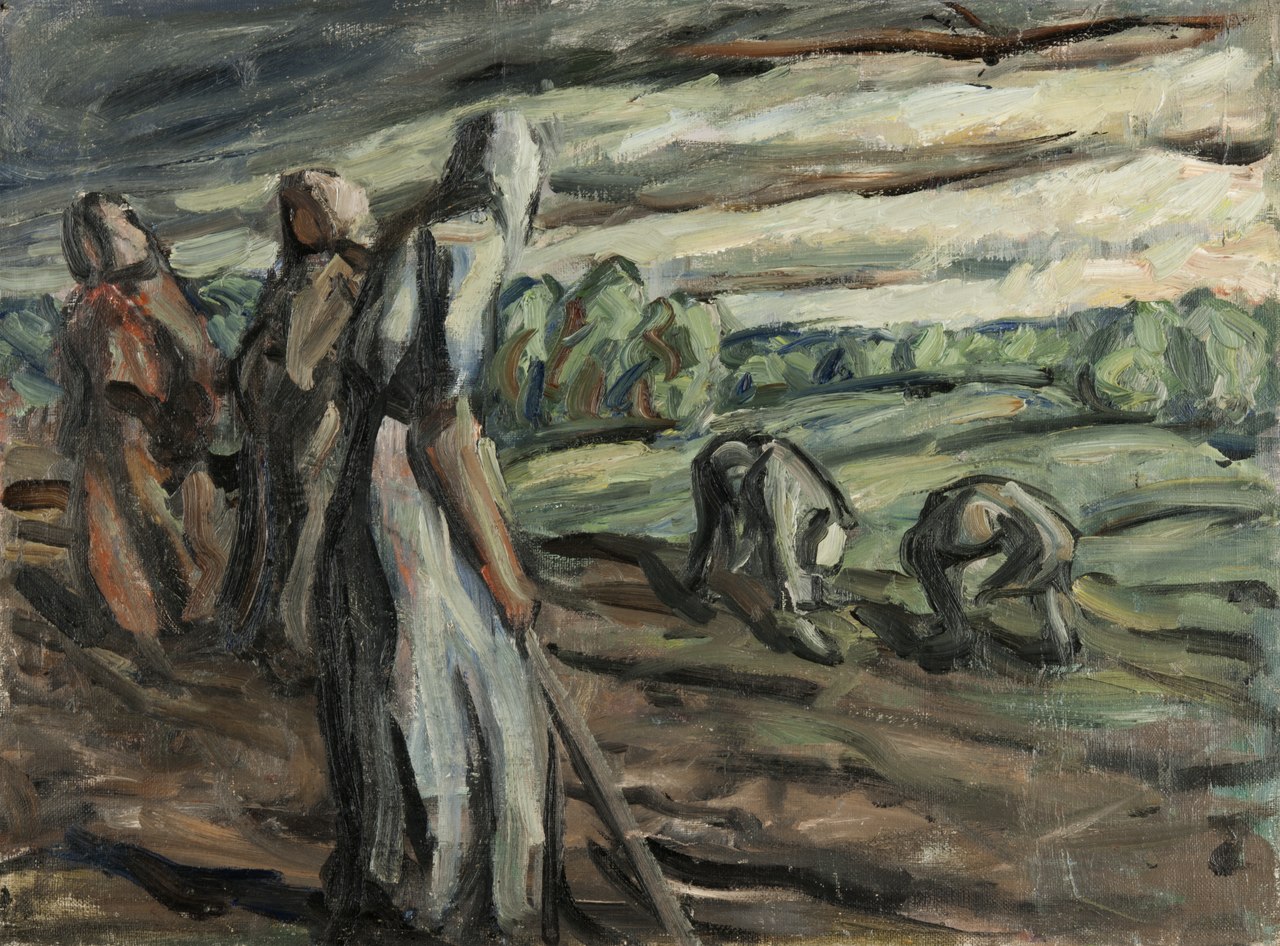
* Old fashioned priest’s daughter (1890) – One of her earliest surviving pieces, this painting presents a young woman in a modest interior, rendered with a subdued palette. Though still within a realist framework, the work hints at an emerging concern with the inner life of the subject. * The Sawmill, December sun (1914) – A landscape of a sawmill bathed in low winter light, the canvas is dominated by deep blues and stark whites. The thick application of paint captures the chill of the season while the composition underscores the industrial intrusion into rural settings. * Potato Pickers (1924) – This canvas depicts agricultural labourers amid a field of potatoes. Almqvist uses bold, earthy tones and vigorous brushwork to convey the physicality of the work and the communal spirit of the harvest. * Noah’s Thank‑offering – A biblical scene in which the artist reinterprets the traditional narrative with a modern colour scheme. The figures are simplified, and the emphasis lies on the act of gratitude expressed through luminous, saturated hues. * The Meeting (1929) – Perhaps her most celebrated piece, it portrays a small group of villagers gathered in a rustic interior. The painting’s dramatic lighting, intense reds and blues, and expressive handling of figures exemplify Almqvist’s mature Expressionist style.
Each of these works demonstrates her commitment to portraying human experience through colour and texture, while also reflecting the evolving artistic concerns of early twentieth‑century Sweden.
Influence and legacy Ester Almqvist’s contribution to Swedish art lies in her early adoption of Expressionist principles and her ability to integrate them with distinctly Scandinavian subjects. By the 1920s she had become a respected figure within Stockholm’s artistic circles, influencing younger painters who sought to break away from academic realism. Her work is represented in the collections of the Nationalmuseum in Stockholm and the Moderna Museet, and several regional museums hold her paintings in permanent display.
Although she never achieved the international fame of some of her contemporaries, art historians credit Almqvist with paving the way for the later Swedish Expressionist movement that flourished in the 1930s and 1940s. Her paintings continue to be studied for their innovative use of colour and their empathetic portrayal of rural life, and recent exhibitions have reassessed her role as a pioneering female artist in a largely male‑dominated field.
Today, Almqvist is recognised not only for her artistic achievements but also for her contribution to the broader cultural narrative of Sweden, where she helped to articulate a visual language that could express both personal and collective emotions during a period of rapid social change.
Frequently asked questions
Who was Ester Almqvist?
Ester Almqvist (1869–1934) was a Swedish painter known as a pioneer of Expressionist painting in Sweden.
What style or movement is she associated with?
She is associated with early Swedish Expressionism, characterised by vivid colour, thick brushwork and emotive subjects.
What are her most famous works?
Her most frequently cited works include The Meeting (1929), Potato Pickers (1924), The Sawmill, December sun (1914), Old fashioned priest’s daughter (1890) and Noah’s Thank‑offering.
Why is Ester Almqvist important in art history?
She introduced Expressionist techniques to Swedish painting, influencing later artists and helping to shape a distinctly modern visual language in early‑20th‑century Sweden.
How can I recognise an Ester Almqvist painting?
Look for bold, non‑naturalistic colour, thick impasto, simplified forms and a strong narrative focus, often depicting rural or religious scenes with dramatic lighting.