Ernst Josephson
1851 – 1906
In short
Ernst Josephson (1851–1906) was a Swedish painter and poet associated with Symbolism, noted for his portraits and genre scenes that explored Swedish folklore. He produced a small but influential body of work, including The Water Sprite and Spanish Smiths, before his death in Stockholm.
Notable works


Early life Ernst Josephson was born in Stockholm in 1851 into a family with artistic leanings. His father, a civil servant, encouraged his early interest in drawing, and Josephson enrolled at the Royal Swedish Academy of Fine Arts in his teens. The Academy provided a solid grounding in academic drawing and painting techniques, while also exposing him to the burgeoning ideas of the European avant‑garde. During his student years he travelled to Germany and France, absorbing contemporary trends such as Realism and the early stirrings of Symbolism. These formative experiences shaped his later willingness to blend meticulous draftsmanship with more subjective, poetic content.
Career and style Returning to Stockholm after his studies, Josephson established himself as a portraitist, securing commissions from the city's bourgeoisie and cultural elite. While his early works adhered closely to the academic conventions of the Academy, he soon began to experiment with a more introspective visual language. Influenced by the Symbolist movement that was gaining traction in Paris, Josephson infused his paintings with allegorical references, muted colour palettes, and a heightened sense of atmosphere. He also cultivated a parallel literary output, publishing poetry that echoed the same preoccupation with inner emotion and mythic resonance. Over time his oeuvre expanded to include genre scenes that depicted Swedish folk life, but always through a lens that emphasized psychological depth rather than mere documentary realism.
Signature techniques Josephson’s technique combined disciplined drawing with a nuanced handling of paint. He favoured a restrained palette of earth tones, greys and deep blues, using thin glazes to suggest translucency and to evoke a dream‑like quality. In portraiture he rendered facial features with exacting precision, yet softened the surrounding context to focus the viewer’s attention on the sitter’s inner state. His brushwork was often delicate, creating subtle texture in fabrics and foliage while avoiding overtly impastoed surfaces. A characteristic compositional device was the placement of the subject against a simplified, often ambiguous background, which allowed symbolic elements—such as a distant landscape or a mythic creature—to emerge without distracting from the central figure. The interplay of light and shadow in his works frequently alludes to the tension between the visible world and the unseen emotional realm.
Major works Josephson’s most celebrated paintings demonstrate his synthesis of portraiture, folklore and Symbolist mood.
- The Water Sprite (1882) – This canvas portrays a luminous, ethereal figure emerging from a reflective pool. The sprite’s delicate form, rendered in cool blues and silvery highlights, exemplifies Josephson’s skill at rendering translucency. The work is often interpreted as a visual poem on the fleeting nature of inspiration and the allure of the supernatural.
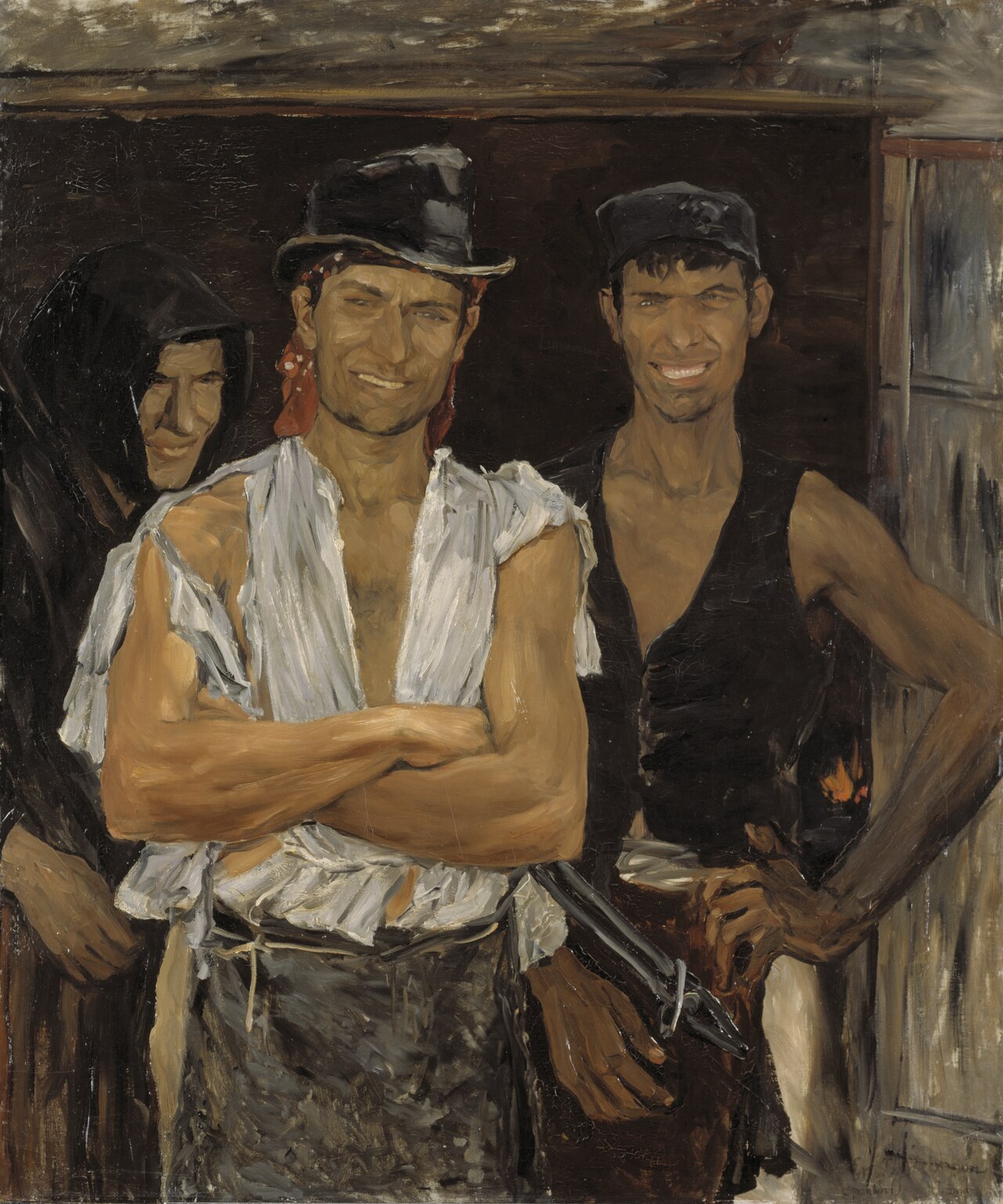
- Spanish Smiths (1881) – In this genre scene Josephson depicts a group of labourers in a rustic setting, their muscular bodies illuminated by a warm, golden light. Though the subject matter is rooted in everyday activity, the composition carries a subtle heroic tone, hinting at the dignity of manual work and the mythic archetype of the craftsman.
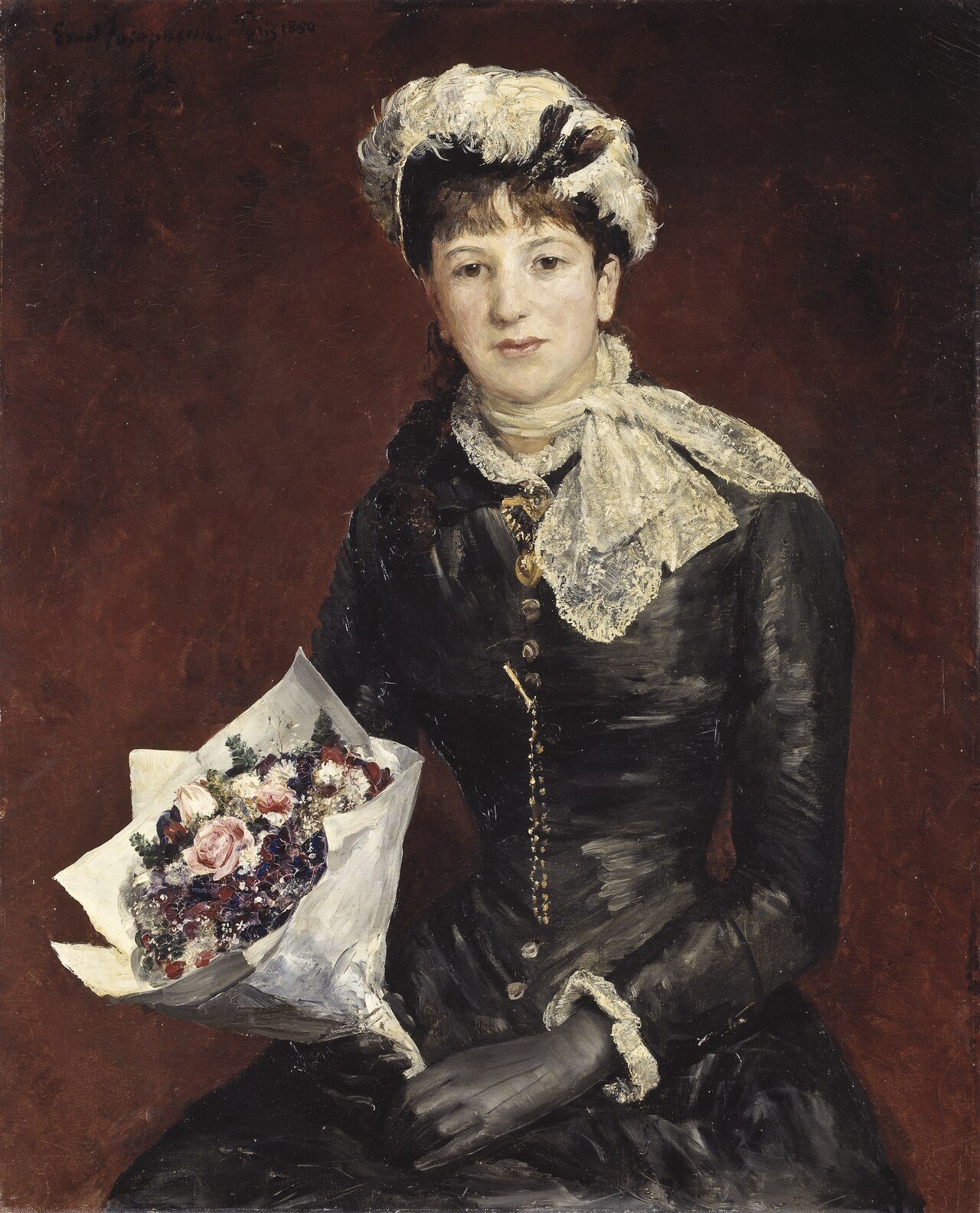
- Miss Anna Bagge, née Heyman (1880) – A portrait of a young woman from Stockholm’s middle class, this painting showcases Josephson’s refined technique in facial rendering. The sitter’s thoughtful gaze and the muted background combine to convey both individuality and an introspective ambience, hallmarks of his Symbolist approach.
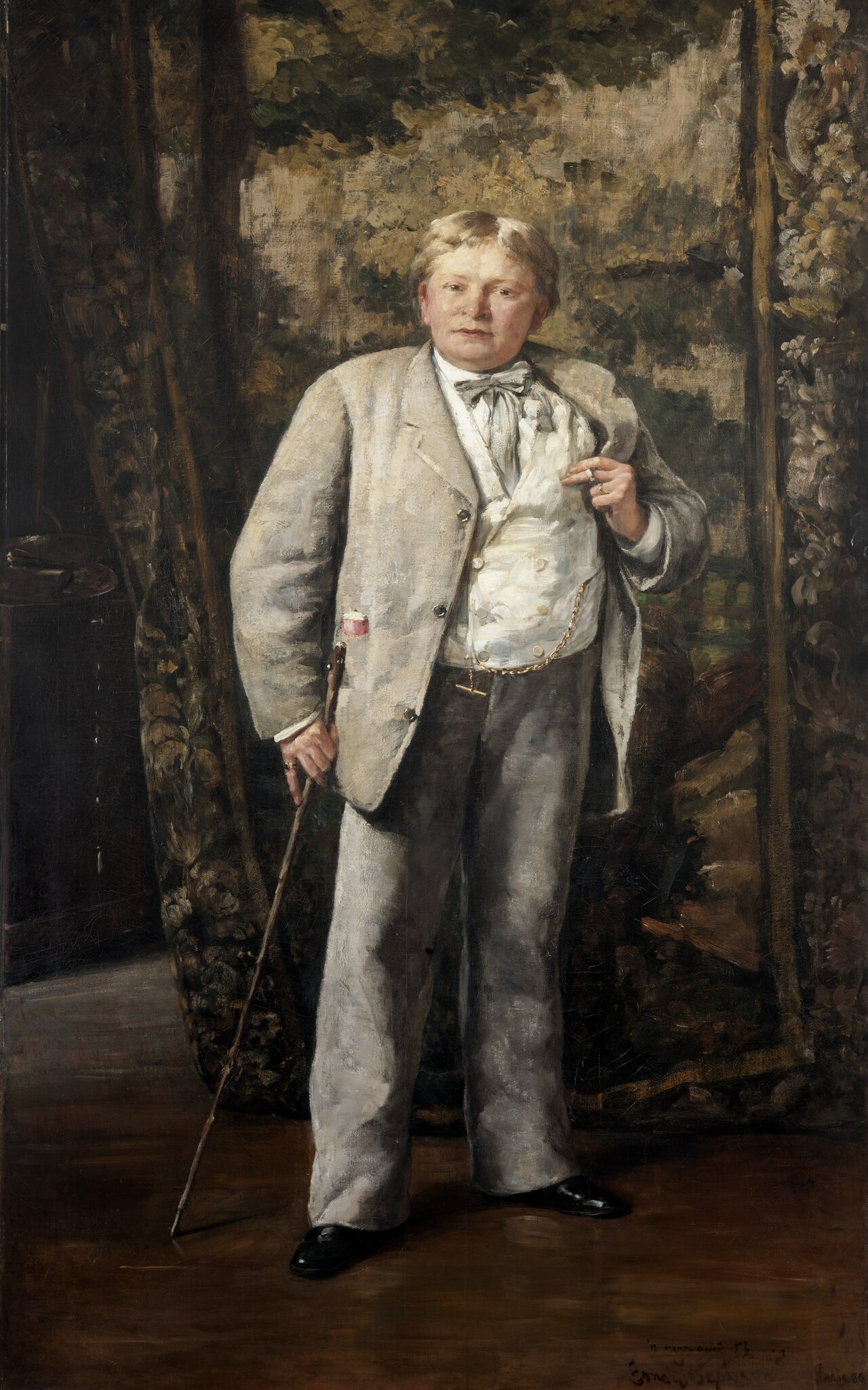
- Carl Skånberg, Landscape Painter (1880) – In this portrait of fellow artist Carl Skånberg, Josephson captures the fellow painter’s contemplative expression. The work subtly references the artistic vocation through the inclusion of a sketchbook and a muted landscape visible through a window, reinforcing the theme of the artist as a mediator between interior vision and external nature.
- Konung Gustav Vasa anklagande biskopen Peder Sunnanväder inför domkapitlet i Västerås 1523 (1875) – This historically themed composition presents King Gustav Vasa confronting Bishop Peder Sunnanväder. Josephson employs a restrained colour scheme and dramatic chiaroscuro to emphasise the political tension of the moment, while the figures are rendered with a psychological intensity that reflects his Symbolist sensibilities.
These works collectively illustrate Josephson’s range—from intimate portraiture to narrative history—while maintaining a consistent emphasis on mood, symbolism and the inner life of his subjects.
Influence and legacy Although Josephson’s career was relatively brief, his integration of Symbolist ideas into Swedish painting left a lasting imprint on later generations of Scandinavian artists. His willingness to treat everyday subjects with a poetic lens anticipated the early modernist tendencies that would emerge in the early twentieth century. Artists such as Anders Zorn and later expressionists drew upon Josephson’s approach to colour, atmosphere and the psychological portrayal of figures. Moreover, his dual identity as painter and poet contributed to a broader cultural discourse that valued interdisciplinary creativity. Today, his works are held in the collections of major Swedish museums, and they continue to be referenced in scholarly discussions of Symbolism’s northern periphery. Josephson’s legacy endures as a testament to the power of merging rigorous technique with an evocative, introspective vision.
Frequently asked questions
Who was Ernst Josephson?
Ernst Josephson was a Swedish painter and poet (1851–1906) known for his Symbolist portraits and genre scenes that explored folklore and inner emotion.
Which artistic movement is he associated with?
He is most closely linked to Symbolism, a late‑19th‑century movement that emphasized myth, mood and the subjective interpretation of reality.
What are his most famous works?
His best‑known paintings include The Water Sprite (1882), Spanish Smiths (1881), Miss Anna Bagge, née Heyman (1880), Carl Skånberg, Landscape Painter (1880) and the historic canvas Konung Gustav Vasa anklagande biskopen Peder Sunnanväder inför domkapitlet i Västerås 1523 (1875).
Why is Ernst Josephson important in art history?
He introduced Symbolist aesthetics to Swedish painting, influencing later artists by combining precise draftsmanship with a poetic, psychological depth that foreshadowed modernist approaches.
How can I recognise a painting by Ernst Josephson?
Look for meticulous portraiture, a muted colour palette, subtle glazes, and an atmospheric background that often hints at symbolic or folkloric themes.