Elisabeth Keyser
1851 – 1898
In short
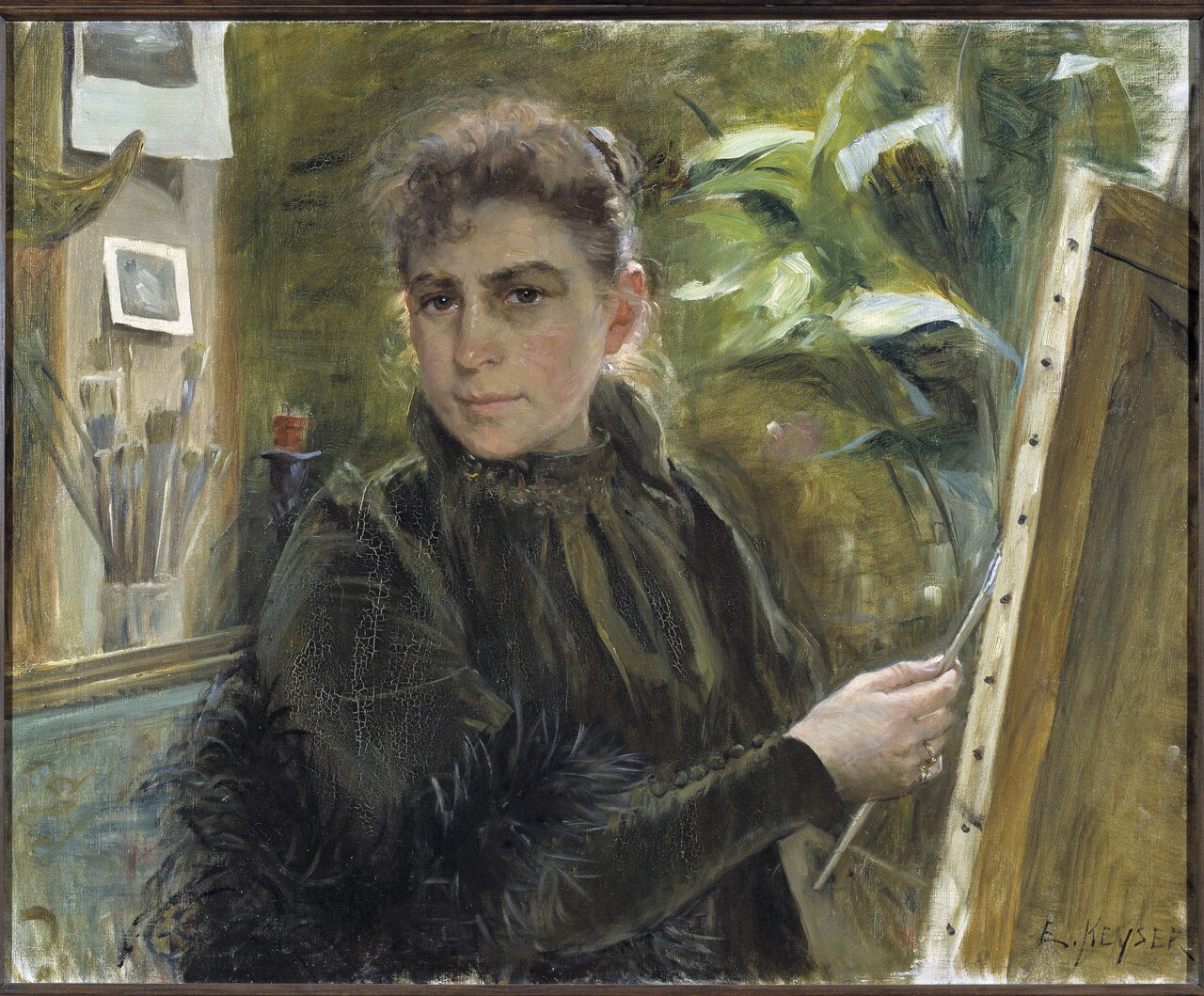
Elisabeth Keyser (1851–1898) was a Swedish painter born in Stockholm, remembered for her self‑portrait (1880) and genre paintings such as A Confirmand in Normandy (1889) and Hilda Fredrika Keyser, Author (1889). She worked in the late‑19th‑century Swedish art scene, producing works that combine careful observation with a subtle narrative tone.
Notable works

Early life Elisabeth Keyser was born in 1851 in Stockholm, the capital of Sweden, into a family that valued education and the arts. The Keyser household was part of the city's emerging middle class, a social stratum that increasingly encouraged women to pursue cultural interests. While precise details of her childhood schooling are scarce, contemporary records indicate that Stockholm provided a vibrant environment for artistic exposure, with regular exhibitions at the Royal Swedish Academy of Arts and a growing network of private studios. Growing up in this milieu, Elisabeth would have encountered the work of Swedish landscape painters and portraitists who were redefining national visual identity in the mid‑19th century.
Career and style By the 1870s, Elisabeth Keyser had begun to establish herself as a professional painter. Her career coincided with a period of gradual liberalisation for women artists in Sweden, when academies and societies started to admit female students on a limited basis. Although her exact training is not documented, the quality of her early work suggests a solid grounding in academic techniques, particularly in the handling of light, form, and colour.
Keyser’s style can be described as a synthesis of realism and a gentle, often lyrical, narrative sensibility. Her canvases display a clear concern for accurate rendering of anatomy and material texture, while also embedding a subtle emotional resonance that hints at the inner lives of her subjects. This dual focus places her within the broader Scandinavian realist tradition, which sought to depict everyday life with both fidelity and empathy. Unlike the more overtly nationalistic themes favoured by some contemporaries, Keyser’s subjects often look beyond Swedish borders, reflecting a curiosity about foreign cultures and the experiences of individuals within them.
Signature techniques Keyser’s paintings are characterised by a restrained palette, favouring muted earth tones punctuated by occasional highlights of richer colour. She employed a layered glazing technique, building thin translucent layers of pigment over a carefully modelled underdrawing. This approach allowed her to achieve depth in skin tones and the delicate interplay of light on fabrics. In portraiture, she paid particular attention to the eyes, rendering them with fine, almost luminous brushwork that draws the viewer’s focus to the psychological dimension of the sitter.
Another hallmark of her technique is the careful rendering of interior spaces. Whether depicting a modest studio or a domestic interior, Keyser used perspective with precision, ensuring that the surrounding environment supports the narrative without overwhelming the central figure. Her brushwork in background elements is often looser, creating a subtle contrast between the sharply defined subjects and the softer, atmospheric settings.
Major works ### Self‑Portrait (1880) The Self‑Portrait of 1880 stands as one of Keyser’s most intimate works. Executed in oil on canvas, the painting presents the artist at the age of twenty‑nine, seated before a modest easel. She gazes directly at the viewer, her expression both confident and contemplative. The work demonstrates her command of chiaroscuro, with a soft light falling across her face, accentuating the delicate modelling of her cheekbones. The palette is restrained, dominated by warm ochres and muted blues, allowing the focus to remain on her expression and the subtle texture of her hair and clothing.
### A Confirmand in Normandy (1889) In A Confirmand in Normandy, Keyser turns her attention to a scene set outside Sweden, reflecting the period’s fascination with travel and cultural exchange. The painting depicts a young French confirmand—a candidate for baptism—standing in a modest chapel interior. Keyser captures the solemnity of the rite through careful composition: the figure is centrally placed, framed by the arches and stained‑glass windows that filter a diffused light. The colour scheme is dominated by muted greys and soft amber, evoking the quiet reverence of the moment. This work highlights Keyser’s ability to convey narrative through the careful placement of symbolic elements, such as the candlesticks and the folded rosary in the confirmand’s hands.
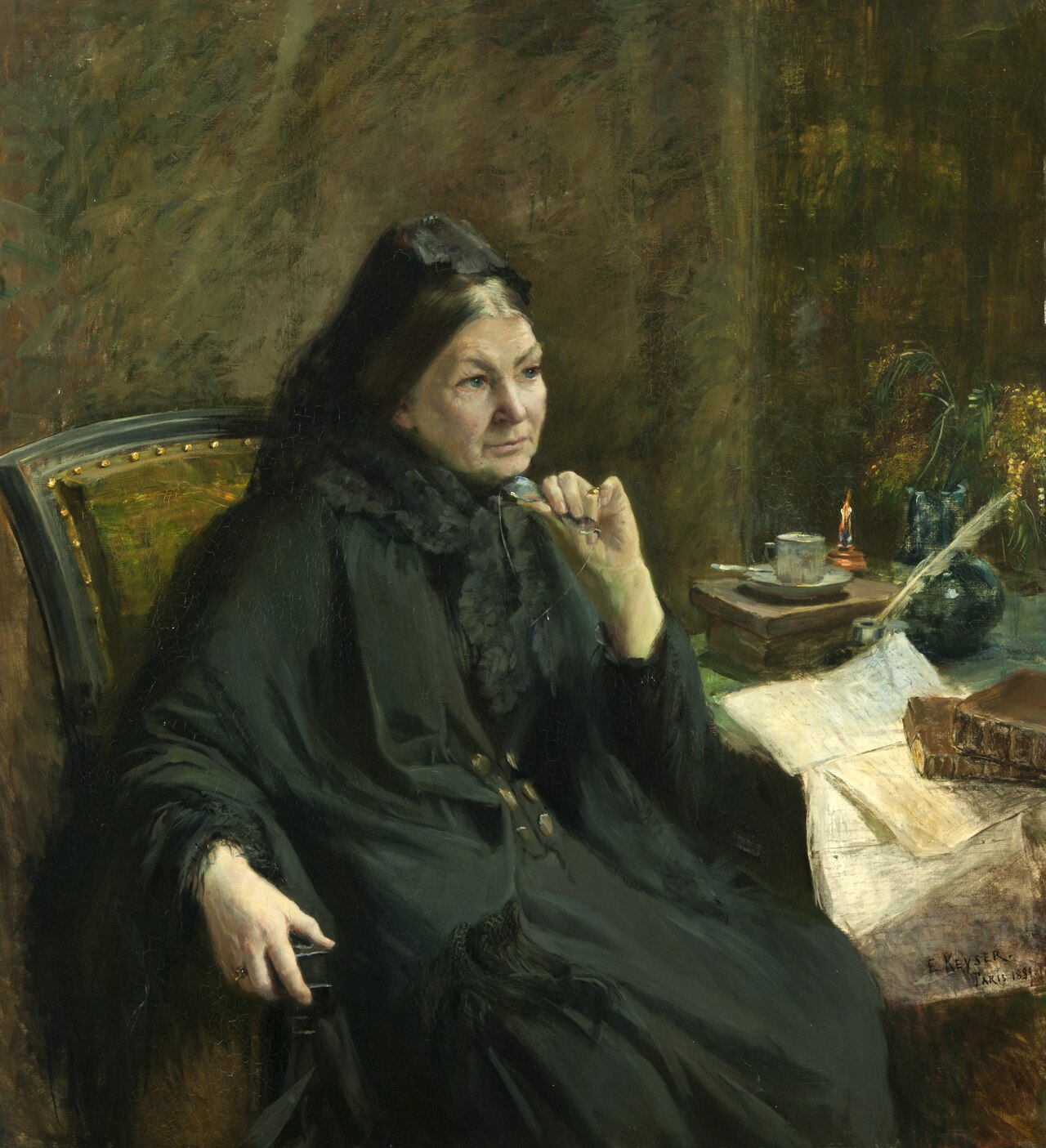
### Hilda Fredrika Keyser, Author (1889) The portrait of Hilda Fredrika Keyser, executed the same year as the Norman scene, honors a relative who had achieved recognition as a writer. In this portrait, Elisabeth portrays Hilda seated at a writing desk, a manuscript open before her. The composition underscores the intellectual pursuits of the sitter, with bookshelves and a lamp providing contextual clues. Keyser’s handling of light is particularly effective: a warm glow from the lamp illuminates Hilda’s face, while the surrounding darkness suggests the concentration required for literary work. The painting is notable for its psychological depth, as the viewer senses both the pride and the contemplative focus of the author.
These three works collectively illustrate Keyser’s range: from self‑reflection to cultural observation and familial commemoration. They also reveal a consistent commitment to realism tempered by a nuanced narrative impulse.
Influence and legacy Elisabeth Keyser’s career, though relatively short—she died in 1898 at the age of forty‑seven—contributed to the gradual acceptance of women as serious artists in Sweden. Her participation in exhibitions, as recorded in period newspapers, placed her among a modest cohort of female painters who were beginning to receive public acknowledgment. While she did not align herself with a specific avant‑garde movement, her dedication to realistic representation and her subtle narrative approach anticipated later Scandinavian genre painters who sought to balance fidelity to everyday life with emotional resonance.
Keyser’s works remain part of the collections of several Swedish museums, where they are cited as examples of late‑19th‑century portraiture and genre painting. Scholars of Swedish art history reference her self‑portrait when discussing the development of women’s self‑representation, noting how she negotiates the dual role of artist and subject. Moreover, her depiction of a French confirmand offers a valuable visual record of religious customs beyond Sweden, contributing to cross‑cultural studies of the period.
Although she is not as widely known as some of her male contemporaries, recent exhibitions have begun to reassess her contribution, positioning her within a broader narrative of women artists who helped shape the visual culture of the Nordic region. Her careful technique, attention to psychological detail, and willingness to explore subjects beyond the Swedish landscape ensure that Elisabeth Keyser retains relevance for both art historians and contemporary audiences interested in the nuanced strands of 19th‑century European painting.
Frequently asked questions
Who was Elisabeth Keyser?
Elisabeth Keyser (1851–1898) was a Swedish painter from Stockholm known for realistic portraits and genre scenes, including a self‑portrait (1880) and works such as A Confirmand in Normandy (1889).
What style or movement is she associated with?
Keyser worked within the late‑19th‑century Swedish realist tradition, combining accurate observation with a subtle narrative tone rather than aligning with a specific avant‑garde movement.
What are her most famous works?
Her most recognised paintings are the Self‑Portrait (1880), A Confirmand in Normandy (1889), and the portrait Hilda Fredrika Keyser, Author (1889).
Why does Elisabeth Keyser matter in art history?
She represents an early generation of Swedish women painters who achieved professional recognition, and her works provide valuable insight into realist technique and cross‑cultural subject matter of the era.
How can I recognise an Elisabeth Keyser painting?
Keyser’s paintings often feature a restrained colour palette, careful modelling of light on faces, detailed interior settings, and a focus on the psychological presence of her subjects.