Egron Lundgren
1815 – 1875
In short
Egron Lundgren (1815–1875) was a Swedish painter and author renowned for his watercolour works, many of which depict genre scenes and travel subjects. He spent his life in Jakob parish, producing a modest but respected oeuvre that includes pieces such as Procession at the Feast of Corpus Christi in Rome (1847) and Neapolitan Fruit‑Sellers (1843).
Notable works

Early life Egron Sellif Lundgren was born in 1815 in the rural community of Jakob parish, Sweden. Little is recorded about his family background, but the parish setting suggests a childhood surrounded by the natural landscapes that would later appear in his watercolours. Lundgren received a basic education typical of the Swedish countryside in the early nineteenth century, which included instruction in drawing—a skill that was increasingly valued in Swedish schools following the Enlightenment emphasis on visual observation.
In his teenage years, Lundgren showed an aptitude for drawing and a particular fascination with the medium of watercolour. This interest aligned with a broader Swedish tradition that, by the mid‑1800s, regarded watercolour as a suitable vehicle for both academic study and the depiction of everyday life. Although specific details of his formal training are not documented, it is reasonable to infer that he would have pursued further instruction at a regional art academy or under the guidance of an established artist, as was customary for aspiring painters of his generation.
Career and style Lundgren’s professional career unfolded during a period of significant change in Swedish art. The early‑to‑mid‑nineteenth century saw the rise of Romanticism, a movement that celebrated emotion, nature, and the exotic. While Lundgren is not formally attached to any single movement, his work reflects the Romantic fascination with travel and the picturesque, evident in his depictions of foreign locales and lively public ceremonies.
His oeuvre is characterised by a focus on genre scenes, often rendered with a delicate yet confident handling of the watercolour medium. Lundgren travelled extensively throughout Europe, a practice that supplied him with visual material for his paintings. The itinerant nature of his career allowed him to capture a variety of cultural settings—from the bustling markets of Naples to the solemn processions of Rome—while maintaining a consistent visual language centred on clear line work, subtle tonal variations, and an attentive observation of light.
Throughout his life Lundgren also wrote about his artistic experiences, contributing essays and travelogues that offered contemporary readers insights into the artistic practices and cultural customs he encountered. This dual role as painter and author reinforced his reputation as a cultured observer of the European art world.
Signature techniques Lundgren’s watercolours are distinguished by several technical traits that together form a recognizable signature:
1. Transparent washes – He employed thin, layered washes of pigment to build atmospheric depth, allowing the white of the paper to glow through the colour and create a luminous effect. 2. Fine linear detail – Even within the fluidity of watercolour, Lundgren retained crisp, precise outlines, especially in architectural elements and figures, which helped to define form without sacrificing the medium’s softness. 3. Balanced composition – His compositions often juxtapose bustling human activity with tranquil natural backgrounds, creating a harmonious balance between activity and repose. 4. Subtle colour palette – Lundgren favoured muted earth tones, soft greens, and gentle blues, reflecting the natural hues of the environments he depicted while avoiding overly saturated colours that could overwhelm the delicate medium. 5. Narrative focus – Each work tells a story, whether it is a market scene, a religious procession, or a solitary figure in the forest. The narrative element is supported by careful attention to gestures and expressions, which convey emotion without reliance on overt dramatics.
These techniques allowed Lundgren to convey both the immediacy of a moment and the broader cultural context of his subjects.
Major works Lundgren’s most frequently cited pieces illustrate the range of his interests and the consistency of his style.
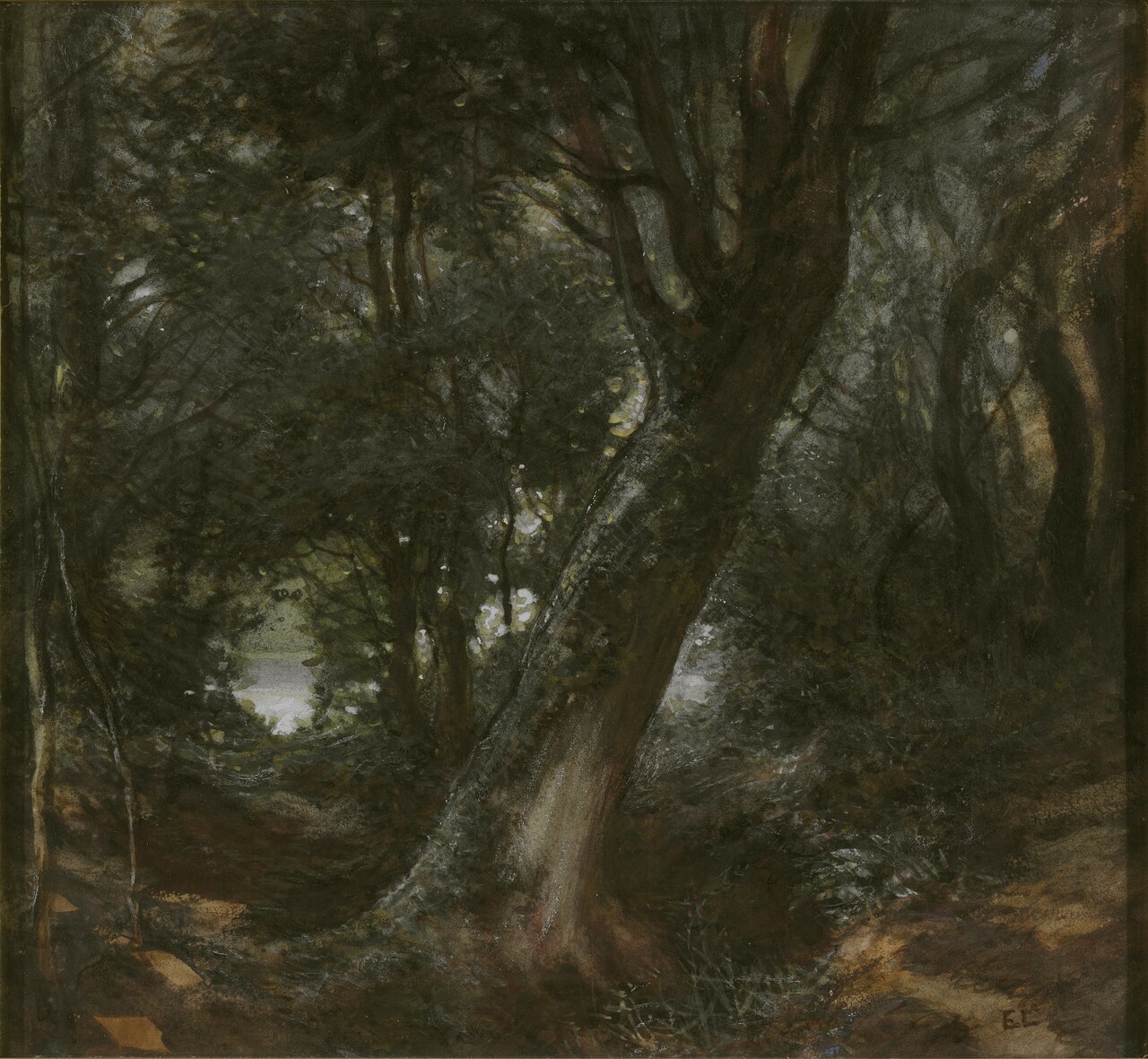
- In the Forest – This watercolour captures a quiet, wooded landscape, emphasizing the interplay of light filtering through leaves. The work showcases Lundgren’s skill in rendering natural atmosphere with translucent washes and delicate foliage detail.
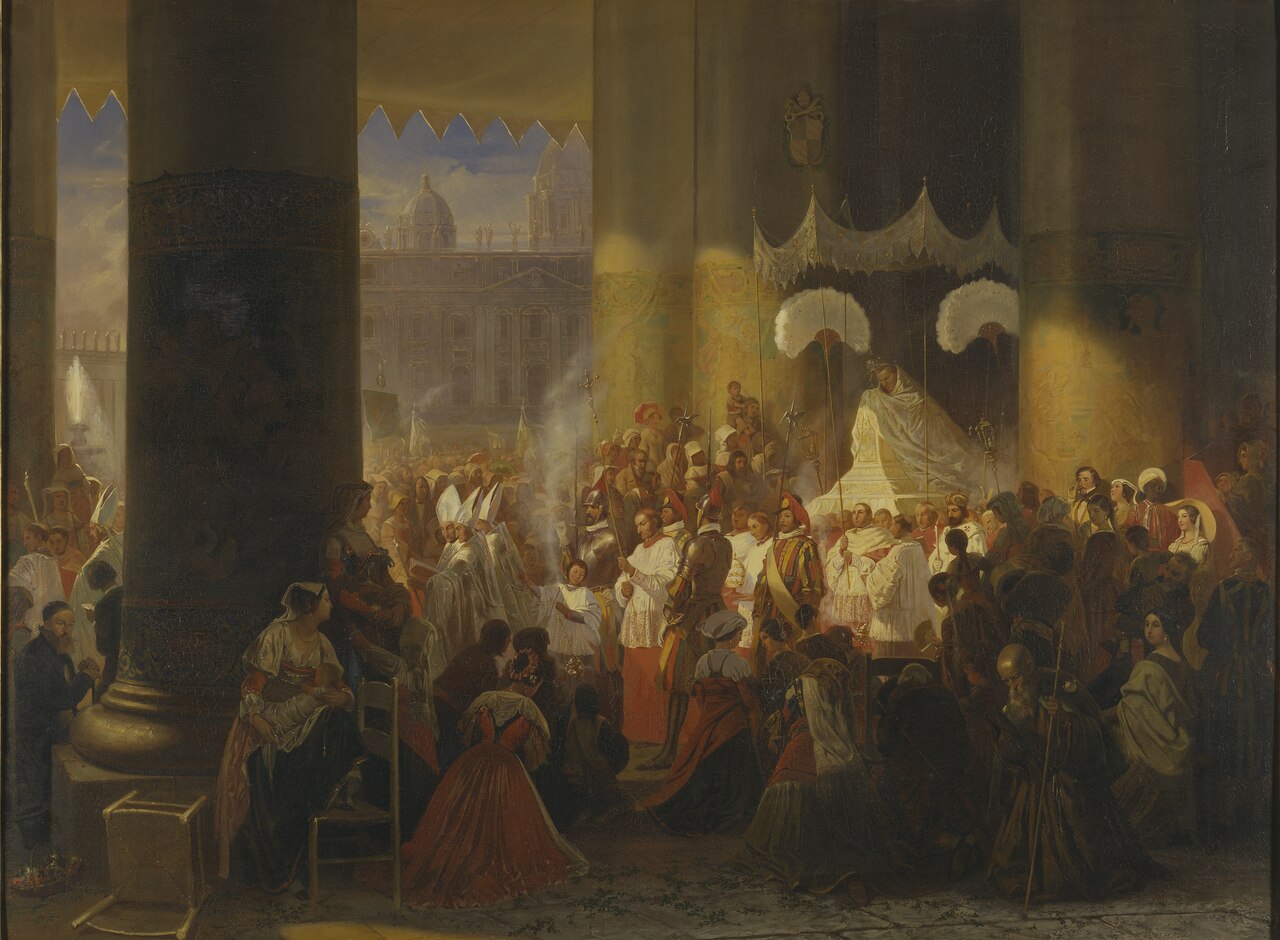
- Procession at the Feast of Corpus Christi in Rome (1847) – A larger, more complex composition, this painting documents a Catholic religious ceremony in the heart of Rome. Lundgren’s precise linear work defines the architecture of the city, while his soft colour washes convey the reverent mood of the procession. The piece reflects his ability to merge documentary observation with artistic interpretation.
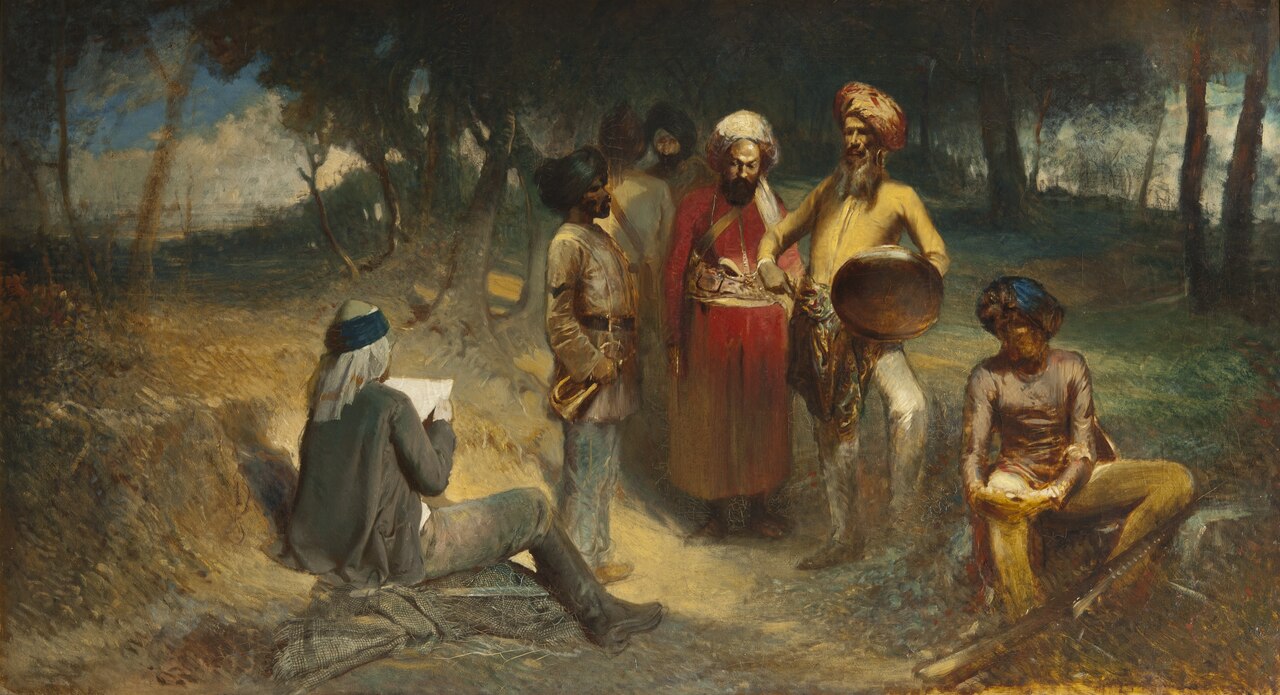
- Examining the Spy. Motif from the Indian Mutiny (1859) – This work diverges from Lundgren’s European subjects, illustrating a scene drawn from contemporary news of the Indian Mutiny. The painting demonstrates his engagement with current events and his willingness to explore dramatic, narrative-driven subjects beyond his usual genre scenes.
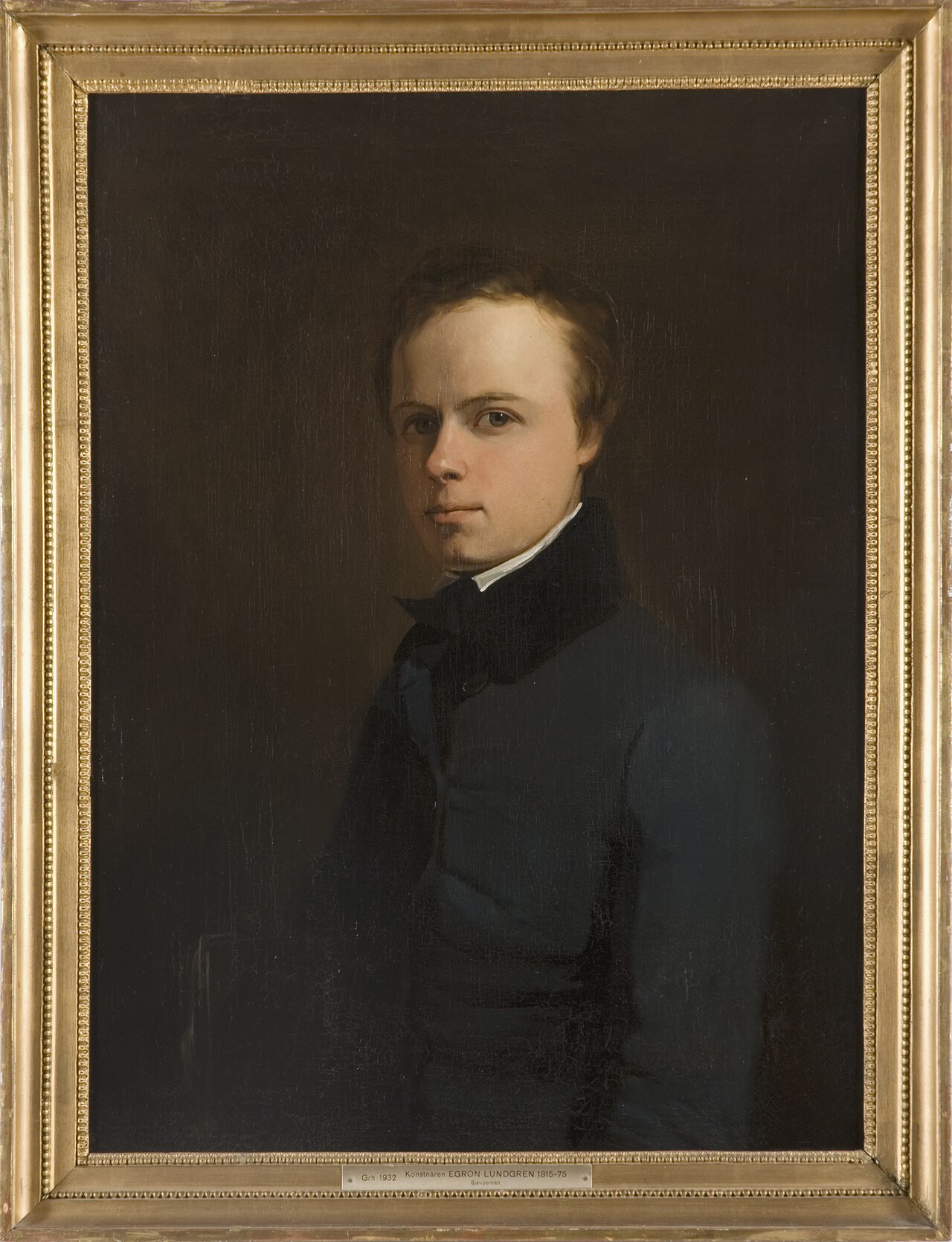
- Självporträtt (1900) – Attributed to Lundgren, this self‑portrait bears a date that post‑dates his death in 1875. The discrepancy suggests either a posthumous publication of an earlier work or a misattribution. Nevertheless, the piece is valuable for its intimate portrayal of the artist, rendered in his characteristic transparent wash technique.
- Neapolitan Fruit‑Sellers (1843) – This lively market scene from Naples illustrates Lundgren’s fascination with everyday life in foreign cities. The composition balances the bustling activity of the vendors with a subtle, sun‑lit background, reflecting his skill in integrating human figures within a broader urban environment.
These works collectively highlight Lundgren’s versatility, his interest in both domestic and international subjects, and his consistent use of watercolour to convey narrative depth.
Influence and legacy Although not as widely known as some of his Swedish contemporaries, Lundgren contributed to the development of watercolour as a respected medium for both genre painting and travel illustration in the nineteenth century. His detailed yet atmospheric approach influenced younger Swedish artists who sought to document the expanding world beyond Scandinavia.
His writings, alongside his visual output, provide modern scholars with a valuable perspective on the cultural exchange between Sweden and the wider European continent during a time of rapid artistic and technological change. The modest but respectable collection of his works that survive in museum and private collections continues to be referenced in studies of 19th‑century Scandinavian watercolour practices.
In contemporary art‑history circles, Lundgren is recognised as a diligent observer whose works bridge the gap between documentary illustration and Romantic painterly sensibility. While his name may not dominate mainstream narratives, his contributions endure as part of the broader tapestry of Swedish art, offering insight into the everyday and the exotic through the subtle lens of watercolour.
Frequently asked questions
Who was Egron Lundgren?
Egron Lundgren (1815–1875) was a Swedish painter and author best known for his watercolour genre scenes and travel subjects.
What artistic style or movement is he associated with?
He is not tied to a single movement, but his work reflects Romantic‑era interests in the picturesque, travel, and everyday life.
What are his most famous works?
Key works include Procession at the Feast of Corpus Christi in Rome (1847), Neapolitan Fruit‑Sellers (1843), In the Forest, and Examining the Spy (1859).
Why is Lundgren important in art history?
Lundgren helped elevate watercolour as a serious medium for narrative and documentary painting in Sweden, influencing later artists and providing valuable visual records of 19th‑century European life.
How can I recognise a Lundgren painting?
Look for transparent washes, fine linear detail, balanced compositions of figures and landscape, a muted colour palette, and a clear narrative focus typical of his watercolours.