Edvard Perséus
1841 – 1890
In short
Edvard Perséus (1841–1890) was a Swedish painter and hovintendent at the Royal Court, known for his historical and genre scenes. His work includes portraits of royalty and studies of everyday life, characterised by careful draftsmanship and a muted palette.
Notable works
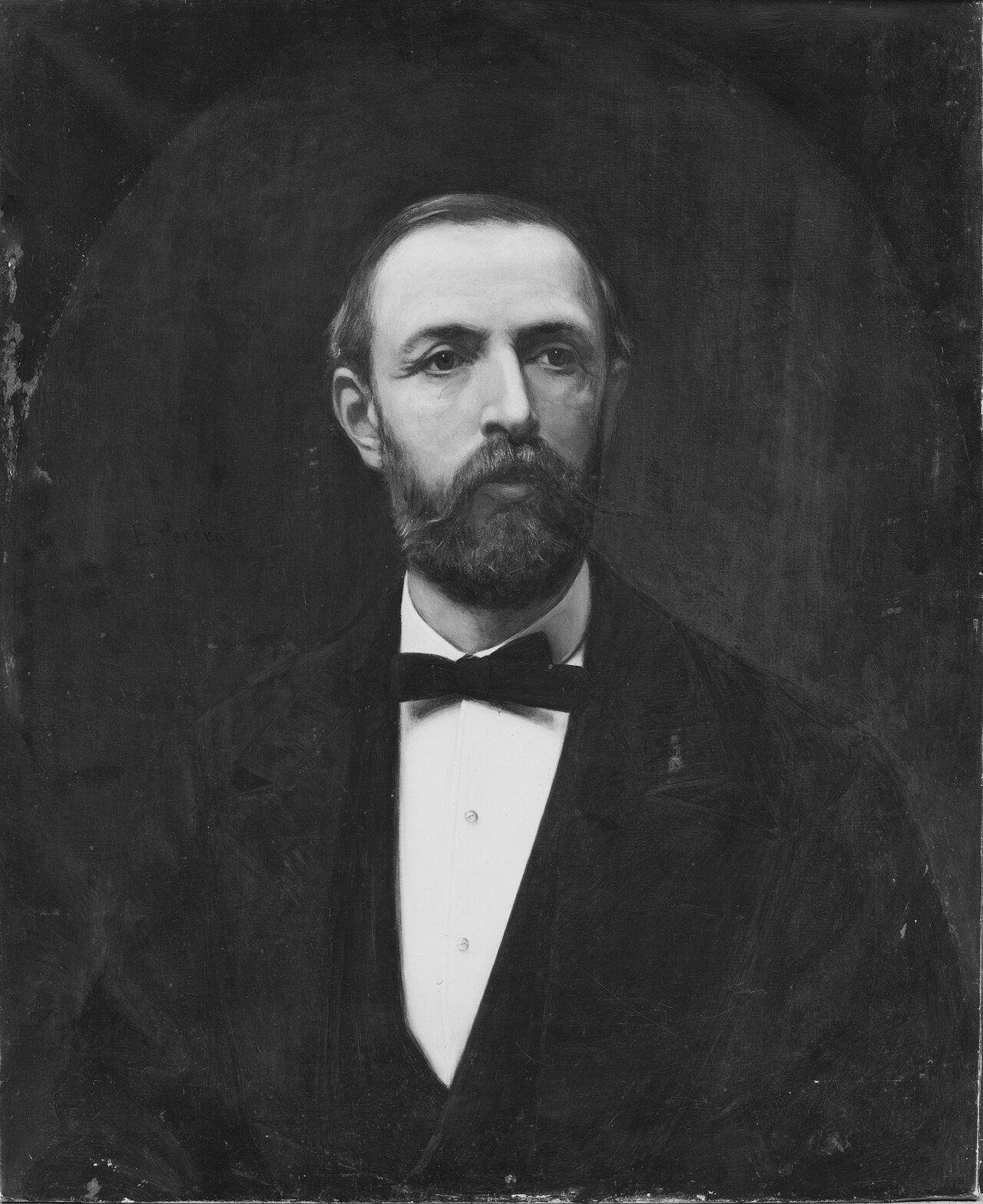

Early life Edvard Perséus was born in 1841 in the parish of Lund Cathedral, Sweden. Little is recorded about his family background, although his original surname was Persson, a name later altered to Perséus. Growing up in the culturally rich environment of southern Sweden, he was exposed early to the artistic traditions of the country, including the legacy of the Royal Academy of Fine Arts in Stockholm. His formative years coincided with a period of national romanticism in Swedish art, a movement that celebrated historic subjects and the everyday life of the Swedish people. Perséus received his initial artistic instruction locally before moving to Stockholm, where he entered the Royal Swedish Academy of Arts. The Academy provided a rigorous grounding in drawing, composition, and the classical traditions that would shape his later career.
Career and style After completing his studies, Perséus secured a position at the Swedish Royal Court as a hovintendent, a role that combined administrative duties with artistic responsibilities. In this capacity, he was tasked with producing official portraits, documenting court ceremonies, and creating works that reflected the monarchy’s visual identity. The court appointment afforded him a steady income and access to a network of patrons, but it also required a disciplined approach to representational art.
Perséus’s style is best described as academic realism, rooted in the techniques taught at the Royal Academy. He favoured a restrained colour palette, often employing earth tones and muted blues to convey a sense of gravitas. His compositions display careful attention to historical detail, whether in the rendering of period costumes or the architectural elements that frame his subjects. While he did not align himself with the avant‑garde movements emerging elsewhere in Europe during the latter half of the 19th century, his work exhibits a subtle sensitivity to the everyday moments of his time, especially in genre scenes that depict ordinary people engaged in quiet activity.
Signature techniques Perséus’s paintings are characterised by several recurring technical approaches. First, he employed a meticulous underdrawing, using fine graphite or charcoal to map out the anatomical structure and spatial relationships before applying paint. This preparatory stage ensured that his figures possessed a convincing three‑dimensionality. Second, his brushwork was generally smooth and controlled; layers of thin glazes were built up to achieve depth without visible brushstrokes, a hallmark of academic training. Third, he frequently used chiaroscuro to model form, creating a subtle contrast between illuminated areas and shadowed planes. Finally, his renderings of textiles and metalwork display a keen observational skill, allowing the viewer to discern the texture of silk, wool, or armor at a glance.
Major works Perséus’s oeuvre includes a number of notable works, many of which were produced for royal or public commissions. Among the most celebrated is **"Oskar II av Sverige och Norge"**, a portrait of King Oscar II that exemplifies Perséus’s capacity to convey regal dignity while maintaining a naturalistic likeness. The painting’s composition places the monarch in a modest yet stately setting, with a muted background that draws attention to the king’s face and attire.
Another significant piece is the sketch "Erik XIV and Karin Månsdotter in Prison", which captures a dramatic historical episode. Though only a sketch, the work demonstrates Perséus’s ability to convey narrative tension through gesture and expression, as the two figures are rendered with a palpable sense of confinement and emotional strain.
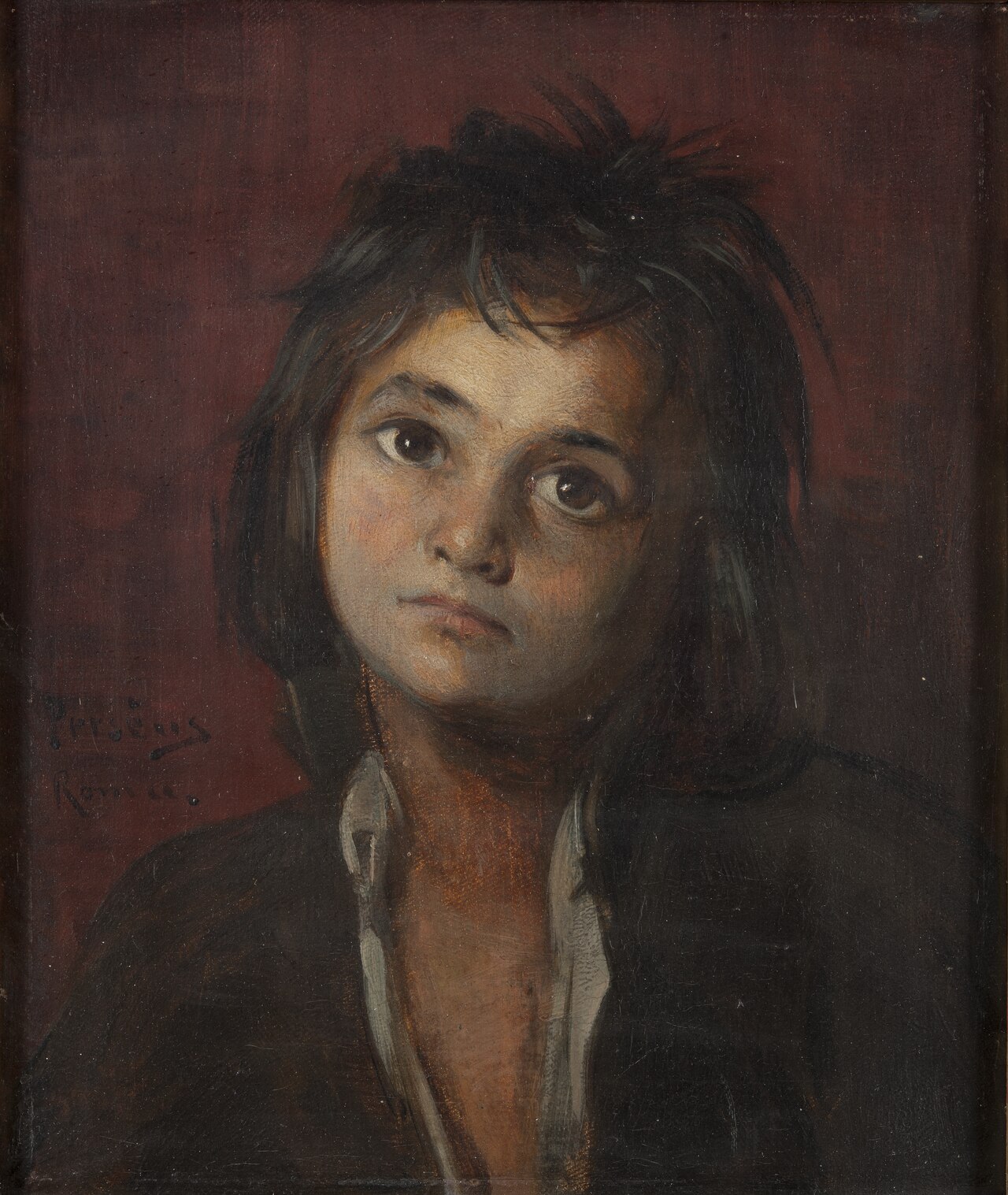
The study "Romersk gosse" (Roman boy) showcases Perséus’s interest in classical subjects, likely stemming from his academic training. In this work, he explores the youthful vigor of a young male figure, employing a restrained palette that emphasizes the anatomical study over ornamental detail.
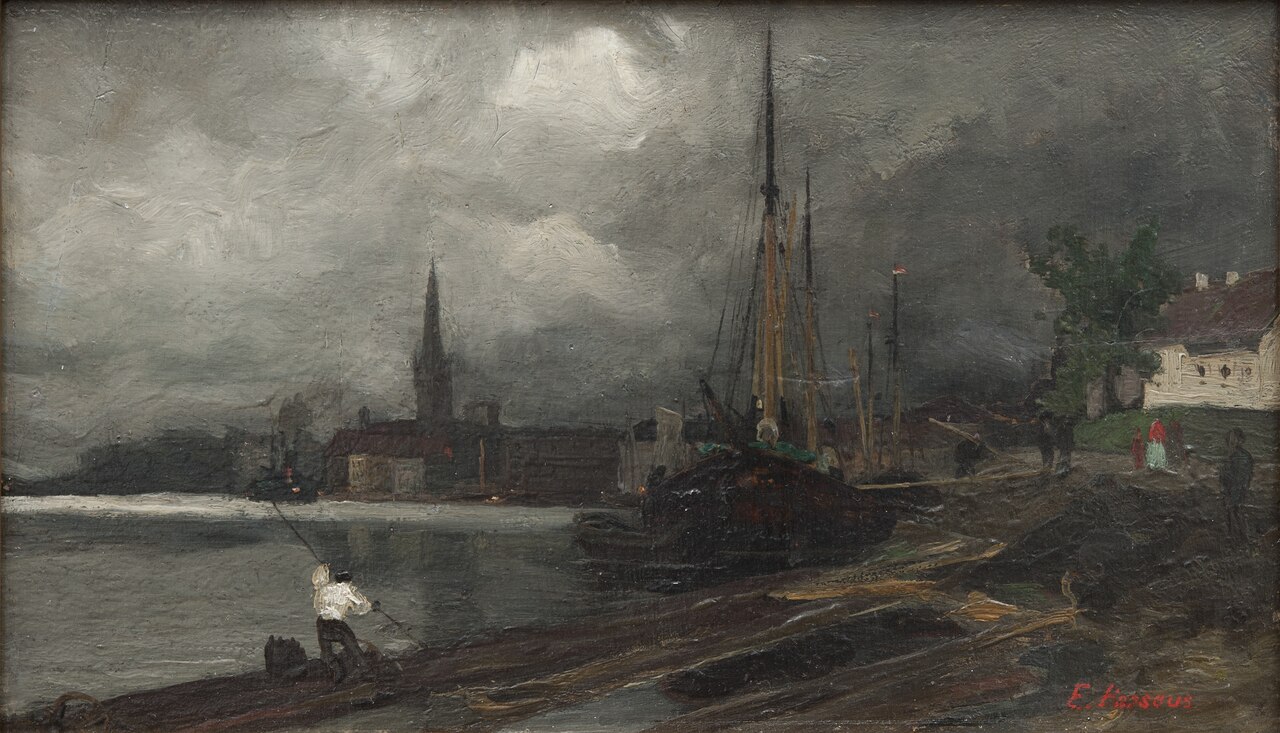
"Stadsvy med hamn" (City view with harbour) is a landscape study that departs from his typical portraiture, yet it retains his hallmark attention to perspective. The composition balances the bustling activity of a harbour with the calmness of distant architecture, offering a snapshot of 19th‑century urban life.
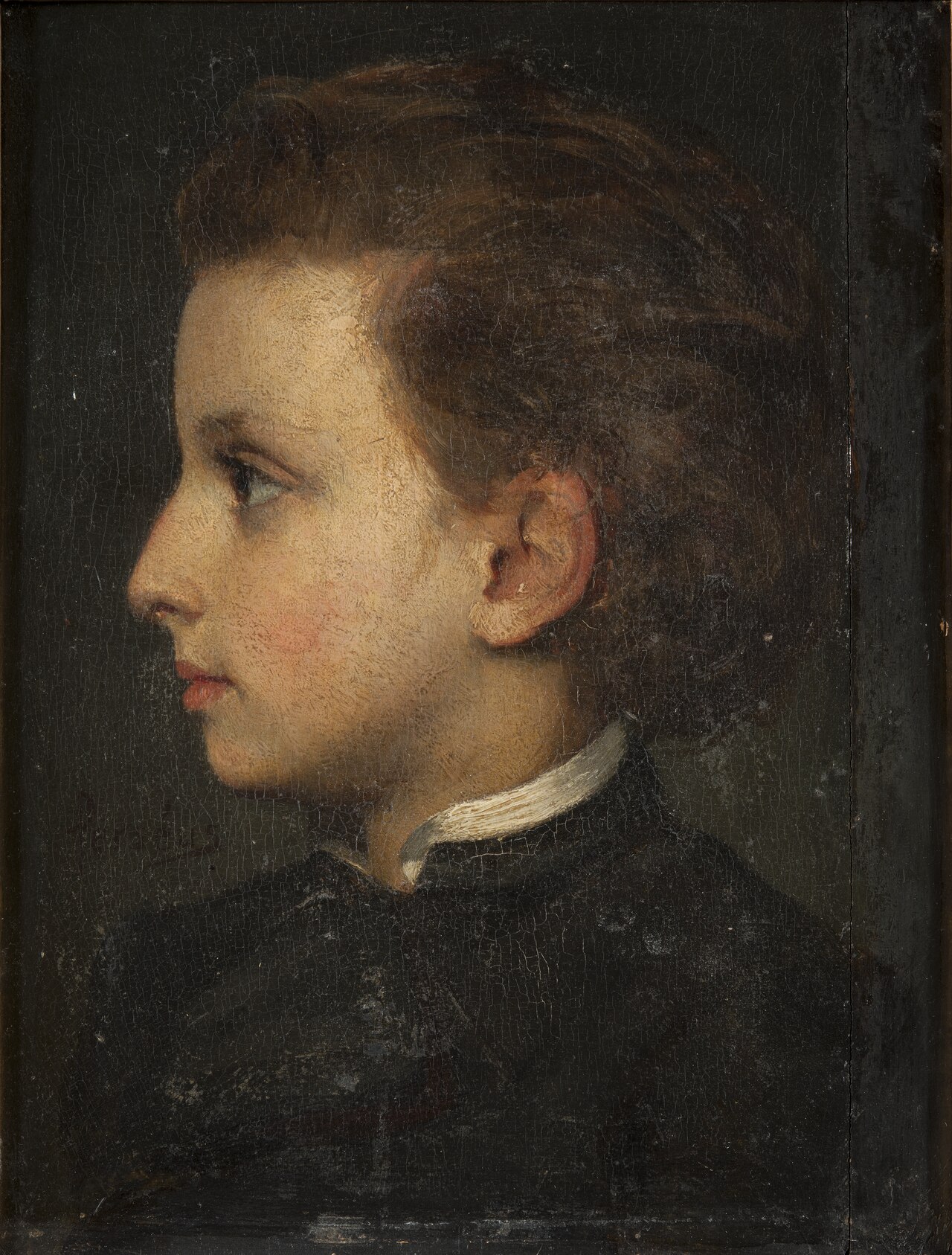
Finally, "Pojke i profil" (Boy in profile) is a simple yet compelling study of a child’s side view. The work highlights Perséus’s skill in rendering the delicate features of a young subject, with subtle shading that gives the head a three‑dimensional presence.
These works collectively illustrate Perséus’s versatility: while he is principally remembered for his royal portraits, his studies and genre scenes reveal a broader engagement with historical, classical, and everyday themes.
Influence and legacy Edvard Perséus died in 1890 in the parish of Jakob and Johannes, leaving behind a body of work that, while not as widely known internationally as that of some of his contemporaries, remains significant within Swedish art history. His contributions to court portraiture helped define the visual language of the Swedish monarchy during a period of constitutional transition. Moreover, his meticulous technique and commitment to academic realism provided a model for younger Swedish artists who sought to balance traditional training with the emerging interest in capturing contemporary life.
Although Perséus did not align himself with the Impressionist or Symbolist movements that were gaining momentum across Europe, his genre studies anticipate later Scandinavian interest in everyday subjects and naturalistic representation. Museums in Sweden, particularly those focusing on 19th‑century art, preserve several of his works, and his sketches are occasionally featured in exhibitions that explore the intersection of royal patronage and artistic practice.
In scholarly assessments, Perséus is recognized as a proficient practitioner of the academic tradition, whose works serve as valuable visual documentation of Swedish royal and social history. His legacy endures in the continued appreciation of his portraits and studies, which remain useful reference points for historians, curators, and artists interested in the period’s aesthetic and cultural context.
Frequently asked questions
Who was Edvard Perséus?
Edvard Perséus (1841–1890) was a Swedish painter and hovintendent at the Royal Court, known for his historical and genre paintings.
What style or movement is he associated with?
He worked within an academic realist style, employing the techniques taught at the Royal Swedish Academy of Arts.
What are his most famous works?
His notable works include the royal portrait "Oskar II av Sverige och Norge", the sketch "Erik XIV and Karin Månsdotter in Prison", and studies such as "Romersk gosse", "Stadsvy med hamn", and "Pojke i profil".
Why is Edvard Perséus important in art history?
He helped shape the visual representation of the Swedish monarchy in the 19th century and exemplifies the academic realist tradition in Swedish painting.
How can I recognise an Edvard Perséus painting?
Look for meticulous draftsmanship, smooth brushwork, a muted colour palette, and careful rendering of historical costume and texture, often with a calm, dignified composition.