Carl Wilhelmson
1866 – 1928
In short
Carl Wilhelmson (1866–1928) was a Swedish painter, graphic artist, amateur photographer and art teacher, noted for his naturalistic depictions of maritime and rural life. He taught at the Gothenburg School of Art and produced works such as Church‑Goers in a Boat and Fishermen's Wives Returning from Church.
Notable works

_-_Maj_Bring_(1880-1971),_konstn%C3%A4rinna_-_NMGrh_3356_-_Nationalmuseum_(cropped).jpg)
Early life Carl Wilhelm Wilhelmson was born in 1866 in the coastal fishing village of Fiskebäckskil, Sweden. The son of a seaman, he grew up surrounded by the rhythms of the sea, the daily toils of fishermen, and the close‑knit community that defined the region. This maritime environment left an indelible imprint on his visual imagination, fostering a lifelong fascination with the lives of ordinary people and the landscape of the Swedish west coast. Wilhelmson received his first informal art lessons from local craftsmen and began to sketch the boats and cottages that dotted the shoreline. His talent was recognised early, and he was awarded a scholarship that enabled him to move to Gothenburg to pursue formal training.
Career and style In Gothenburg Wilhelmson enrolled at the Royal Swedish Academy of Fine Arts, where he studied under leading Swedish painters of the time. After completing his studies, he returned to his native region, but soon took a teaching position at the Gothenburg School of Art. Over the next three decades he combined his duties as an educator with an active studio practice. Wilhelmson’s style is generally characterised as naturalistic, with a strong emphasis on genre scenes that capture everyday activities. While he never aligned himself with a specific avant‑garde movement, his work reflects the broader Scandinavian turn towards realism and an interest in social documentation that emerged in the late nineteenth century. His paintings often combine a clear, restrained palette with careful observation of light, giving his subjects a quiet dignity.
Signature techniques Wilhelmson worked primarily in oil, but he also produced watercolours, etchings and photographic studies. His graphic work demonstrates a mastery of line and contrast, allowing him to render texture and atmosphere with economy. In his paintings, he employed a layered approach, building colour through thin glazes that enhanced the sense of depth without sacrificing the immediacy of the scene. Light is a recurring motif; he frequently positioned his subjects against the low, diffuse light of early morning or evening, creating subtle tonal shifts that suggest the passage of time. His compositions are noted for their balanced placement of figures within the frame, often using the horizon line or architectural elements to guide the viewer’s eye. As an amateur photographer, Wilhelmson also used photographic references to study posture and movement, a practice that informed the realism of his painted figures.
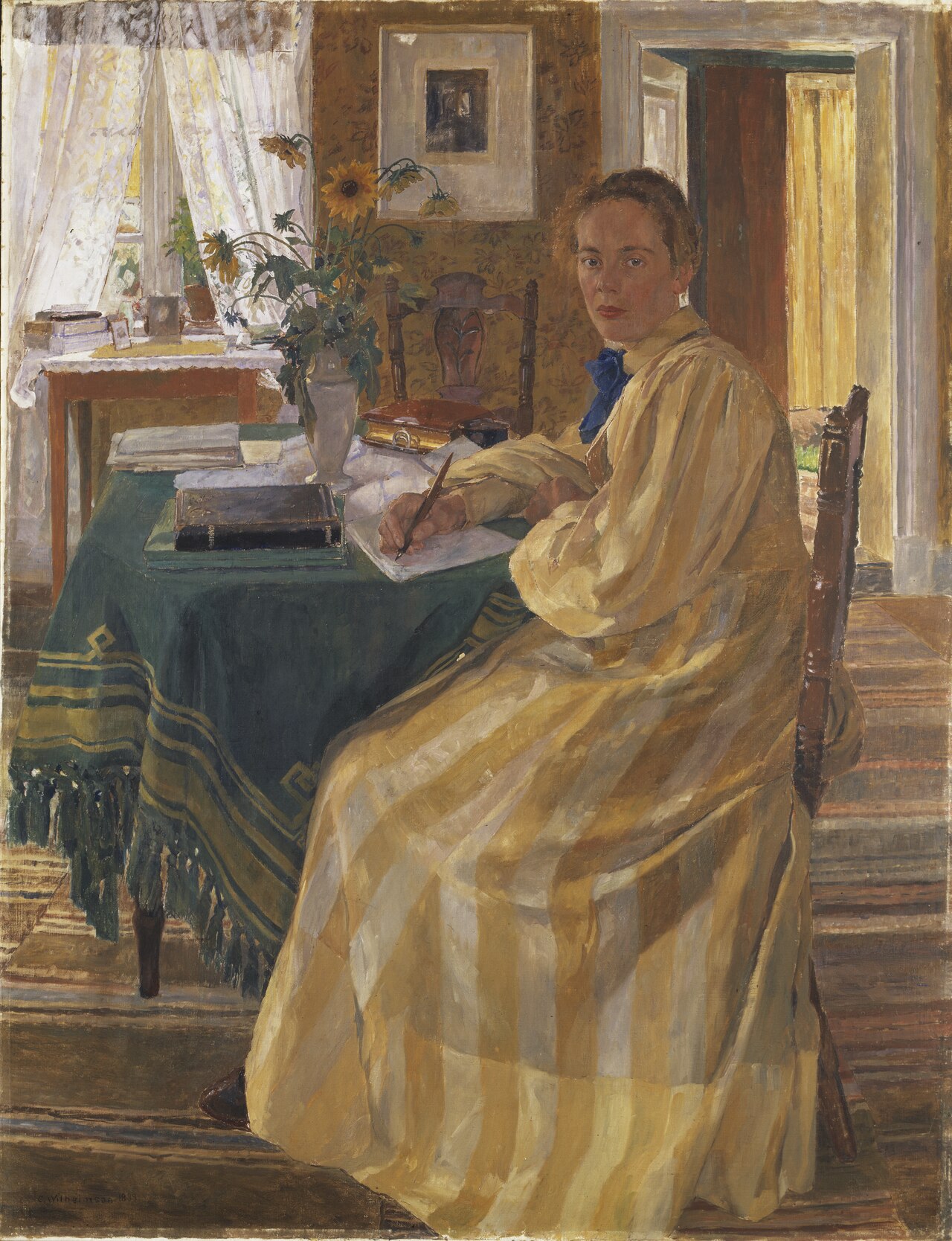
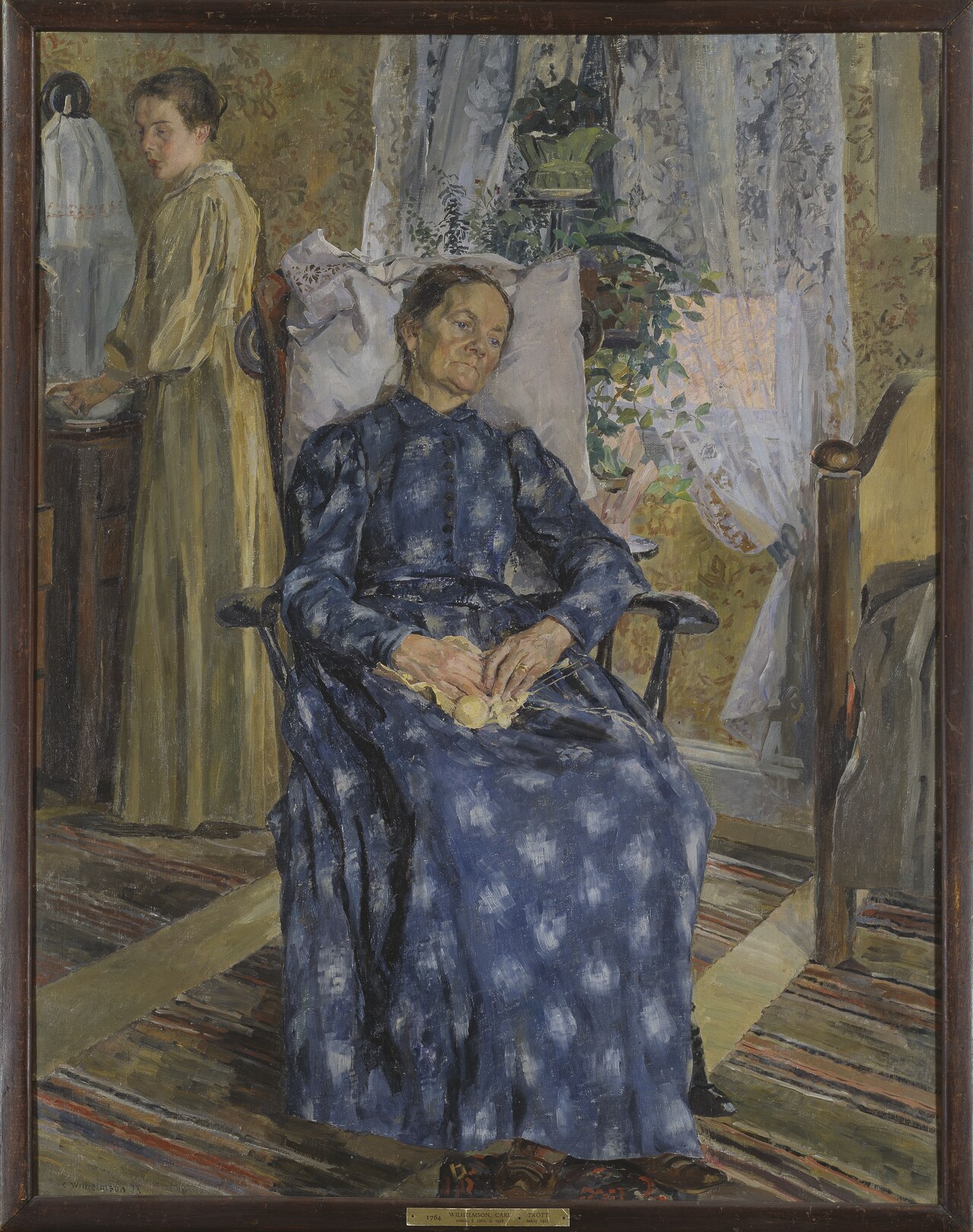
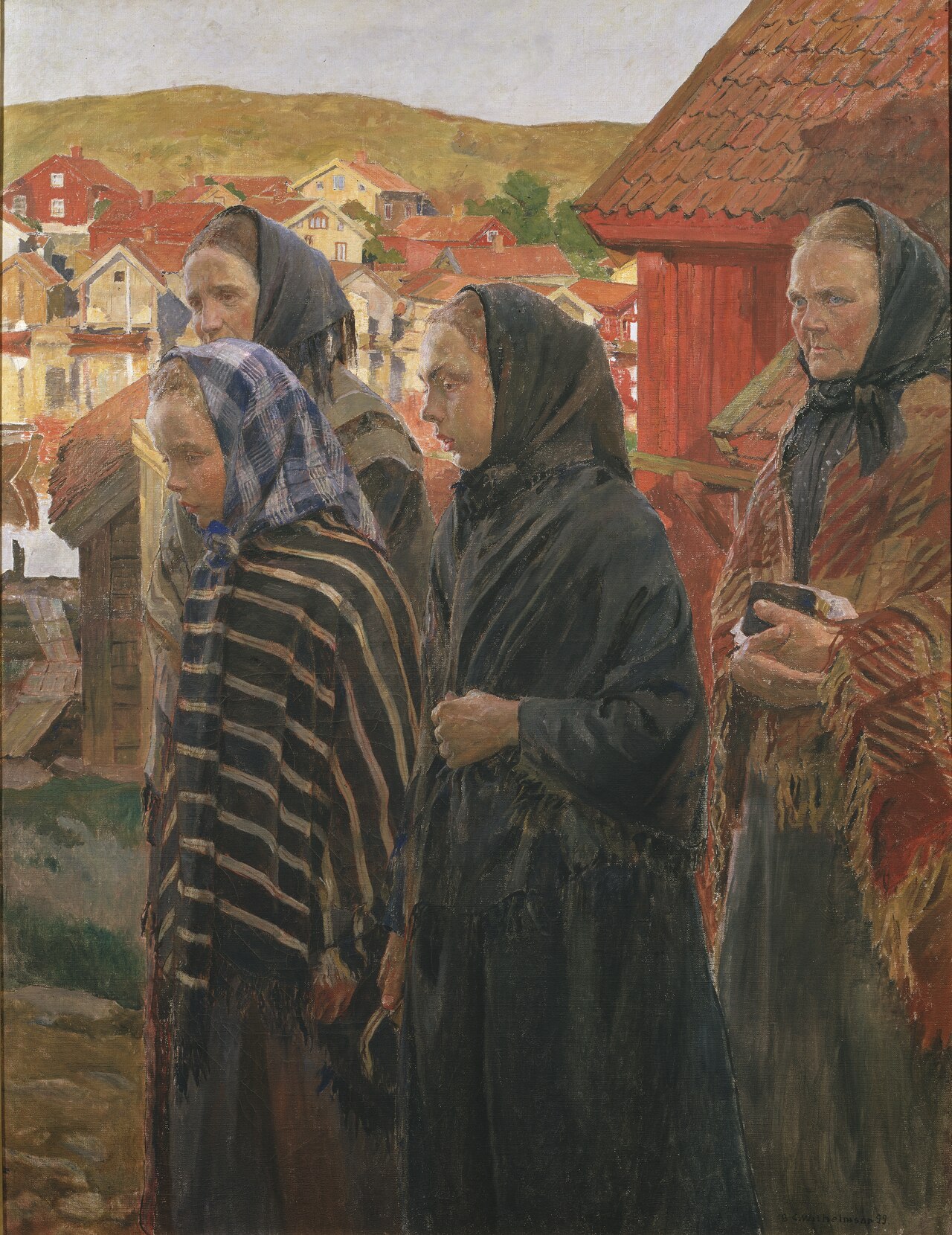
Major works - **Church‑Goers in a Boat (1909)** – This oil painting depicts a small group of worshippers travelling by boat to a coastal church. The work exemplifies Wilhelmson’s interest in communal ritual and the interplay of light on water; the muted blues and greys convey both the solemnity of the pilgrimage and the harshness of the sea. - **Fishermen's Wives Returning from Church (1899)** – In this composition, women in modest dress emerge from a church doorway, their faces lit by the soft glow of the interior. The painting captures a moment of quiet anticipation, highlighting the social role of women within maritime communities. - **The Artist's Sister (1899)** – A more intimate portrait, this work shows Wilhelmson’s sister in a domestic setting. The restrained colour scheme and delicate handling of fabric demonstrate his skill in rendering personality through subtle gestures. - **Tired (1898)** – This piece portrays a lone fisherman resting after a day’s labour. The figure’s slumped posture and the subdued background convey fatigue and dignity, reflecting Wilhelmson’s empathy for the working class. - **Maj Bring (1900)** – A portrait of the Swedish artist Maj Bring, painted during a period when Wilhelmson was establishing his reputation as a portraitist. The work is notable for its keen observation of the sitter’s expression and an almost sculptural treatment of light on the face.
Influence and legacy Wilhelmson’s impact on Swedish art extends beyond his own oeuvre. As a professor at the Gothenburg School of Art, he mentored a generation of artists who would carry forward his commitment to realism and social observation. His teaching emphasized rigorous drawing, careful study of anatomy, and the importance of depicting contemporary life. Many of his former students went on to become prominent figures in Swedish modernism, crediting Wilhelmson with shaping their visual sensibilities. Additionally, his graphic work and photographic experiments contributed to the development of Swedish illustration and early twentieth‑century visual culture. Today, his paintings are held in major Swedish museums, including the Gothenburg Museum of Art, and continue to be exhibited for their authentic representation of coastal life. Wilhelmson is recognised as a bridge between the nineteenth‑century realist tradition and the emerging modernist concerns of the early twentieth century, ensuring his place in the nation’s artistic heritage.
Frequently asked questions
Who was Carl Wilhelmson?
Carl Wilhelmson (1866–1928) was a Swedish painter, graphic artist, amateur photographer and art teacher known for his naturalistic depictions of coastal and rural life.
What artistic style or movement is Wilhelmson associated with?
He is generally linked to Swedish naturalism and realism, focusing on genre scenes of everyday people rather than aligning with a specific avant‑garde movement.
What are his most famous works?
Key works include Church‑Goers in a Boat (1909), Fishermen's Wives Returning from Church (1899), The Artist's Sister (1899), Tired (1898) and the portrait Maj Bring (1900).
Why does Wilhelmson matter in art history?
Wilhelmson is important for documenting Swedish maritime culture, for his role as a teacher who shaped later Swedish artists, and for bridging 19th‑century realism with early 20th‑century artistic developments.
How can I recognise a Wilhelmson painting?
Look for calm, muted colour palettes, careful light treatment, balanced compositions of everyday scenes, and a focus on the dignity of ordinary people, often set against a coastal backdrop.