Carl Gustaf Hellqvist
1851 – 1890
In short
Carl Gustaf Hellqvist (1851–1890) was a Swedish painter celebrated for his dramatic historical canvases, especially those depicting medieval and early‑modern Swedish events, making him one of Sweden's most popular 19th‑century history painters.
Notable works
.jpg)

Early life Born in 1851 in the small town of Kungsör, Sweden, Carl Gustaf Hellqvist grew up in a modest household that valued education and cultural pursuits. His early exposure to Swedish folklore and national history sparked a lifelong fascination with the past. After completing his primary schooling, Hellqvist entered the Royal Swedish Academy of Fine Arts in Stockholm, where he received formal training in drawing, composition, and the techniques of academic painting. The academy’s rigorous curriculum, which emphasized classical drawing from life and historical subject matter, laid the foundation for his later focus on large‑scale narrative works.
Career and style Hellqvist emerged on the Swedish art scene in the late 1870s, quickly gaining a reputation for his ability to render vivid, emotionally charged scenes from Swedish history. Although he never aligned himself with a specific avant‑garde movement, his work reflects the broader 19th‑century historicist trend, combining academic realism with a romantic sensibility. He favoured a palette of rich, earth‑toned colours, using chiaroscuro to heighten drama and to draw viewers into the narrative. By the early 1880s, Hellqvist had secured commissions from both private patrons and public institutions, allowing him to produce a series of monumental canvases that were reproduced in newspapers and illustrated books, further cementing his fame.
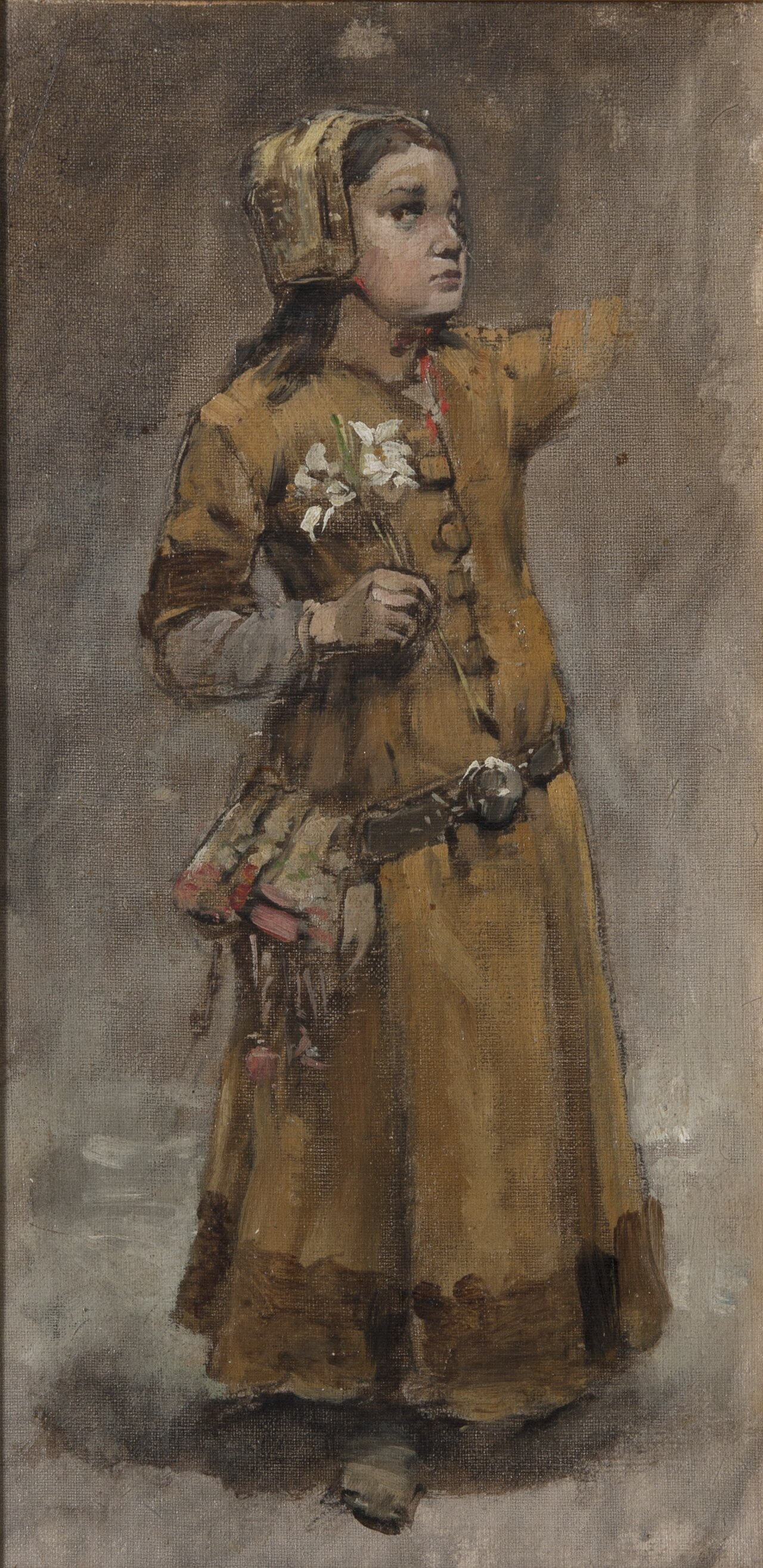
Signature techniques Hellqvist’s paintings are distinguished by meticulous attention to historical detail, particularly in costume, architecture, and weaponry. He often employed preparatory sketches and studies, such as the model of a girl for the "Valdemar Atterdag" composition, to ensure anatomical accuracy and to capture the emotional tenor of his subjects. In the studio, he worked on large wooden panels, building up layers of oil paint to achieve depth and texture. His handling of light—often a single, dramatic source illuminating a focal point—creates a sense of immediacy that pulls the viewer into the depicted moment. The artist also used a limited yet vivid colour scheme to emphasize the narrative over decorative embellishment.
Major works Among Hellqvist’s most celebrated pieces is **"Valdemar Atterdag Holding Visby to Ransom" (1882)**, a monumental canvas that portrays the Danish king’s demand for tribute from the Swedish city of Visby. The work showcases Hellqvist’s skill in arranging complex groupings of figures and his ability to convey political tension through facial expression and gesture. A related study, **"A Girl. Study for Valdemar Atterdag Holding Visby to Ransom, NM 1431" (1882)**, demonstrates his preparatory process, focusing on a single figure to perfect posture and clothing detail.
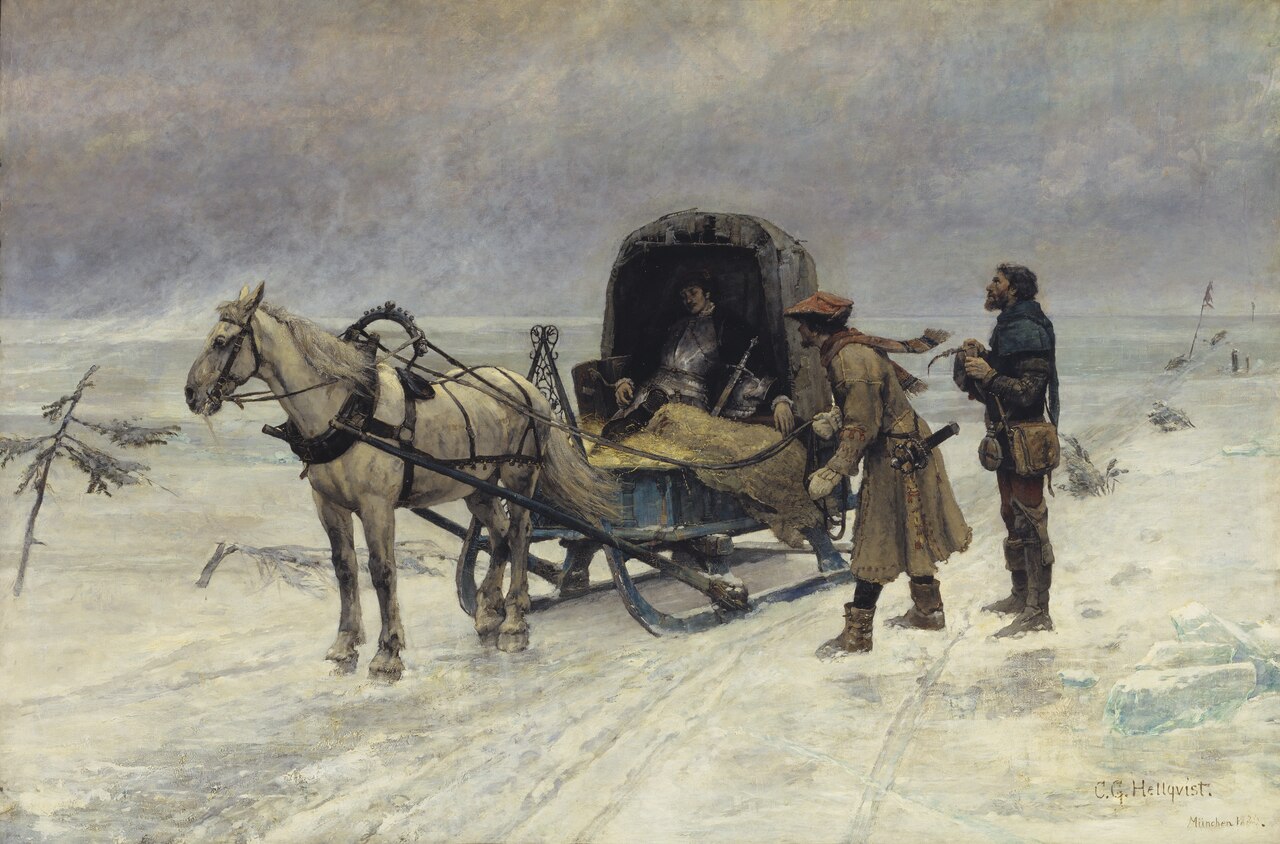
Another key work, "The Death of Sten Sture the Younger on the Ice of Lake Mälaren" (1880), captures a tragic moment in Swedish history with a stark, icy landscape that heightens the drama of the fallen chieftain. Hellqvist’s use of a cold colour palette and stark lighting underscores the solemnity of the scene.
In "Embarkation of the body of Gustavus II Adolphus at the Port of Wolgast 1633" (1885), the artist renders a solemn naval ceremony with meticulous accuracy, reflecting his interest in military history and his capacity to depict large groups in a coherent, narrative‑driven composition.
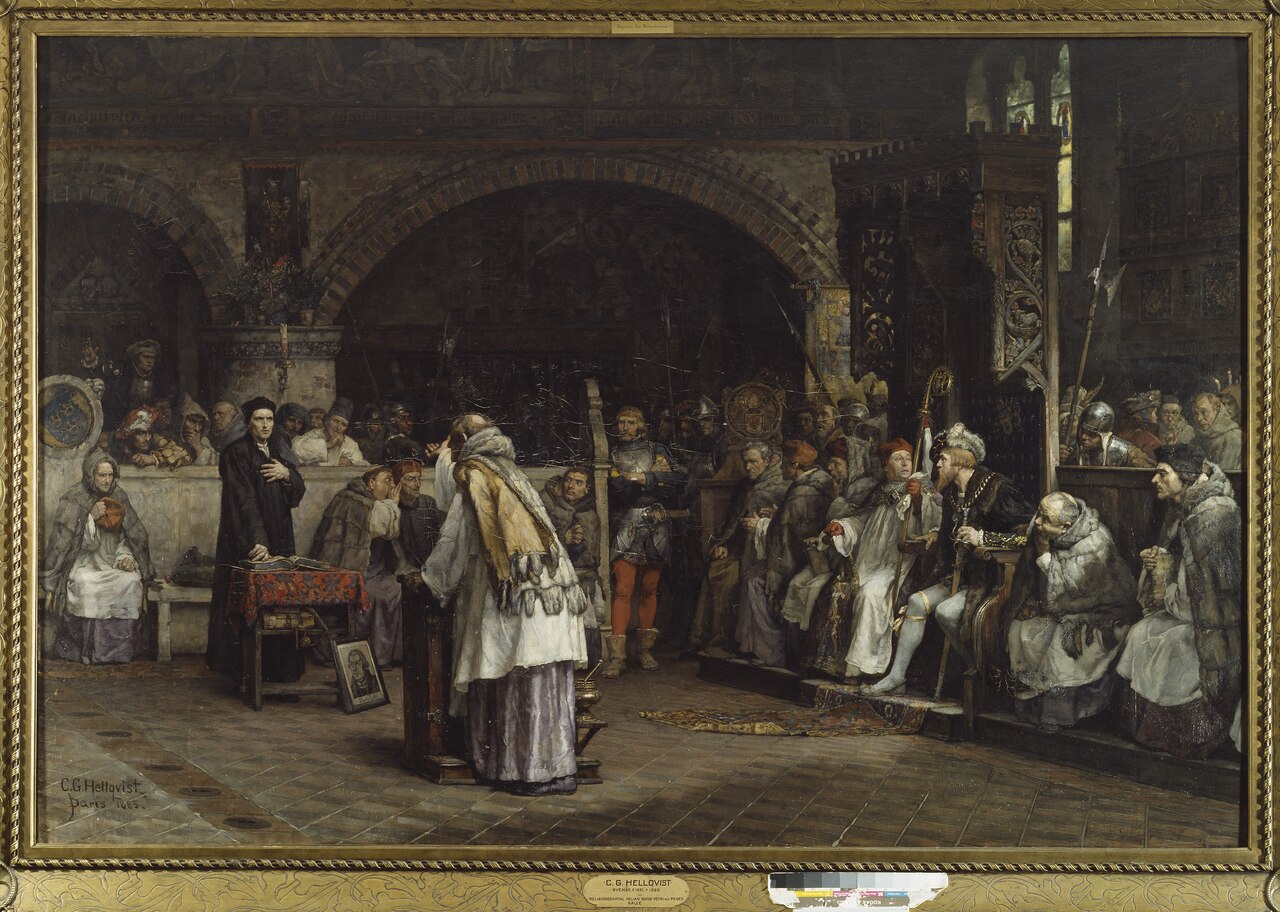
"Religious Discourse between Olaus Petri and Peder Galle" (1883) shifts focus to theological debate, illustrating Hellqvist’s versatility. The painting juxtaposes intellectual exchange with subtle visual cues—such as the positioning of books and the contrasting lighting on the two figures—to convey the tension between reformist and conservative ideas in 16th‑century Sweden.
These works collectively illustrate Hellqvist’s commitment to national history, his technical proficiency, and his ability to translate complex historical events into accessible visual narratives.
Influence and legacy Carl Gustaf Hellqvist’s impact on Swedish art extended beyond his own prolific output. By popularising historical subjects, he helped shape a national visual identity during a period of growing cultural nationalism. His paintings were widely reproduced in periodicals and educational texts, influencing both public perception of Swedish history and the next generation of artists who sought to emulate his narrative clarity. Though he died prematurely in Munich in 1890, his legacy endures in museum collections and in the continued scholarly interest in 19th‑century historicist painting. Modern exhibitions of his work often highlight his role in bridging academic tradition with a popular appetite for storytelling, affirming his place as a pivotal figure in Sweden’s artistic heritage.
Frequently asked questions
Who was Carl Gustaf Hellqvist?
Carl Gustaf Hellqvist (1851–1890) was a Swedish painter best known for his large, dramatic historical canvases that depicted key moments from Sweden’s medieval and early‑modern past.
What style or movement is his work associated with?
His work aligns with 19th‑century historicism, combining academic realism with a romantic emphasis on narrative drama rather than belonging to a specific avant‑garde movement.
What are his most famous works?
Among his most renowned paintings are "Valdemar Atterdag Holding Visby to Ransom" (1882), "The Death of Sten Sture the Younger on the Ice of Lake Mälaren" (1880), "Embarkation of the body of Gustavus II Adolphus at the Port of Wolgast" (1885), and "Religious Discourse between Olaus Petri and Peder Galle" (1883).
Why does Hellqvist matter in art history?
He helped define a visual language for Swedish national history, popularising historic subjects across the public sphere and influencing later artists who sought to blend scholarly accuracy with compelling storytelling.
How can you recognise a Hellqvist painting?
His paintings are marked by meticulous historical detail, dramatic lighting that highlights a central narrative moment, a restrained yet vivid colour palette, and a compositional focus on groups of figures engaged in a clear, emotionally charged story.