Carl Fredrik Kiörboe
1799 – 1876
In short
Carl Fredrik Kiörboe (1799–1876) was a Danish‑born Swedish painter renowned for his realistic animal portraits, especially of horses and dogs. Self‑taught and active in Stockholm and later France, he received commissions from Swedish royalty and the French imperial court.
Notable works
,_empress,_married_to_Napoleon_III_of_France_-_NMGrh_2045_-_Nationalmuseum.jpg)

Early life Born in 1799 in Christiansfeld, then part of the Danish duchy of Schleswig, Carl Fredrik Kiörboe grew up in a region where agriculture and animal husbandry were central to daily life. His parents, modest merchants, encouraged his curiosity about the natural world, and young Carl spent long hours observing the horses, hounds and cattle that worked the surrounding fields. Largely self‑educated, Kiörboe did not attend a formal art academy; instead he learned by copying prints, studying the anatomy of live animals, and practising in a modest workshop attached to his family home. By his late teens he had developed a proficiency in drawing that attracted the attention of local patrons, and a move to Sweden in the early 1820s provided the first professional opportunities for the aspiring painter.
Career and style After relocating to Sweden, Kiörboe settled in Stockholm, where the burgeoning bourgeoisie and royal court were eager for portraits that celebrated both human and animal subjects. He quickly established a niche as a specialist in equine and canine portraiture, a field that combined the prestige of aristocratic portraiture with the emerging interest in naturalistic animal studies. His clientele included members of the Swedish nobility, military officers, and eventually members of the French imperial family, who commissioned works during diplomatic visits to Stockholm. Kiörboe’s paintings are characterised by meticulous observation of anatomy, a restrained palette of earth tones, and a compositional clarity that places the animal as the central figure rather than a decorative accessory. While he never aligned himself with a formal movement, his approach echoes the realism of Dutch masters such as Paulus Potter and the French animalist tradition of Rosa Bonheur, albeit filtered through a distinctly Scandinavian sensibility. He exhibited regularly at the Royal Swedish Academy of Fine Arts and, in the 1860s, spent extended periods in Paris and later in Dijon, where he died in 1876.
Signature techniques Kiörboe employed oil on canvas as his primary medium, favouring a layered glazing technique that allowed him to achieve the subtle tonal variations of fur and feather. He often began with a quick charcoal sketch to capture the animal’s pose, then built up the flesh tones with thin, semi‑transparent layers, creating depth without sacrificing surface detail. His brushwork varies from broad, confident strokes for musculature to fine, almost stippled touches when rendering the texture of a dog’s coat. Light is handled with a soft chiaroscuro, illuminating the animal’s form against a muted background, which enhances the three‑dimensional effect. Kiörboe also paid particular attention to the eyes, rendering them with a reflective glaze that conveys a sense of vitality and personality.
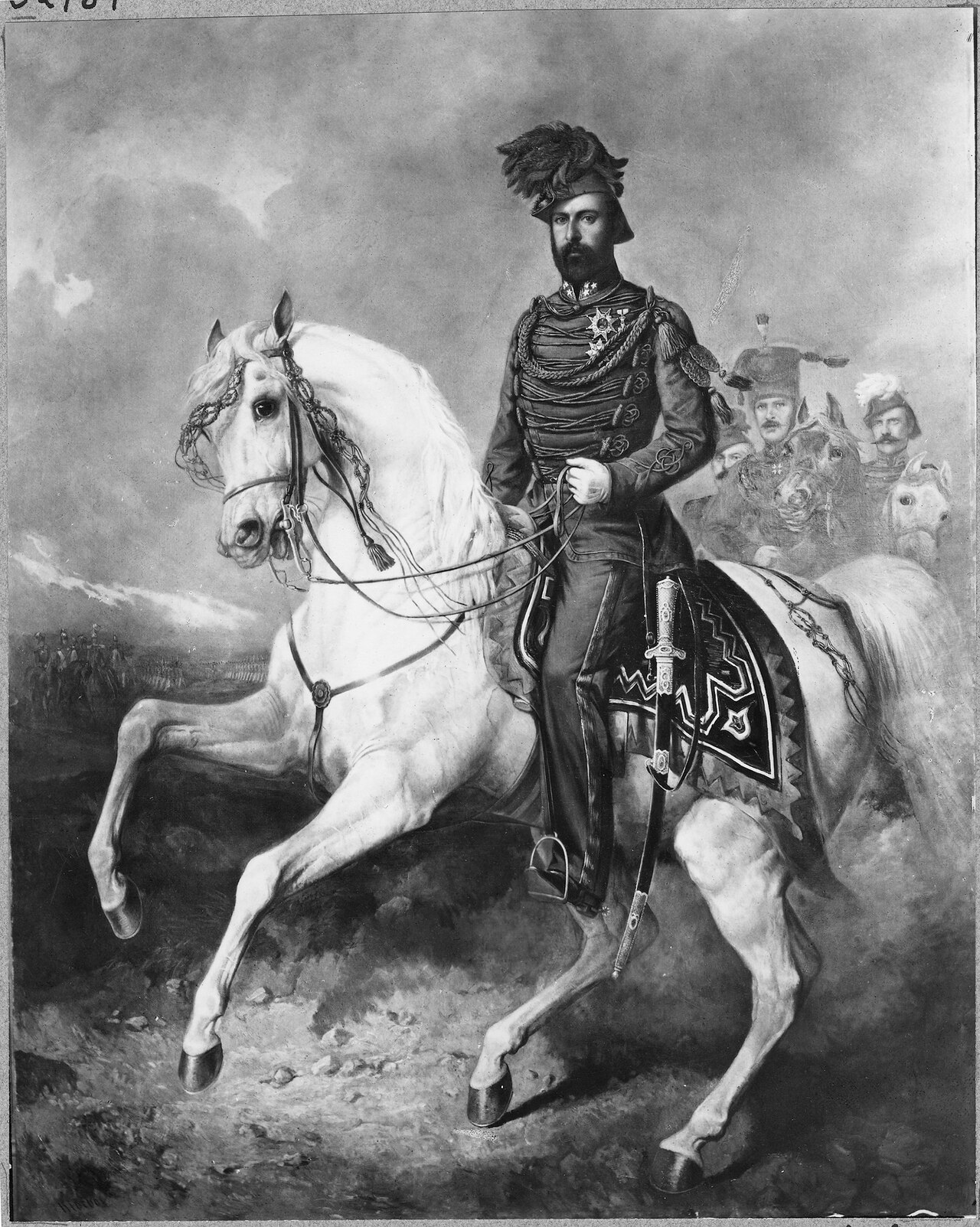
Major works King Charles XV of Sweden on Horseback (1860) – This portrait captures the young monarch astride a powerful chestnut horse, rendered with a striking sense of motion. Kiörboe’s attention to the animal’s musculature and the regal bearing of the rider demonstrates his ability to merge portraiture with dynamic equine study. The background is reduced to a muted landscape, ensuring the focus remains on the interaction between king and steed.
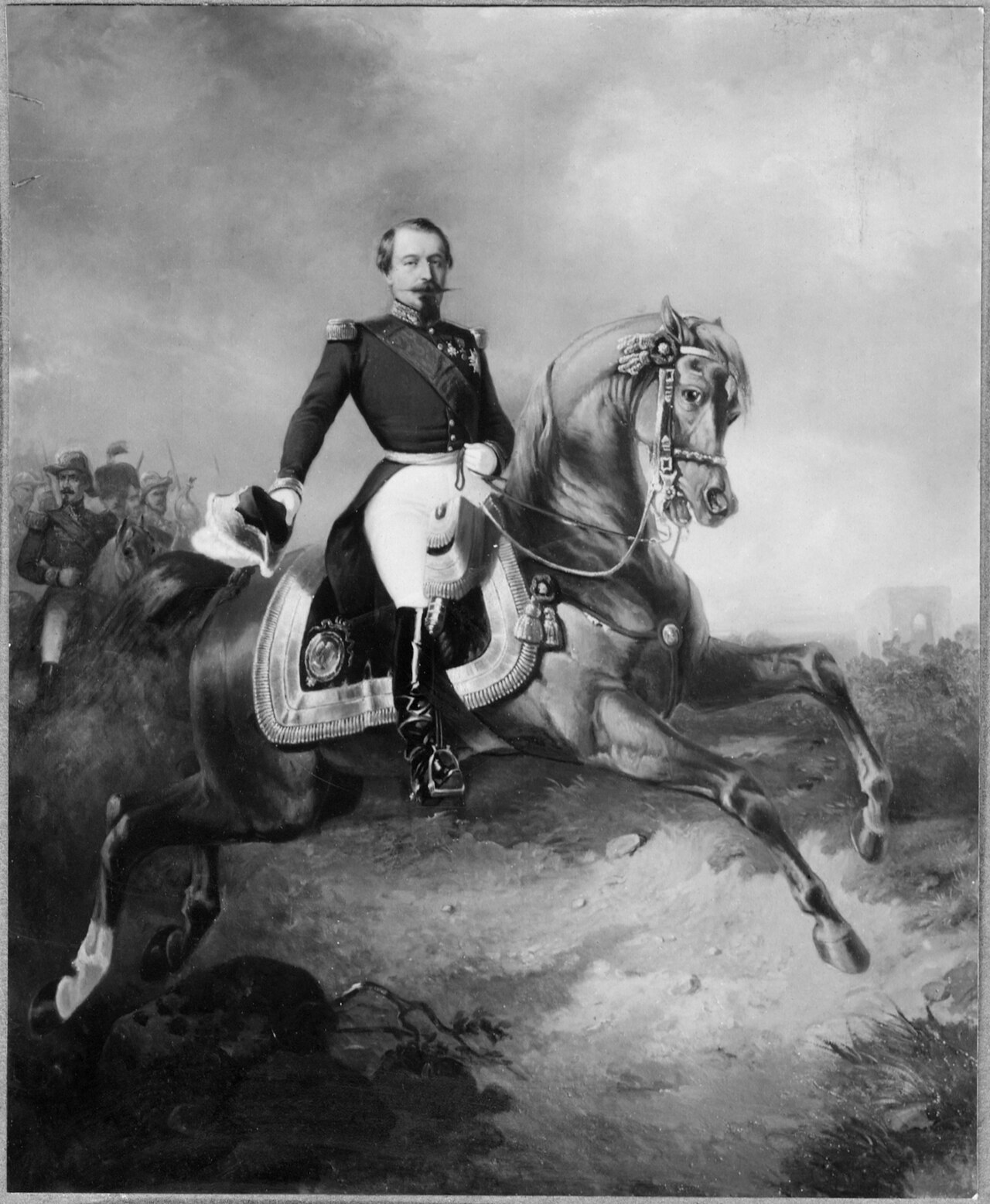
Napoleon III – Commissioned during a diplomatic visit, the painting presents the French emperor in full military regalia, accompanied by his prized warhorse. Kiörboe’s rendering of the horse’s glossy coat and the subtle play of light on the emperor’s uniform exemplify his skill in integrating human and animal subjects within a single composition.
Eugénie – In this companion piece, the empress is portrayed beside a tranquil mare, her hand resting gently on the animal’s neck. The work reflects a softer, more intimate tone, with delicate brushstrokes that convey the silk of Eugénie’s dress and the fine hairs of the horse’s mane.
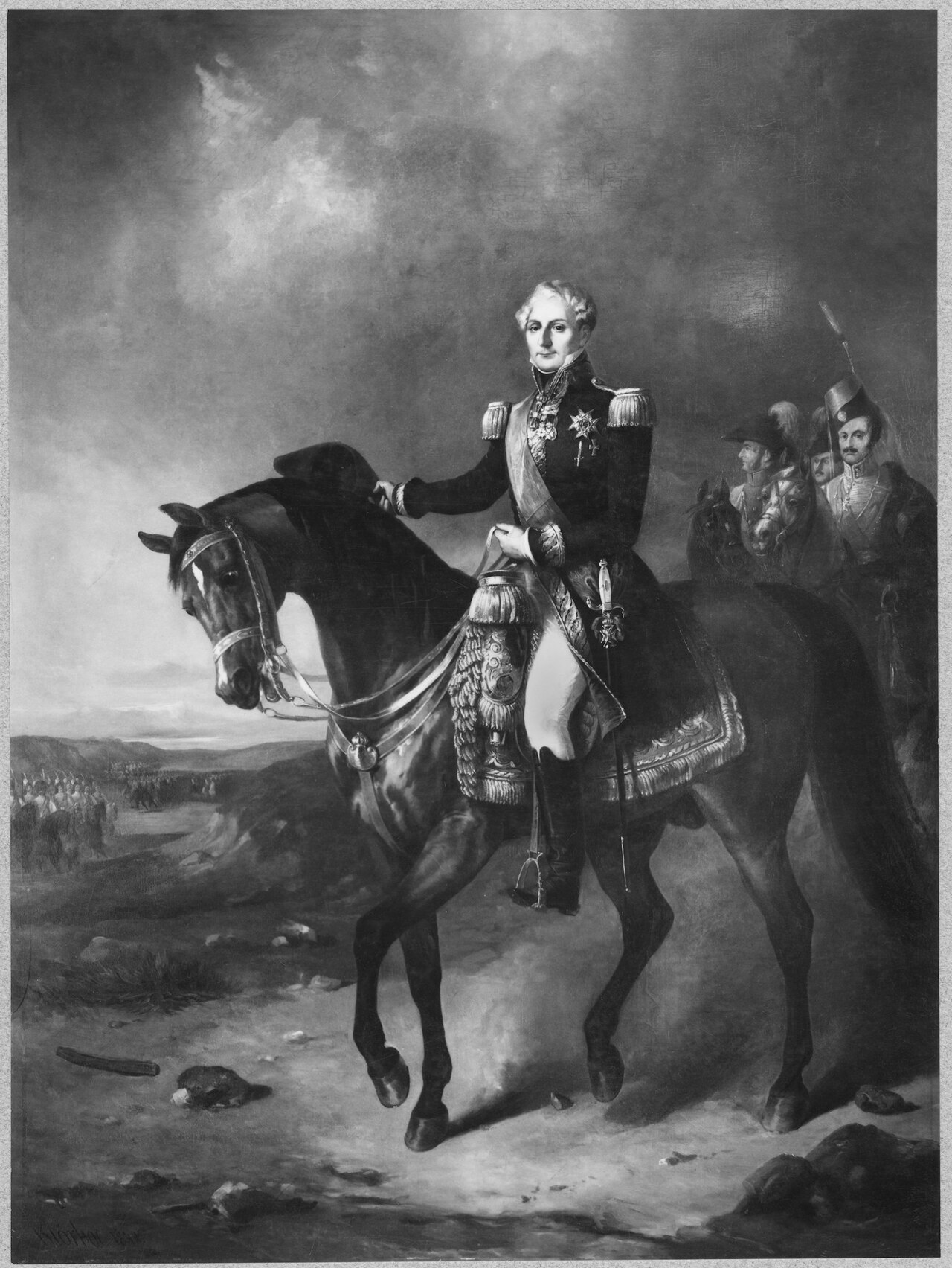
Karl XIV John of Sweden and Norway – A group portrait of the king with three other dignitaries, each mounted on a different horse. Kiörboe’s composition balances the individuality of the riders with the uniformity of the equine forms, creating a cohesive narrative of royal authority.
Two Hounds in a Stable – One of Kiörboe’s purest animal studies, this canvas depicts a pair of hounds lying in a dimly lit stable. The contrast between the warm glow on the dogs’ coats and the cool shadows of the surrounding wood showcases his mastery of chiaroscuro and his affection for canine subjects.
Influence and legacy Carl Fredrik Kiörboe occupies a modest but distinct place in 19th‑century Scandinavian art. His dedication to accurate animal anatomy helped raise the status of animal painting in Sweden, influencing younger artists such as Anders Zorn, who admired Kiörboe’s ability to capture the vitality of living subjects. Though he never achieved the fame of contemporaries working in more avant‑garde circles, his works are held in several Swedish and French museum collections, and they continue to be referenced in studies of royal portraiture and the visual culture of the European aristocracy. Modern scholars regard Kiörboe as an exemplar of the self‑taught artist who bridged local tradition and international taste, offering a valuable perspective on the interplay between portraiture, animal studies, and the politics of patronage in the 1800s.
Frequently asked questions
Who was Carl Fredrik Kiörboe?
Carl Fredrik Kiörboe (1799–1876) was a Danish‑born Swedish painter best known for realistic portraits of horses and dogs, often commissioned by royalty and aristocracy.
What style or movement is Kiörboe associated with?
He is not linked to a formal movement; his work aligns with 19th‑century realism, drawing on Dutch animal painting and French animalist traditions while maintaining a Scandinavian sensibility.
What are Kiörboe’s most famous works?
Key works include King Charles XV of Sweden on Horseback (1860), portraits of Napoleon III and Empress Eugénie, a group portrait of Karl XIV John of Sweden and Norway, and the animal study Two Hounds in a Stable.
Why does Kiörboe matter in art history?
He helped elevate animal painting in Sweden, influenced later Swedish artists, and provides insight into the visual representation of European royalty and the role of self‑taught painters in the 1800s.
How can I recognise a Kiörboe painting?
Look for meticulous anatomical detail, especially in fur and musculature, a restrained earth‑tone palette, subtle chiaroscuro, and a composition that foregrounds the animal as the central figure.