Carl Fredrik Hill
1849 – 1911
In short
Carl Fred Fredrik Hill (1849–1911) was a Swedish painter and draftsman renowned for his early atmospheric landscapes and, after a mental breakdown in his late twenties, for a series of imaginative, often macabre drawings that reveal a unique inner vision.
Notable works


Early life Carl Fredrik Hill was born on 19 May 1849 in the university town of Lund, Sweden. He grew up in a cultured middle‑class family; his father was a physician and his mother a pianist, which gave young Carl access to both scientific and artistic influences. From an early age he displayed a strong aptitude for drawing, copying sketches from illustrated books and producing charcoal studies of the surrounding countryside. After completing his secondary education, Hill moved to Stockholm to enrol at the Royal Swedish Academy of Fine Arts, where he received formal training in drawing, anatomy and composition. The Academy’s curriculum, rooted in the traditions of the Old Masters, provided Hill with a solid technical foundation, but his ambitions soon led him beyond the academy’s conservative expectations.
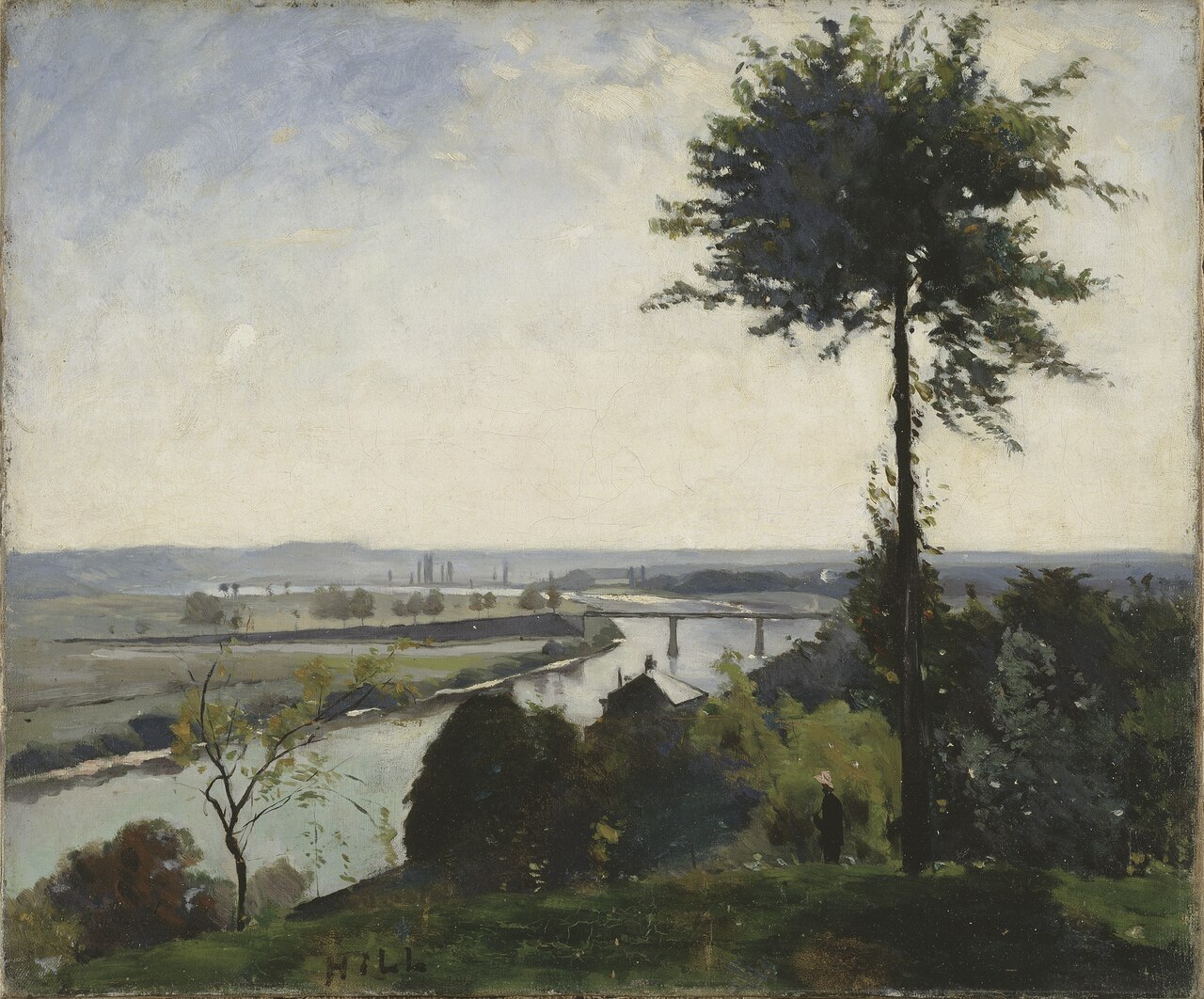
Career and style In 1870, at the age of twenty‑one, Hill travelled to Paris, the epicentre of avant‑garde art. He settled in the Montmartre district, where he encountered the works of the Barbizon school and the early Impressionists. Although he never formally joined a particular movement, his early paintings bear the hallmarks of a transitional style: they combine the tonal subtlety of the Barbizon landscape tradition with the loose brushwork and interest in fleeting light that would later define Impressionism. Over the next four years Hill produced a series of atmospheric landscapes that are distinguished by their muted palettes, misty horizons and a contemplative mood. These works convey a deep sensitivity to the Scandinavian landscape, even when painted en plein air in the French countryside.
In 1876, at the age of twenty‑seven, Hill’s promising career was abruptly interrupted by a severe mental crisis. He began to experience symptoms of what would later be diagnosed as schizophrenia, and his health deteriorated rapidly. By 1878 he was admitted to a psychiatric hospital in Lund, where he remained for the rest of his life, intermittently detained in various institutions. The period of institutionalisation coincided with a radical shift in his artistic output. Deprived of the ability to work in oil, Hill turned to drawing as his primary medium, producing a prolific body of work that was starkly different from his earlier landscapes.
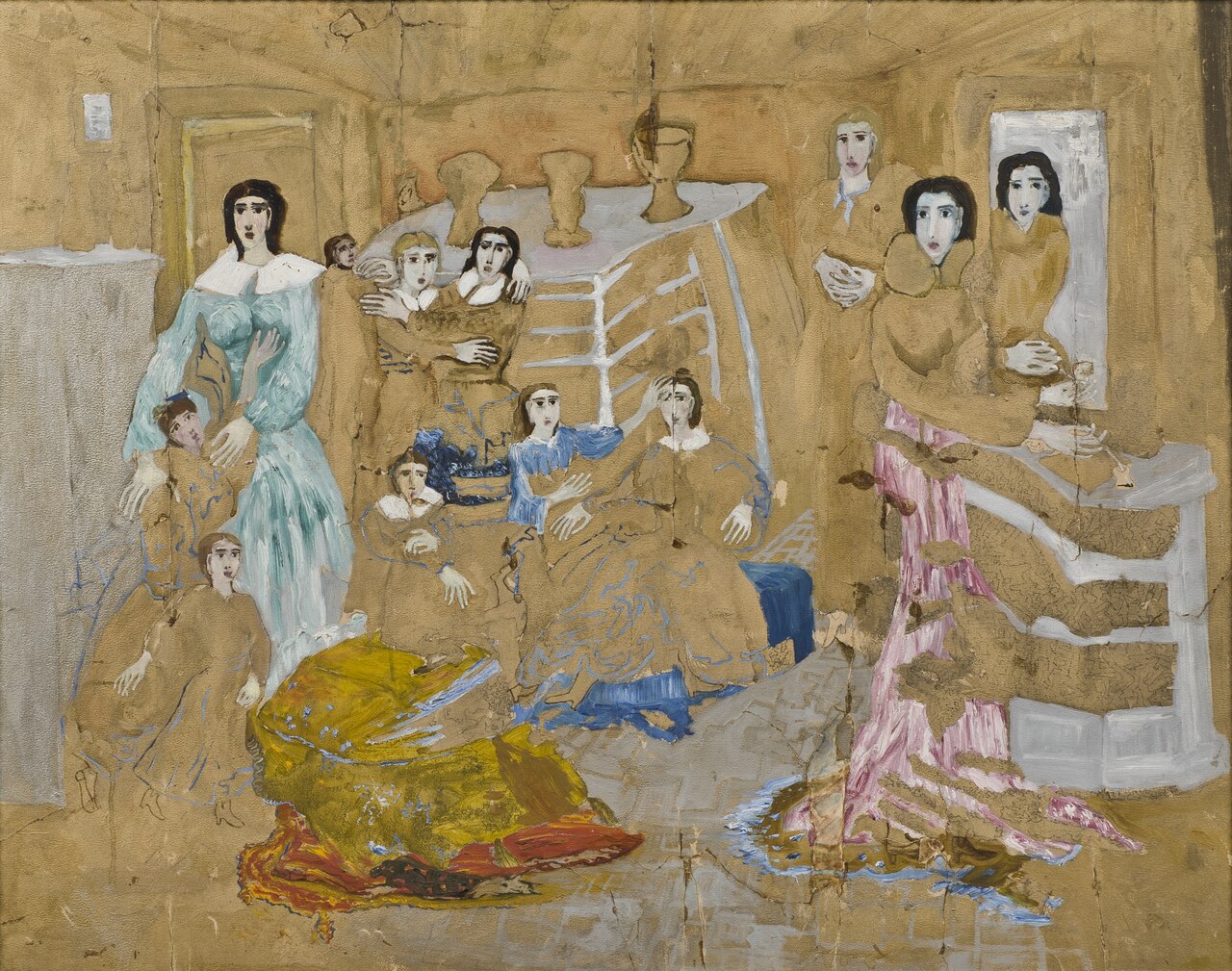
Signature techniques Hill’s early landscapes are characterised by a restrained colour scheme, often dominated by greys, blues and earth tones. He employed a wet‑on‑wet technique with thin oil layers, allowing the paint to blend softly on the canvas and creating the impression of fog or mist. His compositions frequently feature a low horizon line, which expands the sky and emphasises atmospheric effects. In contrast, his later drawings are executed in ink, charcoal and graphite, often on thin paper. He developed a distinctive hatching style, using dense, overlapping strokes to generate texture and depth. The drawings frequently contain intricate, almost obsessive detailing of fantastical figures, architectural ruins and symbolic motifs. A recurring visual element is the use of gold or ochre ground tones, which he applied as a base layer before adding the inked figures, giving the works a luminous, otherworldly quality.
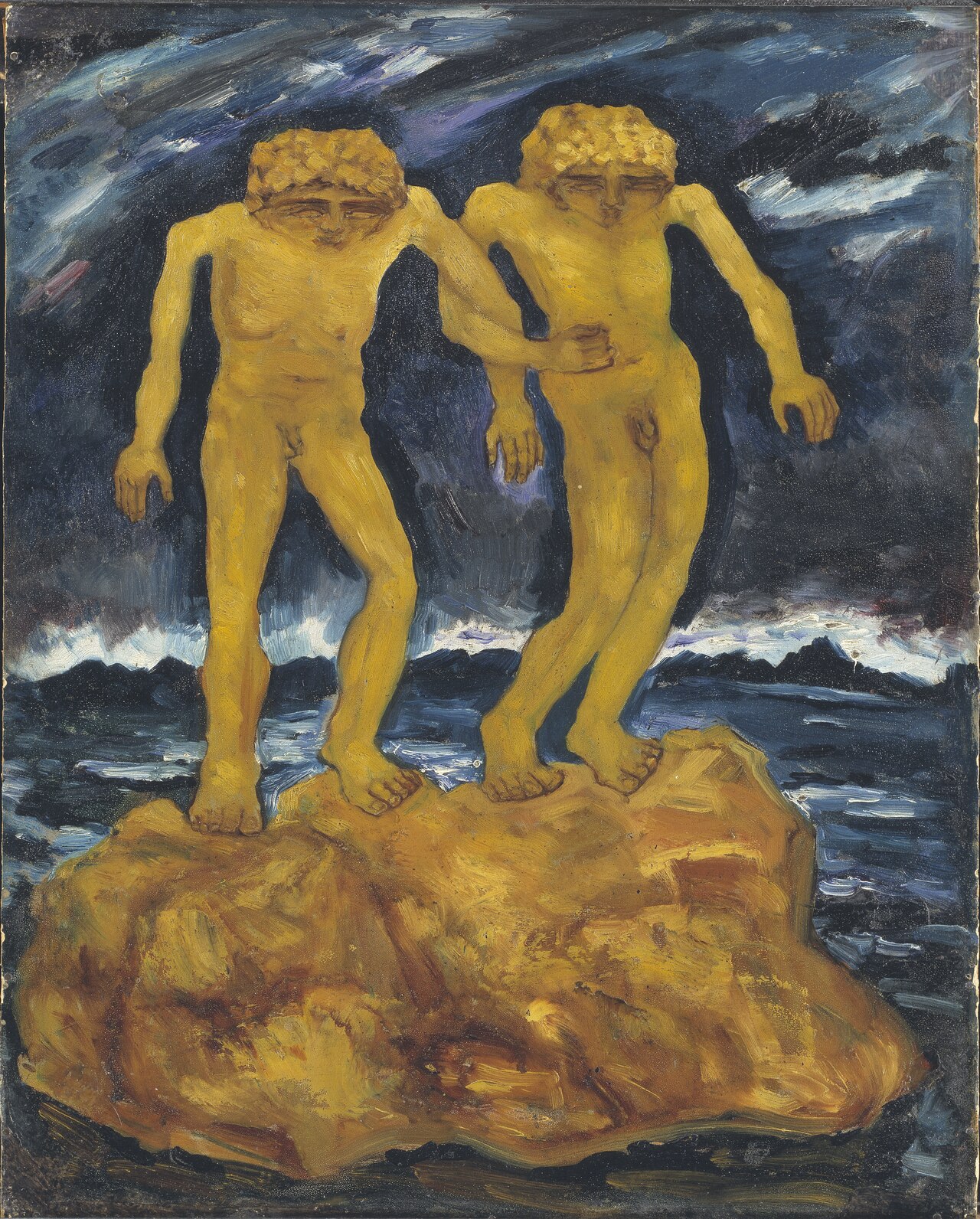
Major works - **The Cemetery (1877)** – One of Hill’s last oil paintings before his breakdown, this work depicts a desolate burial ground under a heavy sky. The muted palette and soft brushwork convey a sense of melancholy and foreboding, reflecting the artist’s own inner turmoil. - **The Tree and the River III (The Seine at Bois‑le‑Roi) (1877)** – This landscape captures a quiet riverside scene near Paris, with a solitary tree standing against a reflective water surface. The painting demonstrates Hill’s skill in rendering atmospheric light and subtle colour shifts. - **Untitled** – Hill produced numerous untitled drawings during his institutional years; many of these feature surreal, nightmarish scenes populated by distorted human figures and skeletal forms, illustrating his preoccupation with mortality and isolation. - **The Last Human Beings** – A haunting drawing that portrays a barren landscape populated by skeletal silhouettes, suggesting a post‑apocalyptic vision. The work is composed with stark black lines against a muted background, emphasizing the starkness of the subject. - **Figures on Golden Ground. Composition from His Illness** – This piece exemplifies Hill’s later technique of applying a warm, golden base before drawing intricate figures in ink. The composition is dense, with overlapping forms that hint at a chaotic inner world, yet the golden ground provides a unifying, almost sacred ambience.
Influence and legacy Although Hill’s career was cut short and his name remained relatively obscure during his lifetime, his work has gained significant scholarly interest in the 20th and 21st centuries. Art historians view his early landscapes as an important bridge between the Romantic tradition and the emerging modernist approaches to light and atmosphere. More importantly, his later drawings are regarded as precursors to expressionist and outsider art, anticipating the raw emotional intensity of artists such as Egon Schiele and the later work of Jean Dubuffet. Hill’s life story – a talented artist whose creative drive persisted despite severe mental illness – has also resonated with contemporary discussions about the relationship between creativity and mental health. Major museums in Sweden, including the Nationalmuseum in Stockholm, hold collections of his works, and his drawings have been featured in exhibitions exploring the art of the marginalised and the visionary.
Today, Carl Fredrik Hill is recognised as a singular figure in Swedish art history, celebrated both for his lyrical early landscapes and for the haunting, visionary drawings that emerged from his personal struggles. His oeuvre offers a compelling study of how an artist can transform personal adversity into a distinctive visual language that continues to inspire scholars and viewers alike.
Frequently asked questions
Who was Carl Fredrik Hill?
Carl Fredrik Hill (1849–1911) was a Swedish painter and draftsman noted for his early atmospheric landscapes and later visionary drawings created after a mental breakdown.
What style or movement is he associated with?
Hill did not belong to a formal movement; his early work blends Barbizon‑inspired tonalism with proto‑Impressionist light effects, while his later drawings anticipate expressionist and outsider art.
What are his most famous works?
Key works include *The Cemetery* (1877), *The Tree and the River III (The Seine at Bois‑le‑Roi)* (1877), *The Last Human Beings*, and the drawing *Figures on Golden Ground. Composition from His Illness*.
Why does Hill matter in art history?
He bridges Romantic landscape painting and modernist approaches to atmosphere, and his post‑illness drawings are early examples of visionary, expressive art that prefigure 20th‑century movements.
How can I recognise a Carl Fredrik Hill painting or drawing?
His early oils feature muted, misty palettes with soft, blended brushwork, while his later drawings use dense hatching, gold or ochre grounds, and often depict fantastical, skeletal figures.