Carl Frederik von Breda
1759 – 1818
In short
Carl Frederik von Breda (1759–1818) was a Swedish portrait painter who trained in Britain under Sir Joshua Reynolds, returned to Sweden to become a professor at the Royal Academy of Arts and court painter, and is remembered for his refined, Van Dyck‑inspired portraits of Swedish high society.
Notable works

,_Wholesale_Merchant_-_NM_1548_-_Nationalmuseum.jpg)
Early life Carl Frederik von Breda was born in Stockholm in 1759 into a family with mercantile roots. His early education included a solid grounding in drawing, which was typical for aspiring artists in Sweden at the time. At the age of twenty‑two, in 1781, he married, establishing a household that would later produce his son, Johan Fredrik von Breda, who also pursued painting. Breda’s ambition led him to seek further training abroad, and by the mid‑1780s he had relocated to London, the centre of European portraiture.
Career and style In Britain, Breda entered the studio of Sir Joshua Reynolds, the pre‑eminent portraitist of the era and the first president of the Royal Academy. Under Reynolds’s mentorship, Breda absorbed the principles of the Grand Manner—an approach that emphasized noble bearing, idealised features, and a harmonious colour palette. This education positioned him as a bridge between Swedish artistic traditions and the sophisticated British style that dominated European courts.
Returning to Sweden in 1796, Breda was appointed professor at the Royal Academy of Arts in Stockholm, where he taught a generation of Swedish painters. His reputation as a portraitist grew rapidly; by the turn of the century he was the preferred artist for aristocratic patrons and, eventually, the Swedish royal family. Contemporary accounts dubbed him "the Van Dyck of Sweden," a reference to his ability to convey elegance and dignity in his sitters, reminiscent of the Flemish master’s court portraits.
Signature techniques Breda’s portraits are characterised by several recurring technical choices:
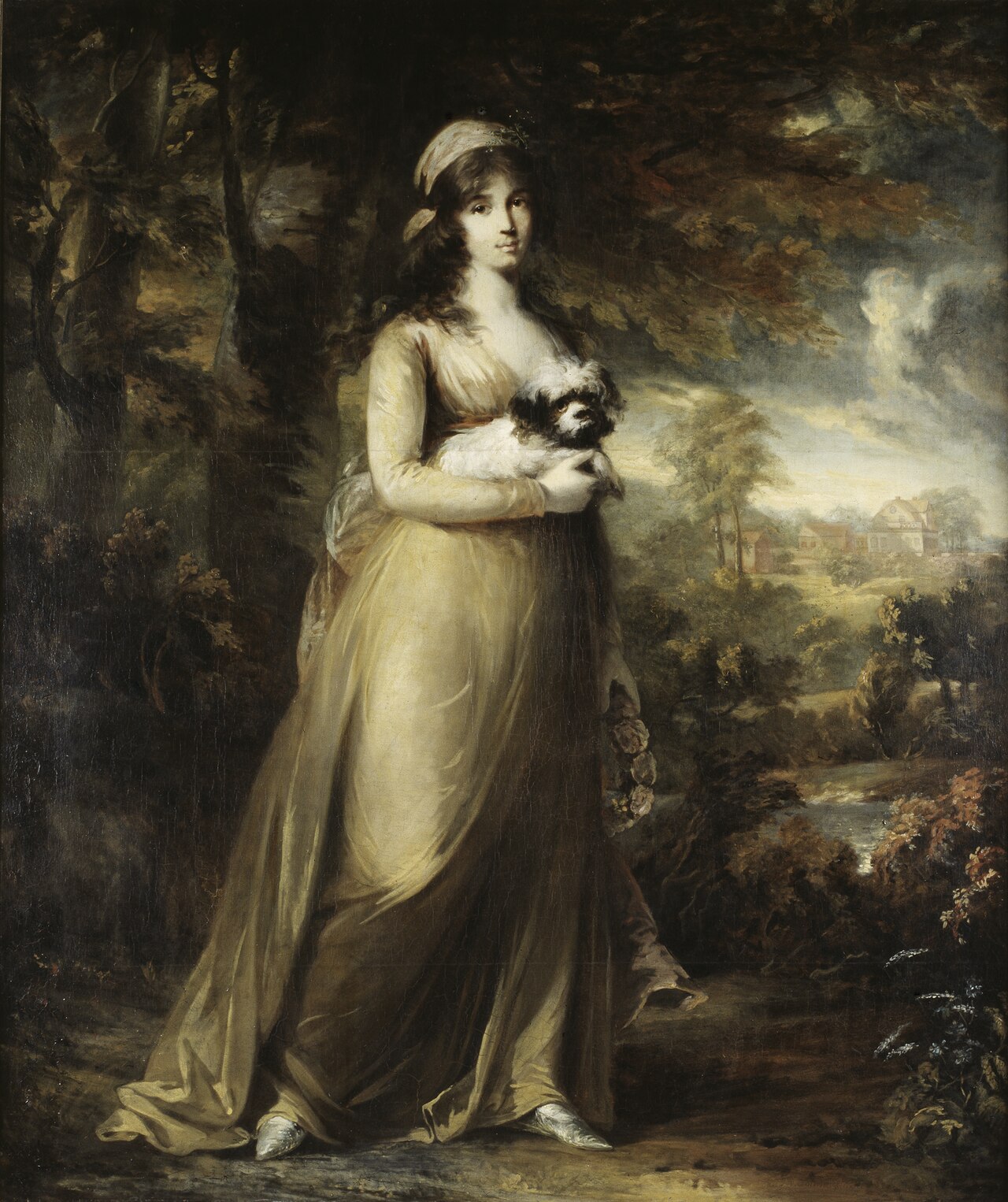
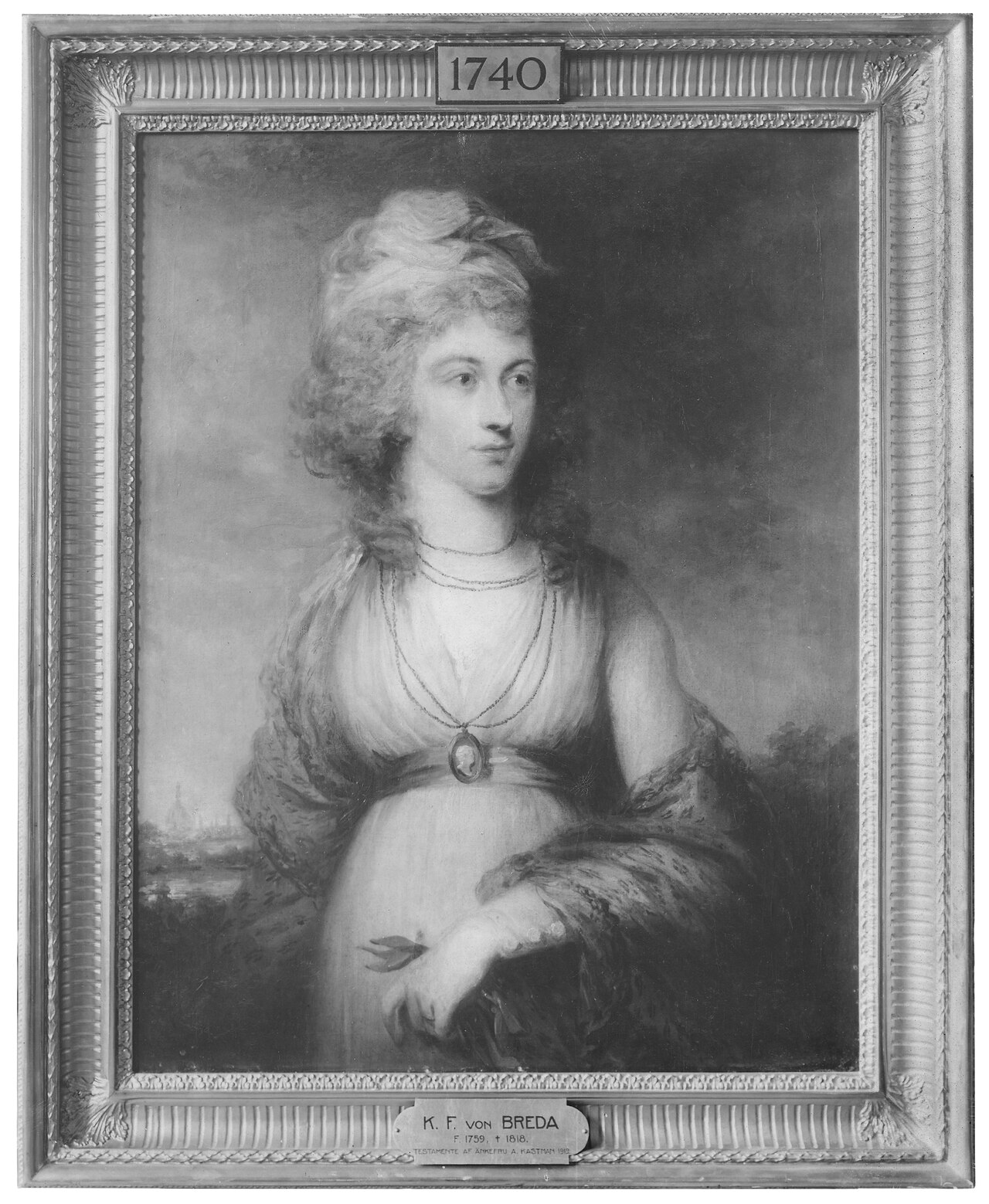
* Soft modelling of flesh – He employed subtle gradations of light and shadow to render skin with a luminous quality, often using a delicate glaze over a well‑prepared underpainting. * Rich but restrained colour – A palette dominated by warm ochres, deep blues, and muted reds gave his works a dignified atmosphere without overwhelming the sitter. * Elegant drapery – Breda paid meticulous attention to the folds of clothing, using fine brushwork to suggest texture while maintaining the overall harmony of the composition. * Compositional balance – Influenced by Reynolds, he placed the figure slightly off‑centre, allowing background elements—such as a hint of a landscape or an interior setting—to frame the subject without detracting from the portrait’s focus. * Psychological depth – Beyond surface likeness, Breda sought to capture the intellectual and moral character of his patrons, often through a direct gaze or a subtle gesture.
These techniques combined to create portraits that were both technically accomplished and emotionally resonant.
Major works Breda’s surviving oeuvre includes several notable portraits dating from the late 1790s, a period when he was consolidating his reputation in Sweden.
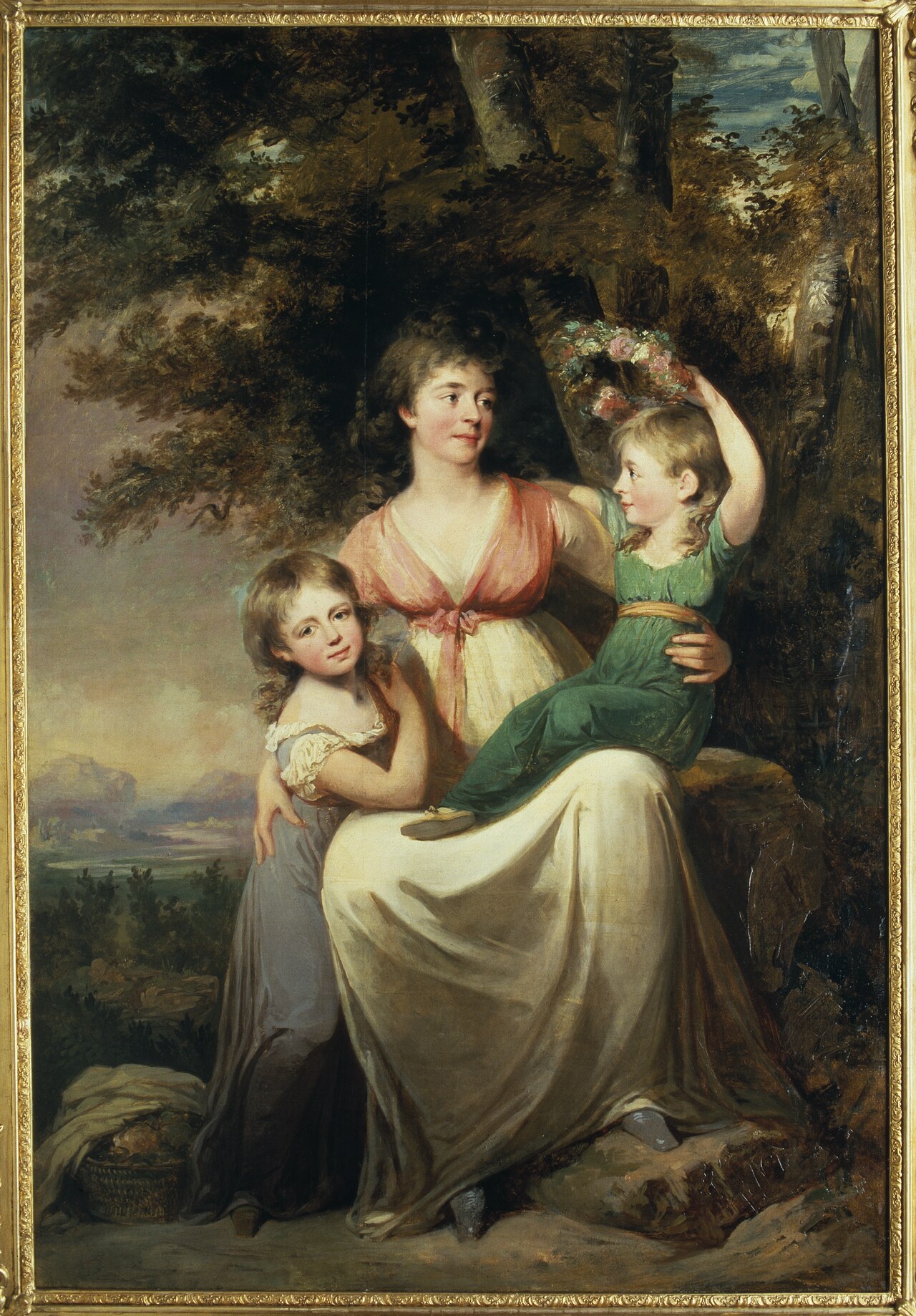
* Hedvig Wegelin with daughters (1797) – This multi‑generation family portrait demonstrates Breda’s skill at arranging several figures within a coherent space. Hedvig Wegelin is depicted with a serene expression, while her daughters are positioned to convey both intimacy and status. * Teresa Vandoni, Italian Singer at the Royal Opera, Stockholm (1797) – Here Breda captures the exotic allure of an opera singer, emphasizing the subject’s costume and the theatrical backdrop, thereby reflecting the cultural fascination with Italian opera in Swedish society. * Yusuf Agah Efendi (1795) – This portrait of a Turkish diplomat showcases Breda’s ability to render foreign attire with accuracy, highlighting the sitter’s dignified bearing and the diplomatic importance of his presence in Stockholm. * Mrs Helena Klingström (1795) – A refined portrait of a Swedish lady of the court, notable for its delicate rendering of silk fabrics and the subtle play of light on the sitter’s face, embodying the courtly elegance of the period. * Jacob Fredrik de Ron (1798) – This work portrays a prominent Swedish official, combining a restrained colour scheme with a confident pose, underscoring the sitter’s authority.
Each painting reflects Breda’s adherence to the Grand Manner while also incorporating local Swedish aesthetic sensibilities, making his work a valuable visual record of late‑18th‑century elite culture.
Influence and legacy Carl Frederik von Breda’s impact on Swedish art was multifaceted. As a professor at the Royal Academy, he introduced British portrait conventions to his students, fostering a more international outlook in Swedish painting. His son, Johan Fredrik, continued the family tradition, suggesting a direct pedagogical lineage.
Breda’s court appointments cemented his role as the primary visual chronicler of Swedish aristocracy during a period of significant political and cultural change. By blending Reynolds’s Grand Manner with a distinctly Swedish taste for restraint, he helped shape a national portrait style that persisted into the early 19th century.
Although later generations shifted toward Romanticism and Realism, Breda’s portraits remain prized for their technical mastery and historical insight. They are regularly exhibited in Swedish museums and continue to inform scholarly assessments of portraiture in the Baltic region. In contemporary art‑historical discourse, Breda is recognized as a pivotal figure who facilitated cultural exchange between Britain and Sweden, and whose works exemplify the elegance of late‑Baroque portraiture.
---
Frequently asked questions
Who was Carl Frederik von Breda?
Carl Frederik von Breda (1759–1818) was a Swedish portrait painter who trained under Sir Joshua Reynolds in Britain and later became a professor at the Royal Academy of Arts in Stockholm and court painter to the Swedish monarchy.
What artistic style or movement is he associated with?
Breda worked in the Grand Manner portrait tradition, blending the British influence of Reynolds with a restrained, elegant style that earned him the nickname "the Van Dyck of Sweden".
What are his most famous works?
His most cited works include "Hedvig Wegelin with daughters" (1797), "Teresa Vandoni, Italian Singer at the Royal Opera, Stockholm" (1797), "Yusuf Agah Efendi" (1795), "Mrs Helena Klingström" (1795), and "Jacob Fredrik de Ron" (1798).
Why is Carl Frederik von Breda important in art history?
He introduced British portrait techniques to Sweden, shaped the visual culture of the Swedish court, and taught a generation of Swedish artists, making him a key conduit for artistic exchange between Britain and Scandinavia.
How can I recognise a painting by Carl Frederik von Breda?
Look for refined, softly modelled flesh tones, balanced compositions with elegant drapery, a restrained colour palette, and a dignified, psychologically nuanced portrayal of the sitter—characteristics typical of Breda’s Grand Manner portraits.