Birger Simonsson
1883 – 1938
In short
Birger Simonsson (1883–1938) was a Swedish painter, illustrator and professor of landscape painting, noted for founding the short‑lived artists’ collective De Unga and for works such as Harvest Landscape (1931) and Portrait of a Boy (1900).
Notable works


Early life Birger Jörgen Simonsson was born in 1883 in the parish of Uddevalla, Sweden. Little is recorded about his family background, but his upbringing in a coastal town exposed him early to the natural light and varied terrain that would later dominate his artistic subjects. He received his primary education locally before moving to Stockholm to pursue formal artistic training. The capital’s academies provided him with a solid grounding in drawing, composition and the techniques of oil painting, which he would later pass on to his own students.
Career and style After completing his studies, Simonsson entered the Swedish art scene at the turn of the twentieth century. He quickly distinguished himself as a versatile illustrator, contributing to periodicals and book designs, while simultaneously developing a reputation as a landscape painter. His style blended a realist observation of nature with a subtle, sometimes lyrical, treatment of colour. Though he never aligned himself with a single avant‑garde movement, his work shows resonances of naturalism and the early modernist interest in atmospheric effects. In 1910 he was appointed professor of landscape painting at the Royal Swedish Academy of Fine Arts, a position that allowed him to influence a generation of young painters.
In 1912 Simonsson helped establish a group of emerging artists called *De Unga* (The Young). The collective was short‑lived, lasting only a few years, but it was notable for its explicit exclusion of women from membership—a policy that reflected the gendered attitudes of many contemporary art societies. The group organised several exhibitions that showcased the members’ commitment to fresh, often bold, interpretations of Swedish scenery and urban life.
Signature techniques Simonsson’s paintings are characterised by a disciplined yet expressive handling of brushwork. He favoured a layered approach, beginning with a thin underpainting to establish tonal values, then building up colour with increasingly opaque strokes. His palette often combined muted earth tones with occasional bursts of saturated hue, especially in sky and foliage, to convey the shifting moods of the Swedish climate. In his illustrations, he employed fine line work and cross‑hatching to suggest texture, a technique that carried over into his painted surfaces where he sometimes left visible brush marks to hint at the underlying structure of a landscape.
Another hallmark of his practice was the careful rendering of light. Whether depicting the soft glow of a sunrise over a farm field or the stark chiaroscuro of a winter scene, Simonsson used subtle gradations to model form and to guide the viewer’s eye through the composition. His portraiture, while less prolific than his landscapes, demonstrates a keen psychological insight, capturing the sitter’s character through restrained colour and attentive facial detail.
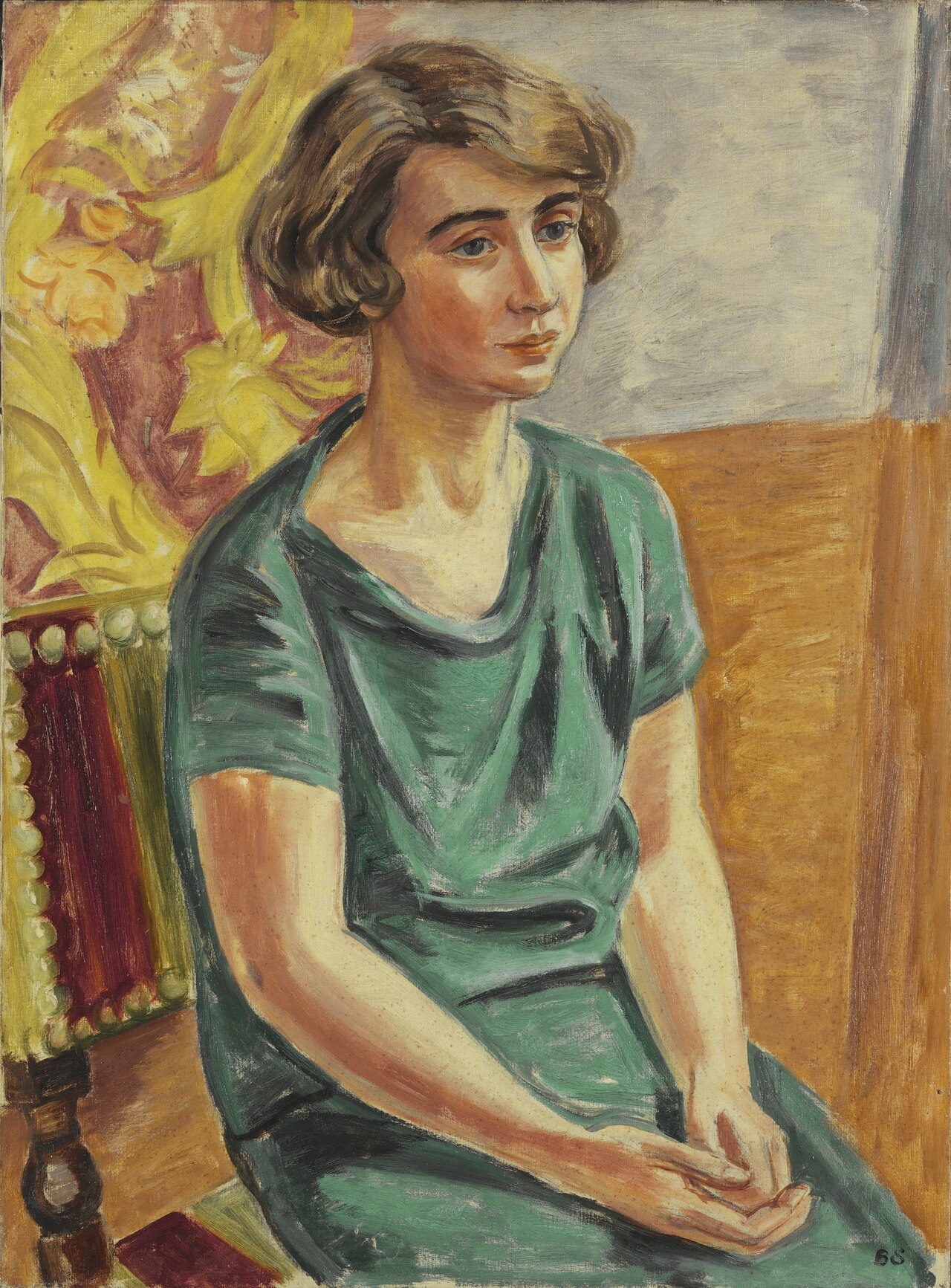
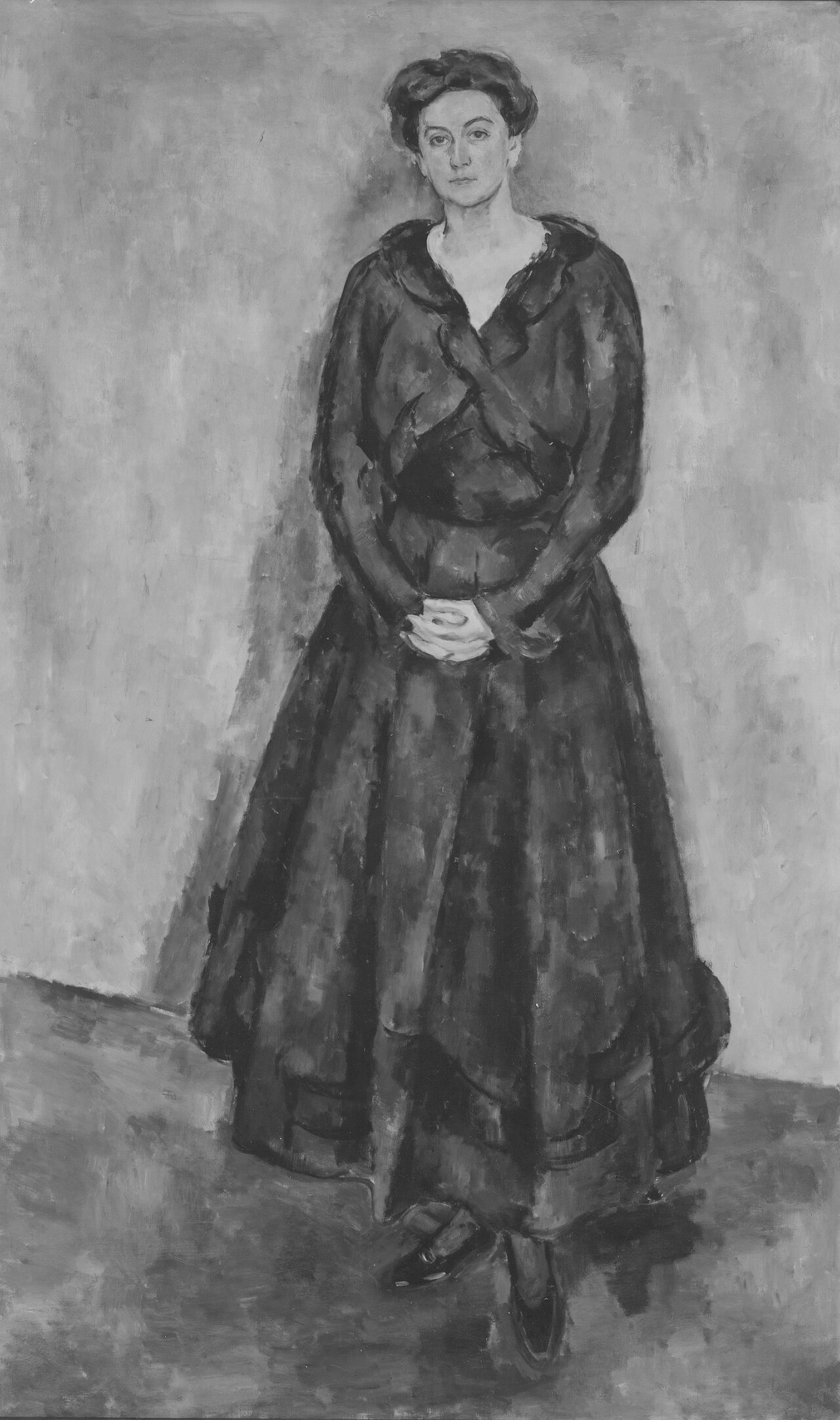
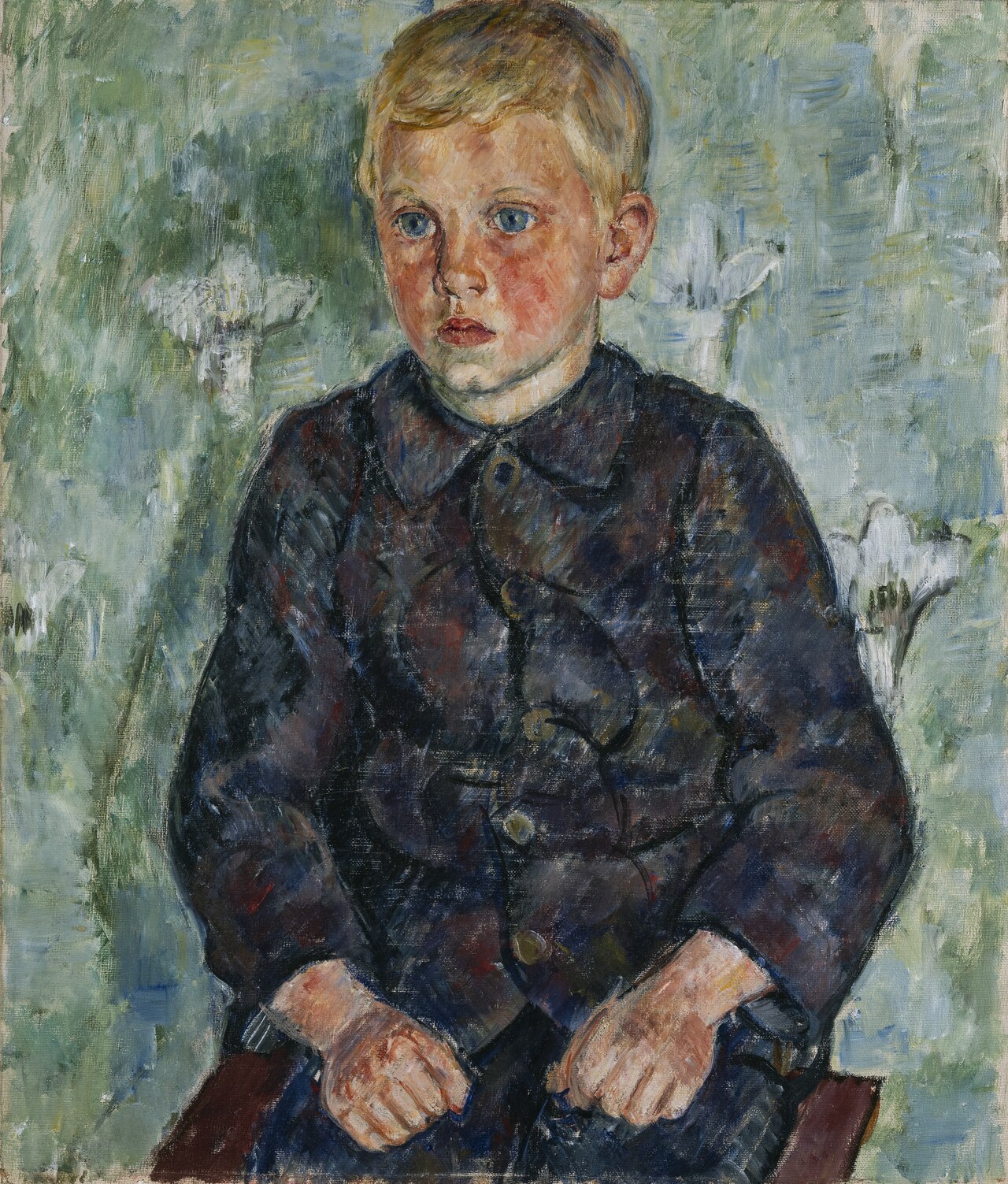
Major works - **Portrait of a Boy (1900)** – One of Simonsson’s earliest surviving paintings, this work presents a young male subject in a domestic interior. The muted background and soft lighting focus attention on the boy’s thoughtful expression, hinting at the artist’s emerging skill in portraiture. - **Konstnären Greta Knutson** – A portrait of the Swedish painter Greta Knutson, this piece reflects both a personal connection and a professional admiration. Simonsson renders Knutson with a dignified poise, using a restrained palette that underscores her intellectual presence. - **Signe Hvistendahl, 1881‑1943 (1919)** – Created in the post‑World War I period, this portrait captures the eponymous figure with a sense of quiet resilience. The composition balances realism with a modest decorative flair, typical of Simonsson’s approach to individual likenesses. - **St. Anne, Provence (1923)** – This landscape marks Simonsson’s first major work produced abroad. The painting depicts the Provençal chapel bathed in warm sunlight, with a colour scheme that departs from his usual northern palette, incorporating golden ochres and deep blues to convey the Mediterranean atmosphere. - **Harvest Landscape (1931)** – Often cited as his signature landscape, the canvas portrays a Swedish agrarian scene during the golden hour of harvest. The composition is anchored by a row of sheaves and a distant horizon, while the sky is rendered in luminous amber, exemplifying Simonsson’s mastery of light and his reverence for rural life.
Each of these works demonstrates Simonsson’s consistent interest in human figures set within broader environmental contexts, whether in intimate portraiture or expansive countryside vistas.
Influence and legacy Although Simonsson never achieved the international fame of some of his contemporaries, his impact on Swedish art education was considerable. As professor of landscape painting, he mentored numerous students who later contributed to the development of modern Swedish visual culture. His advocacy for a distinct, locally rooted approach to landscape—combined with a willingness to experiment with colour and light—helped shape the trajectory of early twentieth‑century Swedish painting.
The *De Unga* collective, despite its brief existence, is remembered for its role in fostering a dialogue among young artists who sought to break from academic conventions. The group’s gender‑exclusion policy, while now viewed as regressive, provides a historical lens through which scholars examine the social dynamics of Swedish artistic circles of the era.
Today, Simonsson’s paintings are held in several Swedish museums, including the Nationalmuseum in Stockholm, where they are displayed alongside works by his peers. Art historians cite his careful observation of light, his balanced composition, and his ability to convey narrative within a single frame as hallmarks of his oeuvre. For collectors and curators, Simonsson remains a figure who bridges the realist traditions of the nineteenth century with the emerging modernist sensibilities of the early twentieth century, offering a nuanced perspective on the evolution of Scandinavian art.
In recent years, renewed scholarly interest has led to exhibitions that reassess his contributions, particularly his role as an educator and his nuanced handling of landscape. While his name may not be as instantly recognisable as some of his contemporaries, Birger Simonsson’s body of work continues to inform discussions of Swedish artistic identity and the broader European art historical narrative.
Frequently asked questions
Who was Birger Simonsson?
Birger Simonsson (1883–1938) was a Swedish painter, illustrator and professor of landscape painting, known for founding the artists’ group De Unga and for works such as Harvest Landscape.
What artistic style or movement is he associated with?
Simonsson did not belong to a single defined movement; his work blends realist observation with early modernist attention to light and colour, rooted in Swedish naturalism.
What are his most famous works?
Key works include Portrait of a Boy (1900), Konstnären Greta Knutson, Signe Hvistendahl (1919), St. Anne, Provence (1923) and Harvest Landscape (1931).
Why is Birger Simonsson important in art history?
He influenced Swedish art through his teaching, his role in establishing the De Unga group, and his distinctive landscape paintings that bridge 19th‑century realism and early 20th‑century modernism.
How can I recognise a Birger Simonsson painting?
Look for careful light modelling, a layered brushwork technique, muted earth tones punctuated by luminous colour accents, and subjects that often intertwine human figures with natural settings.