August Malmström
1829 – 1901
In short
August Malmström (1829–1901) was a Swedish painter renowned for his romantic, national‑istic scenes of rural life and Norse mythology. His best‑known works include the genre painting Grindslanten (1885) and a series of illustrations for Swedish literary classics.
Notable works


Early life Johan August Malmström was born in 1829 in the parish of Västra Ny, a rural area in Sweden. Little is recorded about his family background, but the countryside in which he grew up left a lasting imprint on his artistic sensibility. From an early age he displayed a talent for drawing, which was nurtured through local schooling and later formal training at the Royal Swedish Academy of Arts in Stockholm. The academy, which was the principal centre for artistic education in Sweden, exposed him to the prevailing currents of Romanticism and the emerging national‑romantic movement that celebrated Sweden’s folk traditions, landscapes and historic myths.
Career and style After completing his studies, Malmström embarked on a career that combined teaching, illustration and painting. He became a professor at the Academy, where he influenced a generation of Swedish artists. His oeuvre is characterised by a synthesis of naturalistic observation and idealised romanticism. He frequently returned to country motifs, especially scenes that featured children at play, domestic interiors, and seasonal festivals. These works convey a nostalgic vision of rural Sweden that resonated with the 19th‑century desire to define a national identity rooted in the everyday lives of its people.
Malmström was also drawn to the mythic past of Scandinavia. Influenced by the national‑romantic strand known as Gothicismus, he incorporated motifs from Norse sagas and medieval legend into his compositions. This dual focus on contemporary folk life and ancient mythology placed him at the intersection of two dominant artistic tendencies of his time: the realistic depiction of modern Sweden and the romantic revival of its heroic past.
Signature techniques Malmström’s paintings are distinguished by several recurring technical approaches. He employed a clear, luminous palette that often emphasized the soft light of dawn or evening, lending his scenes a gentle, almost poetic atmosphere. His handling of colour was subtle; earth tones dominate the rural interiors, while brighter hues appear in the clothing of children or the foliage of mythic forests.
In terms of brushwork, he favoured smooth, finely blended strokes that avoided overt texture, allowing the narrative content of his paintings to remain front and centre. Light and shadow are used to model forms with a gentle gradation rather than stark chiaroscuro, creating a sense of calm rather than drama.
Malmström also paid meticulous attention to detail in costume and setting, drawing on ethnographic sources to render folk dress, tools and architecture accurately. This commitment to authenticity, combined with his romantic sensibility, gave his works both scholarly credibility and emotional appeal.
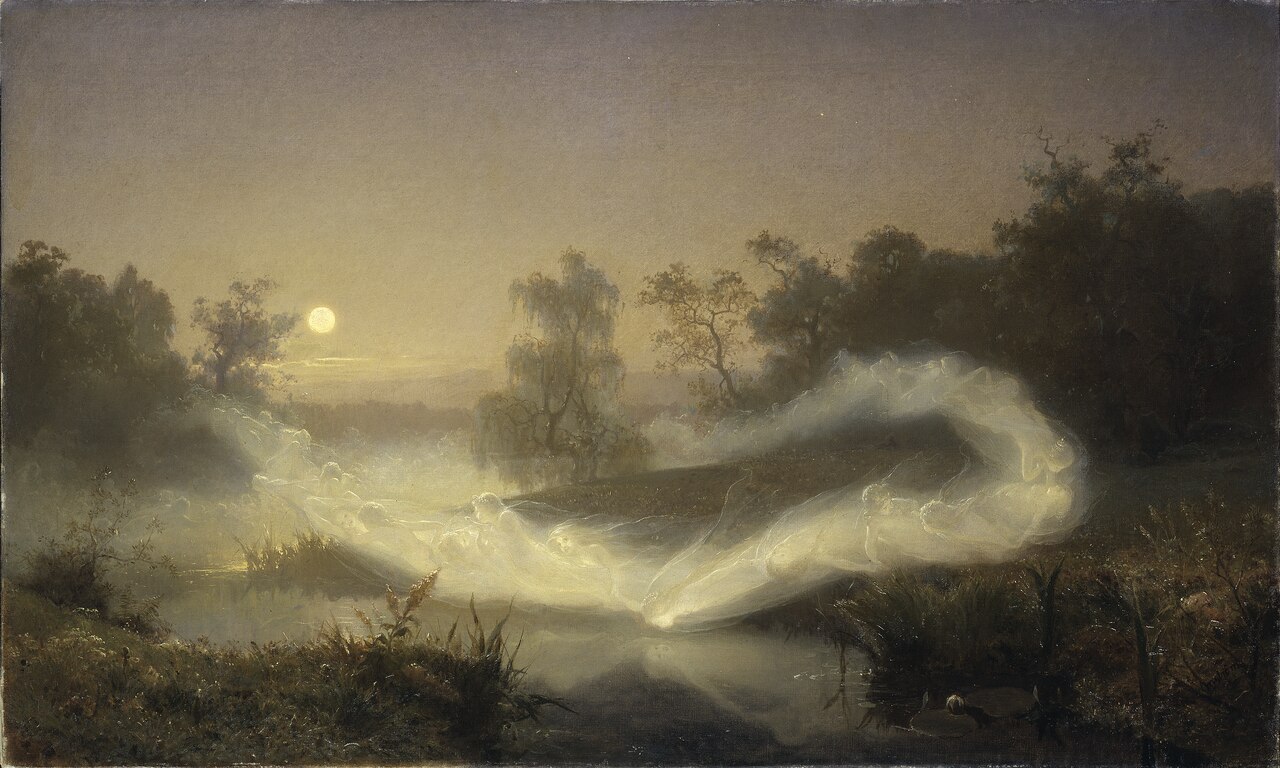
Major works - **The Battle of Bråvalla (1862)** – This early canvas presents the legendary 8th‑century battle between Swedish forces and the Danes. Malmström dramatizes the clash with a sweeping composition that balances heroic figures with a rugged landscape, reflecting his interest in Norse myth while employing a realistic approach to armor and terrain. - **Dancing Fairies (1866)** – A whimsical scene that captures a group of ethereal figures in a forest glade. The painting showcases Malmström’s fascination with folklore, using delicate light to suggest the otherworldly nature of the fairies while grounding them in a convincingly rendered natural setting. - **Design for Decoration (1870)** – This work demonstrates his skill in applied arts, presenting a decorative scheme that blends Swedish folk motifs with the decorative arts aesthetic of the period. The design was intended for interior decoration and illustrates his versatility beyond easel painting. - **Grindslanten (1885)** – Undoubtedly his most celebrated piece, it depicts a young boy polishing a copper coin, a common scene in 19th‑century Sweden. The painting is admired for its warm colour, the intimate portrayal of the child’s concentration, and its subtle commentary on the values of thrift and labour in Swedish society. - **The Old and the Young Sweden (1894)** – A later work that juxtaposes figures representing different generations, symbolising continuity and change within the nation. The composition reflects the artist’s mature synthesis of national romanticism and realistic portraiture.
These works collectively illustrate Malmström’s ability to move fluidly between genre scenes, mythic narratives and decorative projects, each anchored by a consistent visual language.
Influence and legacy August Malmström occupies a central place in Swedish art history as a bridge between the Romantic fascination with the past and the emerging realism of the late 19th century. His paintings of rural life helped shape the visual vocabulary of national identity, influencing subsequent artists who sought to depict Swedish folklore and everyday scenes. The popularity of Grindslanten, in particular, cemented his reputation as a chronicler of Swedish cultural values.
Beyond his canvases, Malmström contributed illustrations to important literary works, including the *Frithiofs saga* and *The Tales of Ensign Stål*. These collaborations reinforced the synergy between visual art and literature in constructing a shared national narrative. As a professor at the Royal Academy, he mentored younger painters, imparting his emphasis on careful observation, historical research and a balanced romantic sensibility.
In contemporary Swedish museums, his works are regularly exhibited in contexts that explore 19th‑century national romanticism and the depiction of folk culture. Art historians regard him as a key figure in the development of Sweden’s visual heritage, and his paintings continue to be reproduced in textbooks, postcards and cultural exhibitions, ensuring that his vision of Sweden’s past remains accessible to new generations.
Overall, August Malmström’s legacy lies in his capacity to capture both the quotidian and the mythic, rendering them with a lyrical realism that continues to resonate in the cultural memory of Sweden.
Frequently asked questions
Who was August Malmström?
August Malmström (1829–1901) was a Swedish painter known for his romantic depictions of rural life and illustrations of Norse mythological subjects.
What artistic style or movement is he associated with?
He worked within the national‑romantic tradition, blending realistic genre painting with the romantic revival of Swedish folklore and medieval mythology.
What are his most famous works?
His best‑known paintings include *Grindslanten* (1885), *Dancing Fairies* (1866), *The Battle of Bråvalla* (1862), *The Old and the Young Sweden* (1894) and his decorative design of 1870.
Why is August Malmström important in art history?
He helped define a visual language for Swedish national identity, influencing later artists and contributing illustrations that linked visual art with key Swedish literary works.
How can I recognise an August Malmström painting?
Look for smooth, softly blended brushwork, a luminous palette, detailed folk costumes, and subjects that combine everyday rural scenes with a hint of romantic or mythic atmosphere.