Anna Wengberg
1865 – 1936
In short
Anna Wengberg (1865–1936) was a Swedish portrait painter who worked within the Önningeby artists' colony on Åland and whose works are held by the National Museum of Fine Arts in Stockholm and the Helsingborg Museum.
Notable works
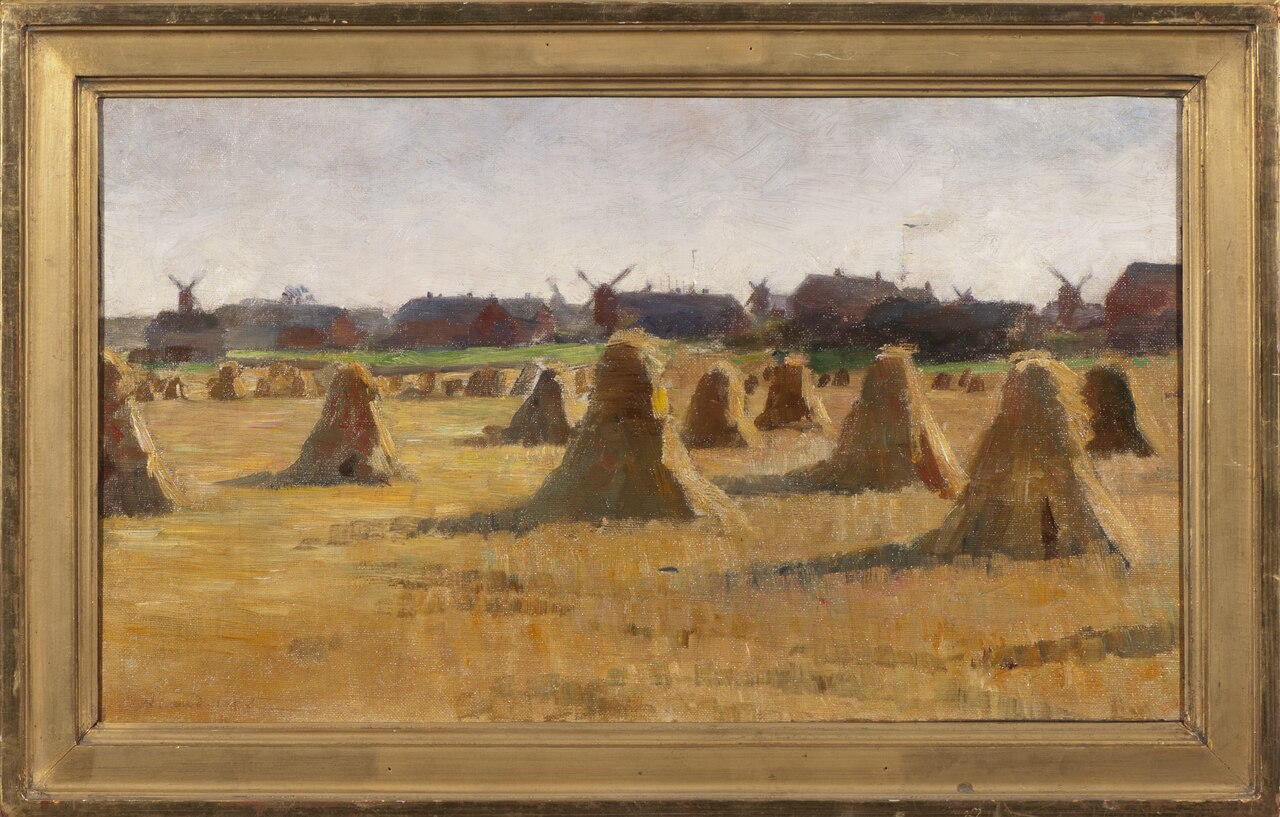


Early life Anna Emelia Elisa Wengberg was born in 1865 in the coastal town of Ystad, Sweden. Little is recorded about her family background, but Ystad’s maritime environment and its proximity to Denmark and the Baltic Sea likely exposed her early to a mixture of cultural influences. She displayed an aptitude for drawing from a young age, a talent that was nurtured through local schooling and private lessons typical of aspiring artists in the late‑19th‑century Swedish provinces.
Career and style Wengberg’s professional development accelerated after she moved to Stockholm to study at the Royal Swedish Academy of Fine Arts, where she received formal training in academic drawing and oil painting. Her early work centred on portraiture, a genre that demanded a keen eye for character and a command of subtle colour harmonies. While she never aligned herself with a single avant‑garde movement, her style reflects the naturalistic realism that dominated Swedish academic circles in the 1880s and 1890s.
During the 1880s she became acquainted with the Önningeby artists’ colony on the Finnish island of Åland. The colony, founded by Finnish painter Victor Westerholm, attracted a diverse group of Scandinavian artists seeking inspiration from the archipelago’s light, flora and modest village life. Wengberg’s participation in this community broadened her subject matter beyond studio portraiture, allowing her to experiment with plein‑air techniques and to integrate a more lyrical, atmospheric quality into her work.
Signature techniques Wengberg’s paintings are distinguished by a restrained palette and a meticulous handling of light. She frequently employed a thin, semi‑transparent glazing technique to achieve depth in skin tones, a method that gave her portraits a luminous, almost photographic quality. In landscapes and genre scenes, she favoured a soft, diffused brushstroke that suggested the fleeting effects of weather and season. Her compositional balance often rests on a calm, centred arrangement, with the principal figure or architectural element placed in the middle ground, allowing the surrounding environment to provide contextual nuance without overwhelming the focal point.
Major works - **Önninge Village, Åland (1888)** – One of her earliest works linked to the colony, this canvas captures the modest wooden houses of Önningeby against a hazy sky. The subdued earth tones and delicate handling of the distant sea illustrate her ability to convey atmosphere while maintaining a clear narrative of daily life. - **Motif from Stockholm. Winter (1891)** – In this winter scene, Wengberg demonstrates her skill at rendering the crisp, cold light of a Swedish winter. Snow‑covered streets, muted architectural details and the soft glow of street lamps combine to create a quiet, introspective mood. - **Kyrkogatan: J.A.G. Acke and Eva Acke (1893)** – This portrait‑type composition portrays the Swedish painters J.A.G. Acke and his wife Eva on the street Kyrkogatan. The work is notable for its intimate rendering of the couple’s expressions and the subtle interplay of shadow and light that highlights their clothing and the surrounding cobblestones.
These pieces exemplify the blend of portraiture and genre painting that defined Wengberg’s oeuvre. All three are part of public collections, with the National Museum in Stockholm holding the first two and the Helsingborg Museum possessing the third, confirming her recognition within Swedish cultural institutions.
Influence and legacy Although Anna Wengberg never achieved the fame of some of her male contemporaries, her contributions to Swedish art remain significant. She helped to bridge the gap between academic portraiture and the more informal, light‑focused practices of the Scandinavian artist colonies. Her work provides valuable insight into the social fabric of late‑19th‑century Sweden and the Åland islands, documenting everyday scenes with a measured, empathetic eye.
Her paintings continue to be studied by scholars interested in gender dynamics within the Nordic art world, as she represents a relatively rare example of a woman who sustained a professional artistic career during a period when female participation in the fine‑arts sphere was still emerging. Moreover, the preservation of her works in major museum collections ensures that future generations can appreciate her nuanced approach to light, colour and human character.
In contemporary exhibitions focusing on the Önningeby colony, Wengberg’s pieces are regularly included to illustrate the diversity of the group’s participants. Her legacy, therefore, lies both in the quiet technical mastery of her paintings and in her role as a pioneering female artist within a collaborative, cross‑border artistic community.
Frequently asked questions
Who was Anna Wengberg?
Anna Wengberg (1865–1936) was a Swedish painter known for her portraits and for being a member of the Önningeby artists' colony on Åland.
What style or movement is she associated with?
She worked in a naturalistic realist style typical of late‑19th‑century Swedish academic painting, incorporating atmospheric plein‑air techniques from the Önningeby colony.
What are her most famous works?
Her most cited works are "Önninge Village, Åland" (1888), "Motif from Stockholm. Winter" (1891) and "Kyrkogatan: J.A.G. Acke and Eva Acke" (1893).
Why does she matter in art history?
Wengberg bridges academic portraiture with the informal, light‑focused practices of Scandinavian artist colonies, and she is an early example of a professional female painter in Sweden.
How can I recognise an Anna Wengberg painting?
Look for a restrained colour palette, soft glazing on skin tones, and a calm composition that balances a central figure with subtle atmospheric background details.