Anna Boberg
1864 – 1935
In short
Anna Boberg (1864–1935) was a Swedish artist known for her depictions of Northern Norway, particularly the Lofoten region. Despite lacking formal art training, she pursued a diverse artistic career encompassing ceramics, textiles, painting, and set design. Her distinctive landscapes, often focusing on maritime scenes, gained recognition internationally, especially in Paris.
Notable works


Early life Anna Katarina Boberg, née Scholander, was born in 1864 in the Klara Church Parish of Stockholm, Sweden. She hailed from a distinguished family with a strong connection to the arts and architecture. Her father, Fredrik Wilhelm Scholander, was an architect, and her maternal grandfather was Axel Nyström, also an architect. This familial background undoubtedly influenced her artistic sensibilities, though Boberg herself is recognized as an autodidact, never having received formal artistic training. Her early life was steeped in a creative environment, setting the stage for her multifaceted artistic endeavors. She married Ferdinand Boberg, a prominent Swedish architect, further embedding her within a circle of notable cultural figures.
Career and style Anna Boberg's artistic career was characterized by its breadth and her persistent exploration of various mediums. While she is most widely recognized today for her paintings, her artistic journey began with a focus on decorative arts. She worked with ceramics and textiles, developing skills in these craft-based disciplines. Her artistic interests extended beyond these, encompassing set design for theatrical productions and writing. This wide-ranging engagement with different art forms speaks to a curious and versatile artistic spirit. Boberg's painting career, in particular, took a significant turn following a pivotal trip to Northern Norway in 1901. This region, with its dramatic landscapes and vibrant fishing communities, became a central theme in her work for many years. Her style, while not easily categorized within a specific art movement of her time, often conveyed a powerful sense of atmosphere and place. Her depictions of the rugged Norwegian coast, the sea, and the lives of those who depended on it possess a distinct emotional resonance. While her work did not always find favour with critics in Sweden, it achieved notable success in Paris, indicating an international appeal for her unique artistic vision.
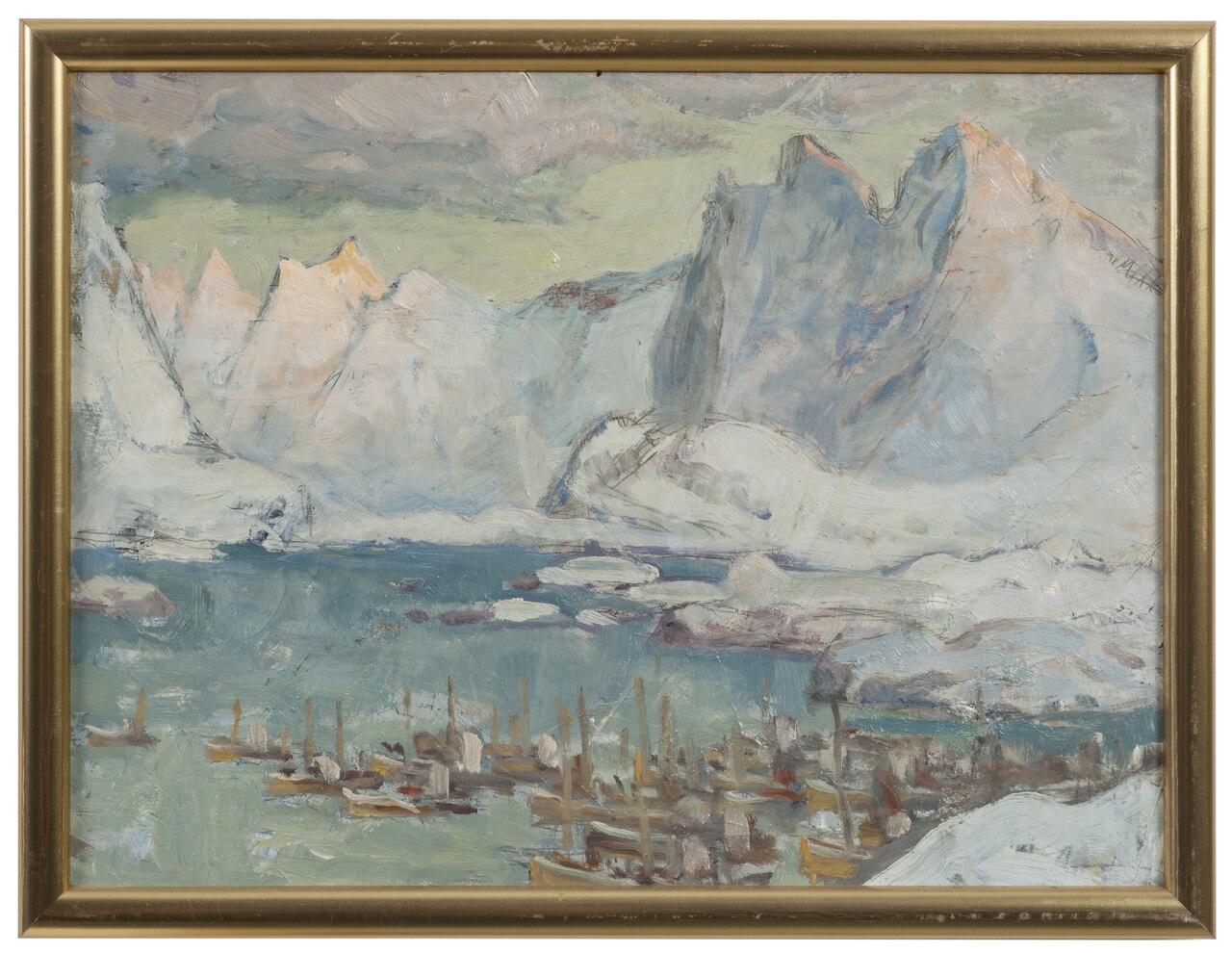
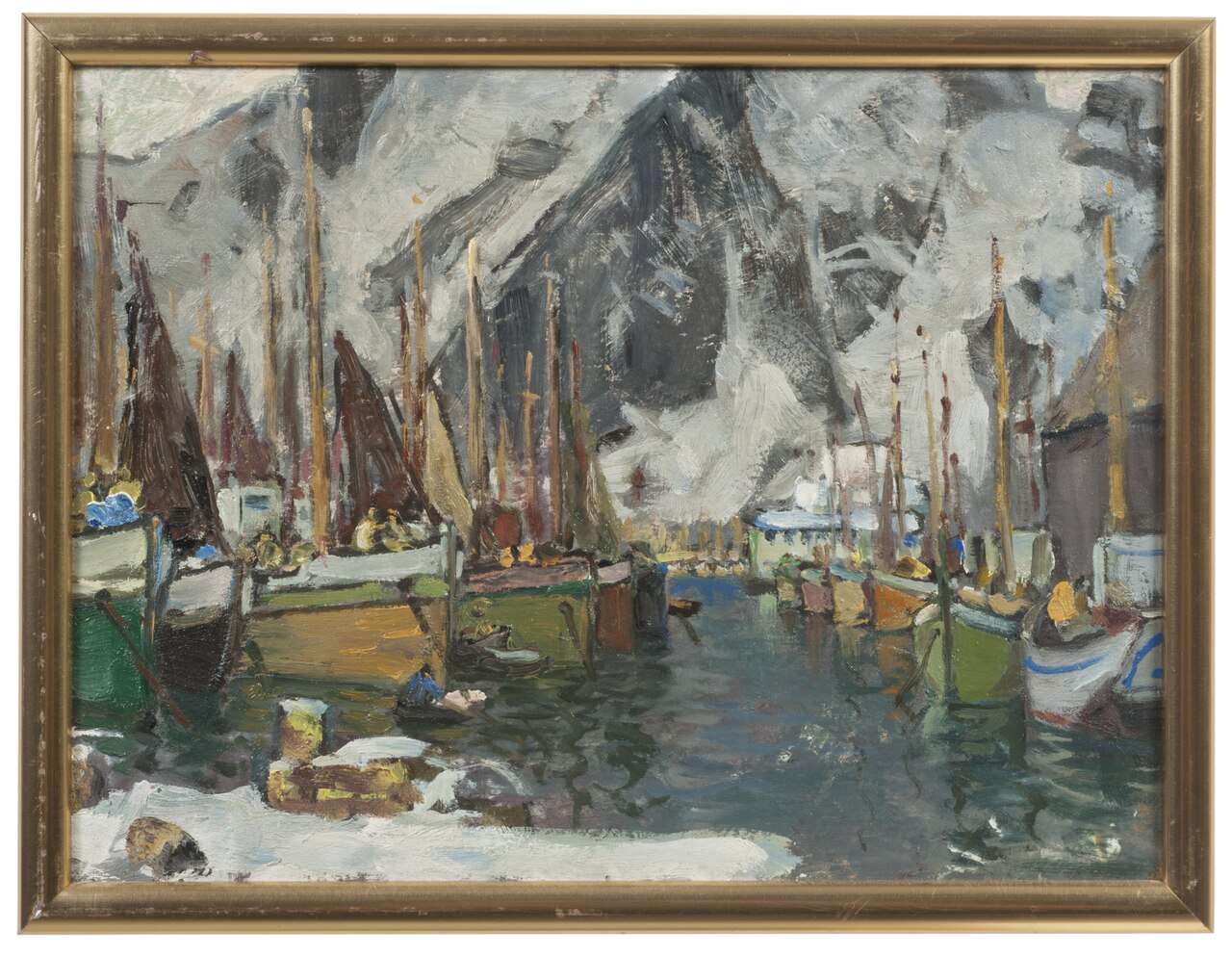
Signature techniques As an autodidact, Boberg developed her own distinctive approaches to her chosen mediums. In her ceramic and textile work, she likely employed techniques that emphasized texture, pattern, and the inherent qualities of the materials. Her paintings, particularly those from Northern Norway, are often characterized by a bold application of paint and a keen eye for capturing the effects of light and weather. She was adept at conveying the dynamic nature of the sea and the stark beauty of the Arctic landscape. Her studies, often designated as such, suggest an ongoing process of observation and refinement, where she focused on capturing essential elements of her subjects. The recurring motif of fishing boats and harbours in her work demonstrates a sustained interest in maritime life, rendered with a palpable sense of movement and energy. Her ability to translate the sensory experience of these remote and often harsh environments into visual form is a hallmark of her artistic technique.
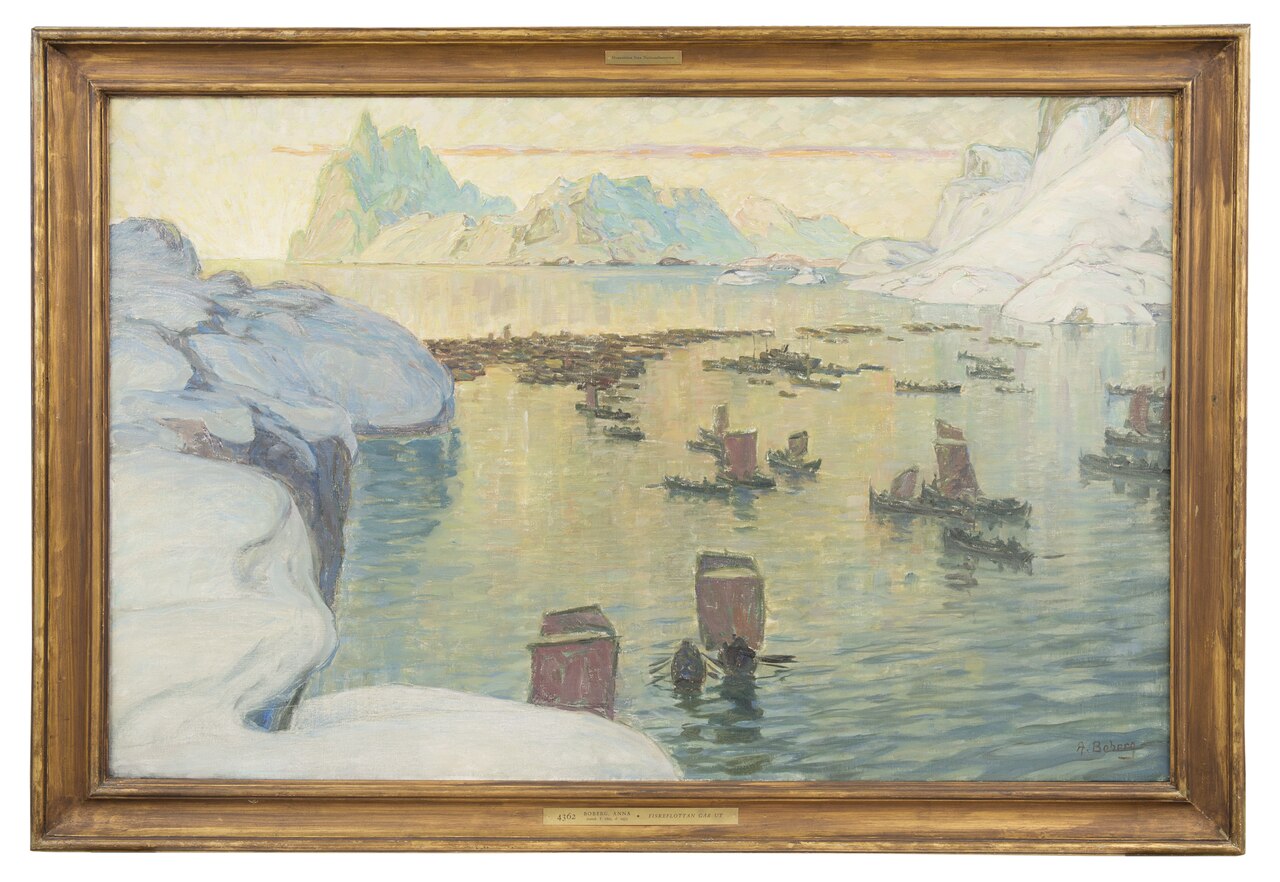
Major works Anna Boberg's oeuvre includes several significant works that highlight her dedication to capturing the essence of Northern Norway. "The Fishing Fleet Going Out. Study from North Norway" exemplifies her engagement with the dramatic maritime activities of the region. This study likely focuses on the movement and power of boats setting out to sea, rendered with her characteristic attention to atmosphere. Similarly, "Fishing boats in the Port" offers a glimpse into the daily life and industry of coastal communities, capturing the static presence of vessels within their harbours. Her 1934 works, "Svolvaer Harbour at the Height of the Fishing Season. Study from Lofoten" and "Among the Fishing Boats in Svolvaer. Study from Lofoten," are particularly poignant representations of the Lofoten Islands. These pieces likely showcase the bustling activity and the unique character of Svolvær during peak fishing times, demonstrating Boberg's deep familiarity with the area. Another notable work is "The Road to Jerusalem. Study" from 1921. While seemingly departing from her Norwegian themes, this study suggests a broader spiritual or symbolic interest, perhaps exploring themes of pilgrimage or journey, rendered in her characteristic painterly style.
Influence and legacy Anna Boberg's influence and legacy are multifaceted. As a female artist in the late 19th and early 20th centuries, her pursuit of a diverse and independent artistic career, particularly in a male-dominated field and without formal training, is noteworthy. Her dedication to depicting Northern Norway brought international attention to the region's landscapes and the lives of its inhabitants through her art. Although her work may not fit neatly into established art historical movements, it holds a unique place in Swedish art, representing a powerful engagement with nature and human endeavour. Her international recognition, particularly in Paris, suggests that her artistic vision transcended national boundaries. Boberg's legacy lies in her independent spirit, her versatile artistic output, and her evocative portrayals of a specific, compelling landscape that resonated with audiences beyond her native Sweden. Her work continues to be appreciated for its atmospheric quality and its honest depiction of a rugged environment and its people.
Frequently asked questions
Who was Anna Boberg?
Anna Boberg (1864–1935) was a Swedish artist known for her paintings of Northern Norway and her work in ceramics, textiles, and set design. She was an autodidact who gained international recognition, particularly in Paris.
What art movement is Anna Boberg associated with?
Anna Boberg is not strictly associated with any single art movement. Her style is considered unique and often described as a personal expression, particularly in her focus on atmospheric landscapes.
What are Anna Boberg's most famous works?
Her most recognized works often depict scenes from Northern Norway, including "The Fishing Fleet Going Out. Study from North Norway", "Svolvaer Harbour at the Height of the Fishing Season. Study from Lofoten", and "Among the Fishing Boats in Svolvaer. Study from Lofoten".
Why is Anna Boberg important in art history?
Boberg is significant for her independent artistic career as a woman and autodidact, her extensive and evocative depictions of Northern Norway, and her international success which brought Swedish art to a broader audience.
How can I recognize an Anna Boberg painting?
Look for depictions of Northern Norwegian landscapes, especially coastal scenes and fishing harbours. Her style often features atmospheric lighting, a focus on the sea and weather, and a painterly application of colour, often with a sense of movement.