Alfred Bergström
1869 – 1930
In short
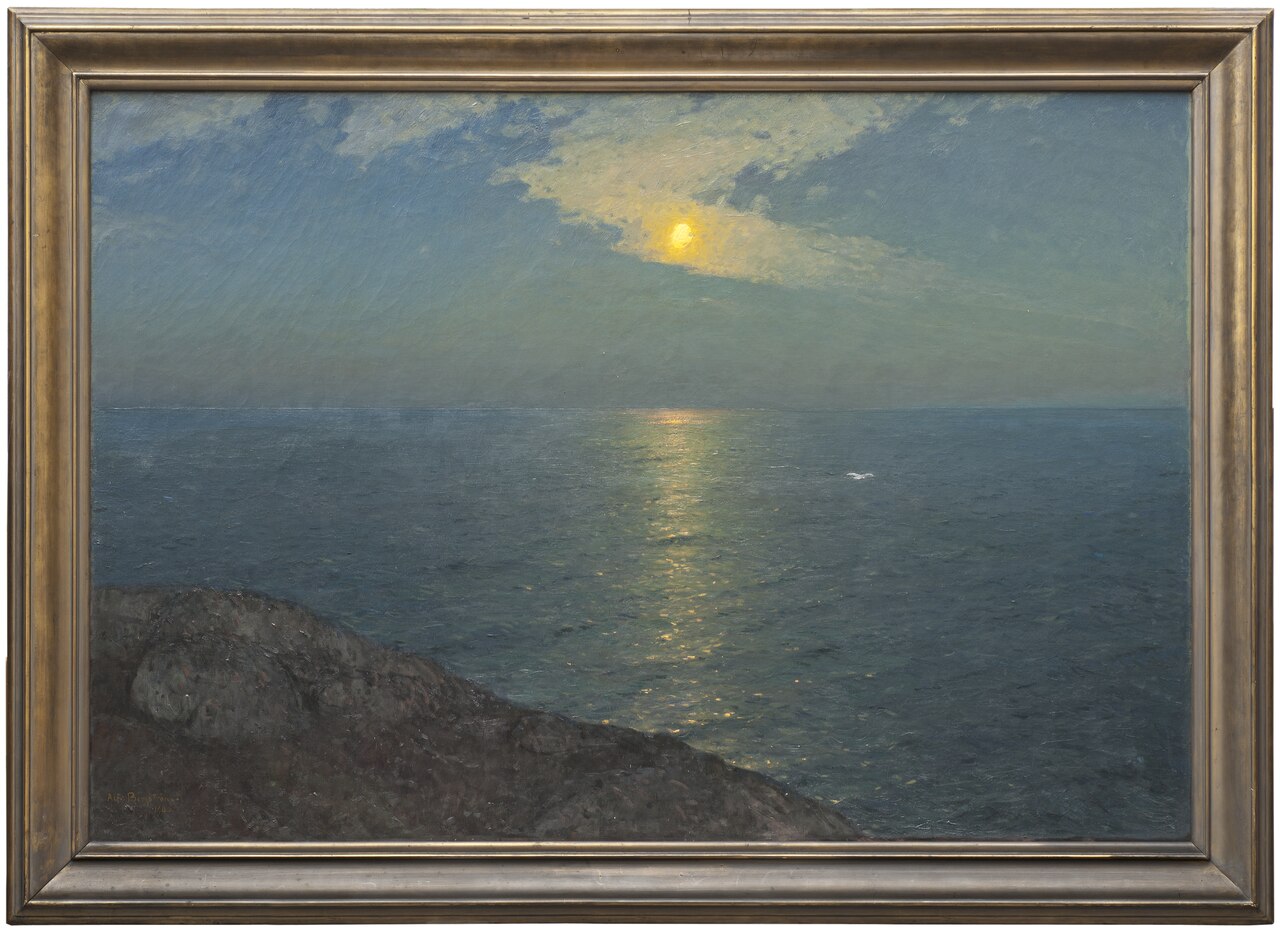
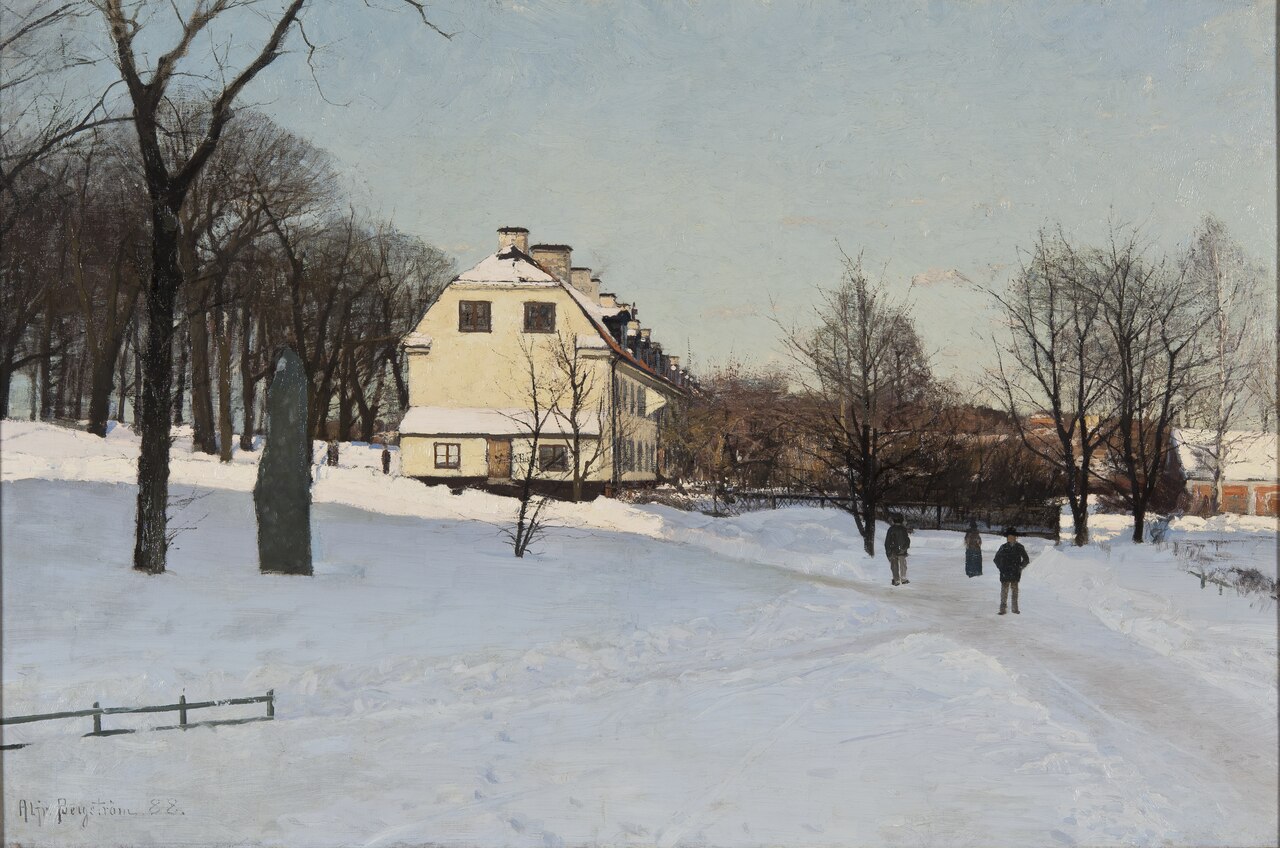
Alfred Bergström (1869–1930) was a Swedish painter, watercolorist and etcher who taught at the Royal Swedish Academy of Fine Arts in Stockholm. He is noted for his atmospheric cityscapes and winter scenes, including works such as By the Sea (1905) and Winter. Skeppsholmen, Stockholm (1888).
Notable works
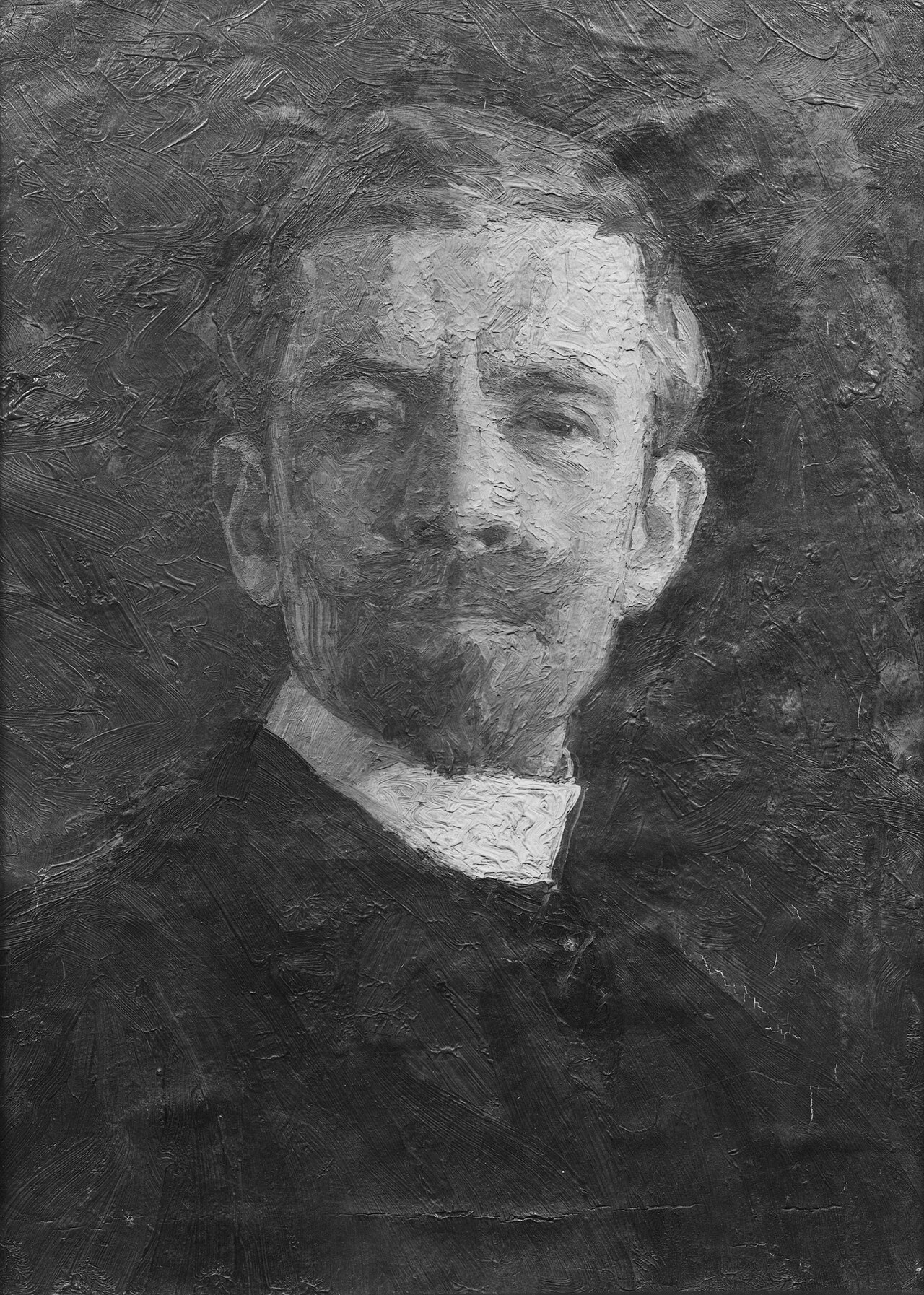

Early life Alfred Maurits Bergström was born in Stockholm in 1869. He grew up in a city that was rapidly modernising, surrounded by the historic architecture of the old town and the expanding waterfront. His early exposure to Stockholm’s maritime environment and the stark, light‑filled winters of Sweden left a lasting impression on his visual sensibility. Details of his family background are sparse, but records show that he later married Augusta Katarina Charlotte Gyllensvaan, also a Stockholm resident.
Career and style Bergström entered the Royal Swedish Academy of Fine Arts in the late 1880s, receiving formal training in drawing, painting and printmaking. After completing his studies, he remained at the Academy as a faculty member, eventually attaining the rank of professor. His teaching career spanned several decades, during which he helped shape the next generation of Swedish artists.
Stylistically, Bergström worked within the academic tradition while embracing a personal affinity for atmospheric realism. His paintings often depict the interplay of light and shadow on water, ice, and stone, capturing the fleeting moods of Swedish weather. Though he never aligned himself with a specific avant‑garde movement, his work reflects the broader Nordic interest in naturalistic landscape painting that flourished at the turn of the century. He was equally comfortable with oil on canvas, transparent watercolours and the fine lines of etching, allowing him to explore the same subjects across media.
Signature techniques Bergström’s technique was characterised by a restrained palette and careful handling of tone. In oil paintings he employed thin, layered glazes to build depth, particularly in sky and water surfaces. His watercolours reveal a mastery of wash and dry‑brush effects, producing delicate gradations that convey the crispness of winter air. As an etcher, he favoured fine cross‑hatching to render texture, especially in architectural elements and the intricate rigging of ships. Across all media, he paid close attention to perspective, often using a slightly elevated viewpoint to encompass both foreground activity and distant architectural landmarks.
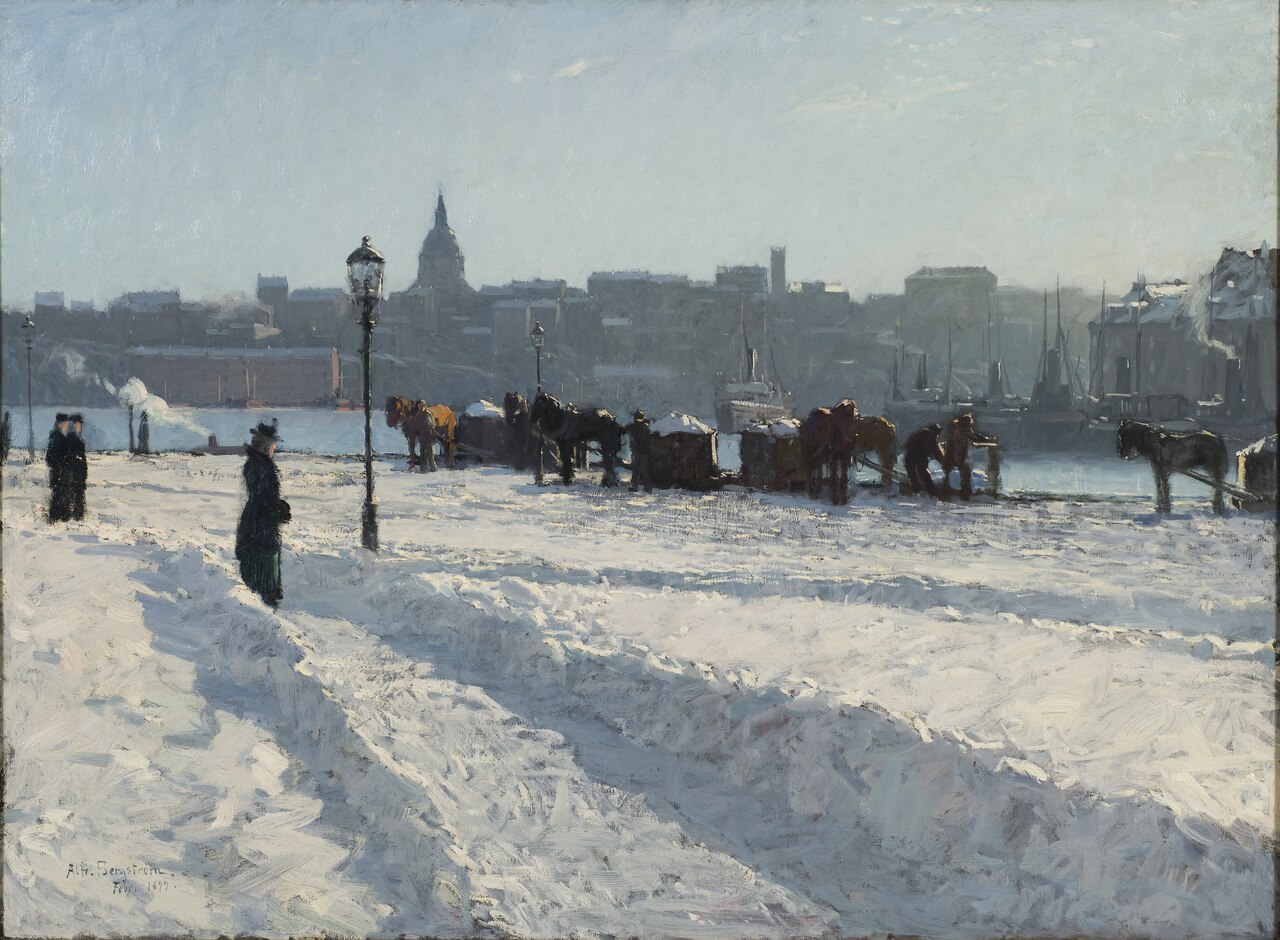
Major works - **Winter. Skeppsholmen, Stockholm (1888)** – One of Bergström’s earliest mature works, this oil painting captures the historic Skeppsholmen island under a blanket of snow. The composition balances the stark white of the frozen harbour with the dark silhouettes of the island’s stone buildings, illustrating his skill in rendering light on snow. - **View of Konstakademien in Stockholm, 1890** – Executed in watercolour, this piece offers a detailed rendering of the Academy’s façade and surrounding courtyard. The work showcases his precise line work and subtle colour modulation, serving both as a documentary record and a study in architectural perspective. - **Winter Scene from the Stockholm Waterfront (1899)** – In this etching, Bergström portrays a bustling waterfront lined with ships and warehouses, all rendered in monochrome. The fine hatching conveys the texture of frost‑covered rigging and the reflective quality of the icy water. - **By the Sea (1905)** – A later oil canvas, this work departs from the urban focus of earlier pieces to depict a tranquil coastal landscape. The composition centres on a small boat moored against a calm shoreline, with muted blues and greys that evoke a quiet, contemplative mood. - **Other works** – Throughout his career Bergström produced numerous watercolours, oils and etchings of Stockholm’s streets, bridges and harbours. While not all titles are widely catalogued, his oeuvre consistently reflects a fascination with the city’s relationship to water and seasonal change.
Influence and legacy Alfred Bergström’s legacy rests on his dual role as an artist and educator. As a professor at the Royal Swedish Academy of Fine Arts, he influenced a generation of Swedish painters who continued the tradition of realistic landscape and cityscape painting into the early twentieth century. His meticulous approach to light, atmosphere and architectural detail provided a visual record of Stockholm’s urban development during a period of rapid change.
Although he never achieved the international fame of some of his contemporaries, Bergström’s works are held in Swedish public collections, including the Nationalmuseum in Stockholm. Art historians regard his paintings and prints as valuable examples of late‑nineteenth‑century Swedish academic art, bridging the gap between Romantic naturalism and the more restrained realism that characterised the early modern period. Today, his pieces are studied for their technical proficiency and as cultural documents that capture the visual character of Stockholm’s waterfront and winter environment.
In recent years, renewed interest in Nordic landscape painting has prompted reassessments of Bergström’s contribution. Exhibitions focusing on the intersection of art and urban history often feature his work, highlighting how his precise depictions of architecture and maritime activity complement broader narratives about Sweden’s industrialisation. As such, Alfred Bergström remains an important figure for scholars of Scandinavian art and for anyone seeking to understand the visual culture of Sweden at the turn of the twentieth century.
Frequently asked questions
Who was Alfred Bergström?
Alfred Bergström (1869–1930) was a Swedish painter, watercolorist and etcher who taught as a professor at the Royal Swedish Academy of Fine Arts in Stockholm.
What artistic style or movement is he associated with?
He worked within the academic tradition and is best known for realistic, atmospheric cityscapes and winter landscapes rather than aligning with a specific avant‑garde movement.
What are his most famous works?
Among his most recognised pieces are *Winter. Skeppsholmen, Stockholm* (1888), *View of Konstakademien in Stockholm* (1890), *Winter Scene from the Stockholm Waterfront* (1899), and *By the Sea* (1905).
Why is Alfred Bergström important in art history?
He provides a detailed visual record of Stockholm’s waterfront and winter environment, and his long tenure as a professor shaped subsequent generations of Swedish artists.
How can I recognise an Alfred Bergström painting?
Look for subtle, layered colour washes, precise architectural perspective, and a calm, muted palette that captures the soft light of snow or overcast water.