Li Gonglin
1049 – 1106
In short
Li Gonglin (1049–1106) was a Chinese antiquarian, painter and civil‑servant of the Northern Song dynasty, known for his refined brushwork and scholarly subjects. He is celebrated for works such as the Painting of Mountain Villa and his illustrations of the Classic of Filial Piety.
Notable works

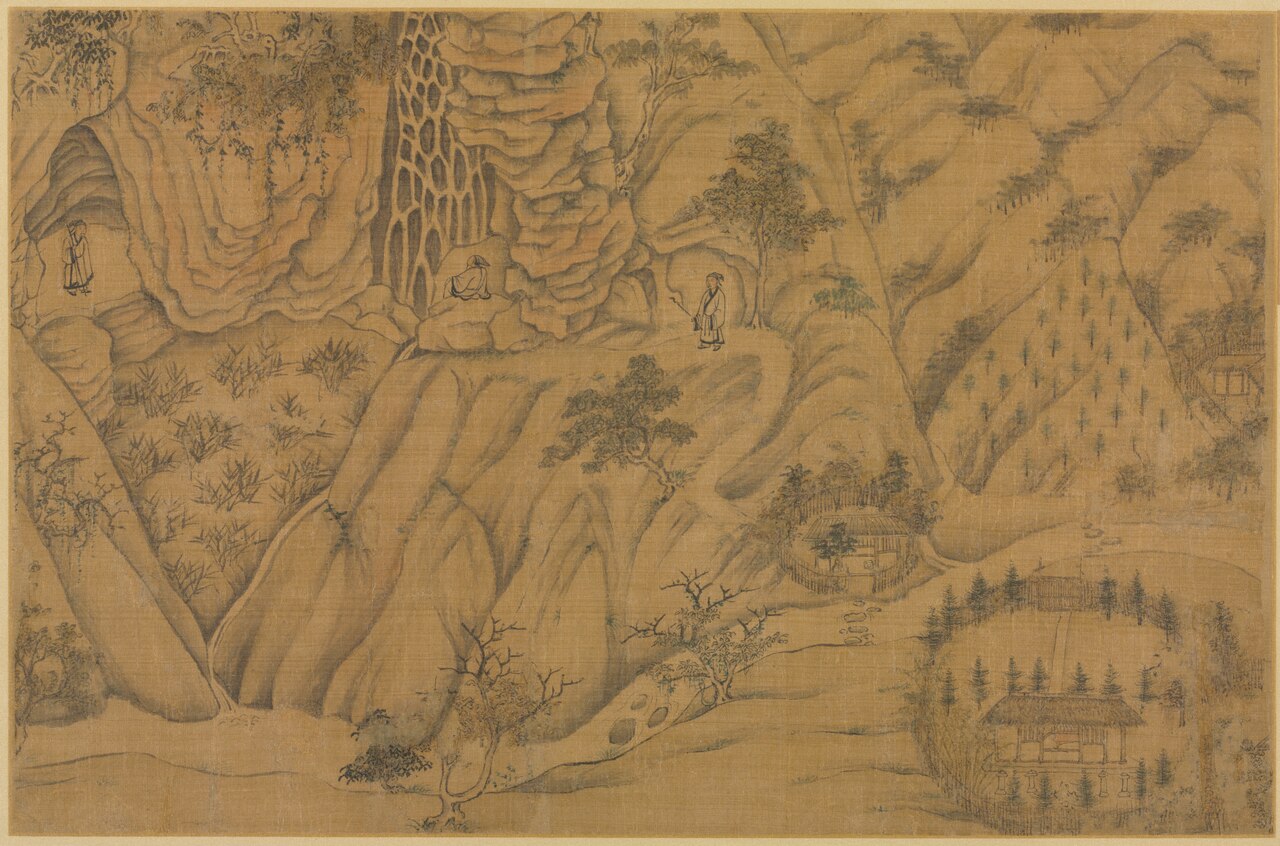


Early life Li Gonglin was born in 1049 in Tongcheng, a county in what is now Anhui province. He grew up in a family that valued scholarship and the arts, which shaped his lifelong interest in classical literature and antiquities. His early education followed the Confucian curriculum of the time, and he excelled in the civil‑service examinations, eventually earning the style name Boshi (伯時) and the art name Longmian Jushi (龍眠居士), indicating his affinity for the secluded, "dragon‑sleeping" landscape motif.
Career and style After passing the imperial examinations, Li Gonglin entered the Song bureaucracy, holding a series of posts that allowed him to travel widely across the empire. These official duties gave him access to historic sites, ancient bronzes, and rare manuscripts, reinforcing his reputation as an antiquarian. In parallel, he cultivated a reputation as a painter whose style blended the literati emphasis on scholarly subjects with the meticulous realism of court painting. His works often feature elegant figures, refined line work, and a restrained colour palette, reflecting the Song ideal of harmony between moral cultivation and artistic expression.
Signature techniques Li Gonglin is particularly noted for his use of *baimiao* (plain brush) technique, in which he rendered figures and architectural elements with fine, uncoloured ink lines. This method allowed him to convey subtle gesture and texture without reliance on heavy shading. He also employed a delicate wash of light ink to suggest atmospheric depth in landscape scenes, a practice that later scholars associated with the early development of the Southern Song landscape aesthetic. In his figure paintings, Li placed great emphasis on the rendering of clothing folds and the expression of scholarly poise, drawing on the precedent set by earlier masters such as Gu Kaizhi while adding his own restrained elegance.
Major works Li Gonglin’s surviving corpus includes several paintings that are frequently cited in art historical literature. The *Painting of Mountain Villa* exemplifies his ability to integrate human habitation within a natural setting, using soft brushstrokes to depict pine‑covered peaks and a modest pavilion that suggests retreat from worldly affairs. The *Dwelling in the Longmian ("Sleeping Dragon") Mountains* is traditionally attributed to Li and is associated with the year 1199; however, this date post‑dates his lifetime and is therefore regarded as a later copy or a misdated catalogue entry. The *Portrait of Lady*, dated 1880 in some sources, is similarly considered a later reproduction that follows Li’s stylistic conventions rather than an original work. The *Classic of Filial Piety* (1085) is a celebrated illustrated manuscript in which Li combined calligraphic inscription with miniature narrative scenes, embodying the Confucian virtue of filial devotion. Finally, *Guanyin Pouring Water* showcases his devotional subjects, depicting the bodhisattva Guanyin in a tranquil pose, with fluid, almost calligraphic lines that convey both reverence and artistic restraint.
Influence and legacy Li Gonglin’s integration of antiquarian scholarship with painting set a precedent for later scholar‑artists of the Song and Yuan periods. His emphasis on *baimiao* line work influenced the development of the literati painting tradition, where the brushstroke itself became a vehicle for moral expression. Contemporary critics praised his ability to convey the inner spirit of his subjects rather than merely their external likeness, a principle that resonated with later masters such as Su Shi and Mi Fu. Modern art historians regard Li as a pivotal figure who helped bridge the gap between official court painting and the emerging intellectual art of the scholar‑official class. His works continue to be exhibited in major Chinese museums and remain subjects of scholarly research, illustrating the enduring relevance of his aesthetic and intellectual contributions.
Frequently asked questions
Who was Li Gonglin?
Li Gonglin (1049–1106) was a Northern Song dynasty antiquarian, painter and civil‑servant, renowned for his refined brushwork and scholarly subject matter.
What artistic style or movement is Li Gonglin associated with?
He worked within the early literati tradition, combining the *baimiao* (plain brush) technique with the refined realism of court painting, reflecting Song‑era scholarly aesthetics.
What are Li Gonglin’s most famous works?
Key works include the *Painting of Mountain Villa*, his illustrated *Classic of Filial Piety* (1085), and devotional pieces such as *Guanyin Pouring Water*.
Why is Li Gonglin important in art history?
He helped define the scholar‑artist model, influencing later generations by showing how moral cultivation and painting could be united through elegant line work and intellectual themes.
How can I recognise a genuine Li Gonglin painting?
Look for delicate *baimiao* lines, restrained colour washes, and a calm, dignified portrayal of figures or landscapes that convey scholarly poise rather than dramatic flair.