Su Hanchen
1101 – 1161
In short
Su Hanchen (1101–1161) was a Song‑dynasty Chinese painter celebrated for his lively figure paintings, especially of children, and served as a Painter‑in‑Attendance to Emperor Huizong. Born in Kaifeng and later working in Zhejiang, his works remain key examples of courtly genre painting.
Notable works


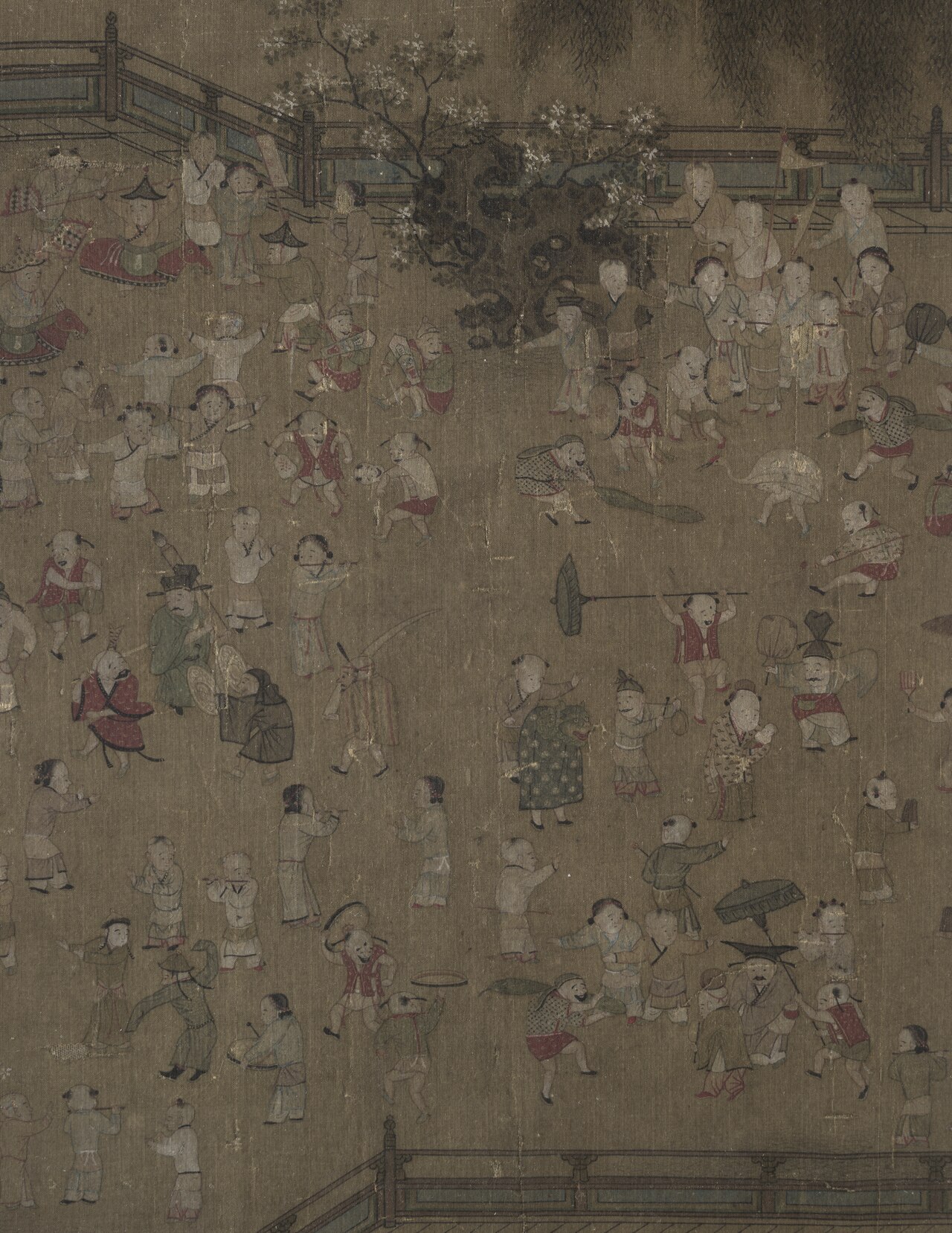


Early life Su Hanchen was born in 1101 in the bustling capital of the Northern Song, Kaifeng (also known historically as Bianjing). Little is recorded about his family background, but the city's vibrant cultural milieu provided ample exposure to the flourishing arts of the period. Traditional training for painters at the time involved apprenticeship in a workshop or study under a court master, and it is likely that Su received his foundational instruction in the imperial workshops of Kaifeng, where he would have absorbed the prevailing aesthetic ideals of the Song court.
Career and style By his thirties, Su had moved to the southeastern province of Zhejiang, a region that would become the centre of his professional life. The move coincided with the reign of Emperor Huizong (r. 1100–1126), a monarch renowned for his patronage of the arts. Huizong appointed Su Hanchen as a "Painter‑in‑Attendance" (御用画师), a prestigious court position that required the production of artworks for imperial ceremonies, diplomatic gifts, and private enjoyment. In this role, Su specialised in genre scenes that depicted everyday life, with a particular focus on children at play. His style combined meticulous brushwork with a light, almost playful touch, capturing the spontaneity of youthful activity while maintaining the refined elegance expected of court painters.
Su's paintings are characterised by a balanced composition, soft colour palettes derived from mineral pigments, and a keen observation of human gestures. He often employed a vertical format, allowing multiple figures to be arranged in a narrative tableau. While his subjects are domestic and intimate, his execution reflects the sophisticated techniques of the imperial academy, bridging the gap between scholarly brushwork and popular subject matter.
Signature techniques Su Hanchen’s technical repertoire includes several hallmarks that art historians use to attribute works to him:
1. Fine line work (gongbi) with controlled ink strokes – Su rendered clothing folds, facial features, and delicate objects with precise, layered brushstrokes, creating a sense of texture without sacrificing elegance. 2. Subtle use of colour – He favored muted reds, greens, and blues derived from natural minerals, applying them in washes that enhance the figures without overwhelming the composition. 3. Dynamic arrangement of figures – Children are often shown in varied poses—crouching, reaching, or gesturing—forming a rhythmic flow across the picture plane. 4. Attention to narrative detail – Small props such as toys, musical instruments, or garden elements are rendered with enough specificity to suggest a story while remaining secondary to the human subjects. 5. Atmospheric background – Rather than elaborate landscape vistas, Su employed light washes or simple architectural hints to suggest space, keeping the focus on the activity of the figures.
These techniques together create works that feel both intimate and formally refined, a duality that has made Su’s paintings particularly prized by collectors and scholars.
Major works Su Hanchen’s surviving oeuvre is limited, but several key pieces illustrate his thematic interests and technical skill:
- One Hundred Children in the Long Spring (1150) – This large hand‑scroll presents a bustling courtyard filled with children engaged in various games. The work showcases Su’s ability to orchestrate a crowded scene while preserving individual character. The title references the traditional Chinese celebration of the coming of spring, a time associated with renewal and youthful energy.
- Children Playing in an Autumn Garden (1150) – In this composition, Su captures a cooler, more contemplative atmosphere. The muted autumnal palette and the placement of children among fallen leaves convey both the fleeting nature of youth and the serenity of the garden setting.
- One Hundred Children at Play (1199) – Though dated after Su’s death, this piece is traditionally attributed to his workshop or followers, reflecting the enduring popularity of his subject matter. It mirrors the compositional strategies of the earlier "Long Spring" scroll, suggesting a continuation of his visual language.
- A Toy Peddler with Two Women and a Child – This smaller painting focuses on a domestic encounter: a peddler displaying toys to a mother and child. The work highlights Su’s skill in rendering textures—silk ribbons, wooden toys, and the subtle folds of clothing—while maintaining a narrative clarity.
- Children Playing in a Garden in Autumn (1500) – Attributed to later copyists, this piece demonstrates how Su’s style influenced later generations. The composition and brushwork remain faithful to the original aesthetic, underscoring his lasting impact.
These works collectively illustrate Su’s preoccupation with the joys of childhood, his mastery of figure painting, and his capacity to embed narrative within a disciplined formal structure.
Influence and legacy Su Hanchen occupies a distinctive niche in Song‑dynasty art history. While many court painters of his era focused on landscapes or portraiture, Su’s dedication to genre scenes of children set him apart. His paintings contributed to a broader appreciation of everyday life as a worthy artistic subject, a precedent that would later flourish in Ming and Qing genre painting.
The clarity of his brushwork and the elegance of his compositions made his works popular among imperial collectors, and his reputation endured through the centuries. Later artists and scholars often cited Su as a model for how to balance refined technique with approachable subject matter. In modern times, his paintings are frequently reproduced in textbooks and museum exhibitions as exemplars of Song‑period figure painting.
Su’s legacy also lies in the way his works have been preserved and studied. The surviving scrolls are held in major institutions such as the Palace Museum in Beijing and the Shanghai Museum, where they continue to inform research on Song court aesthetics, pigment technology, and the social role of children in medieval China. Through these avenues, Su Hanchen remains a vital reference point for understanding the intersection of elite patronage and popular imagery in Chinese art.
Overall, Su Hanchen’s contributions underscore the richness of Song‑dynasty visual culture and its capacity to celebrate the simple pleasures of daily life with sophisticated artistry.
Frequently asked questions
Who was Su Hanchen?
Su Hanchen (1101–1161) was a Song‑dynasty Chinese painter renowned for his figure paintings of children and served as a Painter‑in‑Attendance to Emperor Huizong.
What style or movement is Su Hanchen associated with?
He worked within the imperial court tradition, combining meticulous gongbi brushwork with genre scenes of everyday life, especially playful depictions of children.
What are Su Hanchen’s most famous works?
His best‑known pieces include *One Hundred Children in the Long Spring* (1150), *Children Playing in an Autumn Garden* (1150), *One Hundred Children at Play* (1199), and *A Toy Peddler with Two Women and a Child*.
Why is Su Hanchen important in art history?
Su pioneered the dignified portrayal of domestic, child‑centric subjects in court painting, influencing later genre painters and providing a key example of Song‑period figure painting.
How can I recognise a painting by Su Hanchen?
Look for finely rendered figures, especially children, arranged in lively compositions, with subtle mineral colours, precise line work, and minimal background detail that keeps focus on the activity.