Min Zhen
1730 – 1788
In short
Min Zhen (1730–1788) was a Qing‑dynasty Chinese painter and seal‑carver from Nanchang who specialised in human figures, occasional finger painting and worked mainly in Hubei. He is noted for a handful of late‑career works such as the Album of Miscellaneous Subjects and is sometimes linked to the Eight Eccentrics of Yangzhou.
Notable works
Early life Min Zhen was born in 1730 in Nanchang, a city in Jiangxi province, during the Qing dynasty. Orphaned at a young age, he was raised without parental guidance, a circumstance that shaped both his personal resilience and his artistic trajectory. Early records indicate that he received basic instruction in the traditional literati arts, but much of his formative training was self‑directed, reflecting the resourcefulness required of an orphaned child in 18th‑century China.
Career and style By his thirties, Min Zhen had relocated to the Hubei region, where he spent the majority of his professional life. The cultural milieu of Hubei, especially the vibrant artistic community of nearby Yangzhou, offered him exposure to a range of styles and patrons. While he never aligned himself formally with a recognised school, his work bears the hallmarks of the so‑called “eccentric” painters of the period – a loose, expressive brushwork that departs from the rigid academic conventions of the imperial court. Min Zhen’s oeuvre is characterised by a focus on human figures, rendered with a keen eye for individual expression, and a willingness to experiment with unconventional media such as finger painting.
Signature techniques Min Zhen’s technical repertoire combines traditional ink‑and‑water methods with more experimental approaches. His human figures often display a delicate balance between line and wash, employing fine, controlled strokes for facial features while allowing broader, spontaneous washes to suggest clothing and background atmosphere. In several works he employed finger painting, a technique where the artist uses the fingertips to apply pigment directly onto the paper. This method produces a tactile, almost calligraphic texture that distinguishes his compositions from those of his contemporaries. Additionally, his skill as a seal‑carver informed his paintings, as he frequently incorporated personal seals that functioned both as signatures and as compositional elements.
Major works The year 1788 marks the culmination of Min Zhen’s artistic production, with five extant pieces that illustrate his mature style.
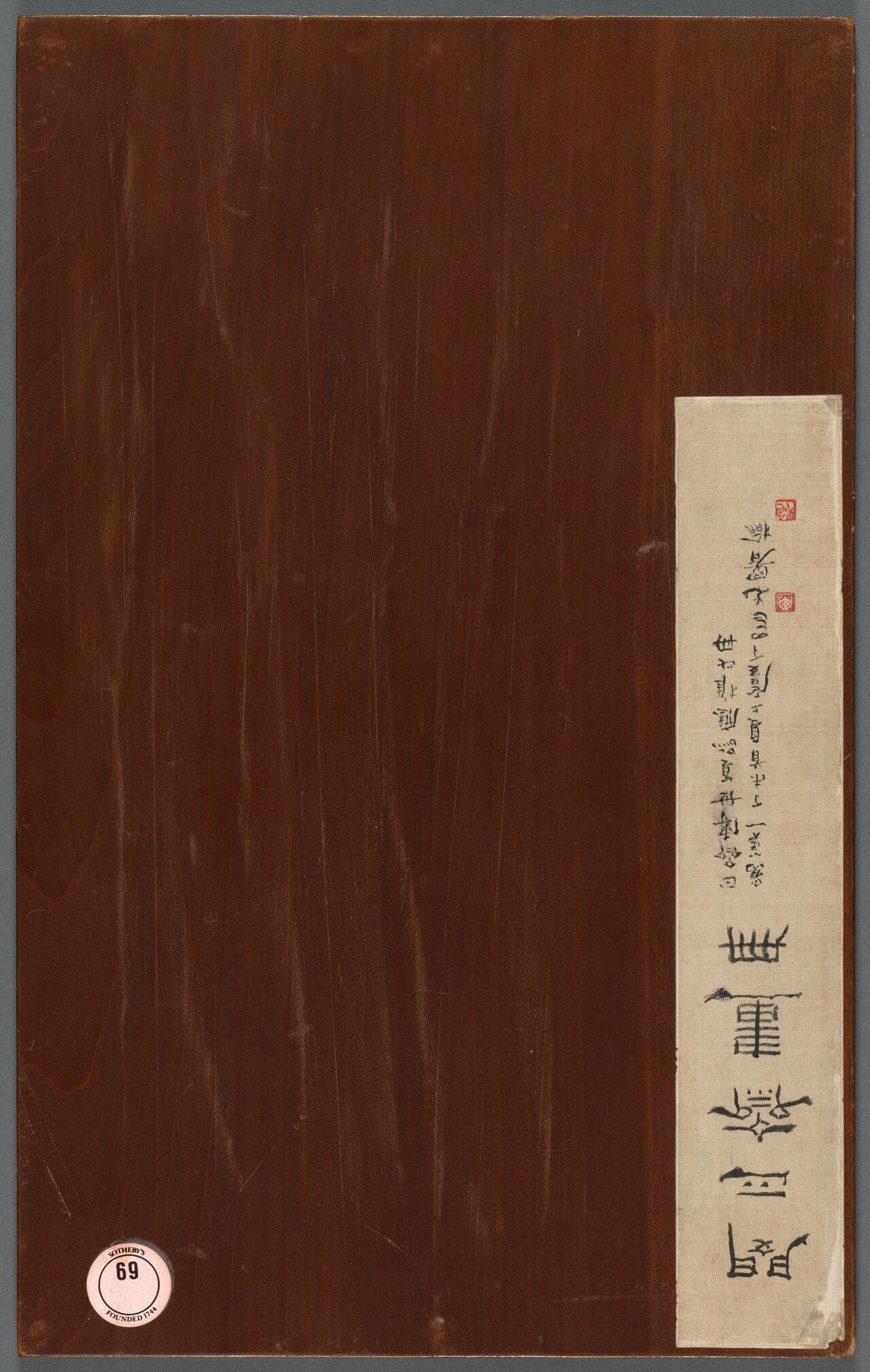
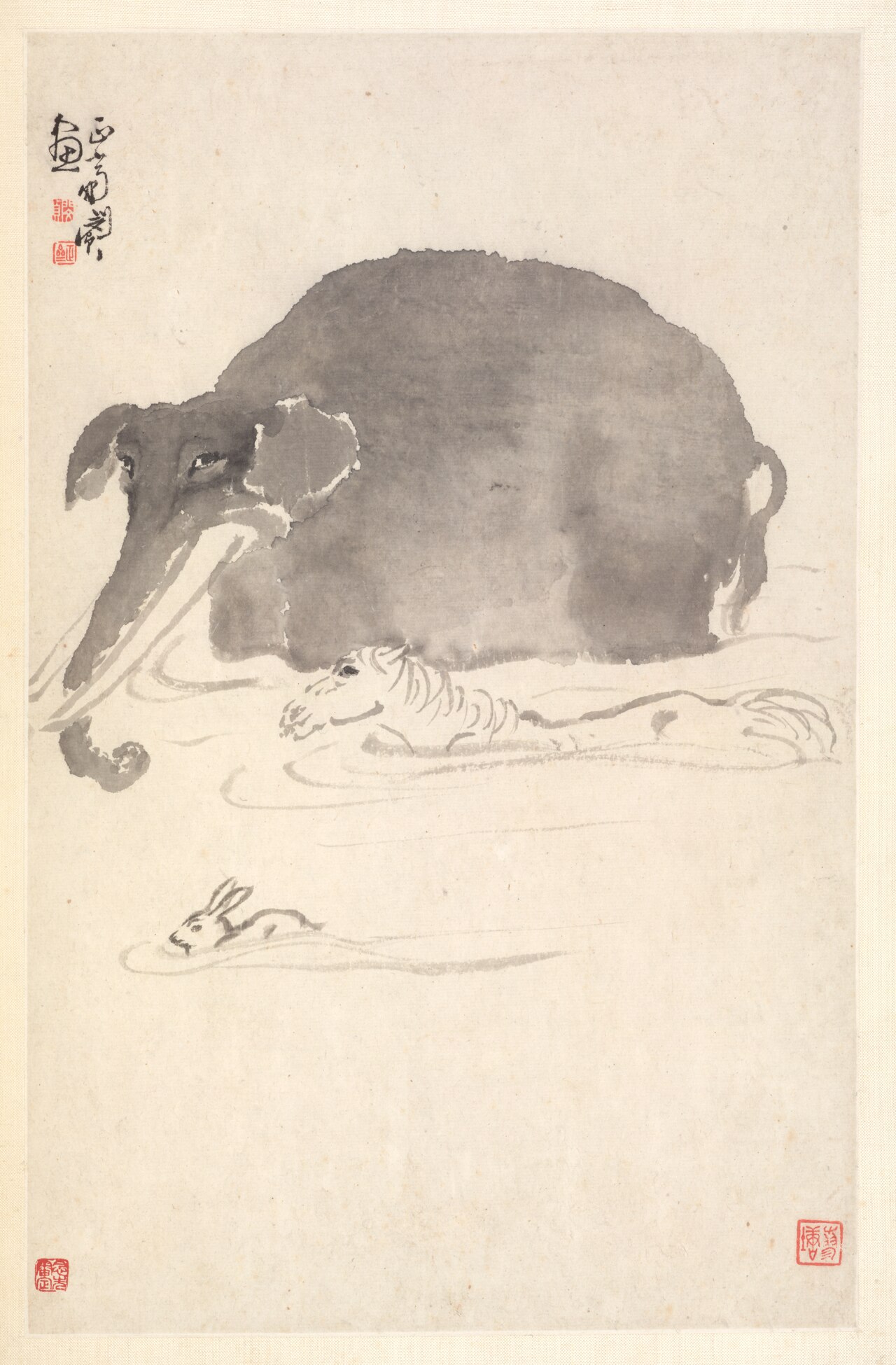
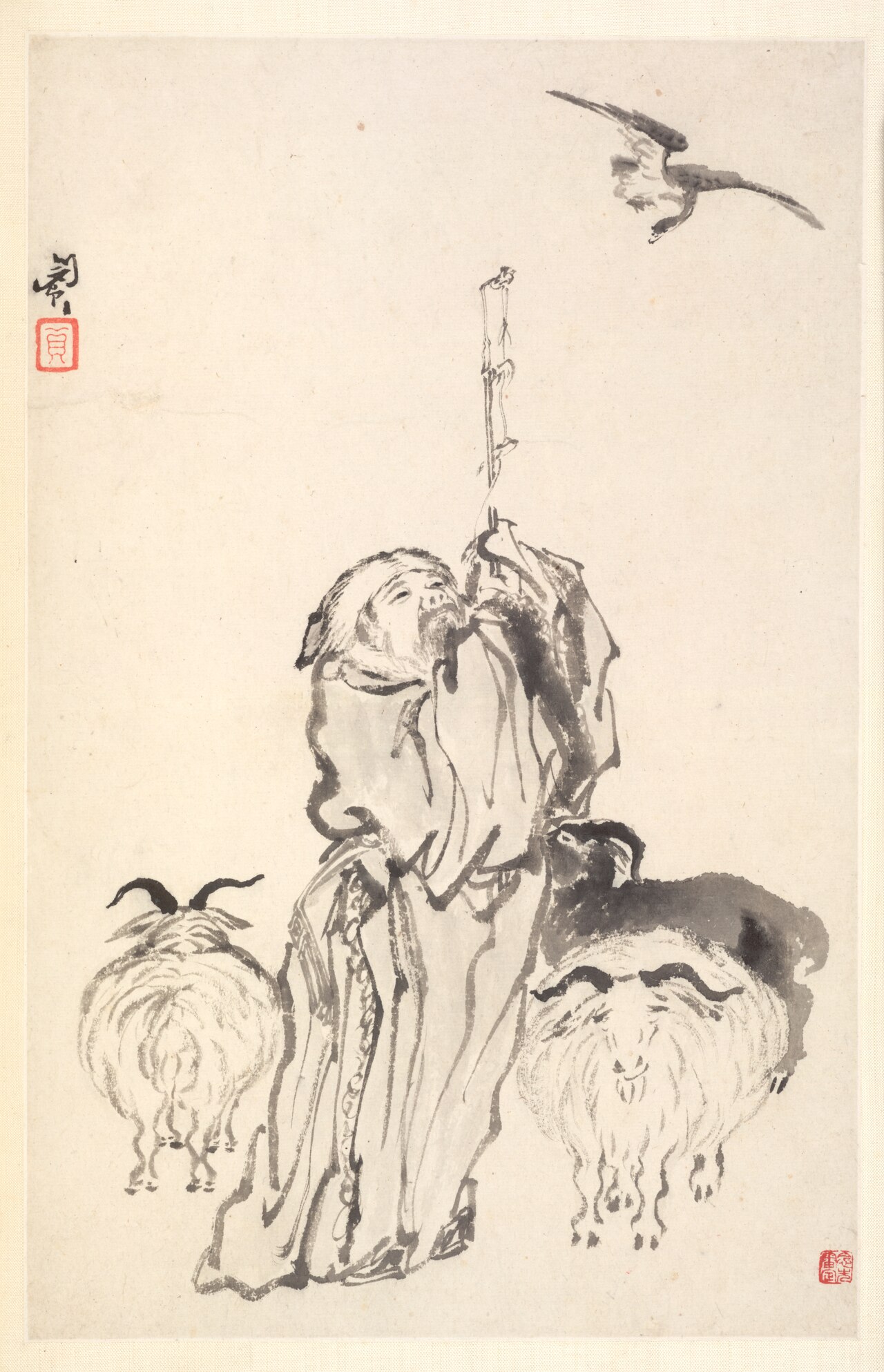
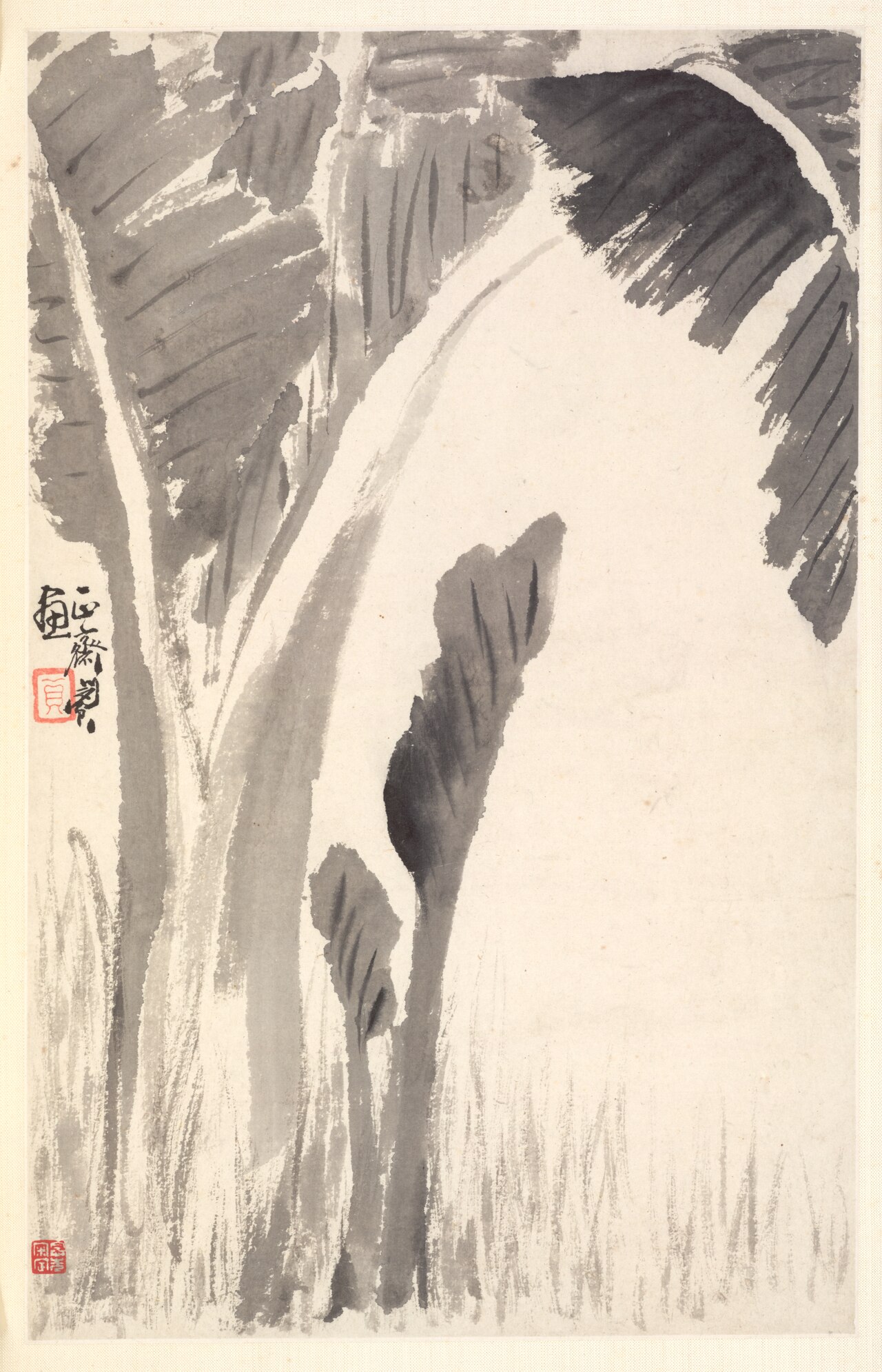
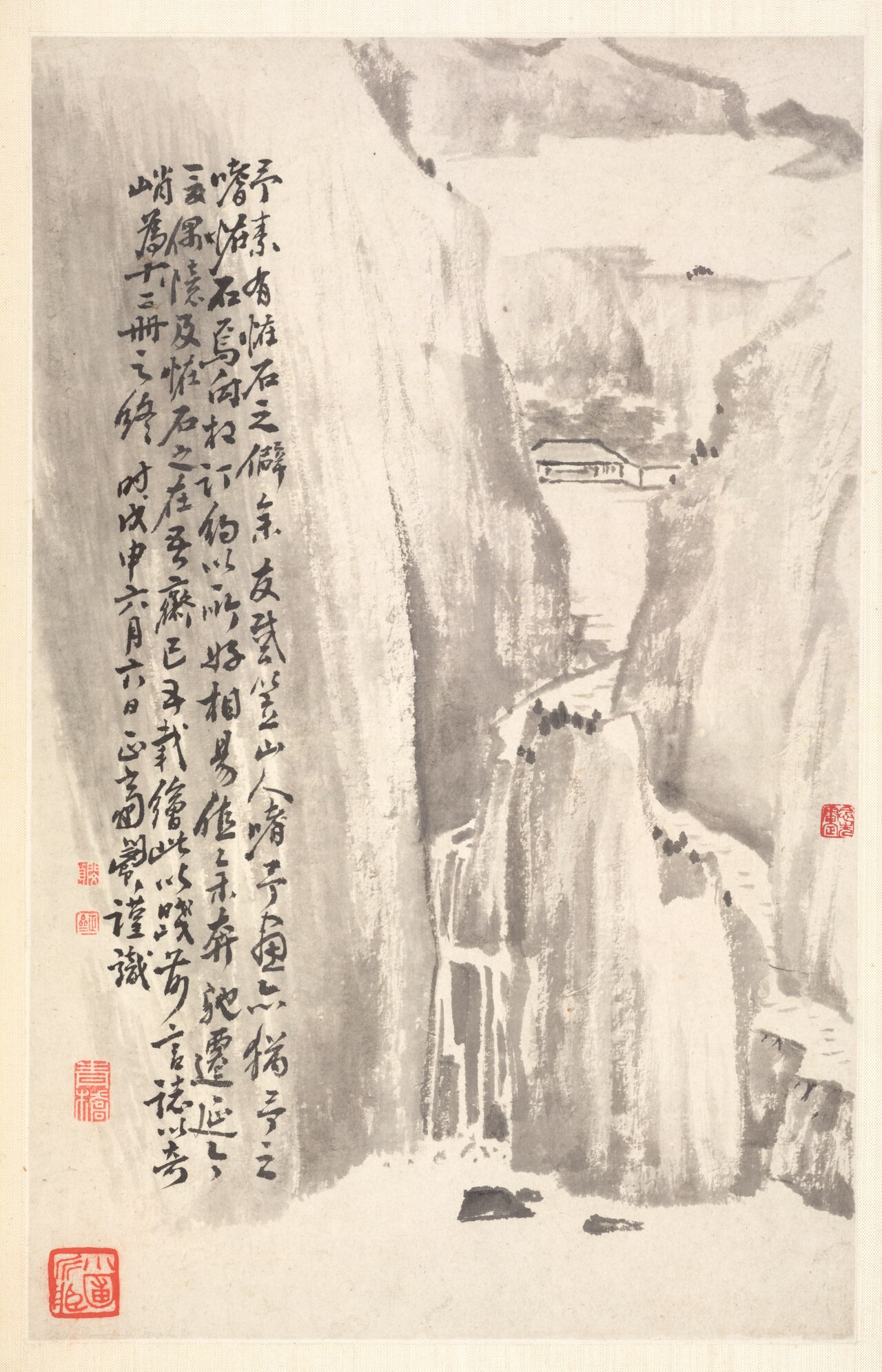
- Album of Miscellaneous Subjects (1788) – A multi‑panel collection that brings together a variety of themes, from portraiture to landscape. The album showcases Min’s versatility, juxtaposing detailed figure studies with more whimsical, loosely rendered scenes. - Elephant, Horse, and Hare (1788) – This composition presents three animals rendered with differing degrees of realism. The elephant is depicted with a robust, almost sculptural quality, while the horse exhibits fluid motion, and the hare appears in a playful, spontaneous pose, reflecting Min’s experimental use of brush and finger techniques. - Su Wu the Shepherd (1788) – A narrative painting that portrays the legendary Han‑dynasty envoy Su Wu, emphasizing the figure’s stoic demeanor amidst a rugged landscape. The work highlights Min’s capacity for storytelling through subtle facial expression and atmospheric washes. - Banana Plants (1788) – A botanical study that captures the lush foliage of banana leaves with vigorous brushstrokes. The piece is notable for its vibrant ink density, suggesting an early interest in the natural world that predates the more systematic botanical illustrations of later periods. - Sheer Cliffs (1788) – A landscape that dramatizes steep rock formations against a misty sky. The cliffs are rendered with bold, sweeping lines, while the surrounding atmosphere is suggested through delicate washes, demonstrating Min’s skill in balancing structural solidity with lyrical softness.
These works collectively reveal a painter comfortable moving between figurative and landscape subjects, while maintaining a consistent visual language rooted in expressive brushwork and occasional finger‑applied pigment.
Influence and legacy Although Min Zhen never achieved the fame of contemporaries such as Wang Yuanqi or the Four Wangs, his contributions have been recognised by later scholars for their idiosyncratic approach to figure painting. His occasional association with the Eight Eccentrics of Yangzhou—an informal group known for their avant‑garde attitudes—underscores his willingness to challenge orthodoxy. In modern times, art historians cite Min Zhen as an example of a regional painter who bridged the gap between courtly refinement and the more spontaneous, individualistic tendencies that would later define Chinese modern art. His surviving works, all dated to the final year of his life, provide valuable insight into the diversity of Qing‑dynasty visual culture and continue to be exhibited in specialist collections focusing on 18th‑century Chinese painting.
Frequently asked questions
Who was Min Zhen?
Min Zhen (1730–1788) was a Qing‑dynasty Chinese painter and seal‑carver from Nanchang, known for his figure paintings, occasional finger painting, and a small body of late‑career works.
What artistic style or movement is Min Zhen associated with?
He is not tied to a formal movement, but his expressive brushwork and experimental techniques place him alongside the “eccentric” painters of Yangzhou, who favoured a more spontaneous approach than official court styles.
What are Min Zhen’s most famous works?
His most recognised pieces, all dated 1788, include the Album of Miscellaneous Subjects, Elephant, Horse, and Hare, Su Wu the Shepherd, Banana Plants, and Sheer Cliffs.
Why is Min Zhen significant in art history?
He exemplifies a regional artist who blended traditional literati techniques with innovative practices such as finger painting, offering a distinct perspective on Qing‑dynasty visual culture and influencing later assessments of Chinese eccentric art.
How can I recognise a painting by Min Zhen?
Look for a combination of finely detailed human figures, bold, sweeping brushstrokes, occasional fingertip pigment marks, and the presence of personal seals that serve as both signatures and compositional accents.