Chen Hongshou
1598 – 1652
In short
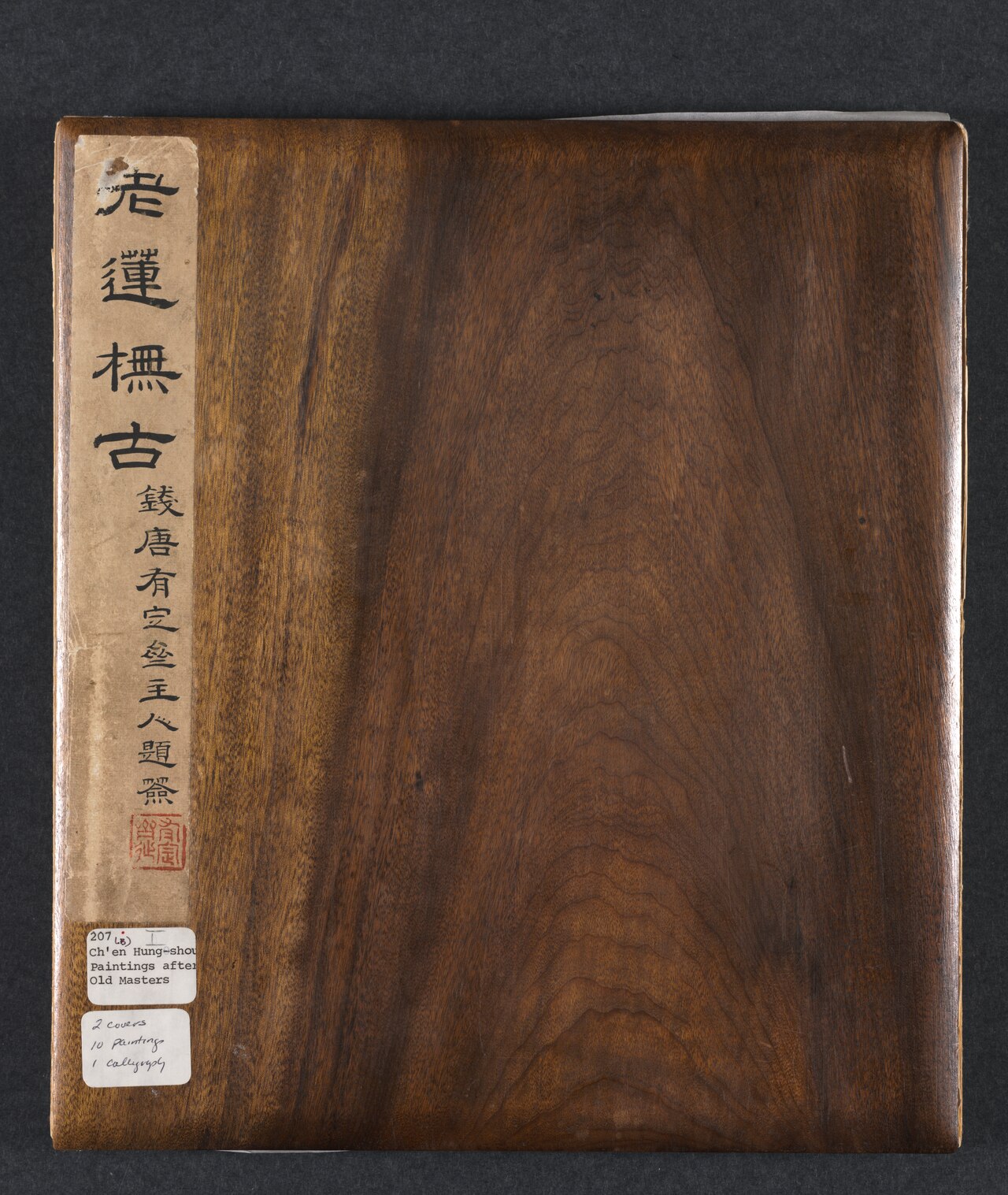
Chen Hongshou (1598–1652) was a Chinese painter of the late Ming and early Qing periods, renowned for his figure paintings, decorative composition and bold use of line. His surviving works include Paintings after Ancient Masters (1625), Miscellaneous Album, Old Plum (1650) and Lotuses and Rock.
Notable works


Early life
Chen Hongshou was born in 1598 in Zhuji, a county in present‑day Zhejiang province. His family belonged to the scholarly class, and he received a classical education that included calligraphy and poetry, typical of literati families of the time. From an early age he showed a talent for drawing, practising on paper and silk under the guidance of local artisans. The cultural environment of the Jiangnan region, with its thriving market for paintings and its network of private studios, gave Chen access to a wide range of artistic models, from court painters to folk illustrators. By his teens he was already familiar with the works of ancient masters such as Wang Xizhi and the Tang‑era figure painters, a knowledge that would later inform his own practice.
Career and style
In his twenties Chen moved to Hangzhou, the cultural capital of the late Ming dynasty, where he established himself as a professional painter. He combined the ideals of the literati tradition – personal expression, brush‑controlled line, and scholarly subjects – with the decorative richness favoured by court patrons. His style is characterised by a strong, often exaggerated outline, a vivid palette of mineral pigments, and a penchant for crowded, narrative compositions. Chen favoured subjects drawn from classical literature, Buddhist iconography and everyday life, presenting them in a manner that balanced scholarly refinement with popular appeal. While the exact artistic movement he belonged to is not recorded, his work represents a synthesis of the Wu School’s emphasis on spontaneity and the more ornamental tendencies of the Southern school.
Signature techniques
Chen Hongshou’s paintings are instantly recognisable through several recurring technical hallmarks. First, he employed a bold, almost calligraphic line to delineate figures and objects, a technique that gave his works a graphic intensity. Second, he layered mineral pigments – especially azurite, malachite and cinnabar – to achieve saturated colours that retain their brilliance over centuries. Third, he often used a stippled background of “dots and specks” to suggest atmospheric depth while keeping the main subjects in sharp relief. Fourth, his compositions frequently feature a decorative border or frame, echoing the format of album leaves and reinforcing the sense of a curated collection. Finally, he incorporated intricate patterned clothing and accessories, allowing him to demonstrate his mastery of fine brushwork while adding narrative detail.
Major works
- Paintings after Ancient Masters (1625) – This series consists of a set of small scrolls in which Chen reproduced the styles of celebrated ancient painters, ranging from the Tang master Zhou Fang to the Song‑era landscape artists. The project was both an homage to the past and a pedagogical exercise, showcasing his ability to internalise and reinterpret historic techniques.
- Miscellaneous Album – A compilation of diverse subjects, the album includes figure studies, bird‑and‑flower sketches, and genre scenes. Its eclectic nature illustrates Chen’s versatility and his willingness to experiment with composition, colour and subject matter within a single bound volume.
- Old Plum (1650) – One of his later works, Old Plum portrays a solitary plum branch against a misty background, rendered with delicate brushstrokes and a restrained colour scheme. The painting is celebrated for its lyrical simplicity, contrasting with the busier compositions that dominate much of his earlier output.
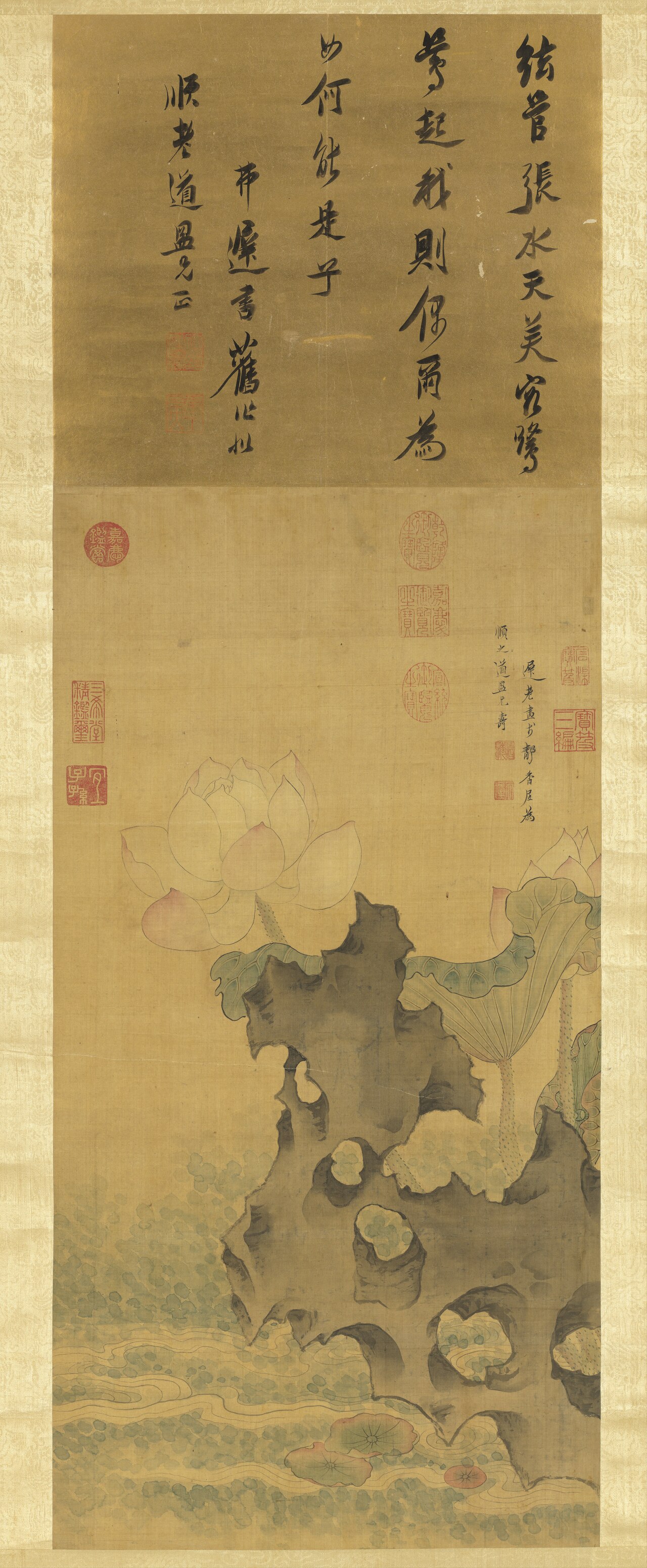
- Lotuses and Rock – This composition juxtaposes a cluster of lotus blossoms with a stylised rock formation, a traditional motif symbolising purity and resilience. Chen’s handling of the lotus petals, rendered with fine, feather‑like strokes, and the rough, almost sculptural treatment of the rock, exemplifies his skill in balancing texture and form.
Influence and legacy
Chen Hongshou’s work played a pivotal role in the transition from Ming to early Qing visual culture. By preserving the techniques of ancient masters while introducing his own ornamental flair, he provided a model for later Qing painters who sought to reconcile the past with contemporary tastes. Contemporary scholars praised his ability to fuse the literati spirit with decorative elegance, and his paintings were collected by both aristocratic families and imperial libraries. In the centuries that followed, his albums were reproduced in woodblock prints, spreading his stylistic vocabulary across China. Modern art historians regard Chen as a bridge figure – a practitioner who maintained the intellectual rigor of the late Ming academy while anticipating the more decorative inclinations of early Qing court art. His legacy endures in museum collections worldwide, where his works continue to be studied for their technical brilliance and their insight into a period of cultural transformation.
Frequently asked questions
Who was Chen Hongshou?
Chen Hongshou (1598–1652) was a Chinese painter of the late Ming and early Qing periods, known for his figure paintings and decorative style.
What style or movement is he associated with?
He is not linked to a single formal movement; his work blends literati brushwork with ornamental court influences, creating a distinctive hybrid style.
What are his most famous works?
Key works include Paintings after Ancient Masters (1625), the Miscellaneous Album, Old Plum (1650) and the composition Lotuses and Rock.
Why does Chen Hongshou matter in art history?
He helped preserve ancient painting techniques while introducing decorative innovations, acting as a bridge between late‑Ming scholarly art and early‑Qing court aesthetics.
How can I recognise a painting by Chen Hongshou?
Look for bold, calligraphic outlines, vivid mineral pigments, intricate patterned clothing, decorative borders, and a composition that balances detailed figures with stylised natural elements.