Luo Ping
1733 – 1799
In short
Luo Ping (1733–1799) was a Qing‑dynasty Chinese painter, the youngest member of the Eight Eccentrics of Yangzhou, known for his expressive brushwork and a repertoire that included figures, Buddhist subjects, plum‑and‑bamboo motifs, and imaginative landscapes.
Notable works

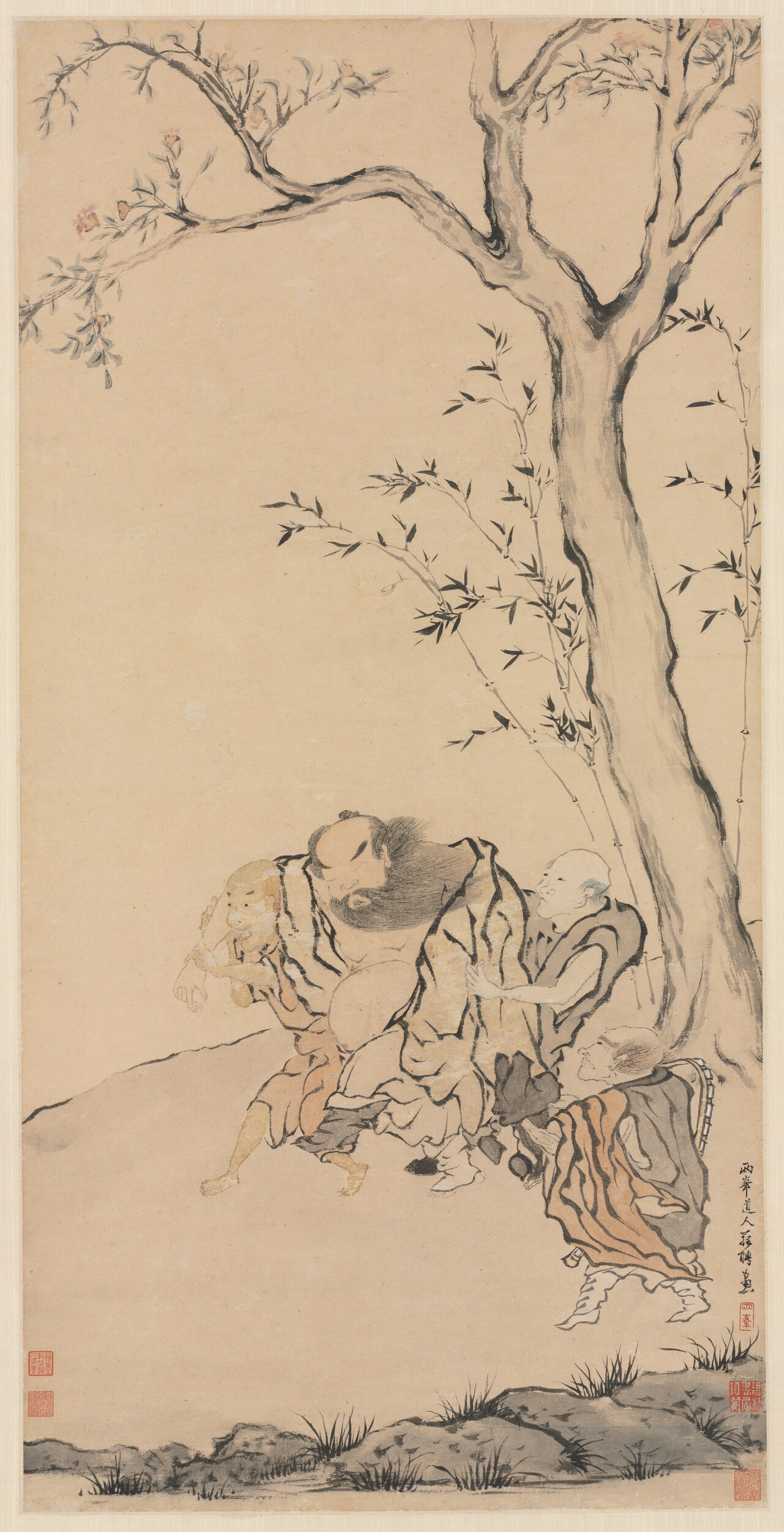
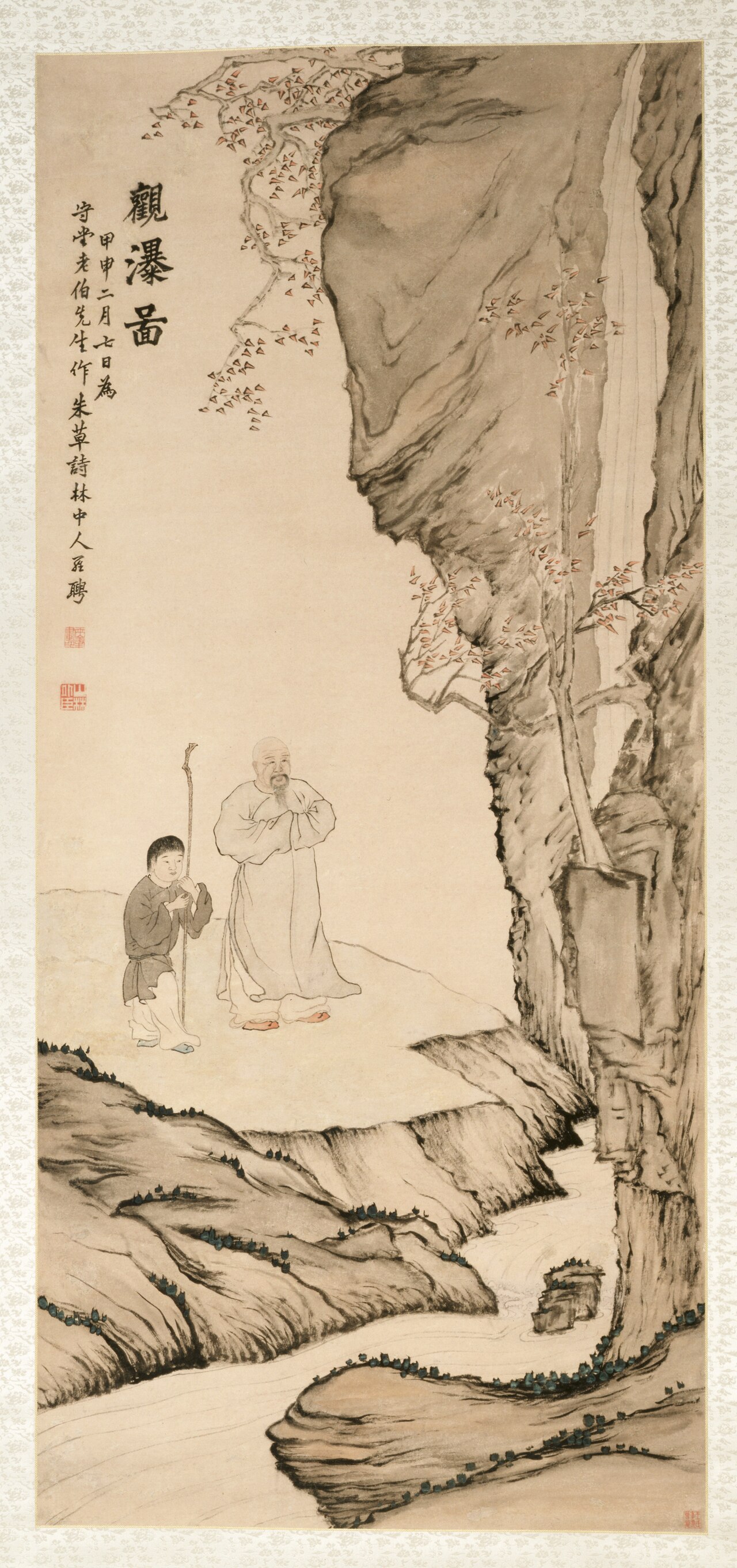

Early life Luo Ping was born in 1733 in Ganquan, a historic district that is now part of Yangzhou in Jiangsu province. Little is recorded about his family background, but he grew up in an environment steeped in the artistic traditions of the Jiangnan region. He received his courtesy name, Dunfu, and later adopted the pseudonyms Liangfeng and Huazhisi Seng, reflecting a penchant for poetic self‑identification common among literati artists of his time.
Career and style Luo Ping entered the artistic world under the tutelage of Jin Nong, one of the leading figures of the Yangzhou school. Jin Nong’s encouragement of individuality and spontaneity left a lasting imprint on Luo’s approach. Rejecting the conventional route of civil service, Luo chose a life of artistic independence, subsisting on the sale of his paintings. This decision placed him among the so‑called “Eight Eccentrics of Yangzhou,” a loosely defined group noted for their unorthodox techniques and anti‑establishment attitudes.
His oeuvre spans a wide range of subjects. Luo painted scholarly figures immersed in contemplation, Buddhist deities rendered with a serene gravitas, and natural subjects such as plum blossoms, bamboo, and wildflowers. His landscapes, while rooted in classical Chinese conventions, often display a whimsical quality, blending realistic observation with imaginative invention. Throughout his career he maintained a consistent commitment to personal expression over adherence to courtly or academic standards.
Signature techniques Luo Ping’s brushwork is distinguished by vigorous, calligraphic strokes that convey both structural clarity and emotional intensity. He favoured a dry‑brush technique for foliage, allowing the ink to break and create a textured, almost tactile surface. In contrast, his figures are rendered with fluid, rounded lines that suggest movement and vitality. Luo also employed a restrained palette of ink, light washes of colour, and occasional touches of red or gold to highlight focal points. The interplay of negative space and inked forms is a hallmark of his compositions, creating a sense of balance that aligns with Daoist aesthetic principles.
Major works Among Luo Ping’s most celebrated pieces are four paintings that illustrate the breadth of his subjects and his technical mastery:
- Spider Spinning Its Web – This work captures a delicate spider at work, its slender legs set against a subtly inked background. Luo’s dry‑brush technique renders the spider’s silk with fine, broken strokes, emphasizing the fragility of the subject while evoking the broader theme of diligent perseverance.
- Zhong Kui Supported by Ghosts (1774) – Depicting the mythic demon‑hunter Zhong Kui, Luo places the heroic figure amid a procession of spectral beings. The composition combines bold ink outlines for Zhong Kui’s armor with softer, diffused washes for the ghosts, creating a dynamic contrast that underscores the painter’s narrative skill.
- Scholar Watching the Waterfall (1764) – In this landscape, a lone scholar stands before a cascading waterfall, his contemplative pose suggesting a meditation on nature’s power. Luo balances the turbulent water with the scholar’s calm presence, employing layered ink washes to convey depth and the misty atmosphere typical of Chinese waterfall scenes.
- Drinking in the Bamboo Garden (1773) – This painting portrays a figure enjoying a drink amidst towering bamboo stalks. Luo’s treatment of bamboo showcases his dry‑brush prowess, each stalk rendered with crisp, angular strokes that contrast with the fluid, rounded lines of the drinking figure, highlighting the harmony between humanity and the natural world.
These works collectively demonstrate Luo Ping’s versatility: his ability to depict minute detail, convey mythic narrative, and render serene landscapes with equal confidence.
Influence and legacy Luo Ping’s defiance of official artistic conventions and his commitment to a personal visual language resonated with later generations of Chinese painters who sought to balance tradition with innovation. While he never held an official court position, his reputation as a “scholar‑artist‑outlaw” contributed to the romantic image of the eccentric painter in Chinese cultural memory. Contemporary scholars regard him as a pivotal figure in the transition from the highly formalised styles of the early Qing period to the more expressive, individualistic approaches that emerged in the late eighteenth century.
In modern exhibitions, Luo’s paintings are valued not only for their aesthetic qualities but also for the insight they provide into the social and cultural milieu of Yangzhou’s merchant‑driven art market. His works continue to be studied for their technical brilliance, narrative richness, and the way they embody a uniquely Chinese synthesis of literati ideals and popular imagination.
Frequently asked questions
Who was Luo Ping?
Luo Ping (1733–1799) was a Qing‑dynasty Chinese painter, the youngest of the Eight Eccentrics of Yangzhou, celebrated for his expressive brushwork and varied subjects.
What artistic style or movement is Luo Ping associated with?
He is linked to the Yangzhou school of eccentric painters, a movement noted for its individualistic, anti‑academic approach and spontaneous, calligraphic technique.
What are Luo Ping’s most famous works?
Key works include Spider Spinning Its Web, Zhong Kui Supported by Ghosts (1774), Scholar Watching the Waterfall (1764), and Drinking in the Bamboo Garden (1773).
Why is Luo Ping important in art history?
Luo’s refusal of official service and his innovative, personal style helped bridge traditional literati painting with more expressive, market‑driven art, influencing later Chinese painters.
How can I recognise a Luo Ping painting?
Look for vigorous, calligraphic brushstrokes, a dry‑brush texture in foliage, a balanced use of ink and light colour washes, and subjects ranging from scholarly figures to mythic scenes rendered with a whimsical yet disciplined hand.