Ludvig Munthe
1841 – 1896
In short
Ludvig Munthe was a Norwegian landscape painter born in 1841 in Sogndal Municipality, who later settled in Düsseldorf, Germany, where he died in 1896. He is known for his winter landscapes and scenes of everyday life. Munthe's work reflects his connection to both Norwegian and German artistic traditions.
Notable works

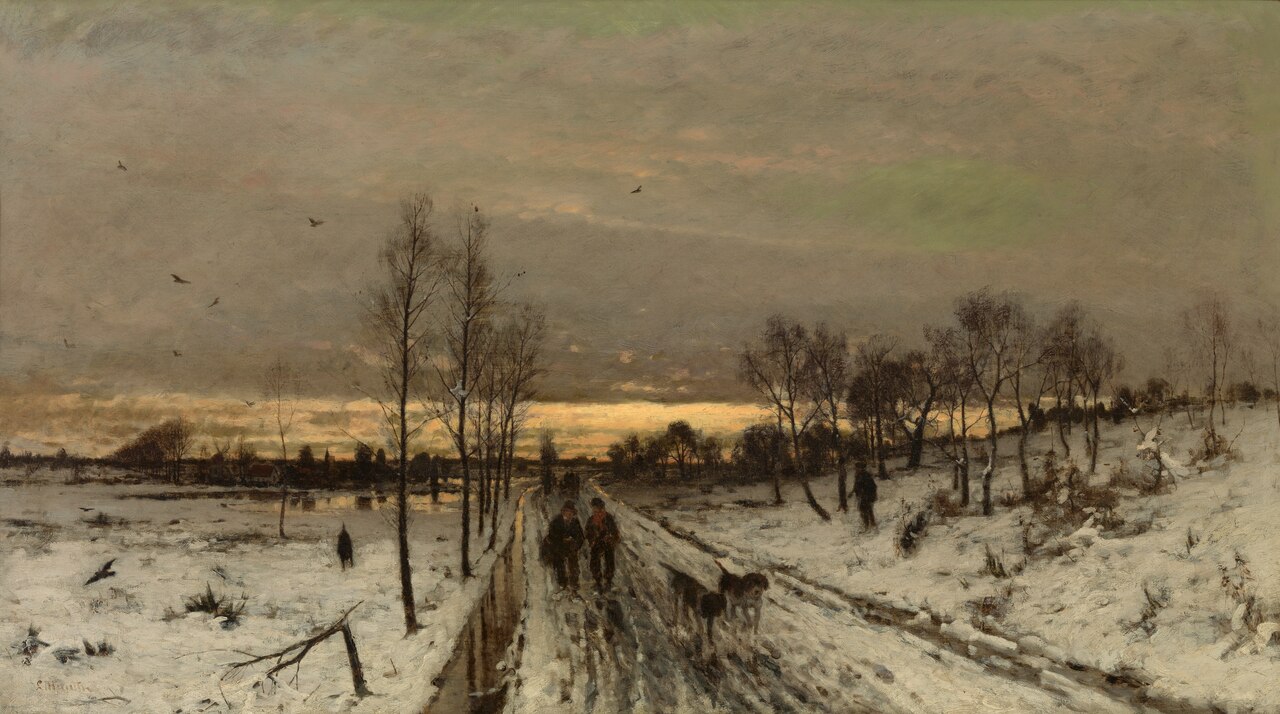


# Ludvig Munthe ## Early life Ludvig Munthe was born in 1841 in Sogndal Municipality, Norway. Although specific details about his early life and training are not well-documented, it is known that he developed an interest in art from a young age. This period laid the foundation for his future career as a landscape painter. ## Career and style Munthe's career as a painter was marked by his relocation to Düsseldorf, Germany, a city known for its vibrant art scene. It was here that he likely developed his skills further and became acquainted with various European art movements. His style, while not strictly adhering to a single movement, reflects the influences of the landscapes and cultures he encountered. ## Signature techniques Munthe's work is characterized by his ability to capture the serene and often tranquil atmosphere of landscapes. His use of light and color contributed to the emotive quality of his paintings, inviting viewers to immerse themselves in the scenes he depicted. Although the specific techniques he employed are not extensively documented, his paintings demonstrate a mastery of traditional landscape painting methods. ## Major works Among Munthe's notable works are 'Winter Scenery' (1869), 'Winter Landscape', 'Waterfall', 'Village Street in Holland' (1895), and 'Landscape'. 'Winter Scenery' and 'Winter Landscape' showcase his skill in capturing the quiet beauty of snow-covered landscapes, while 'Waterfall' highlights his ability to depict dynamic natural scenes. 'Village Street in Holland' demonstrates his interest in everyday life and architectural subjects, reflecting his time spent in Holland. 'Landscape' is a testament to his broad range of interests in natural scenery. ## Influence and legacy Munthe's contributions to the world of landscape painting, though perhaps not widely recognized in his time, have become more appreciated over the years. His work serves as a bridge between Norwegian and German artistic traditions, offering insights into the exchange of ideas and influences during the 19th century. Today, his paintings are valued for their beauty and the window they provide into the past, allowing viewers to appreciate the enduring appeal of traditional landscape art.
Frequently asked questions
Who was Ludvig Munthe?
Ludvig Munthe was a Norwegian landscape painter born in 1841, known for his serene and emotive depictions of natural scenes and everyday life.
What style or movement was Ludvig Munthe associated with?
While Munthe's style does not strictly adhere to a single known movement, his work reflects influences from European landscape traditions, particularly from Norway and Germany.
What are some of Ludvig Munthe's most famous works?
Munthe's notable works include 'Winter Scenery', 'Winter Landscape', 'Waterfall', 'Village Street in Holland', and 'Landscape', each showcasing his skill in capturing different aspects of natural and everyday scenes.
Why does Ludvig Munthe matter in the history of art?
Munthe matters because his work bridges Norwegian and German artistic traditions, providing a unique perspective on 19th-century landscape painting and the exchange of artistic ideas during that period.
How can I recognize Ludvig Munthe's work?
You can recognize Munthe's work by looking for serene and often tranquil landscapes, characterized by skilled use of light and color, and a focus on capturing the beauty of natural scenes and everyday life.