Liu Songnian
1174 – 1224
In short
Liu Songnian (1174–1224) was a Chinese landscape painter of the early Southern Song dynasty, recognised as one of the Four Masters of that period. He worked mainly in Hangzhou, where he studied at the Imperial Academy of Painting and produced a body of work noted for its refined brushwork and atmospheric scenery.
Notable works
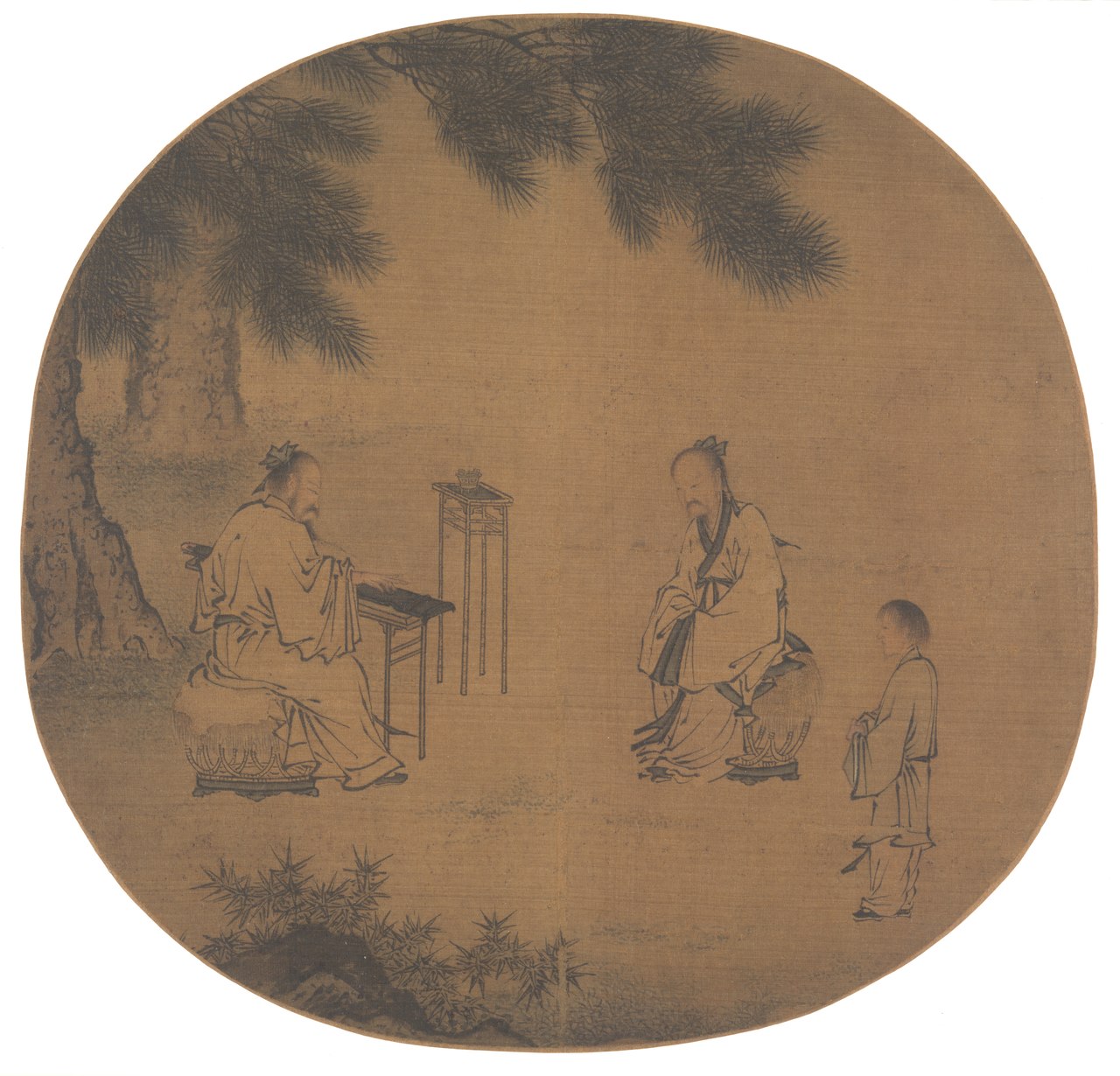


Early life Liu Songnian was born in 1174 in Hangzhou, the capital of the Southern Song dynasty. Little is known about his family background, but the city’s status as a cultural centre meant that he was exposed early to the artistic traditions of the imperial court. Hangzhou’s lakes, gardens and mountains provided a rich visual vocabulary that would later dominate his paintings. By his teenage years Liu had entered the Imperial Academy of Painting, where he received formal training in the techniques of court painters and was introduced to the literati aesthetic that prized subtlety and scholarly allusion.
Career and style Liu Songnian’s professional career unfolded during a period of relative stability for the Southern Song, allowing him to serve both the court and private patrons. He rose to the rank of court painter, a position that required him to produce works for imperial ceremonies, diplomatic gifts and the decoration of palace spaces. His style reflects a synthesis of the earlier Northern Song realism and the emerging Southern Song emphasis on lyrical, mist‑laden landscapes. Liu favoured a restrained palette of muted greens, browns and grays, using layered washes to evoke depth and atmosphere. While he adhered to the conventions of the academy, he also incorporated a more personal, expressive line that anticipates the later “one‑corner” compositions of Ma Yuan and Xia Gui.
Signature techniques Liu’s brushwork is distinguished by a combination of meticulous detail and bold, sweeping strokes. He employed the *cun* (texture stroke) to suggest rock formations, using a series of short, angular taps that build up a sense of solidity. In contrast, his foliage and water are rendered with softer, flowing lines that dissolve into the background, creating a seamless transition between foreground and mist. Liu frequently used the *wet‑brush* technique, allowing ink to bleed into the paper and generate subtle gradations of tone. This method enhanced the ethereal quality of his skies and waters, reinforcing the poetic atmosphere that underlies much of his work.
Major works Among Liu Songnian’s surviving pieces, several stand out for their historical importance and artistic excellence. **Listening to the Qin (Zither) (1187)** depicts a scholar seated beside a scholar‑rock, gently plucking a zither while mist curls around him. The composition balances the figure’s introspection with a landscape that recedes into layered ink washes, illustrating Liu’s skill in integrating human activity within a natural setting.
Winter Landscape is a monochrome ink painting that captures a snow‑covered mountain range through sparse brushstrokes and delicate shading. The work exemplifies Liu’s ability to convey the chill of winter without relying on colour, using subtle variations in ink density to suggest both texture and atmosphere.
Gathering of Daoist Immortals portrays a legendary assembly of immortal figures set within a lush, mountainous retreat. Liu renders the figures with elegant, flowing lines, while the surrounding cliffs and waterfalls are suggested through the characteristic *cun* texture, creating a harmonious blend of myth and natural scenery.
The Gathering at the Orchid Pavilion references the famous calligraphic event of Wang Xizhi, yet Liu translates the literary moment into a visual meditation. The painting shows scholars gathered by a meandering stream, their boats floating amidst willows and reeds. The composition’s rhythmic flow mirrors the fluidity of the original prose, reinforcing Liu’s capacity to echo literary themes through pictorial means.
Nine Egrets in a Lotus Pond offers a quieter, more intimate scene. Nine egrets, rendered with precise, feather‑like strokes, stand amidst blooming lotus leaves. The work’s delicate balance of negative space and detailed rendering showcases Liu’s mastery of bird‑and‑flower motifs, a subject that was less common among his contemporaries.
These works collectively demonstrate Liu’s versatility—ranging from grand, narrative compositions to intimate studies of nature—while maintaining a consistent aesthetic of contemplative serenity.
Influence and legacy Liu Songnian’s contribution to Southern Song painting earned him a place among the Four Masters, a group whose collective output defined the visual language of the era. His approach to atmospheric perspective and the integration of scholarly themes influenced later artists such as Ma Yuan and Xia Gui, who further distilled the Southern Song aesthetic into more abstracted, single‑corner compositions. Beyond the court, Liu’s paintings circulated among literati circles, where they were admired for their poetic resonance and technical finesse. In modern scholarship, Liu is recognised not only for his artistic achievements but also for his role in bridging the Northern Song realism with the Southern Song’s lyrical sensibility. Contemporary exhibitions of Song dynasty art frequently include Liu’s works to illustrate this pivotal transition, and his paintings continue to serve as reference points for scholars studying brush technique, composition, and the cultural symbolism of landscape in Chinese art.
Frequently asked questions
Who was Liu Songnian?
Liu Songnian (1174–1224) was a Chinese landscape painter of the early Southern Song dynasty, celebrated as one of the Four Masters of that period.
What artistic style or movement is Liu Songnian associated with?
He worked within the Southern Song court painting tradition, blending Northern Song realism with the lyrical, mist‑filled approach that characterised Southern Song landscapes.
What are Liu Songnian’s most famous works?
His best‑known paintings include Listening to the Qin (1187), Winter Landscape, Gathering of Daoist Immortals, The Gathering at the Orchid Pavilion, and Nine Egrets in a Lotus Pond.
Why is Liu Songnian important in art history?
He helped define the Southern Song aesthetic, influencing later masters such as Ma Yuan and Xia Gui, and his works exemplify the integration of poetic narrative with refined brush technique.
How can I recognise a Liu Songnian painting?
Look for subtle, layered ink washes, delicate texture strokes for rocks, a restrained colour palette, and compositions that balance human figures or mythic scenes with atmospheric, misty landscapes.