Johanne Mathilde Dietrichson
1837 – 1921
In short
Johanne Mathilde Dietrich0n (1837–1921) was a Norwegian painter, sculptor and ceramicist, notable for being the first Norwegian woman to receive a formal art education. She worked mainly in portraiture and genre scenes, producing works such as a self‑portrait (1865) and several professor portraits, and her legacy lies in opening professional avenues for women artists in Norway.
Notable works
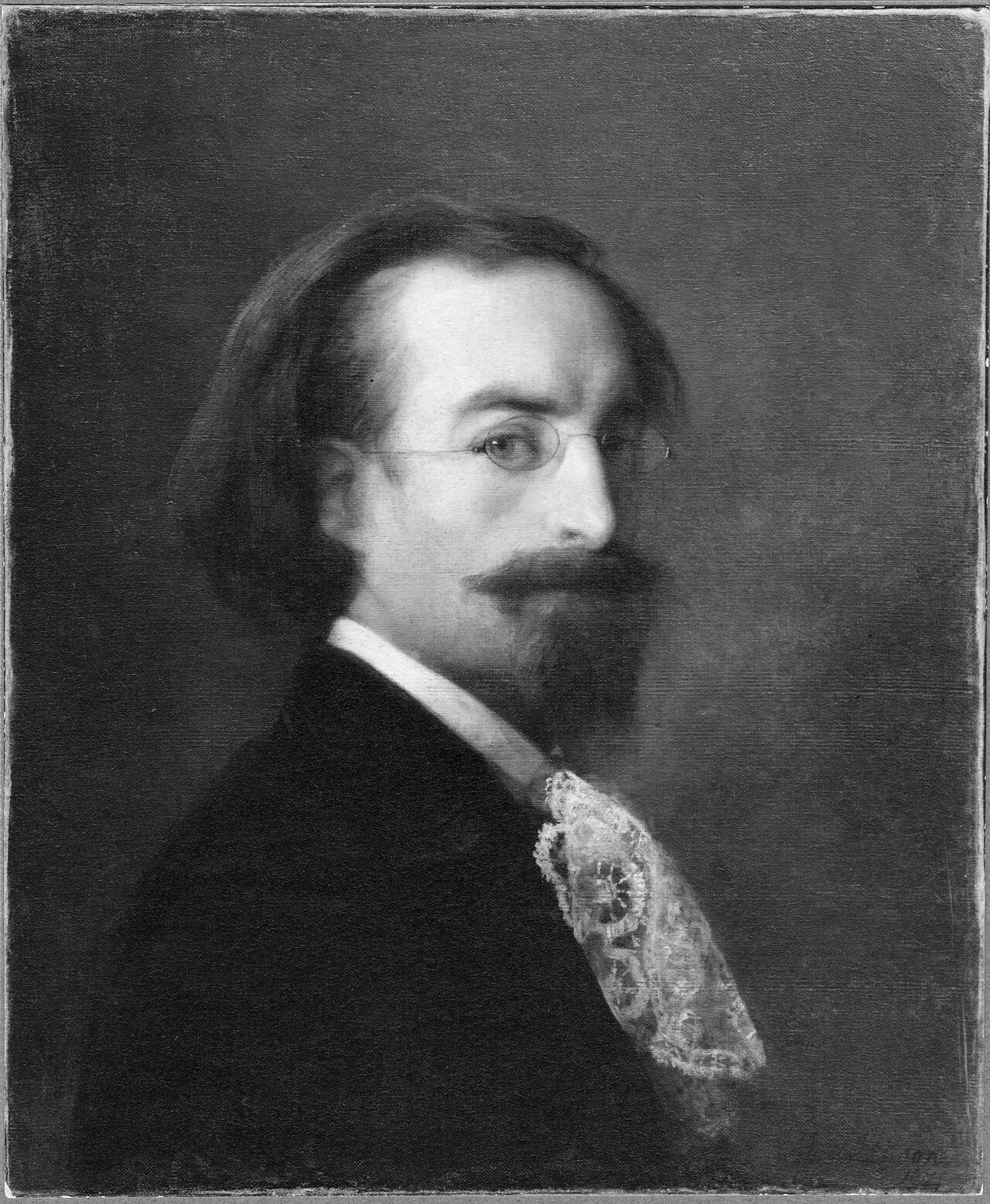


Early life Johanne Mathilde Dietrichson was born in 1837 in Christiania, the capital of Norway (today Oslo). She grew up in a culturally engaged family; her father was a civil servant with an interest in the arts, which gave her early exposure to drawing and decorative crafts. Unlike most Norwegian women of her generation, she was encouraged to pursue artistic training beyond the domestic sphere. By the late 1850s she had begun to attend informal drawing circles that were forming in Christiania, laying the groundwork for her later breakthrough into formal instruction.
Career and style In the early 1860s Dietrichson secured a place at the Royal Danish Academy of Fine Arts in Copenhagen, becoming the first Norwegian woman to be admitted to a recognised art academy. The academy’s curriculum emphasized rigorous drawing from casts, life‑model studies and an academic approach to composition, which shaped her subsequent portraiture. After completing her studies she returned to Christiania, where she established a modest studio and began receiving commissions from academics, clergy and the emerging bourgeoisie. Her oeuvre straddles painting, sculpture and ceramics; while portraiture dominates her output, she also experimented with three‑dimensional media, producing small figurines and decorative ceramic plates that display a keen eye for texture and materiality.
Stylistically, Dietrichson adhered to the realist conventions of mid‑nineteenth‑century academic art. Her paintings are characterised by careful modelling of flesh, restrained colour palettes and a calm, dignified atmosphere. Unlike the more flamboyant Romantic painters of her time, she favoured subtle chiaroscuro and a naturalistic rendering of clothing and surroundings. In her genre scenes she often depicted women engaged in domestic activities—sewing, reading or conversing—capturing a quiet interiority that reflects both the social expectations of her era and her own nuanced observation of everyday life.
Signature techniques Dietrichson’s technical signature lies in her meticulous draftsmanship and the smooth integration of surface detail. In her oil portraits she employed layered glazing to achieve luminous skin tones, a method that allowed her to build depth without sacrificing the crispness of facial features. Her handling of fabric folds demonstrates a precise awareness of light, often achieved through fine, almost invisible brushstrokes that suggest texture rather than overtly delineate it. When working in ceramics, she transferred this painterly sensibility to the clay surface, using slip painting to create delicate patterns that echo the embroidery motifs seen in her painted works. Across media, a consistent element is her focus on the sitter’s gaze; she often positioned the eyes at a slightly off‑center line, creating a subtle psychological tension that invites the viewer into the portrait.
Major works - **Portrait of Professor Lorentz Dietrichson (1863)** – One of her earliest surviving portraits, this oil painting captures the noted Norwegian art historian and poet Lorentz Dietrichson. The work demonstrates her early mastery of chiaroscuro, with the professor’s scholarly demeanor rendered against a muted background that places emphasis on his facial expression and the texture of his beard. - **Self‑portrait (1865)** – Executed shortly after her return from Copenhagen, the self‑portrait presents the artist in a modest studio setting, brush in hand. The composition reflects her confidence as a professional artist while maintaining the modesty expected of women at the time. The delicate rendering of her hair and the soft lighting reveal her skill in modelling light on skin. - **L. Dietrichson, Professor (1871)** – This later portrait of a fellow academic, painted for a university commission, showcases her evolved technique. The sitter is depicted seated, surrounded by books, with a subtle interplay of warm ochres and cool blues that creates a balanced colour harmony. The work is notable for its psychological depth, suggesting the professor’s contemplative nature. - **Gode venner (1877)** – Translating to “Good Friends,” this genre painting depicts two women sharing a quiet moment over tea. The scene is rendered with a gentle palette of pastel tones, and the careful depiction of the porcelain teacup and embroidered tablecloth highlights Dietrichson’s attention to decorative detail. The work exemplifies her ability to convey intimacy within domestic interiors. - **Sittende ung dame med broderi (1891)** – Meaning “Seated Young Lady with Embroidery,” this later painting illustrates a young woman absorbed in needlework. The composition is simple yet effective: the sitter occupies the centre, her hands delicately manipulating thread, while the background recedes into a soft blur. The piece reflects Dietrichson’s continued interest in portraying women’s everyday labour, and her technique in rendering textile textures is particularly refined.
Influence and legacy Johanne Mathilde Dietrichson’s significance extends beyond her individual artworks. By breaking the gender barrier at the Royal Danish Academy, she paved the way for subsequent generations of Norwegian women to pursue formal artistic training. Her professional success—evidenced by commissions from academic institutions and private patrons—demonstrated that women could sustain a career in the visual arts without reliance on familial support. Though she never aligned herself with a distinct avant‑garde movement, her adherence to realist principles provided a stable platform for later modernists in Norway, who built upon the technical foundations she helped establish.
After her death in 1921, her works entered the collections of the National Museum in Oslo and several regional galleries, where they are displayed as exemplars of 19th‑century Norwegian portraiture. Art historians cite her as a transitional figure: while rooted in academic realism, her nuanced treatment of domestic subjects anticipates the more introspective approaches of early 20th‑century painters. Contemporary exhibitions on women artists of the Nordic countries frequently include Dietrichson, acknowledging her role as a pioneer who expanded the possibilities for women in the professional art world.
In scholarly discourse, Dietrichson is often referenced in discussions of gender and education in 19th‑century Scandinavia. Her legacy is not only artistic but also social; she embodied the gradual shift toward greater educational access for women, a change that would eventually lead to the establishment of dedicated art schools for female students across Norway. Today, her paintings continue to be studied for their technical precision, their subtle commentary on gendered labour, and their embodiment of a period in Norwegian art where tradition and emerging modernity intersected.
Overall, Johanne Mathilde Dietrichson remains a vital figure in Norway’s cultural heritage—a testament to artistic skill, perseverance, and the quiet yet powerful impact of breaking institutional barriers.
Frequently asked questions
Who was Johanne Mathilde Dietrichson?
Johanne Mathilde Dietrichson (1837–1921) was a Norwegian painter, sculptor and ceramicist, recognised as the first Norwegian woman to receive a formal art education.
What artistic style or movement is she associated with?
She worked within the academic realist tradition of the mid‑19th century, focusing on careful draftsmanship, naturalistic portraiture and modest genre scenes.
What are her most famous works?
Key works include the Portrait of Professor Lorentz Dietrichson (1863), her Self‑portrait (1865), the genre painting Gode venner (1877), and later pieces such as Sittende ung dame med broderi (1891).
Why is she important in art history?
Beyond her paintings, she broke gender barriers by becoming the first Norwegian woman admitted to a formal art academy, paving the way for future generations of women artists in Norway.
How can I recognise a painting by Johanne Mathilde Dietrichson?
Look for meticulous modelling of faces, subtle glazing for skin tones, restrained colour palettes, and a focus on domestic interiors where textile textures are rendered with fine, almost invisible brushwork.