Ferdinand Dietz
1708 – 1777
In short
Ferdinand Dietz (1708–1777) was a German visual artist born in Albrechtice and died at Schloss Seehof. He is noted for a modest body of work that includes furniture design and figurative sculpture, such as the Console Table (1765) and a series of allegorical pieces like the Janus allegory (1760).
Notable works



Early life Ferdinand Dietz was born in 1708 in the small settlement of Albrechtice, then part of the Holy Roman Empire. Little is recorded about his family background, but the region was known for its craft traditions, particularly in woodwork and metalworking. It is likely that Dietz received his initial training locally, possibly through an apprenticeship with a regional guild master, as was customary for artisans of his generation. By the time he reached his twenties, he had acquired the technical competence required to work across multiple media, a versatility that would later define his career.
Career and style Dietz’s professional life unfolded during a period of transition in German art, when the exuberant Baroque style was giving way to the lighter, more decorative Rococo aesthetic. Although contemporary records do not assign him to a specific movement, his surviving works display a synthesis of these trends. The decorative motifs on his furniture pieces reveal the sinuous curves and asymmetrical forms typical of Rococo, while his figurative sculptures retain the dynamic poses and dramatic chiaroscuro associated with late Baroque. Throughout his career, Dietz worked for both private patrons and ecclesiastical commissions, navigating the demands of courtly taste and religious iconography.
Signature techniques Dietz’s oeuvre is characterised by a meticulous attention to surface treatment and an ability to blend functional design with ornamental flourish. In his furniture, he employed finely carved gilt wood, often using repoussé and chasing techniques to create relief patterns that caught light and emphasized texture. His sculptural work shows a preference for polychrome finishes, with subtle colour washes that highlight anatomical detail without obscuring the underlying form. Moreover, Dietz frequently incorporated symbolic elements—such as allegorical figures or heraldic devices—into his pieces, allowing each work to convey layered meanings beyond its immediate visual appeal.
Major works Among Dietz’s documented pieces, the **Console Table (1765)** stands out as a hallmark of his decorative skill. The table’s gilt bronze mounts, intricate scrollwork, and delicate marquetry exemplify the Rococo penchant for elegance and lightness, while its structural robustness reflects the practical concerns of furniture makers of the era. The **Putto** and **Putti Pair** sculptures demonstrate his mastery of the cherubic form, a popular motif in both secular and sacred contexts. These figures are rendered with soft modeling, gentle smiles, and a sense of buoyant movement that aligns with the period’s idealisation of innocence.
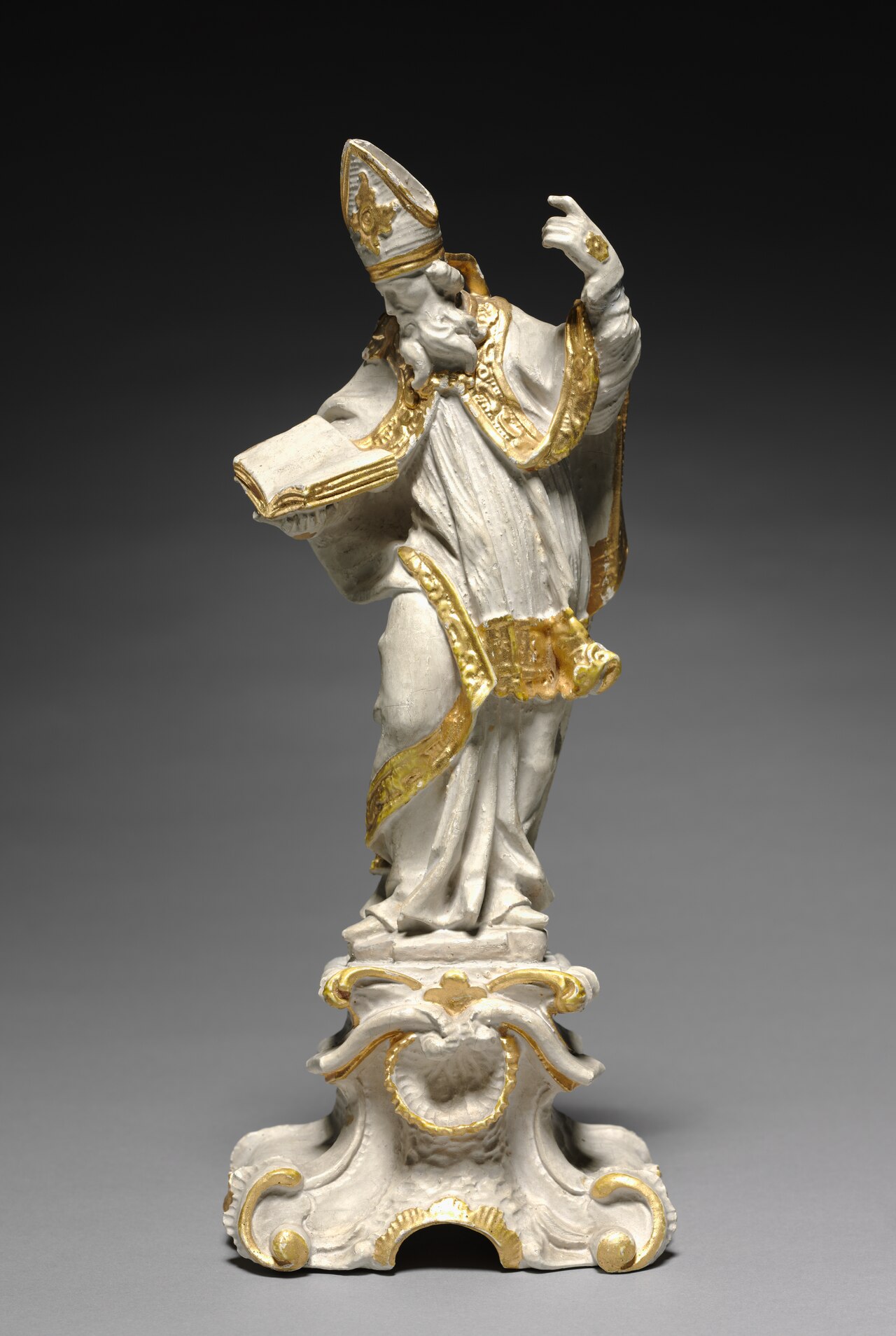
The Bishop Saint is a religious work that merges devotional gravitas with the artist’s characteristic ornamental sensibility. The figure is clothed in richly detailed vestments, and the surrounding drapery is carved with flowing lines that suggest both spiritual authority and graceful motion. Finally, the Allegories of the Months: Janus (1760) illustrates Dietz’s capacity for allegorical representation. In this piece, the Roman god Janus is depicted with two faces, each looking in opposite directions, symbolising the passage of time. The composition balances narrative content with intricate decorative elements, underscoring Dietz’s ability to fuse storytelling with decorative art.
Influence and legacy Although Ferdinand Dietz did not achieve the fame of some of his contemporaries, his work contributes valuable insight into the transitional aesthetics of 18th‑century German art. By integrating Baroque dynamism with Rococo ornamentation, he helped shape a regional language of visual expression that resonated in both courtly interiors and ecclesiastical settings. His surviving pieces, though limited in number, are studied by scholars interested in the cross‑currents of European decorative arts, and they provide tangible evidence of the craftsmanship standards of the time. Dietz’s legacy endures primarily through the preservation of his works in museum collections and the continued scholarly interest in the nuanced interplay of function and ornament that defines his artistic output.
Frequently asked questions
Who was Ferdinand Dietz?
Ferdinand Dietz (1708–1777) was a German visual artist from Albrechtice, known for his work in furniture design and sculpture during the mid‑18th century.
What style or movement is Dietz associated with?
His work blends late Baroque dynamism with Rococo decorative elegance, reflecting the transitional artistic climate in Germany at the time.
What are his most famous works?
Key pieces include the Console Table (1765), the Putto and Putti Pair sculptures, the Bishop Saint, and the Allegories of the Months: Janus (1760).
Why is Dietz important in art history?
He exemplifies the synthesis of functional design and ornamental detail in 18th‑century German art, offering insight into the period’s aesthetic shifts.
How can I recognise a work by Ferdinand Dietz?
Look for finely carved gilt wood, elegant Rococo scrollwork, polychrome sculptural finishes, and the inclusion of allegorical or symbolic motifs.
More Germany artists
References: Wikidata