Jiao Bingzhen
1689 – 1726
In short
Jiao Bingzhen (1689–1726) was a Qing‑dynasty painter and astronomer from Jining, Shandong, renowned for blending traditional Chinese brushwork with Western techniques and for his imperial commissions illustrating agriculture, sericulture and frontier life.
Notable works
.jpg)

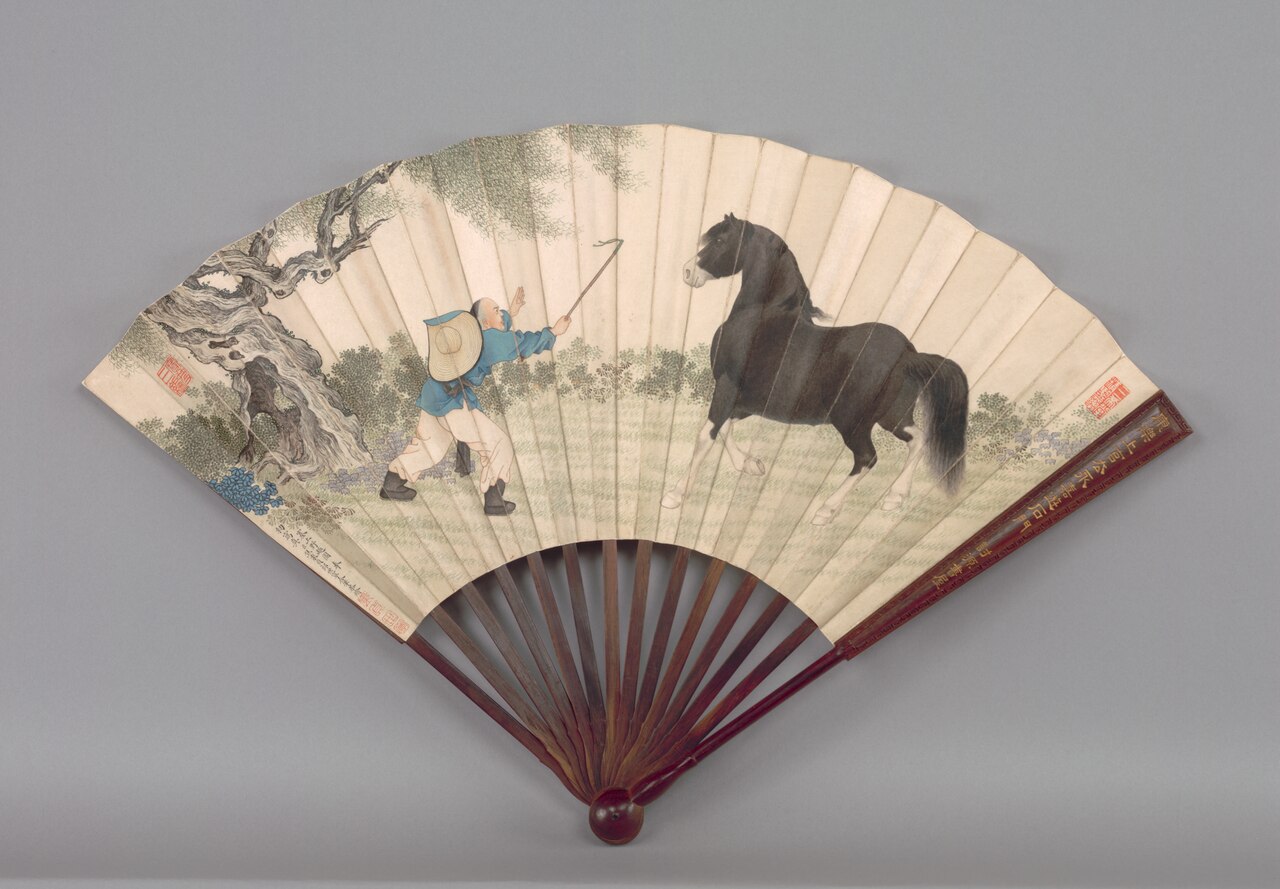
Early life Jiao Bingzhen was born in 1689 in Jining, a historic city in Shandong province. Little is recorded about his family background, but the region’s rich artistic traditions and the presence of imperial workshops in nearby Beijing provided a fertile environment for his early training. He is believed to have received a classical education that included calligraphy and the fundamentals of Chinese painting, while also gaining exposure to the emerging influence of Jesuit missionaries who introduced European artistic concepts to China.
Career and style By the early 18th century Jiao had established himself at the imperial court in Beijing. His career coincided with a period of intense cultural exchange, as the Qing emperors encouraged the incorporation of Western scientific knowledge and artistic techniques. Jiao’s work reflects this synthesis: he employed the meticulous line work and perspective that characterised European oil painting, yet retained the fluid brushstrokes, ink washes and compositional sensibilities of the Chinese tradition. This hybrid style placed him among the first Qing painters to consciously merge the two visual languages.
Jiao was also a skilled astronomer, a role that further linked him to the Jesuit scientific community. His understanding of celestial observation informed his rendering of space and depth, contributing to the realistic spatial effects seen in his later miniatures and landscape sketches.
Signature techniques Jiao’s paintings are distinguished by several recurring techniques:
1. Linear perspective – He applied a vanishing point to create illusionistic depth, a hallmark of Western art that was rare in Chinese painting of his time. 2. Fine brushwork – His miniature portraits demonstrate an exacting control of line, allowing him to capture subtle facial expressions and intricate clothing details. 3. Layered washes – By combining thin ink washes with colour pigments, Jiao achieved atmospheric effects that lend his landscapes a sense of distance and mood. 4. Scientific accuracy – In works that depict agricultural processes or frontier scenes, he rendered tools, architecture and natural phenomena with a degree of precision that suggests an observational, almost documentary approach.
Major works Jiao’s most celebrated pieces include:
- Imperially commissioned illustrations of agriculture and sericulture (Yuzhi Gengzhi tu, 1696) – Produced for the court, this series documents the cultivation of mulberry trees and the rearing of silkworms. The illustrations combine detailed depictions of tools and techniques with a clear compositional structure, demonstrating Jiao’s ability to convey practical information within an artistic framework.
- Lidai tuibei quantu – Although the exact date is uncertain, this work exemplifies Jiao’s interest in juxtaposing historical epochs. The painting presents a comparative view of past and present scenes, using perspective to link them visually. Its nuanced brushwork and subtle colour modulation reflect his mature synthesis of Chinese and Western aesthetics.
- A Vignette of Life on the Frontier (1719) – This composition portrays everyday activities along the empire’s borderlands, featuring soldiers, traders and local inhabitants. Jiao captures the dynamism of frontier life through carefully rendered gestures and an attentive rendering of architectural elements, offering a valuable visual record of Qing frontier society.
These works not only illustrate Jiao’s technical prowess but also his role as a visual chronicler of imperial concerns, ranging from agricultural policy to territorial administration.
Influence and legacy Jiao Bingzhen’s career marks a pivotal moment in Qing art history. By integrating Western perspective and scientific observation into Chinese painting, he helped pave the way for later court artists who would further explore cross‑cultural visual vocabularies. His miniature portraits set a standard for precision that influenced subsequent generations of portraitists.
Although he died relatively young in 1726, Jiao’s surviving works continue to be studied for their hybrid style and documentary value. Scholars cite his paintings as early examples of the “Western‑influenced” school that would later flourish under artists such as Giuseppe Castiglione (Lang Shining) and later Qing painters who embraced oil techniques. Jiao’s legacy endures in museum collections and academic discussions that examine the complex dialogue between Chinese tradition and foreign artistic ideas during the early Qing period.
---
Frequently asked questions
Who was Jiao Bingzhen?
Jiao Bingzhen (1689–1726) was a Qing‑dynasty painter and astronomer from Jining, Shandong, known for blending Chinese brushwork with Western perspective.
What artistic style or movement is Jiao associated with?
He is not linked to a formal movement, but he is recognised as an early practitioner of a hybrid style that combined traditional Chinese painting with European techniques such as linear perspective.
What are Jiao Bingzhen’s most famous works?
His notable works include the imperial illustrations of agriculture and sericulture (Yuzhi Gengzhi tu, 1696), the comparative painting Lidai tuibei quantu, and the frontier scene A Vignette of Life on the Frontier (1719).
Why is Jiao Bingzhen important in art history?
He helped introduce Western visual concepts to Qing court painting, influencing later artists and providing valuable visual documentation of early‑Qing agricultural and frontier life.
How can I recognise a painting by Jiao Bingzhen?
Look for meticulous line work, subtle colour washes, and the use of linear perspective to create depth, often combined with accurate depictions of everyday objects and architectural detail.