Gong Xian
1618 – 1689
In short
Gong Xian (1618–1689) was a Chinese painter of the late Ming and early Qing periods, recognised as a leading figure of the Nanjing school and one of the Eight Masters of Nanjing. He is celebrated for his atmospheric landscapes that blend classical literati ideals with a distinctive, almost mystical brushwork.
Notable works
.jpg)


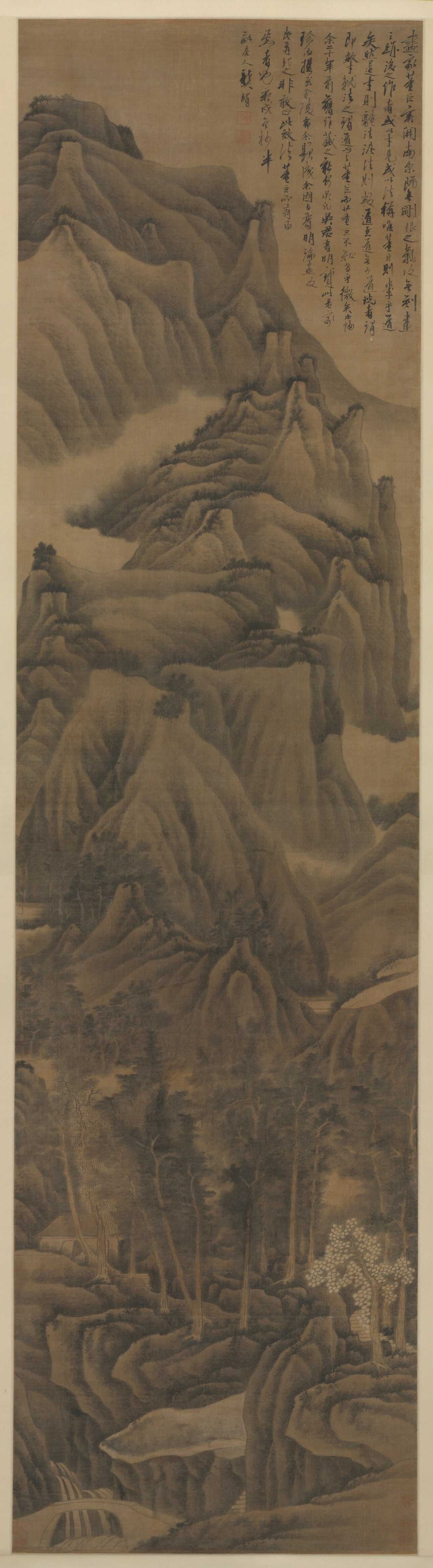
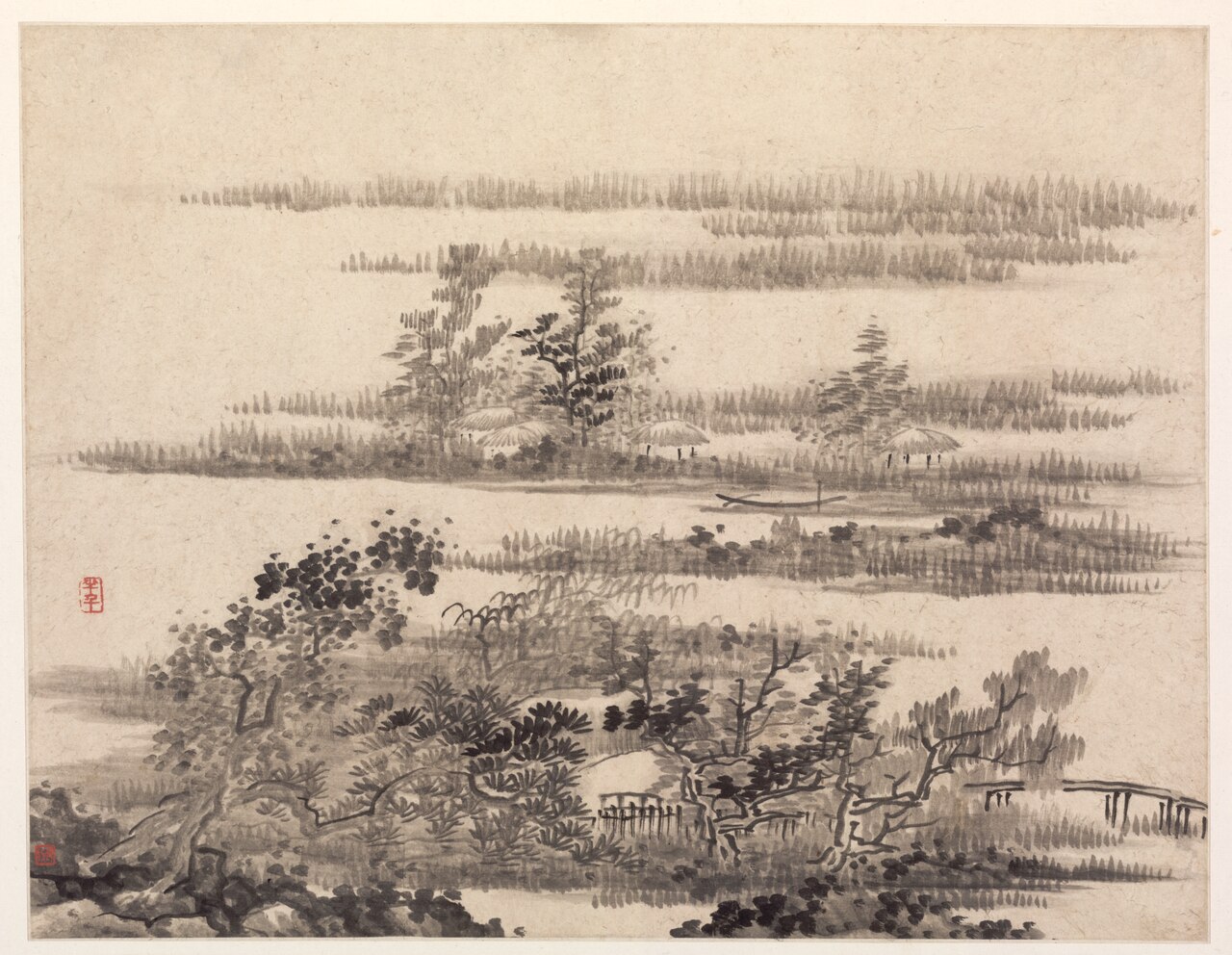
Early life Gong Xian was born in 1618 in Kunshan, a town in the Jiangsu province that lay near the cultural centre of Nanjing. His family belonged to the scholarly gentry, a background that afforded him access to the classical education prized by the literati. From an early age he was trained in calligraphy and poetry, disciplines that would later inform his artistic practice. The turbulent transition from the Ming to the Qing dynasty coincided with his formative years, exposing him to a period of political instability and cultural flux that shaped his sensibility toward the natural world as a refuge and a source of moral reflection.
Career and style Gong Xian emerged as a professional painter in the early decades of the Qing dynasty, establishing his reputation within the Nanjing school, a regional style noted for its adherence to the Southern Song masters while allowing for personal expression. He was counted among the Eight Masters of Nanjing, a group that collectively revitalised landscape painting through a synthesis of historical reverence and innovative brushwork. Gong’s style is characterised by a dense, layered composition that often evokes mist‑filled valleys and towering peaks. He favoured monochrome ink, employing subtle gradations to suggest depth and atmosphere rather than relying on colouristic effects. His landscapes are imbued with a contemplative mood, reflecting the literati ideal that painting should be an extension of poetry and scholarship.
Signature techniques Gong Xian’s technique centres on the manipulation of ink density and the strategic use of negative space. He employed a “wet‑brush” method, allowing the ink to bleed into the paper to create soft, diffused forms that suggest fog or distant mountains. This approach contrasts with the sharper, more defined strokes of earlier masters, giving his works an ethereal quality. Another hallmark is his use of the "cattle‑head" (牛首) brushstroke, a thick, rounded line that forms the backbone of tree trunks and rock ridges, contributing to the sense of solidity amidst the surrounding haze. Gong also integrated poetic inscriptions directly into his paintings, often composing verses that echo the visual theme, thereby reinforcing the unity of visual and literary art.
Major works Among Gong Xian’s surviving oeuvre, several pieces illustrate his mature style. *Lofty Peak and Dense Woods* (1669) showcases a towering mountain shrouded in mist, with tightly packed foliage rendered in layered ink washes that convey both grandeur and intimacy. The composition balances vertical thrust with horizontal depth, inviting the viewer to wander through the imagined forest.
*清 龔賢 自題 山水十六開 冊* – Ink Landscapes with Poems (1688) is a collection of sixteen landscape studies accompanied by Gong’s own poetry. Each sheet demonstrates his capacity to distil a scene into a concise visual statement, while the verses provide insight into his philosophical outlook on nature and transience.
*A Lofty Pavilion* (1683) presents an imagined pavilion perched atop a cliff, rendered with delicate brushwork that delineates the architectural forms against a backdrop of swirling clouds. The piece exemplifies Gong’s skill at integrating human habitation within an overwhelming natural setting, a common theme in Chinese landscape tradition.
*Landscape in the Style of Dong Yuan and Juran* (1650) is an homage to the Southern Song masters Dong Yuan and Juran, whose influence is evident in Gong’s use of soft, rolling hills and a muted tonal palette. By referencing these predecessors, Gong situates himself within a lineage while asserting his own interpretive voice.
*Summer in the Water Country* (1674) captures a riverine scene with lush reeds and distant mountains reflected in water. The work is notable for its fluid brushstrokes that suggest movement, and for the subtle interplay of light and shadow that conveys a humid, summer atmosphere.
These works collectively demonstrate Gong Xian’s command of ink technique, his poetic sensibility, and his ability to evoke a sense of timelessness within a landscape.
Influence and legacy Gong Xian’s impact on Chinese painting extended well beyond his lifetime. As a leading exponent of the Nanjing school, he helped codify a regional aesthetic that balanced reverence for classical models with personal innovation. Later generations of literati painters looked to his atmospheric approach as a template for expressing introspection and moral resolve through landscape. His use of mist and layered ink influenced the development of the "ink-wash" style that became prominent in the Qing and early modern periods. Moreover, his integration of poetry into visual art reinforced the interdisciplinary ideal that continues to inform Chinese artistic education. Contemporary scholars regard Gong Xian as a bridge between the late Ming scholarly tradition and the evolving artistic sensibilities of the early Qing, making his work a vital reference point for studies of Chinese landscape painting.
Frequently asked questions
Who was Gong Xian?
Gong Xian (1618–1689) was a Chinese painter of the late Ming and early Qing dynasties, known as a leading figure of the Nanjing school and one of the Eight Masters of Nanjing.
What artistic style or movement is he associated with?
He is associated with the Nanjing school, a regional style that blends Southern Song landscape traditions with a personal, atmospheric brushwork.
What are his most famous works?
His most celebrated pieces include *Lofty Peak and Dense Woods* (1669), the ink‑landscape collection *Ink Landscapes with Poems* (1688), *A Lofty Pavilion* (1683), *Landscape in the Style of Dong Yuan and Juran* (1650) and *Summer in the Water Country* (1674).
Why does Gong Xian matter in art history?
He helped define the Nanjing school's aesthetic, influencing later literati painters with his misty, layered ink techniques and his seamless integration of poetry and painting.
How can I recognise a Gong Xian painting?
Look for dense, mist‑filled compositions, soft ink washes, the distinctive "cattle‑head" brushstroke for rocks and trees, and often accompanying poetic inscriptions that echo the visual theme.