Wilhelm Peters
1851 – 1935
In short
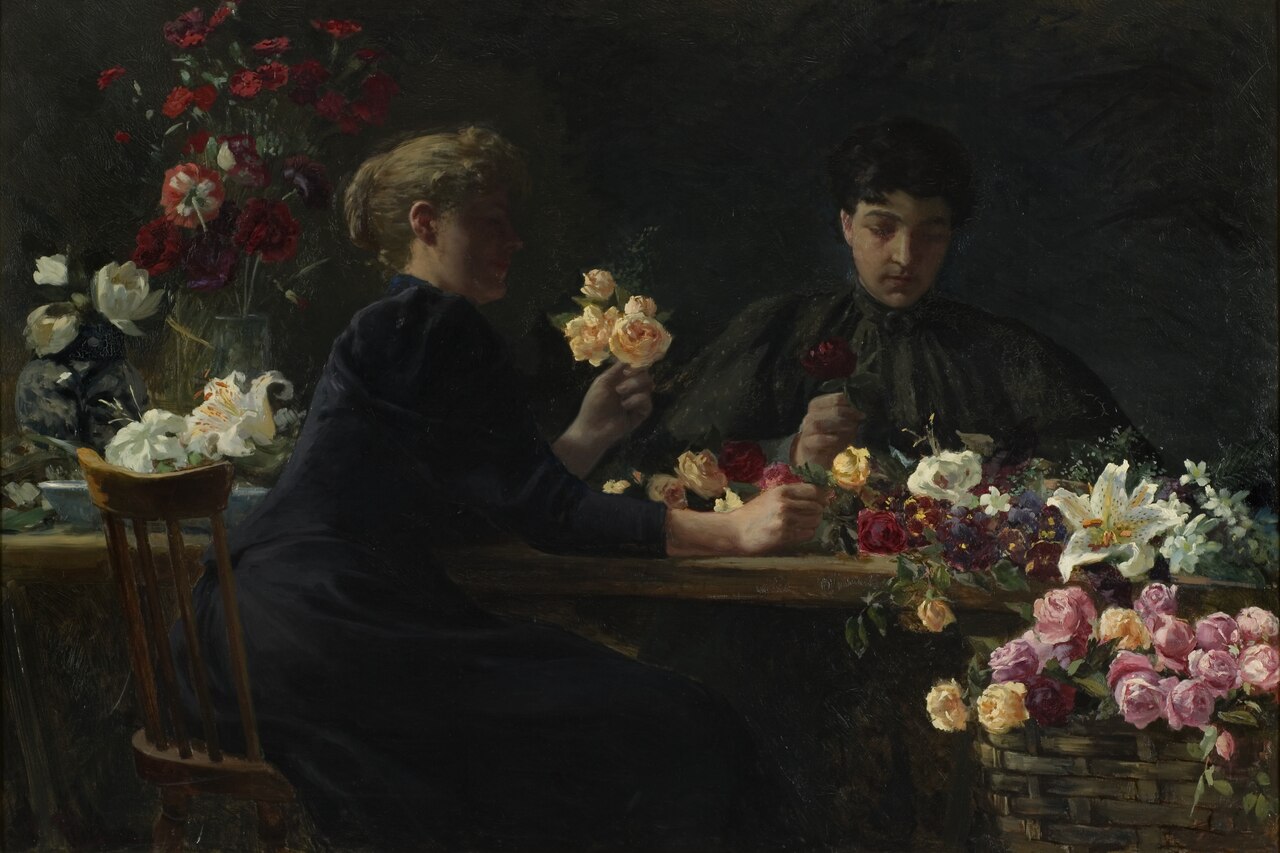
Wilhelm Peters (1851–1935) was a Norwegian painter associated with the Modern Breakthrough in Nordic art, known for his realist depictions of everyday life and his early ties to the Skagen Painters; his most celebrated works include Ladies at a Flower‑table (1894) and Brugata 6 (1906).
Notable works


Early life
Wilhelm Otto Peters was born on 12 March 1851 in Christiania, the capital of Norway (now Oslo). He grew up in a middle‑class family that valued education and the arts, which allowed him to pursue drawing from an early age. After completing his primary schooling, Peters enrolled at the Royal School of Art in Christiania, where he received a solid grounding in academic drawing, anatomy, and the principles of composition. His instructors encouraged exposure to contemporary European trends, and a study trip to Copenhagen in the early 1870s introduced him to the vibrant artistic circles of Denmark. This experience proved decisive, as it sparked his interest in the emerging realist movement that was reshaping Scandinavian art.
Career and style
Returning to Norway in the late 1870s, Peters began exhibiting at the annual Autumn Exhibition in Christiania, quickly gaining a reputation for his unflinching portrayals of ordinary people. By the early 1880s he had forged a close friendship with several members of the Skagen Painters—a loosely organised group of Danish artists who worked in the fishing village of Skagen, focusing on natural light and the lives of local fishermen. Peters was among the first Norwegians to paint the fishermen at Brøndums Store, capturing the gritty reality of their daily labour with a directness that aligned him with the Modern Breakthrough, a pan‑Scandinavian push for realism and social relevance in art.
Although Peters never formally joined a single movement, his work reflects a synthesis of realist naturalism, the plein‑air techniques championed by the Impressionists, and a subtle narrative quality reminiscent of the Dutch genre painters of the 17th century. He favoured a restrained palette of earth tones punctuated by occasional bursts of colour, a choice that enhanced the sense of authenticity in his scenes. Throughout his career he remained committed to depicting contemporary life—whether in the bustling streets of Christiania, the quiet interiors of rural homes, or the rugged coastlines of Norway’s fishing communities.
Signature techniques
Peters’ technique was characterised by several recurring elements. First, he worked extensively outdoors, sketching directly from life to capture the fleeting effects of natural light. This practice, borrowed from the French Impressionists, allowed him to render the subtle variations of colour and shadow that define his coastal and urban scenes. Second, he employed a careful modelling of form using thin, layered brushstrokes that built up a luminous surface without sacrificing detail. Third, his compositions often place the viewer at a slight distance, inviting a contemplative observation of the subject rather than an overtly dramatic focal point. Finally, Peters occasionally incorporated etching and illustration into his oeuvre, demonstrating a versatility that extended beyond oil painting and underscored his interest in narrative illustration.
Major works
- Ladies at a Flower‑table (1894) – This oil painting presents three women seated at a small table laden with an arrangement of wildflowers. The work exemplifies Peters’ ability to blend intimate domesticity with a keen eye for colour balance. The gentle interplay of daylight through a nearby window creates a soft illumination that highlights the textures of the women’s garments and the delicate petals.
- Brugata 6 (1906) – A later urban work, Brugata 6 depicts a street scene on a rainy afternoon. Peters captures the reflective wet cobbles and the muted tones of shopfronts, while a few pedestrians, bundled against the weather, provide narrative depth. The painting is noted for its subtle handling of atmospheric perspective and its documentation of early‑20th‑century Norwegian city life.
- Prestekrager (1894) – Translating roughly as “The Preacher’s Stride,” this composition shows a cleric walking briskly through a village square, his coat billowing in the wind. Peters uses the figure’s movement to convey a sense of purpose, while the surrounding architecture frames the scene within a recognizable Norwegian setting.
- Agterspeilet (1894) – Meaning “The Rear Mirror,” this work portrays a woman examining herself in a handheld mirror. The reflective surface offers a study in light and texture, as Peters deftly renders the glint of the mirror against the soft skin tones of the subject. The painting is often cited as an example of his interest in everyday rituals and private moments.
- Illustrasjon til Henrik Wergeland, Den engelske lods (1894) – This illustration was created for a literary edition of Henrik Wergeland’s poem “Den engelske lods.” Peters’ line work combines precise detail with expressive shading, translating the poem’s melancholic tone into a visual narrative. The piece underscores his versatility as both painter and illustrator, and it highlights his engagement with Norwegian literary culture.
Influence and legacy
Wilhelm Peters occupies an important, if sometimes understated, position in Norwegian art history. By integrating the realist concerns of the Modern Breakthrough with the atmospheric sensibilities of the Skagen Painters, he helped bridge the gap between traditional academic painting and the more experimental approaches that would dominate the early 20th century. His depictions of fishermen, market stalls, and domestic interiors provided a visual record of a rapidly modernising Norway, influencing younger artists who sought to document the nation’s social transformation.
After his death in Drøbak on 7 October 1935, Peters’ works entered the collections of several major Norwegian museums, including the National Museum in Oslo and the Bergen Kunstmuseum. Retrospectives in the 1950s and 1970s revived scholarly interest in his oeuvre, prompting renewed discussion of his role in the development of Nordic realism. Contemporary Norwegian painters continue to cite Peters as an exemplar of disciplined observation combined with narrative empathy, and his paintings are frequently reproduced in textbooks covering the Modern Breakthrough.
In sum, Wilhelm Peters’ career reflects a commitment to portraying the lived experience of his compatriots with honesty and subtle artistry. His legacy endures not only through his surviving canvases but also through the continuing relevance of his approach to everyday subjects—a testament to his lasting impact on the visual culture of Norway.
Frequently asked questions
Who was Wilhelm Peters?
Wilhelm Peters (1851–1935) was a Norwegian painter known for his realist depictions of everyday life and his early association with the Skagen Painters.
What style or movement is he associated with?
He is linked to the Modern Breakthrough in Nordic painting, blending realist naturalism with plein‑air techniques and a subtle narrative style.
What are his most famous works?
His best‑known paintings include Ladies at a Flower‑table (1894), Brugata 6 (1906), Prestekrager (1894), Agterspeilet (1894) and the illustration for Henrik Wergeland’s Den engelske lods (1894).
Why does Wilhelm Peters matter in art history?
He helped bridge academic realism and early modernist approaches in Norway, documenting social change and influencing later generations of Scandinavian artists.
How can I recognise a Wilhelm Peters painting?
Look for muted earth tones, careful modelling of light, everyday subjects, and a calm, observational composition that often includes reflective surfaces or subtle narrative details.