Chen Chun
1483 – 1544
In short
Chen Chun (1483–1544) was a Ming‑dynasty Chinese painter, calligrapher and poet from Suzhou, known for his spontaneous ink‑wash landscapes and bird‑and‑flower paintings. He studied under Wen Zhengming before developing a freer style influenced by the Song master Mi Fu.
Notable works



Early life
Chen Chun was born in 1483 in Suzhou, a prosperous centre of culture in the Ming dynasty. His family belonged to the scholar‑official class, which afforded him a classical education and exposure to the arts from an early age. Under the guidance of the renowned painter‑calligrapher Wen Zhengming, one of the Four Masters of the Ming period, Chen received instruction in traditional brushwork and the literary traditions that underpinned Chinese painting. These formative years grounded him in the conventions of the Wu School, a regional movement that prized refined brush technique and poetic expression.
Career and style
After completing his apprenticeship, Chen Chun began to diverge from Wen Zhengming’s meticulous approach. He embraced a more liberated method of ink wash, favouring rapid strokes and spontaneous composition. This shift aligned him with the broader Wu School ethos of self‑expression, yet he distinguished himself by integrating the bold, calligraphic vigor of the earlier Song artist Mi Fu. Chen’s paintings often combined landscape motifs with delicate depictions of flora and avian subjects, reflecting a synthesis of ‘literary’ painting and the decorative qualities of bird‑and‑flower genre. Though his oeuvre is not tied to a formal movement, his work exemplifies the transition from courtly refinement to a more personal, expressive aesthetic that characterised late Ming art.
Signature techniques
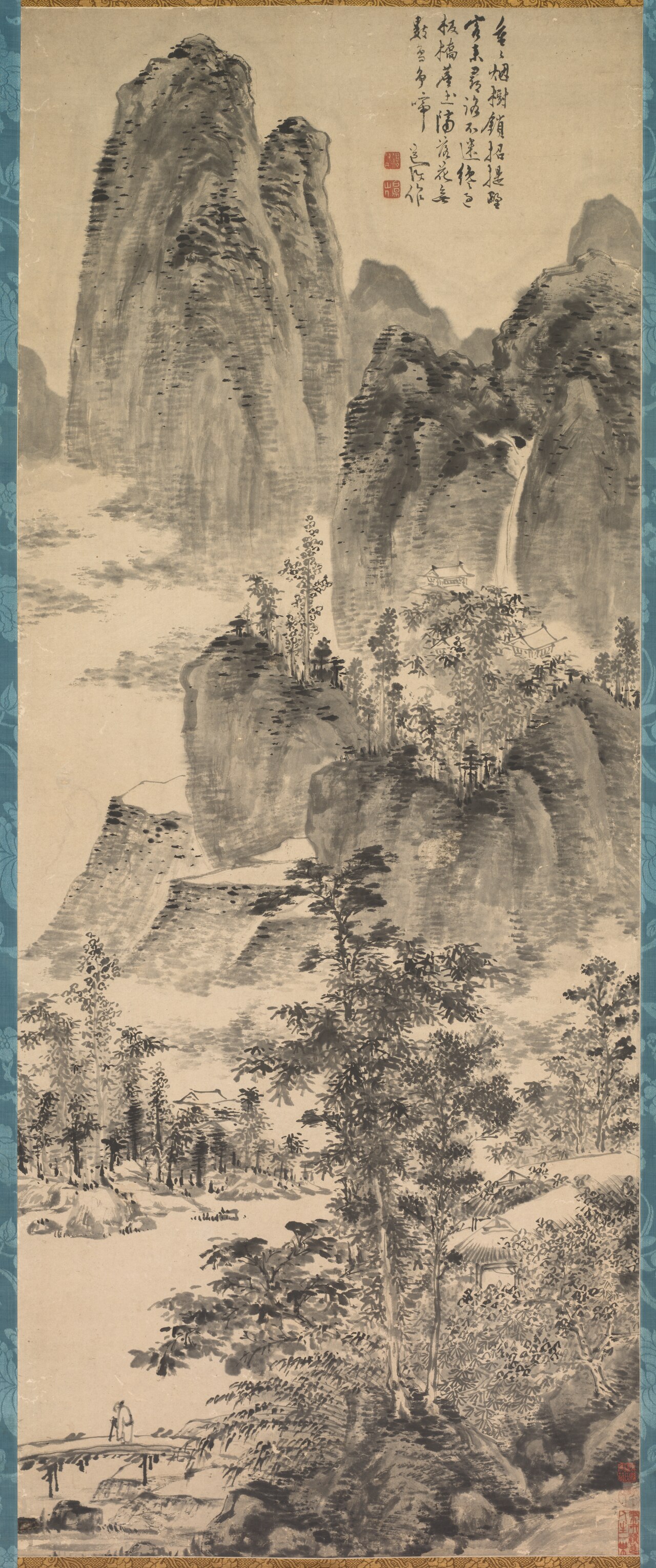
Chen Chun’s hallmark was the use of swift, gestural brushstrokes that suggested form rather than delineating it precisely. He employed a wet‑on‑wet ink technique to create atmospheric layers, allowing mist and water to merge with the underlying structure of the composition. In bird‑and‑flower pieces, he often rendered petals and feathers with a single, confident brush flick, capturing the essence of the subject with minimal detail. Calligraphic influences appear in his occasional use of thick, blocky strokes reminiscent of Mi Fu’s ink rubbings, a practice that added a rhythmic quality to his landscapes. These methods collectively convey a sense of immediacy and emotional resonance.
Major works
- Pavilion of Eight Poems (1506) – This early work demonstrates Chen’s command of traditional composition while hinting at his future freer style. The pavilion is rendered with delicate lines, set against a misty backdrop that suggests a poetic gathering. - Looking for a Monastery in the Misty Mountains (1506) – In this piece, Chen employs his characteristic wet‑on‑wet technique to depict a secluded monastery enveloped in fog, emphasizing the spiritual isolation of the subject. - River Landscape (1513) – Here the artist’s brushwork becomes more vigorous; the river’s flow is suggested by bold, sweeping strokes, while distant peaks dissolve into atmospheric washes. - Summer Garden (1530) – This painting illustrates Chen’s skill in combining landscape with detailed flora. The garden is populated with lush vegetation rendered in quick, expressive brush marks, conveying the heat and vitality of summer. - Garden Flowers (1540) – One of his later works, it focuses on a cluster of blossoms rendered with a single, elegant stroke per petal, exemplifying his mature bird‑and‑flower technique.
Influence and legacy
Chen Chun’s departure from strict academic conventions contributed to a broader acceptance of individual expression in Ming painting. His synthesis of Wu School ideals with Mi Fu’s bold ink aesthetics inspired later artists who sought to balance scholarly refinement with emotive spontaneity. Though not as widely recognised in the West as some of his contemporaries, Chen’s works are valued by collectors and scholars for their innovative brushwork and poetic sensibility. Contemporary exhibitions of Ming art frequently include his pieces to illustrate the period’s stylistic diversity, and his influence persists in modern Chinese ink painting that favours expressive, gestural techniques.
Frequently asked questions
Who was Chen Chun?
Chen Chun (1483–1544) was a Ming‑dynasty Chinese painter, calligrapher and poet from Suzhou, noted for his free‑hand ink‑wash landscapes and bird‑and‑flower paintings.
What artistic style or movement is he associated with?
He is linked to the Wu School of literary painting, but his work is distinguished by a spontaneous, calligraphic approach influenced by the Song master Mi Fu.
What are his most famous works?
Key works include *Pavilion of Eight Poems* (1506), *Looking for a Monastery in the Misty Mountains* (1506), *River Landscape* (1513), *Summer Garden* (1530) and *Garden Flowers* (1540).
Why is Chen Chun important in art history?
He helped bridge the meticulous Wu School tradition with a more expressive, personal style, influencing later generations of Chinese ink painters who value spontaneity.
How can I recognise a Chen Chun painting?
Look for rapid, gestural brushstrokes, wet‑on‑wet ink washes that create misty atmospheres, and a blend of landscape with delicately rendered flowers or birds, often executed with a single confident stroke.