Shen Zhou
1427 – 1509
In short
Shen Zhou (1427–1509) was a Chinese Ming‑dynasty painter, a principal member of the Wu School, celebrated for his literati landscapes such as Twelve Views of Tiger Hill.
Notable works


Early life Shen Zhou was born in 1427 in Suzhou, a cultural hub of the Jiangsu region. His family belonged to the gentry class and enjoyed a long‑standing relationship with the imperial bureaucracy, which secured their wealth and social standing. The household emphasized classical education, and Shen received instruction in poetry, calligraphy and the Confucian classics alongside his artistic training. His courtesy names were Qǐnán (启南) and Shítián (石田), reflecting the traditional practice of adopting scholarly appellations.
Career and style Although Shen Zhou could have pursued an official career, he chose a path more aligned with the literati ideal of the scholar‑artist. After completing his education, he briefly held minor posts but soon retired to a reclusive life, devoting himself to painting and caring for his widowed mother. This withdrawal allowed him to develop a style that blended personal expression with the refined techniques of earlier masters. He is associated with the Wu School, a regional movement centred on Suzhou that championed spontaneous brushwork, subtle tonal variations and an emphasis on the artist’s inner character.
Shen’s paintings often depict mountains, rivers and remote pavilions, rendered with a restrained palette of ink washes and muted colour washes. He preferred a composed, meditative atmosphere, favouring compositions that invite the viewer to contemplate the harmony between humanity and nature. His work reflects the influence of Yuan‑dynasty masters such as Huang Gongwang and Wu Zhen, yet he introduced a softer, more lyrical quality that became a hallmark of the Wu School.
Signature techniques Shen Zhou’s technique is characterised by several recurring elements:
* Ink‑and‑light wash – He employed thin, layered washes of ink to suggest mist and distance, creating a sense of depth without relying on heavy outlines. * Dry brush strokes – By using a relatively dry brush, Shen achieved textured, almost calligraphic lines that define rock faces and tree trunks. * Sparse colour accents – When colour is used, it is applied sparingly—often a wash of light green or soft rust—to highlight foliage or architectural details without disrupting the overall monochrome harmony. * Poetic inscription – Many of his works include his own poems or classical verses, integrating literature and visual art in a manner typical of the literati tradition.
These techniques combine to convey an atmosphere of quiet contemplation, aligning the viewer’s experience with the painter’s own scholarly sensibilities.
Major works Shen Zhou’s surviving oeuvre includes several celebrated pieces that exemplify his mature style.
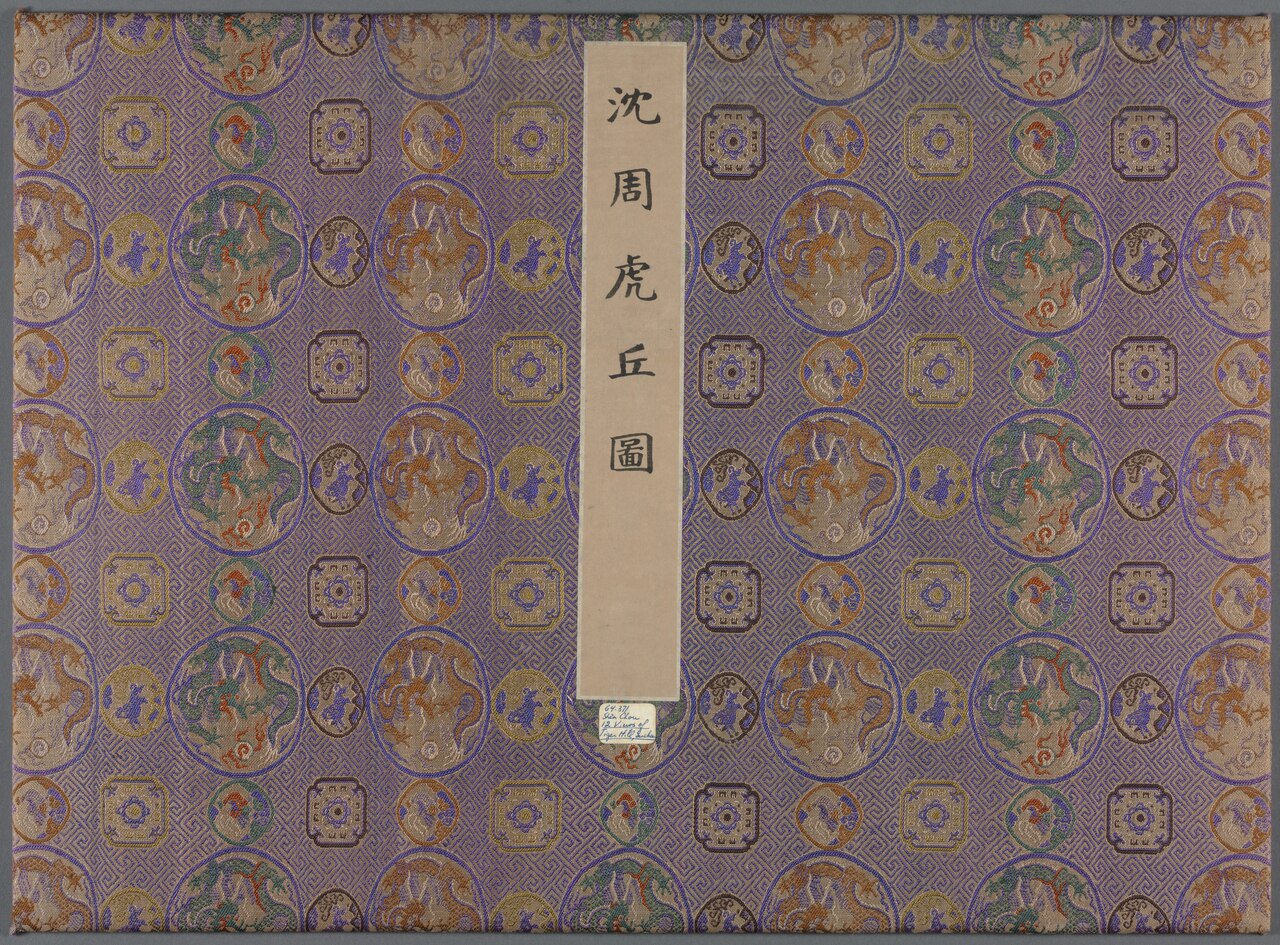
* Twelve Views of Tiger Hill (1500) – This series of landscape paintings presents varied perspectives of the historic Tiger Hill near Suzhou. Each view captures a different seasonal or atmospheric condition, using subtle ink washes to render mist‑shrouded peaks and reflective water surfaces. The series demonstrates Shen’s mastery of compositional balance and his ability to evoke emotional resonance through restrained detail. * Poet on a Mountaintop – In this single‑panel work, Shen depicts a solitary figure, often identified as a poet, perched on a craggy outcrop overlooking a distant valley. The figure is rendered with delicate brushwork, while the surrounding landscape is suggested through faint ink tones, emphasising the contemplative isolation of the scholar‑artist. * Dreaming of Traveling while in Bed – This imaginative composition shows a reclining scholar whose imagination transports him to far‑flung scenery. The painting juxtaposes the interior space of a modest chamber with a vast, dream‑like landscape that appears through an open window. The piece reflects Shen’s interest in the interplay between reality and poetic imagination, a theme common among literati painters.
These works collectively illustrate Shen Zhou’s commitment to integrating poetry, philosophy and visual art, while also highlighting the distinctive aesthetic of the Wu School.
Influence and legacy Shen Zhou’s contribution to Chinese art extends beyond his own paintings. As a founding figure of the Wu School, he helped shape a regional style that persisted into the early Qing period. His emphasis on personal expression, scholarly erudition and restrained brushwork inspired subsequent generations of literati painters, including his own descendants and disciples.
Later scholars credit Shen with codifying the Wu School’s principles, particularly the balance between technical proficiency and the cultivation of inner virtue. His works are frequently cited in art historical texts as exemplars of Ming‑dynasty literati painting, and they continue to be exhibited in major museums worldwide. By embodying the ideal of the scholar‑artist who withdraws from officialdom to pursue artistic self‑cultivation, Shen Zhou remains a touchstone for understanding the cultural values of late‑medieval China.
In contemporary scholarship, his paintings are studied for their nuanced treatment of space, their poetic inscriptions, and their role in the transmission of Yuan‑dynasty aesthetics into the Ming era. Shen Zhou’s legacy endures as a testament to the enduring power of a contemplative, brush‑driven vision of the natural world.
Frequently asked questions
Who was Shen Zhou?
Shen Zhou (1427–1509) was a Chinese Ming‑dynasty painter from Suzhou, renowned as a leading figure of the Wu School and celebrated for his literati landscape paintings.
What artistic movement is Shen Zhou associated with?
He is closely linked to the Wu School, a regional Suzhou movement that emphasized scholarly brushwork, subtle ink washes and the integration of poetry with painting.
What are Shen Zhou’s most famous works?
His best‑known pieces include the landscape series Twelve Views of Tiger Hill (1500), the single‑panel Poet on a Mountaintop, and the imaginative Dreaming of Traveling while in Bed.
Why is Shen Zhou important in art history?
He helped define the Wu School’s aesthetic, blending technical mastery with personal expression, and his works exemplify the literati ideal that shaped Chinese painting for centuries.
How can I recognise a painting by Shen Zhou?
Look for restrained ink washes, dry‑brush textures, sparse colour accents, and poetic inscriptions that together create a tranquil, contemplative landscape typical of the Wu School.