Peder Balke
1804 – 1887
In short
Peder Balke (1804–1887) was a Norwegian painter celebrated for his dramatic, romantic depictions of Norway’s rugged coastlines and mountainous landscapes, creating iconic works such as Stetind in Fog and The Tempest.
Notable works


_-_The_Tempest_-_NG6614_-_National_Gallery.jpg)
Early life Peder Balke was born in 1804 on the small island of Helgøya, situated in the lake Mjøsa in Norway. His family were modest farmers, and the wild scenery of the surrounding countryside left an early imprint on his imagination. As a youth Balke was drawn to drawing and spent long hours sketching the dramatic skies and water that characterised the Norwegian landscape. In the early 1820s he moved to Christiania (now Oslo) to seek apprenticeship opportunities, a common route for provincial artists seeking training in the capital.
Career and style Balke’s career unfolded during a period of growing national consciousness in Norway. The Romantic movement, with its emphasis on the sublime power of nature, resonated strongly with his own visual sensibilities. Although he never aligned himself formally with a particular artistic school, his work reflects the broader Romantic‑nationalist trend that dominated Scandinavian art in the mid‑nineteenth century. He spent extensive periods travelling along Norway’s coast and inland fjords, sketching directly from nature. These field studies informed a body of work that is instantly recognisable for its stark contrasts, expansive skies, and a palpable sense of atmospheric drama.
Throughout the 1840s and 1850s Balke exhibited regularly in Christiania, gaining the patronage of both private collectors and the nascent Norwegian state, which was eager to promote images of its dramatic terrain. He also participated in exhibitions abroad, helping to introduce the international audience to the stark beauty of the Norwegian environment. By the 1860s he was regarded as one of the country’s leading landscape painters, and his paintings were acquired for the Royal Palace and the National Gallery.
Signature techniques Balke’s paintings are characterised by a limited but powerful palette, dominated by deep blues, muted greys and occasional bursts of ochre. He frequently employed thick impasto, applying paint with a palette knife to create a tactile surface that conveys the turbulence of sea‑foam or the craggy texture of rock. Light plays a central role in his compositions; he often positioned a low horizon line to accentuate a sky that is either brooding or illuminated by a distant sunrise. The artist’s handling of fog and mist—rendered with soft, overlapping washes—conveys both the physical and emotional weight of the Norwegian climate. These techniques combine to produce a sense of immediacy, as if the viewer is standing at the edge of a cliff, feeling the wind and hearing the roar of waves.
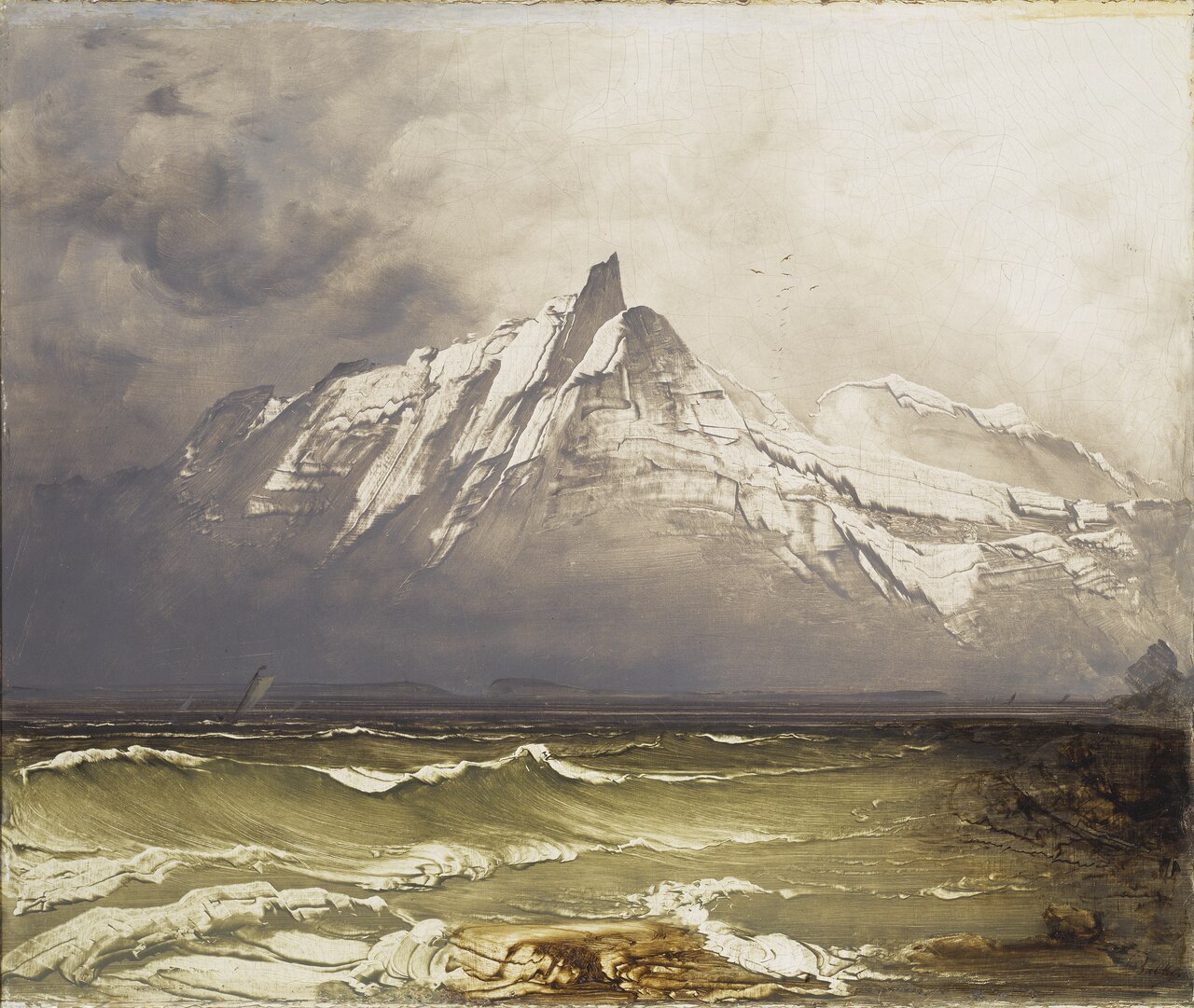
Major works Balke’s most celebrated pieces include several that directly reference specific Norwegian locales. **Stetind in Fog (1864)** captures the iconic mountain Stetind, shrouded in a veil of mist that dissolves the boundary between rock and sky. The composition’s vertical thrust and muted colour scheme emphasise the mountain’s solitary grandeur.
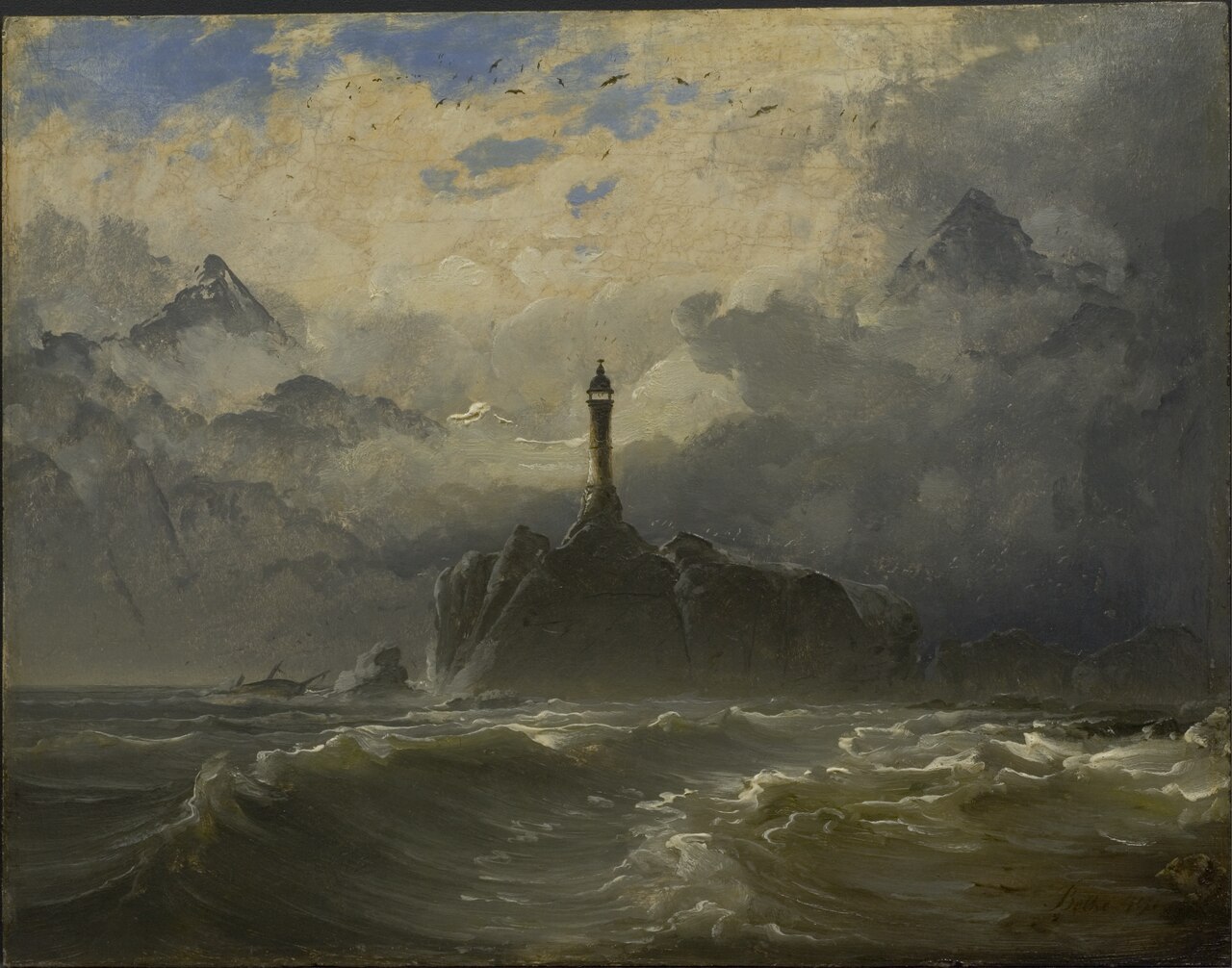
Lighthouse on the Norwegian Coast (1855) portrays a solitary beacon perched on a jagged promontory, its light cutting through a storm‑laden horizon. The work reflects Balke’s fascination with human structures set against overpowering natural forces.
The Tempest (1862) is a sweeping seascape dominated by dark, rolling clouds and churning waters. The painting’s dynamic brushwork and stark chiaroscuro convey the raw energy of a North Sea storm.
Seascape (1849) is an earlier work that already demonstrates Balke’s mastery of atmospheric effects. A calm sea under a low‑lying sky hints at the impending turbulence that would become a hallmark of his later pieces.
From Nordland (1864) presents the stark, remote landscape of Norway’s northern county, with a rugged coastline and distant mountains that seem to dissolve into the horizon. The painting’s muted tones and expansive composition underscore the isolation and majesty of the region.
Each of these works showcases Balke’s ability to translate the harsh, often unforgiving Norwegian environment into a visual language of awe and reverence.
Influence and legacy Peder Balke’s legacy is inseparable from the development of a distinctly Norwegian artistic identity. By foregrounding the nation’s dramatic natural features, he helped forge a visual vocabulary that later generations of Norwegian artists – from the Düsseldorf‑trained painters of the late nineteenth century to the early modernists of the twentieth – would draw upon. His paintings remain a cornerstone of the National Gallery’s collection and continue to be reproduced in textbooks and travel literature, reinforcing the image of Norway as a land of stark beauty.
Beyond his paintings, Balke contributed to the education of younger artists through informal mentorship and participation in artistic societies. His emphasis on direct observation and his willingness to depict the most remote corners of the country inspired contemporaries to venture beyond the capital’s urban confines. In recent decades, art historians have reassessed his work, recognising it not merely as Romantic nostalgia but as an early expression of ecological awareness, where the power of nature is both celebrated and respected.
Today, Balke’s paintings are prized by collectors and museums alike for their technical brilliance and their capacity to evoke the timeless atmosphere of Norway’s wild landscapes. His name endures as a symbol of the Romantic spirit that helped shape the cultural narrative of a young nation.
Frequently asked questions
Who was Peder Balke?
Peder Balke (1804–1887) was a Norwegian painter best known for his dramatic, romantic landscapes of Norway’s coastlines and mountains.
What style or movement is his work associated with?
Balke’s paintings belong to the Romantic‑nationalist tradition, emphasizing the sublime power of nature and the emerging sense of Norwegian identity.
What are his most famous works?
His most celebrated pieces include *Stetind in Fog* (1864), *Lighthouse on the Norwegian Coast* (1855), *The Tempest* (1862), *Seascape* (1849) and *From Nordland* (1864).
Why does he matter in art history?
Balke helped define a distinctly Norwegian visual language, influencing later landscape painters and contributing to the nation’s cultural heritage through his powerful depictions of the natural environment.
How can I recognise a Peder Balke painting?
Look for stark, mist‑filled skies, a limited palette of blues and greys, thick impasto that renders rock or sea‑foam, and dramatic compositions that place human elements against overwhelming natural forces.