Morten Müller
1828 – 1911
In short
Morten Müller (1828–1911) was a Norwegian landscape painter known for atmospheric depictions of Norway’s mountains, lakes and forests. He spent much of his later life in Düsseldorf, where he died, and his work remains a benchmark of 19th‑century Scandinavian scenery.
Notable works
.jpg)

Early life Morten Müller was born in 1828 in the coastal town of Holmestrand, Norway. Little is recorded about his family background, but the natural surroundings of his youth—fjords, forests and the rolling Norwegian terrain—left a lasting impression. Growing up in a period when Norway was forging a distinct national identity, Müller absorbed the romantic fascination with the wild landscape that was prevalent among his contemporaries. By the mid‑19th century, he had shown an early aptitude for drawing, prompting him to pursue formal artistic training abroad, a common path for Scandinavian artists seeking exposure to the broader European art market.
Career and style Müller’s professional career unfolded largely in the German art centre of Düsseldorf, a hub for landscape painting that attracted many Scandinavian artists. The Düsseldorf School emphasized meticulous draftsmanship, a clear compositional structure and a subtle handling of light, all qualities that would become hallmarks of Müller’s oeuvre. While the precise dates of his enrolment are not documented, his association with the city is evident from his death there in 1911 and the stylistic affinities of his work.
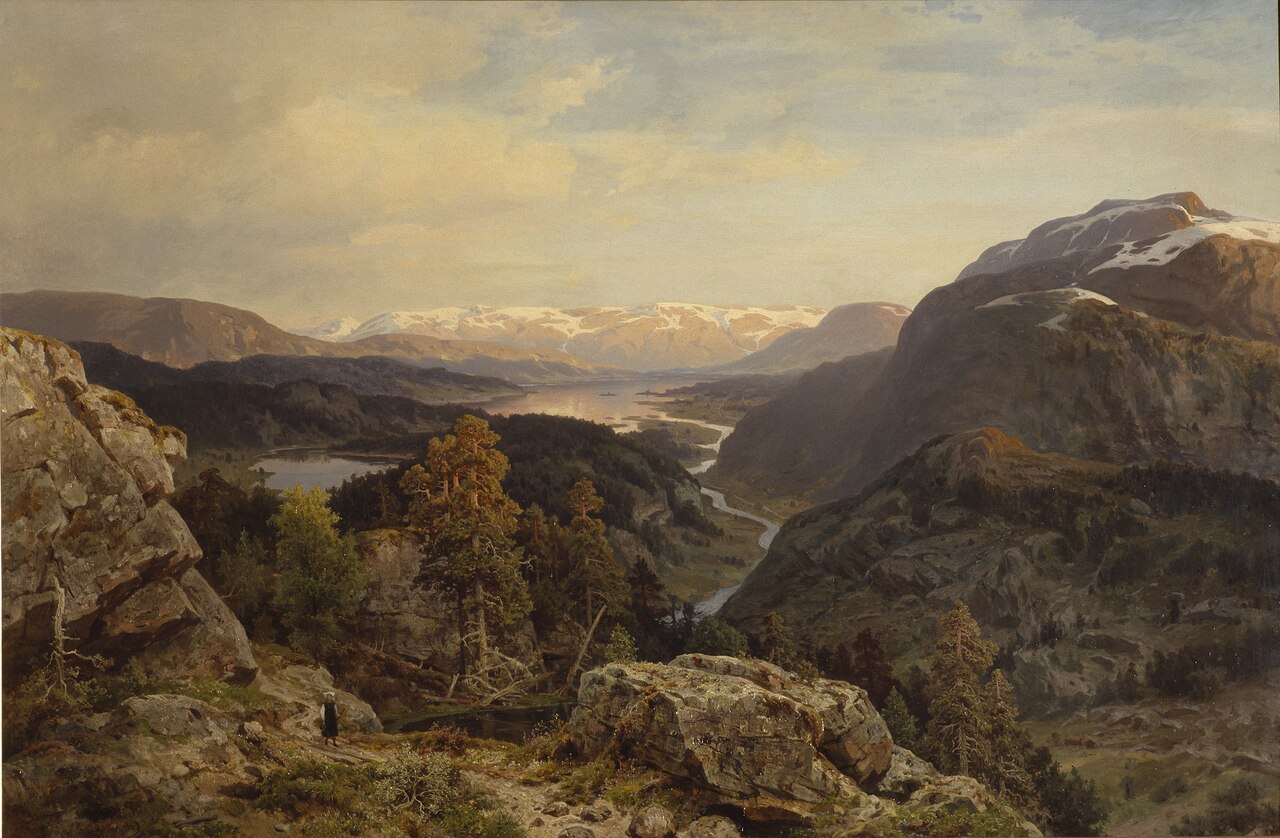
Müller’s paintings are characterised by a balanced blend of realism and idealised Romantic sentiment. He favoured panoramic vistas that capture the serene majesty of Norwegian nature, often employing a subdued colour palette of muted greens, cool blues and warm earth tones. This restrained chromatic approach enhances the sense of atmosphere, allowing light and shadow to convey the passage of time and the mood of the scene. His work aligns with the broader 19th‑century European fascination with national landscapes, yet retains a uniquely Norwegian sensibility through the specificity of his topographical references.
Signature techniques Müller’s technique combines careful underdrawing with layered oil applications. He typically began with a precise charcoal or graphite sketch to establish the compositional framework, ensuring accurate perspective and proportion—particularly important when depicting the rugged contours of mountains or the reflective surfaces of lakes. Subsequent layers of thin glazes build depth, while more opaque passages capture the solidity of rock and vegetation.
A distinctive element of his practice is the treatment of atmospheric effects. By modulating the tonal values of distant elements, Müller creates a sense of depth that mirrors the way light diffuses across the Scandinavian horizon. He also employed a subtle brushwork that suggests foliage and foliage textures without over‑detailing, allowing the viewer’s eye to fill in the finer details. The overall effect is a harmonious synthesis of realism and poetic mood.
Major works Müller’s catalog includes several celebrated pieces that exemplify his devotion to Norwegian scenery. **"Evening in the Norwegian Mountains" (1869)** presents a tranquil alpine scene bathed in the soft glow of dusk. The composition guides the viewer’s gaze from the foreground’s rugged rocks to a distant sky tinged with pink and violet, illustrating Müller’s mastery of light.
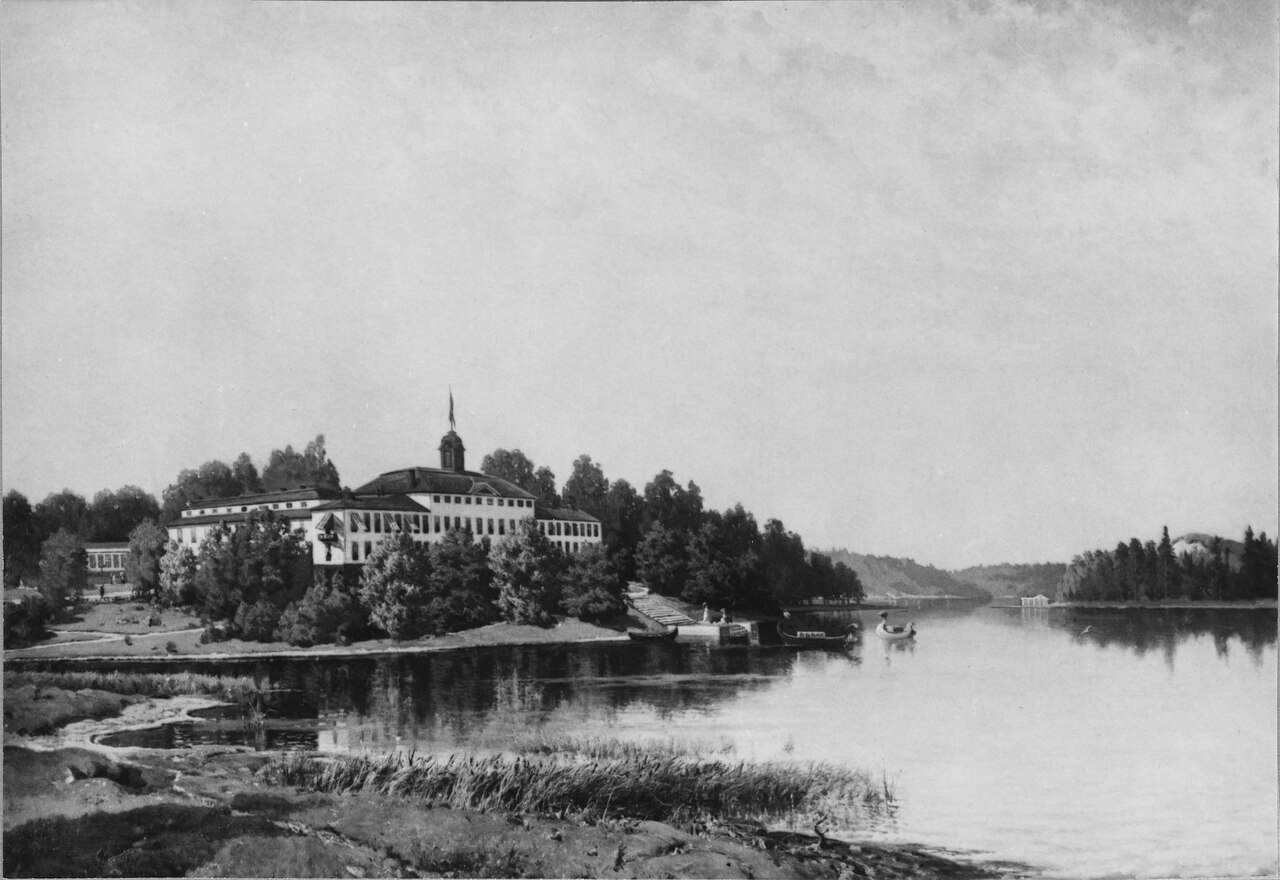
"View of Ulriksdal from the South" (1870) captures a historic estate set against a sweeping landscape. Though the subject is a specific locale, Müller’s treatment elevates it to a universal meditation on the relationship between human habitation and the surrounding wilderness.
"Woodland in Norway" (1859) offers a more intimate perspective, focusing on a dense forest interior. Here, the interplay of dappled sunlight and shadowed undergrowth demonstrates his skill in rendering texture and atmospheric depth.
"Norwegian landscape with a lake" (1854) is an early work that already reveals Müller’s fascination with reflective water surfaces. The calm lake mirrors the sky and surrounding hills, creating a symmetrical balance that underscores the serenity of the scene.
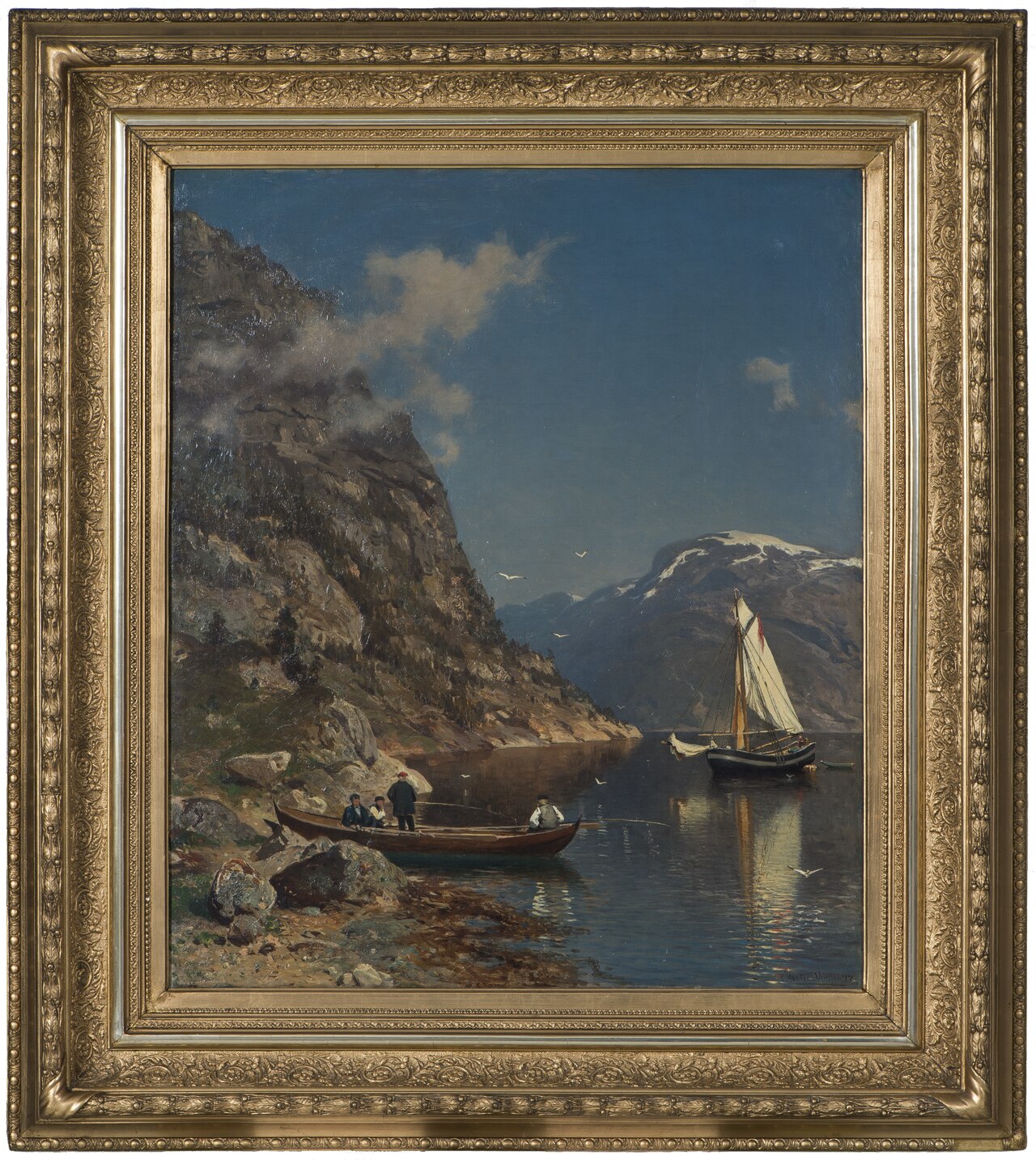
"Fiord Landscape" (1877) stands as perhaps his most iconic piece, depicting the dramatic cliffs and deep waters that define Norway’s fjords. The composition’s bold vertical lines contrast with the horizontal expanse of water, reinforcing the grandeur of the natural environment.
These works collectively underscore Müller’s commitment to portraying the Norwegian environment with both fidelity and lyrical imagination. While each painting varies in scale and focus, they share a consistent approach to composition, colour, and atmospheric nuance.
Influence and legacy Morten Müller occupies a respected place in the canon of 19th‑century Scandinavian art. His landscapes contributed to the visual vocabulary that helped define Norway’s national identity, influencing subsequent generations of Norwegian painters who sought to capture the country’s dramatic terrain. By aligning with the Düsseldorf School while maintaining a distinct Norwegian perspective, Müller bridged the gap between continental artistic trends and regional subject matter.
Although he is less widely known outside specialist circles today, his works continue to be exhibited in museums dedicated to Nordic art, and they serve as reference points for scholars examining the interplay between Romanticism and emerging national artistic narratives. Moreover, his paintings remain popular among collectors for their serene beauty and technical proficiency. In contemporary discussions of landscape painting, Müller is frequently cited as an exemplar of how an artist can convey the spirit of a place through disciplined technique and emotive atmosphere.
Overall, Morten Müller’s legacy endures through the continued appreciation of his evocative depictions of Norway’s natural splendor, cementing his role as a key figure in the development of Scandinavian landscape art.
Frequently asked questions
Who was Morten Müller?
Morten Müller (1828–1911) was a Norwegian painter renowned for his landscape works that capture the atmosphere of Norway’s mountains, forests and fjords.
What artistic style or movement is he associated with?
He worked within the Romantic tradition of landscape painting, closely linked to the Düsseldorf School’s emphasis on precise draftsmanship and subtle atmospheric effects.
What are his most famous works?
His best‑known paintings include "Evening in the Norwegian Mountains" (1869), "View of Ulriksdal from the South" (1870), "Woodland in Norway" (1859), "Norwegian landscape with a lake" (1854) and "Fiord Landscape" (1877).
Why is Morten Müller important in art history?
Müller helped define a visual language for Norwegian national identity, influencing later Scandinavian artists and contributing to the broader European Romantic landscape tradition.
How can I recognise a painting by Morten Müller?
Look for balanced compositions of Norwegian scenery, a muted colour palette, delicate glazes that suggest light and atmosphere, and a precise underdrawing that defines the terrain’s structure.