Mathias Stoltenberg
1799 – 1871
In short
Mathias Stoltenberg (1799–1871) was a Norwegian painter who worked mainly as a travelling portraitist and furniture restorer. His modest body of work, rediscovered in the early 20th century, now provides valuable insight into 19th‑century Norwegian portraiture.
Notable works
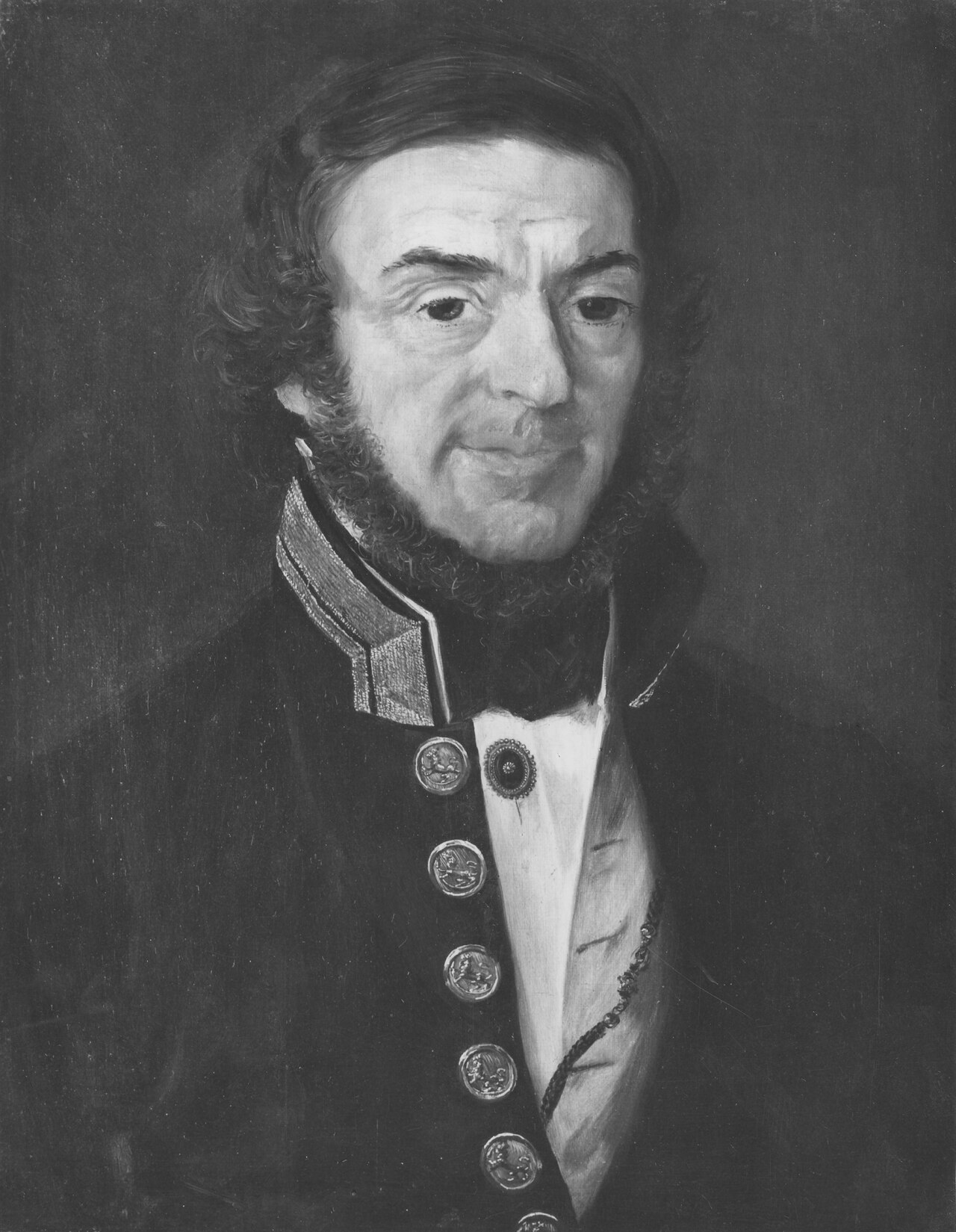


Early life Mathias Stoltenberg was born in 1799 in the coastal town of Tønsberg, Norway. Little is recorded about his family background, but the region’s maritime and craft traditions likely shaped his early exposure to visual arts. As a child he would have been familiar with the practical skills of woodwork and decorative painting, which later informed his dual vocation as a portraitist and furniture restorer.
Career and style Stoltenberg’s professional life was defined by mobility. Throughout the 1820s and 1830s he travelled extensively across Norway, offering painted portraits to a clientele that ranged from municipal officials to private citizens. This itinerant practice was common among Norwegian artists of the period, who lacked a strong institutional framework for artistic patronage. In addition to portraiture, Stoltenberg earned a living by restoring and repainting furniture, a trade that demanded a precise understanding of colour, varnish, and surface preparation.
His artistic style aligns with the realist tendencies that began to surface in northern Europe during the early 19th century. Stoltenberg’s portraits are characterised by a restrained palette, careful modelling of flesh tones, and a sober treatment of clothing and surroundings. While he did not belong to a formally recognised movement, his work reflects the influence of Dutch and German portrait traditions, especially in the handling of light and the emphasis on individual character.
Signature techniques Stoltenberg’s paintings reveal several recurring technical choices:
* Chiaroscuro modelling – He employed subtle contrasts of light and shadow to give three‑dimensionality to faces, a technique that lends his subjects a quiet dignity. * Attention to fabric detail – Whether depicting the crisp lapels of a judge’s robe or the soft folds of a lady’s dress, Stoltenberg rendered textiles with meticulous brushwork, often using thin glazes to suggest texture. * Limited colour range – A muted palette of earth tones, browns, and greys dominates his work, allowing the sitter’s expression to become the focal point. * Polished finish – Influenced by his experience as a furniture restorer, his surfaces are smooth and varnished, giving the portraits a refined, almost lacquered appearance.
These techniques combined to produce portraits that are both realistic and subtly idealised, fitting the expectations of a 19th‑century Norwegian clientele.
Major works Stoltenberg’s surviving oeuvre is modest but includes several documented pieces:
* Joachim G. Holmboe, District Judge (1844) – A formal portrait of the respected jurist, showcasing the sitter’s dignified posture and the judge’s official regalia. The work demonstrates Stoltenberg’s skill in rendering authoritative attire while preserving a sense of personal presence. * Fra et møte i den gamle Stortingssalen i Christiania Katedralskole (1830) – This group scene captures a meeting in the historic Stortingssalen of Christiania (now Oslo). Though less common in his repertoire, the painting illustrates his ability to manage multiple figures within a cohesive composition. * Portrait of Benedicte Dorthea Thaulow, b. Møinichen (1832) – A delicate portrayal of a young woman, notable for its gentle handling of light on the face and the subtle suggestion of the subject’s social standing through modest clothing. * Portrait of Ellen Sophie Richter, b. Bernhoft (1845) – In this work, Stoltenberg renders the sitter’s elaborate hairstyle and the soft sheen of her dress, highlighting his competence with intricate details. * Portrait of Caroline Steen Torshaug (1862) – One of his later dated works, this portrait reflects a mature style, with a calm demeanour and a restrained but expressive colour scheme.
Each piece contributes to a broader picture of Norwegian society in the mid‑19th century, documenting both the visual culture and the personal histories of its subjects.
Influence and legacy During his lifetime, Stoltenberg remained a regional artist, known primarily to the families he painted. After his death in Vang Municipality in 1871, his oeuvre fell into relative obscurity. The turning point arrived with the 1914 Jubilee Exhibition in Kristiania, which celebrated the centenary of Norway’s constitution. Curators included several of Stoltenberg’s portraits, sparking renewed scholarly interest.
The exhibition positioned him as a representative figure of Norway’s early portrait tradition, bridging the gap between the folk‑art practices of the 18th century and the more formally academic approaches that would dominate later in the century. Contemporary Norwegian art historians cite his work as illustrative of the pragmatic, itinerant artist model that sustained visual culture before the establishment of state‑supported academies.
Today, Stoltenberg’s paintings are held in public collections such as the National Museum of Art, Architecture and Design in Oslo, and they continue to be referenced in studies of Norwegian portraiture. His legacy endures as a testament to the skill and adaptability of artists who operated outside the major urban art centres of their time.
Frequently asked questions
Who was Mathias Stoltenberg?
Mathias Stoltenberg was a Norwegian painter (1799–1871) who worked mainly as a travelling portraitist and furniture restorer, documenting mid‑19th‑century Norwegian society.
What artistic style or movement is he associated with?
He was not part of a formal movement; his work reflects a realist approach influenced by Dutch and German portrait traditions, with a restrained palette and careful modelling.
What are his most famous works?
Key works include the portraits of Judge Joachim G. Holmboe (1844), Benedicte Dorthea Thaulow (1832), Ellen Sophie Richter (1845), Caroline Steen Torshaug (1862), and the group scene ‘Fra et møte i den gamle Stortingssalen i Christiania Katedralskole’ (1830).
Why is Mathias Stoltenberg important in art history?
His paintings provide a rare visual record of Norwegian portraiture before the rise of academic art, and his rediscovery at the 1914 Jubilee Exhibition highlighted the role of itinerant artists in Norway’s cultural development.
How can I recognise a Mathias Stoltenberg painting?
Look for a muted colour scheme, smooth varnished surfaces, precise rendering of fabrics, and subtle chiaroscuro that together give the sitter a dignified yet intimate presence.