Li Shan
1686 – 1762
In short
Li Shan (1686–1762) was a Qing‑dynasty Chinese painter born in Xinghua, Jiangsu, known for his free‑spirited brushwork and association with the Eight Eccentrics of Yangzhou.
Notable works
.jpg)


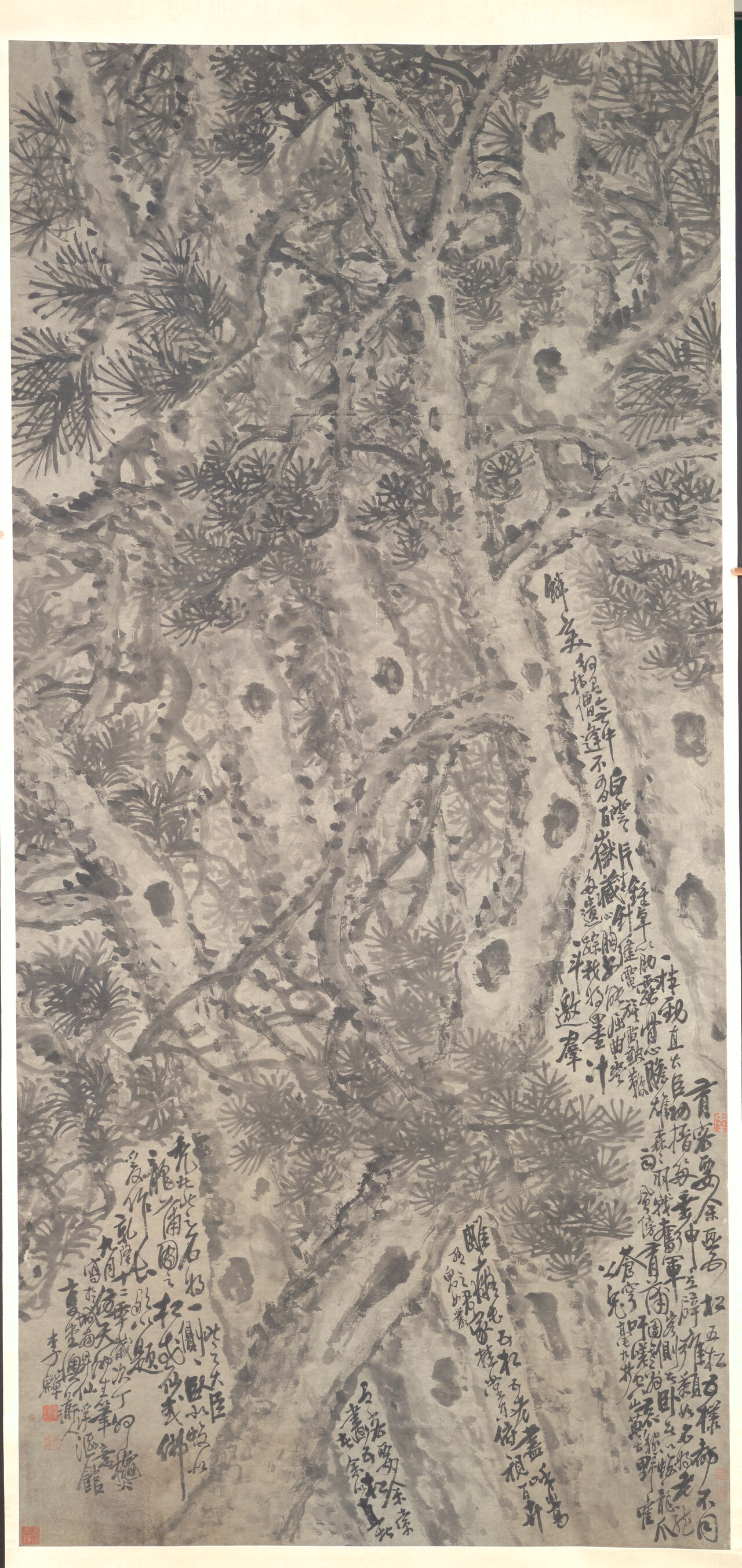
Early life Li Shan was born in 1686 in Xinghua, a town in present‑day Jiangsu province. Contemporary accounts record that he displayed a keen interest in drawing from an early age, and by the time he was sixteen he was already recognised locally as a talented painter. Little is recorded about his family background, but the region’s vibrant artistic culture provided ample opportunity for a young artist to study the works of earlier masters and to experiment with his own ideas.
Career and style In the early decades of the eighteenth century Li Shan moved to the thriving commercial centre of Yangzhou, where he joined a circle of artists later identified as the Eight Eccentrics of Yangzhou. This loosely organized group shared a common disdain for the rigid conventions of the orthodox academy and pursued a more individualistic, expressive approach to ink painting. Li Shan’s style reflects this ethos: his compositions are often described as “unrestricted” and convey a spontaneity that contrasts with the meticulous brushwork of many of his contemporaries.
The influence of Shitao, a leading figure of the earlier Qing period, is evident in Li Shan’s use of bold, irregular strokes and his willingness to depart from strict formalism. Rather than adhering to prescribed subjects, Li Shan painted a range of themes—landscapes, flora, fauna, and genre scenes—infusing each with a personal, almost poetic sensibility. His paintings frequently combine a vigorous, calligraphic brush technique with delicate washes of colour, creating a dynamic balance between structure and freedom.
Signature techniques Li Shan’s work is characterised by several recurring technical traits:
* Irregular brushwork – He employed swift, varying strokes that suggest a sense of immediacy, often leaving visible brush marks that convey texture and movement. * Layered ink washes – By applying multiple translucent layers of ink and colour, Li Shan achieved depth in his landscapes and a subtle atmospheric quality in his flower and bird studies. * Use of negative space – Empty areas of paper are deliberately retained to suggest mist, water, or sky, allowing the viewer’s imagination to complete the scene. * Emphasis on spontaneity – Even in more detailed subjects, Li Shan retained a loose, gestural feel, reflecting his belief that the spirit of the artist should be evident in the work.
These techniques together produce paintings that feel both controlled and lively, aligning him with the broader “eccentric” movement while maintaining a distinct personal voice.
Major works Li Shan’s surviving oeuvre includes several dated pieces that illustrate the breadth of his talent.
* New Year Offerings (1736) – This composition depicts a festive banquet scene rendered in a loose, celebratory style. The figures are suggested rather than fully detailed, allowing the viewer to focus on the overall mood of abundance and joy. * Winter Landscape – Though undated, this work exemplifies Li Shan’s ability to convey the stark beauty of a cold season. Sparse brushwork suggests barren trees and a muted sky, while subtle ink washes hint at snow‑covered ground. * Banana Plant by a Garden Rock (1744) – In this painting the artist captures a single banana plant growing beside a rugged rock, a subject that demonstrates his interest in the juxtaposition of the cultivated and the wild. The plant’s leaves are rendered with lively, sweeping strokes that contrast with the rock’s solid, textured form. * Birds, Flowers and Insects (1721) – An early dated work, it showcases Li Shan’s skill in rendering delicate natural subjects. The birds are depicted with swift, feather‑like lines, while the flowers and insects are treated with fine detail, creating a harmonious balance between the detailed and the expressive. * Five Pine Trees (1747) – This later work presents a group of pine trees, a traditional symbol of longevity. Li Shan employs bold, angular strokes for the trunks and softer washes for the foliage, reflecting his mature synthesis of strength and elegance.
These pieces, together with other attributed works, illustrate Li Shan’s versatility across subject matter and his consistent commitment to an expressive, unrestrained aesthetic.
Influence and legacy Li Shan’s contribution to Qing‑dynasty painting lies in his embodiment of the eccentric spirit that challenged the dominant academic tradition. By prioritising personal expression over formal correctness, he helped expand the visual vocabulary available to Chinese painters in the eighteenth century. His association with the Eight Eccentrics of Yangzhou ensured that his approach was disseminated among fellow artists and later generations, influencing both contemporaries and later scholars who reassessed the value of spontaneity in Chinese art.
Modern art historians view Li Shan as a bridge between the more restrained literati painters of the early Qing and the later, increasingly individualistic artists of the nineteenth century. His works are regularly exhibited in major Chinese museums and are referenced in scholarly studies of eccentric painting. Although the precise details of his later life and death remain unclear, his artistic legacy endures through the continued appreciation of his bold brushwork and his willingness to explore a wide range of subjects with a distinctive, free‑hand style.
Frequently asked questions
Who was Li Shan?
Li Shan (1686–1762) was a Qing‑dynasty Chinese painter from Xinghua, Jiangsu, renowned for his free‑spirited brushwork and membership in the Eight Eccentrics of Yangzhou.
What style or movement is he associated with?
He is linked to the eccentric painting movement of Yangzhou, which emphasized personal expression and a departure from strict academic conventions.
What are his most famous works?
Key works include New Year Offerings (1736), Winter Landscape, Banana Plant by a Garden Rock (1744), Birds, Flowers and Insects (1721), and Five Pine Trees (1747).
Why does Li Shan matter in art history?
He helped broaden the visual language of Qing‑dynasty painting, influencing later artists with his spontaneous technique and contributing to the legacy of the eccentric school.
How can I recognise a painting by Li Shan?
Look for bold, irregular brushstrokes, layered ink washes, strategic use of empty space, and a lively, spontaneous feel that balances detail with expressive gesture.