Johan Fredrik Eckersberg
1822 – 1870
In short
Johan Fredrik Eckersberg (1822–1870) was a Norwegian landscape painter who helped bridge Romanticism and Realism, and founded a notable art school in Oslo.
Notable works


Early life Johan Fredrik Eckersberg was born in 1822 in the industrial town of Drammen, Norway. His family belonged to the emerging middle class, which afforded him a basic education and early exposure to the visual culture of his native region. Growing up near the dramatic Norwegian fjords, Eckersberg developed a lifelong fascination with the natural landscape, an interest that later became the cornerstone of his artistic output. At a young age he displayed a talent for drawing, and his parents encouraged him to pursue formal training. By his late teens he had moved to Christiania (now Oslo), the cultural centre of Norway, where he began studying under established local artists and absorbing the prevailing Romantic aesthetic that celebrated the sublime qualities of the Norwegian terrain.
Career and style Eckersberg’s professional career unfolded during a pivotal moment in Norwegian art history. The early‑mid‑19th century saw Romanticism dominate, emphasizing emotional intensity and dramatic scenery. However, a growing desire for realism—faithful representation of the world—was emerging across Europe. Eckersford positioned himself at this crossroads. After completing his apprenticeship, he travelled abroad, notably to Germany and the Netherlands, where he encountered the realist landscape traditions of the Düsseldorf school and the Dutch Golden Age. These encounters enriched his visual vocabulary and prompted a gradual shift from the idealised, often theatrical compositions of Romanticism towards a more observational, naturalistic approach.
Back in Norway, Eckersberg settled in Christiania and began exhibiting his works at the Royal Norwegian Society of Artists. His paintings combined a keen eye for atmospheric effects with a disciplined compositional structure, reflecting both his Romantic roots and his realist ambitions. He favoured subjects drawn from the Norwegian countryside—fjords, mountains, and rural settlements—rendering them with a balance of dramatic lighting and meticulous detail. This synthesis resonated with a public eager to see their own landscapes portrayed with authenticity, and it positioned Eckersberg as a leading figure in the nation’s artistic transition.
Signature techniques Eckersberg’s technique was characterised by several recurring elements. First, he employed plein‑air sketching, often completing quick studies outdoors to capture light, colour, and weather conditions directly from nature. These studies informed the larger studio works, where he refined forms and tonal values. Second, his brushwork was disciplined yet expressive; he used fine, controlled strokes to delineate rock formations and foliage, while broader, more fluid passages suggested atmospheric depth. Third, colour played a crucial role: he favoured a palette of muted earth tones punctuated by vivid blues and greens to convey the crispness of Norwegian air and water. Finally, his compositions frequently utilised a high horizon line, allowing the sky to dominate the canvas and accentuate the expansive feeling of the landscape. Together, these techniques gave his works a sense of immediacy and realism without sacrificing the poetic resonance of the scene.
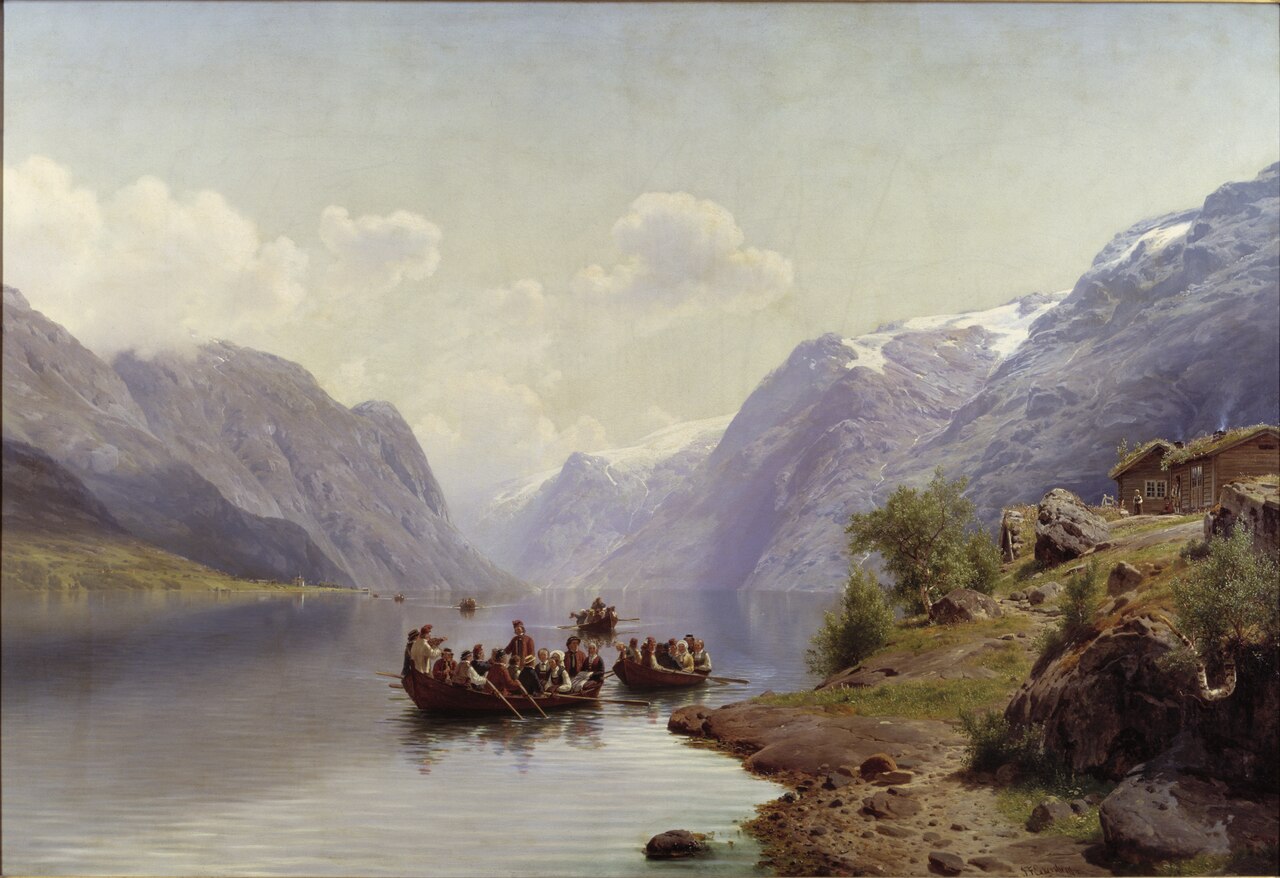
Major works Eckersberg’s oeuvre includes several paintings that exemplify his mature style. **"Bridal Escort on the Hardanger Fjord" (1865)** captures a ceremonial procession moving along the iconic fjord, juxtaposing human activity with the towering cliffs and reflective water. The work demonstrates his skill in integrating narrative elements within a natural setting, and the subtle handling of light on the water surface showcases his attention to atmospheric effects.
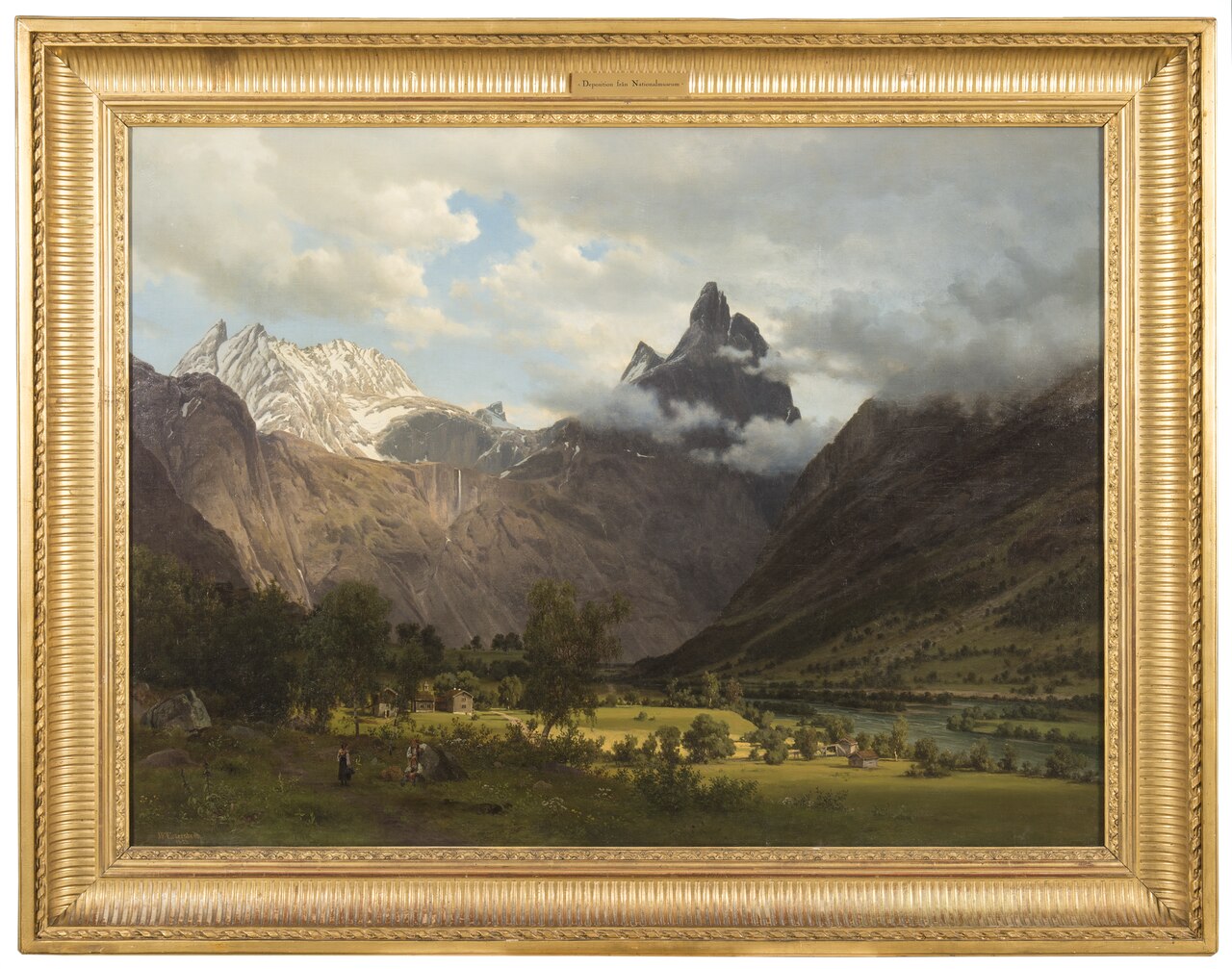
"Landscape from Romsdalen" (1858) presents a sweeping view of the Romsdalen valley, with its rugged peaks and meandering river. Here Eckersberg employs a balanced composition, placing the river as a guiding line that leads the eye into the depth of the mountains. The painting’s muted palette and precise rendering of rock textures highlight his realist inclination.
"View of Funchal, Madeira" (1854) marks one of his rare forays into exotic locales. While the subject is outside Norway, the work retains his characteristic focus on light and atmosphere, depicting the harbour of Funchal bathed in a warm Mediterranean glow. The composition reflects his exposure to European travel and his ability to adapt his techniques to diverse environments.
"From Horgheim in Romsdal" (1857) offers a more intimate scene, depicting a small settlement nestled among the Romsdal mountains. The painting’s delicate treatment of foliage and the subtle interplay of shadow and sunlight reveal Eckersberg’s meticulous observational skills.
"View of Jotunheimen" (1866) stands as a culmination of his lifelong engagement with Norway’s high mountains. The piece portrays the rugged peaks of Jotunheimen under a dramatic sky, employing a striking contrast between the luminous snow‑capped summits and the darker valleys below. This work epitomises his capacity to convey both the grandeur and the tangible reality of the Norwegian wilderness.
Influence and legacy Beyond his canvases, Eckersberg’s most enduring contribution to Norwegian art was his role as an educator. In the 1850s he founded an art school in Christiania, where he taught a generation of young painters the principles of realistic landscape painting and the importance of direct observation. His pedagogical approach emphasized disciplined drawing, careful study of nature, and a balanced synthesis of Romantic sentiment with realist accuracy. Many of his students later became prominent artists who continued to develop a distinctly Norwegian visual language.
Eckersberg’s influence extended to the broader cultural sphere as well. By portraying Norway’s dramatic scenery with authenticity, he helped shape a national visual identity that resonated with the burgeoning sense of Norwegian independence in the mid‑19th century. His works were widely exhibited and reproduced, contributing to a popular appreciation of the country’s natural heritage. Today, his paintings are held in major Norwegian museums, and his legacy persists in the continued emphasis on landscape as a central theme in Norwegian art. Through both his artistic output and his teaching, Johan Fredrik Eckersberg remains a pivotal figure in the transition from Romantic idealisation to realistic representation within Norway’s artistic tradition.
Frequently asked questions
Who was Johan Fredrik Eckersberg?
Johan Fredrik Eckersberg (1822–1870) was a Norwegian painter renowned for his landscape works and for bridging Romanticism and Realism in 19th‑century Norwegian art.
What style or movement is he associated with?
He is linked to the transitional period between Romanticism and Realism, combining poetic atmosphere with faithful natural observation.
What are his most famous works?
Key paintings include "Bridal Escort on the Hardanger Fjord" (1865), "Landscape from Romsdalen" (1858), "View of Funchal, Madeira" (1854), "From Horgheim in Romsdal" (1857) and "View of Jotunheimen" (1866).
Why does he matter in art history?
Eckersberg helped define a realistic Norwegian landscape tradition, taught a generation of artists, and contributed to the formation of a national visual identity.
How can I recognise an Eckersberg painting?
Look for crisp, detailed depictions of Norwegian scenery, a balanced composition with a high horizon, muted earth tones punctuated by vivid blues or greens, and careful rendering of light on water and mountains.