Eilif Peterssen
1852 – 1928
In short
Eilif Peterssen (1852–1928) was a Norwegian painter renowned for his history paintings, portraits and landscapes. He achieved early fame with works such as Christian II signing the Death Warrant of Torben Oxe and later designed Norway’s national coat of arms, a symbol still in use today.
Notable works




Early life Eilif Peterssen was born on 22 December 1852 in Christiania (now Oslo), Norway. He was the son of a well‑to‑do merchant family and received a solid elementary education before turning to art. In the early 1870s he enrolled at the Royal Danish Academy of Fine Arts in Copenhagen, a common route for aspiring Norwegian artists of the period. His studies there exposed him to the realist traditions of the Danish Golden Age and to the emerging naturalist tendencies that were sweeping across Europe. After Copenhagen, Peterssen continued his training in Munich and later in Paris, where he absorbed influences from academic historicism as well as the looser brushwork of the French Impressionists.
Career and style Peterssen’s first public success came in 1870, when, at only eighteen, he exhibited *Christian II signing the Death Warrant of Torben Oxe*. The painting, a dramatic history piece, demonstrated his command of narrative composition and earned him a scholarship to continue his studies abroad. Throughout the 1870s and 1880s he balanced history painting with portraiture, quickly establishing a reputation as one of Norway’s leading portrait painters. His sitters included cultural figures such as Henrik Ibsen and Edvard Grieg, though the exact dates of those portraits lie outside the present source material.
In the mid‑1880s Peterssen joined the loosely organised Skagen Painters, a community of Scandinavian artists who gathered in the Danish fishing village of Skagen to paint en plein air. This experience deepened his interest in light, colour and atmospheric effects, which became hallmarks of his later landscape work. While he never aligned himself with a single avant‑garde movement, his style can be described as a synthesis of academic realism, naturalism and a subtle, almost impressionistic handling of light.
Signature techniques Peterssen’s technique combined meticulous draftsmanship with a painterly approach to colour. In his portraits he often began with a precise charcoal or graphite study, ensuring accurate likeness before moving to oil. His palette tended toward muted earth tones for flesh, contrasted with richer hues in clothing and background, a strategy that highlighted the sitter’s personality without overwhelming the composition.
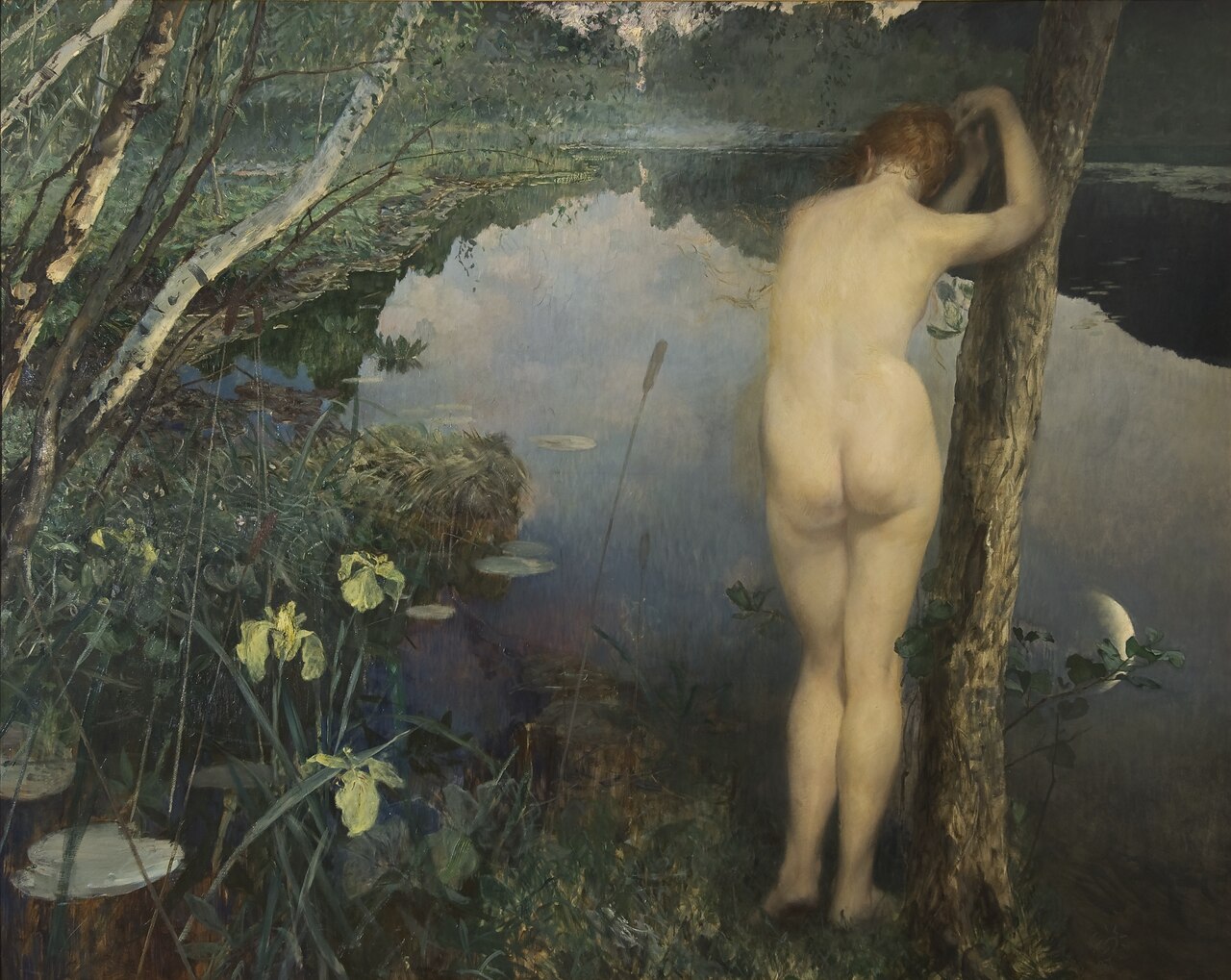
When painting landscapes, Peterssen employed a more spontaneous method. He would set up his easel outdoors, quickly blocking in the sky and foliage with broad, layered strokes, then return to the studio to refine details. This two‑stage process allowed him to capture the fleeting qualities of northern light while preserving the structural integrity of the scene. His nocturnal works, such as the *Nocturne* (1887), demonstrate a skillful modulation of chiaroscuro, using deep blues and soft yellows to suggest moonlit ambience.
Major works - **Christian II signing the Death Warrant of Torben Oxe (1870)** – This early history painting depicts the Danish king in a moment of stark decision. Peterssen’s use of dramatic lighting and precise figural arrangement underscores the moral weight of the scene, and the work secured his first major public recognition. - **Hans Heyerdahl (1875)** – A portrait of fellow Norwegian painter Hans Heyerdahl, this piece exemplifies Peterssen’s ability to render psychological depth. The sitter is shown in a modest studio setting, with subtle tonal contrasts that draw attention to his expressive eyes. - **The adoration of the shepherds (1881)** – A religious composition that blends Baroque dynamism with a Nordic sensibility. Peterssen renders the shepherds in simple, rustic attire, while the infant Christ is bathed in a gentle, almost ethereal light, reflecting his interest in both narrative and atmospheric effects. - **Nocturne (1887)** – Part of a series exploring night scenes, this work captures a moonlit landscape with a calm, reflective surface. The limited colour range and soft edges convey a sense of stillness, demonstrating Peterssen’s command of mood. - **Helvig Paus (1915)** – One of his later portraits, this painting shows the eponymous subject in an elegant, early‑20th‑century dress. The work reflects a mature confidence in composition, with a delicate balance between realism and a slightly softened, almost decorative finish.
In addition to his paintings, Peterssen designed Norway’s national coat of arms in 1905. The lion‑bearing shield he created was adopted by the government and the royal family and remains the basis for the current royal coat of arms and flag.
Influence and legacy Eilif Peterssen played a pivotal role in shaping Norway’s visual culture at the turn of the twentieth century. His portraits set a high standard for capturing the likeness and character of Norway’s intellectual elite, influencing subsequent generations of portraitists. By participating in the Skagen Painters’ circle, he helped introduce a more naturalistic treatment of light and colour to Norwegian art, bridging the gap between academic realism and the newer, more experimental approaches that would dominate the early twentieth century.
Peterssen’s design of the national coat of arms provided a lasting visual identity for the newly independent Norway, cementing his contribution beyond the canvas. Today, his works are held in major Norwegian museums such as the National Museum in Oslo, and they continue to be studied for their technical mastery and their embodiment of a formative period in Scandinavian art history.
Frequently asked questions
Who was Eilif Peterssen?
Eilif Peterssen (1852–1928) was a Norwegian painter best known for his history paintings, portraits, landscapes, and the design of Norway’s national coat of arms.
What artistic style or movement is he associated with?
He is not tied to a single movement but his work blends academic realism, naturalism and a subtle impressionistic handling of light, reflecting influences from the Danish Golden Age and the Skagen Painters.
What are his most famous works?
Key works include *Christian II signing the Death Warrant of Torben Oxe* (1870), the portrait *Hans Heyerdahl* (1875), *The adoration of the shepherds* (1881), *Nocturne* (1887) and the portrait *Helvig Paus* (1915).
Why does he matter in art history?
Peterssen helped define Norwegian portraiture, introduced naturalistic light techniques through the Skagen circle, and created the enduring national coat of arms, linking artistic achievement with national identity.
How can I recognise an Eilif Peterssen painting?
Look for careful draftsmanship, a restrained yet rich colour palette, subtle modelling of light—especially in night scenes—and a balance between realistic detail and atmospheric ambience.