Du Jin
1465 – 1509
In short
Du Jin (1465–1509) was a Ming‑dynasty Chinese painter noted for his landscapes, figure scenes, and bird‑and‑flower compositions, active in the late 15th century and recognised for works such as The Poet Lin Bu Wandering in the Moonlight.
Notable works
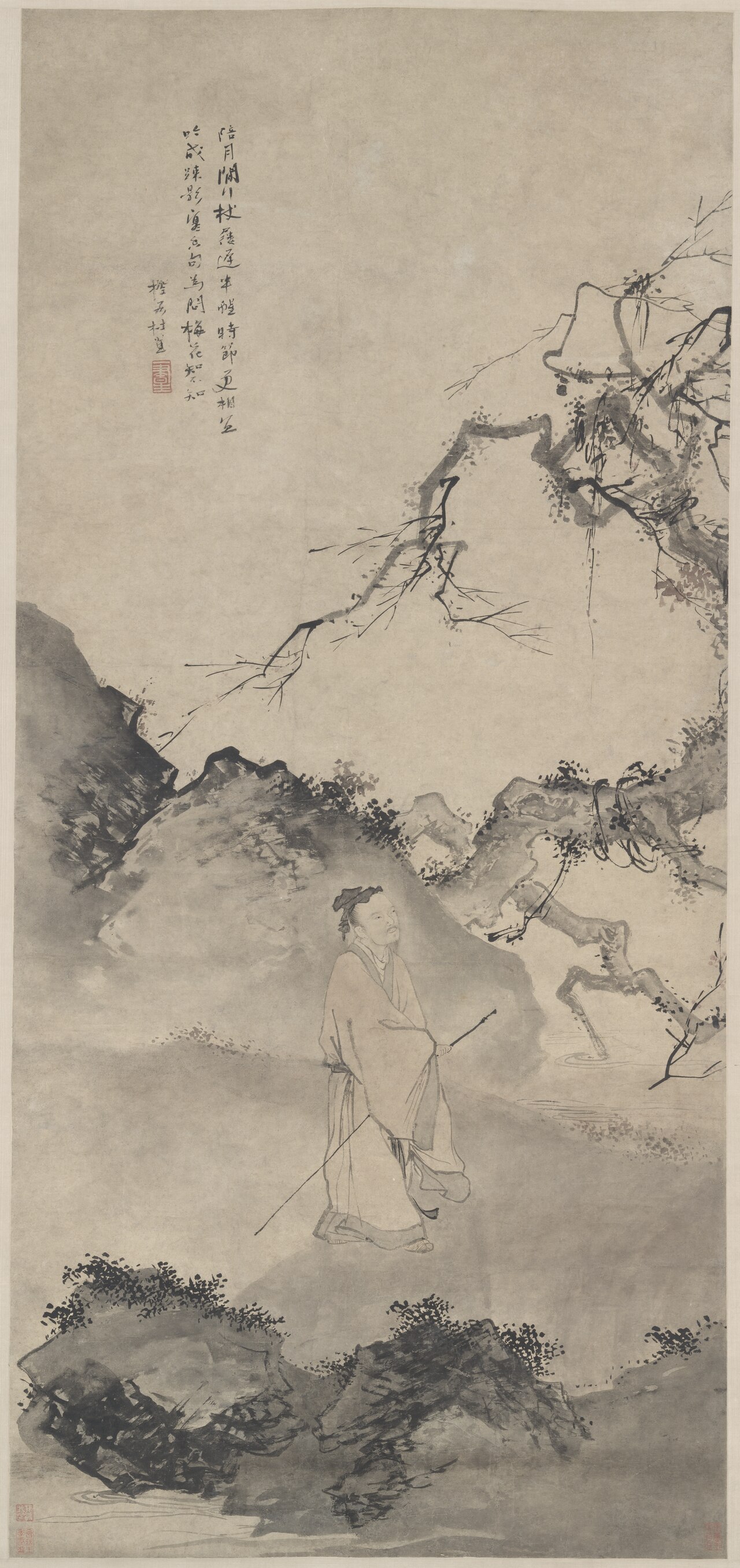


Early life Du Jin was born in 1465 in Zhenjiang, a city on the lower Yangtze River that was a cultural crossroads during the Ming dynasty (1368–1644). Little is recorded about his family background, but the region’s thriving commercial and scholarly environment provided ample opportunities for artistic training. It is likely that Du received his initial instruction from local masters familiar with both the literati tradition of ink painting and the more decorative court style favoured by the imperial workshops. By the time he entered his twenties, Du had mastered the fundamental brush techniques that would underpin his later career.
Career and style In the latter half of the 15th century, Du Jin established himself as a versatile painter capable of working across several genres. He produced landscapes that combined atmospheric perspective with meticulous detail, figure paintings that captured the elegance of scholarly pursuits, and bird‑and‑flower works that displayed a keen observation of nature. His style reflects a synthesis of the scholarly (wenren) approach—emphasising personal expression and brush spontaneity—and the more formal, decorative aesthetics of the imperial court. This hybrid approach allowed him to appeal to both elite scholar‑officials and the wealthy merchant class, who commissioned works for private enjoyment and ritual display.
Du’s compositions often employ a balanced arrangement of foreground elements, such as rocks or blossoms, against a distant, mist‑filled background. The subtle gradations of ink wash create a sense of depth, while occasional touches of colour—typically applied with mineral pigments—enhance focal points without overwhelming the overall harmony. His figures are rendered with slender, elongated lines, a hallmark of late‑Ming portraiture, and are frequently placed within literary or historical narratives that convey moral or philosophical themes.
Signature techniques Du Jin’s technical repertoire is distinguished by several recurring methods:
1. Ink‑wash layering – He built atmospheric depth through successive washes of diluted ink, allowing the paper to retain a soft, luminous quality. 2. Fine line (xieyi) brushwork – In figure painting, Du employed swift, controlled strokes to delineate clothing folds, facial features, and gestures, achieving a sense of immediacy. 3. Selective colour application – Rather than saturating his works with pigment, he applied colour sparingly, often to highlight blossoms, robes, or ceremonial objects. 4. Dynamic compositional framing – Du frequently used diagonal rock formations or winding paths to guide the viewer’s eye through the picture, creating a narrative flow. 5. Integration of calligraphy – In many of his pieces, he incorporated poetic inscriptions, melding visual and literary arts in the tradition of the Chinese scholar‑artist.
These techniques contributed to a distinctive visual language that balanced realism with poetic abstraction.
Major works Du Jin’s extant oeuvre includes several dated pieces that illustrate his range:
- The Poet Lin Bu Wandering in the Moonlight (1476) – This painting depicts the legendary Tang‑dynasty poet Lin Bu strolling under a moonlit sky. Du renders the moon’s soft glow with delicate ink washes, while Lin’s solitary figure is rendered in fine brush lines, emphasizing his contemplative isolation. The work reflects the Ming fascination with re‑interpreting classical literary subjects.
- Tao Yuanming Enjoying Chrysanthemums (1487) – In this composition, the revered poet‑official Tao Yuanming is shown seated among blooming chrysanthemums, a symbol of modesty and resilience. Du captures the texture of the flowers through meticulous dotting and subtle colour, juxtaposed against a restrained, misty backdrop that underscores the poet’s retreat into nature.
- The Scholar Fu Sheng Transmitting the Book of Documents (1487) – This piece illustrates the historic figure Fu Sheng presenting the classic text to a group of scholars. Du’s use of layered ink conveys a solemn atmosphere, while the careful rendering of the scholars’ robes and the open scroll highlights his attention to narrative detail. The painting serves both as a didactic illustration and a celebration of Confucian learning.
These works, dated within a relatively short period, demonstrate Du’s ability to blend narrative content with his evolving aesthetic.
Influence and legacy Du Jin’s synthesis of literati spontaneity and courtly refinement left a lasting imprint on late‑Ming painting. His approach influenced younger artists who sought to navigate the expectations of official patronage while preserving personal expression. Contemporary collections, such as those of the Palace Museum in Beijing and several private Chinese galleries, preserve his paintings, attesting to their continued appreciation.
Scholars regard Du as a transitional figure whose works embody the broader cultural currents of the 15th‑century Ming court: the revival of classical themes, the rising interest in naturalistic detail, and the negotiation between scholarly ideals and commercial art markets. Though not as widely known internationally as some of his contemporaries, Du Jin’s paintings remain valuable primary sources for understanding the visual culture of his era and for studying the technical evolution of Chinese brush painting.
In modern art‑history curricula, Du Jin is cited as an exemplar of the late‑Ming painter who successfully merged multiple artistic traditions, offering a model for how artists can adapt to shifting patronage while retaining a distinct visual voice.
Frequently asked questions
Who was Du Jin?
Du Jin (1465–1509) was a Chinese painter of the Ming dynasty, known for landscapes, figure scenes, and bird‑and‑flower works.
What style or movement is Du Jin associated with?
He worked in a hybrid style that blended the literati (scholar‑artist) approach with the decorative aesthetics of the Ming court.
What are Du Jin's most famous works?
His notable dated paintings include The Poet Lin Bu Wandering in the Moonlight (1476), Tao Yuanming Enjoying Chrysanthemums (1487) and The Scholar Fu Sheng Transmitting the Book of Documents (1487).
Why does Du Jin matter in art history?
Du Jin exemplifies the late‑Ming synthesis of personal expression and official taste, influencing subsequent artists and providing insight into the period’s cultural and artistic values.
How can I recognise a painting by Du Jin?
Look for balanced compositions with atmospheric ink washes, restrained colour highlights, fine line figure work, and often a literary inscription that together convey a poetic narrative.