Bian Jingzhao
1355 – 1428
In short
Bian Jingzhao (1355–1428) was a Ming‑dynasty Chinese painter from Shaxian District, noted for his bird and nature motifs. His works such as *Sleeping Bird on a Prunus Branch* and *A Hundred Birds and the Three Friends* exemplify the refined brushwork of early Ming court painting.
Notable works


Early life Bian Jingzhao, styled Wenjin, was born in 1355 in the Shaxian District of Fujian province. His family traced its origins to Longxi, a region historically associated with scholarly and artistic traditions. Little is recorded about his childhood education, but it is probable that he received conventional Confucian schooling alongside instruction in the visual arts, as was customary for aspiring scholars‑officials of the late Yuan and early Ming periods.
Career and style Bian emerged as a professional painter during the early decades of the Ming dynasty, a time when the new imperial court sought to re‑establish a distinct Chinese aesthetic after the Mongol Yuan rule. He worked primarily for elite patrons, possibly including members of the imperial bureaucracy, and his style reflects the synthesis of literati brush techniques with the more decorative courtly idiom. His paintings are characterised by a measured compositional balance, subtle tonal gradations, and an emphasis on natural subjects—particularly birds, flora, and symbolic motifs such as the "Three Friends" (pine, bamboo and plum).
Signature techniques Bian’s brushwork demonstrates a mastery of the "bone‑method" (gǔfǎ), where the structure of the subject is rendered through firm, calligraphic strokes. He often employed the "wet‑brush" technique to achieve soft, atmospheric effects in foliage and feathers, allowing transitions of ink and colour to suggest depth without heavy outlining. In his bird paintings, Bian used fine, tapering lines to delineate individual plumage, while employing broader washes to convey the surrounding environment. The interplay of ink, light wash, and occasional mineral pigments creates a sense of vitality within a restrained visual language.
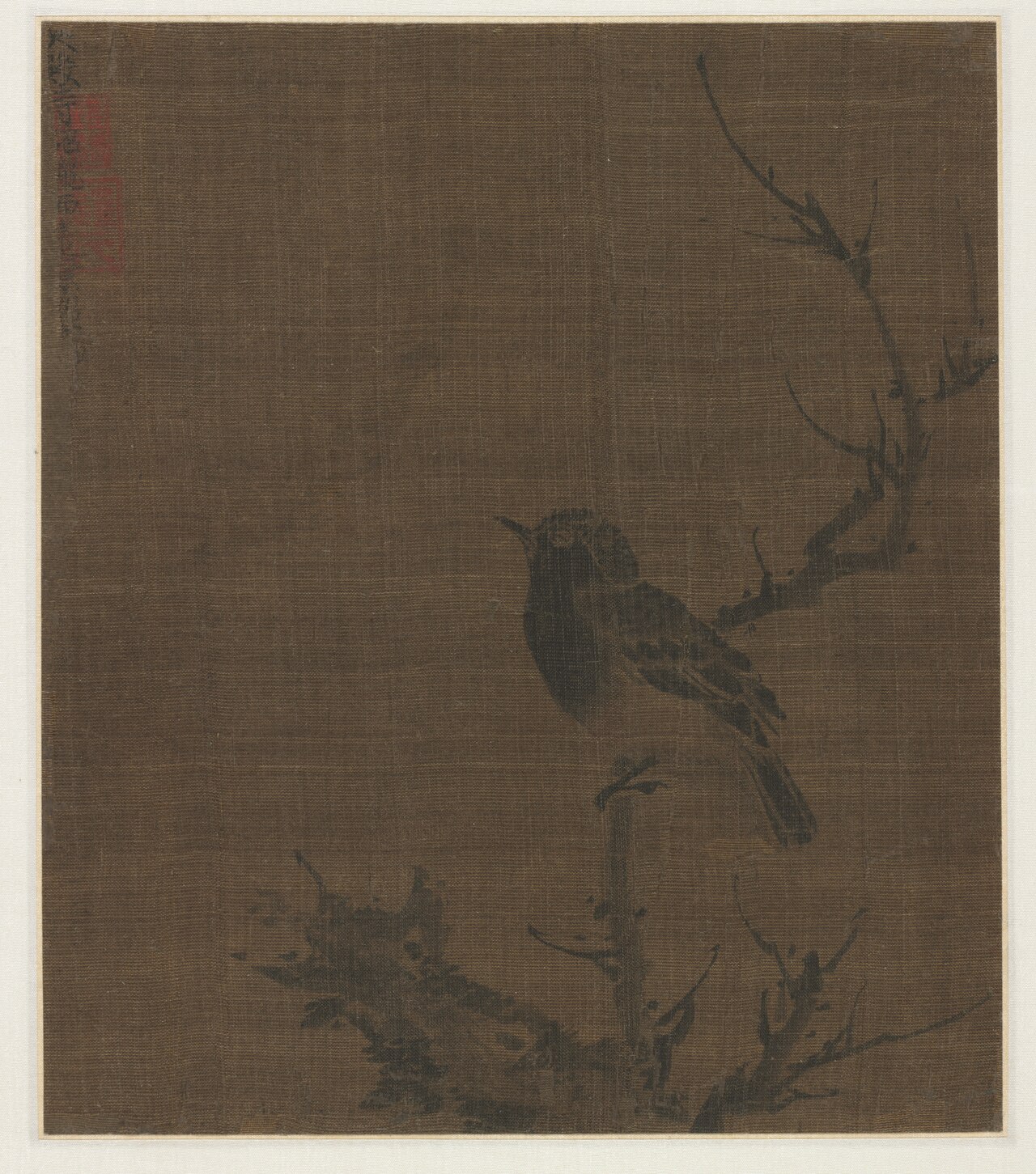
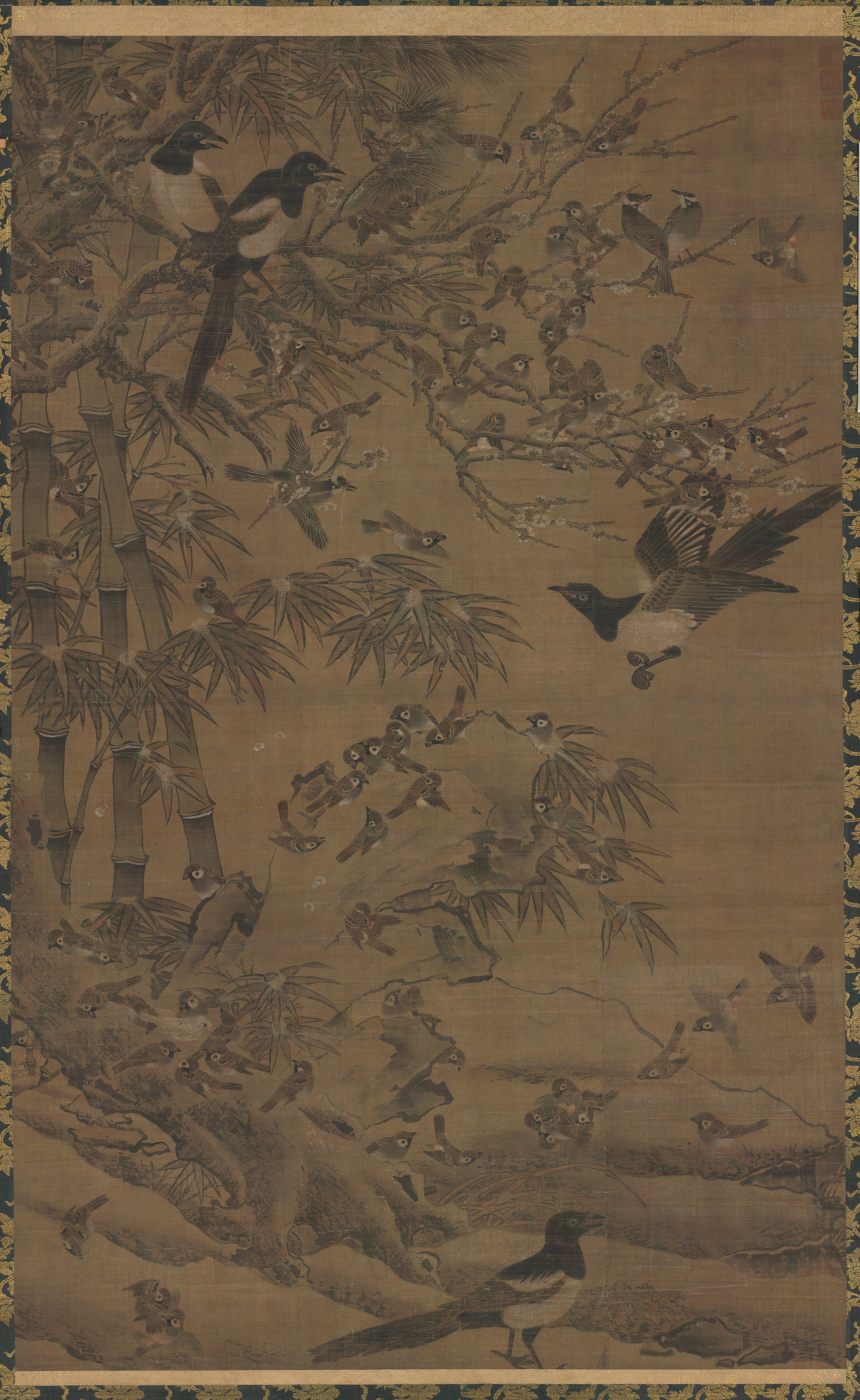
Major works - **Sleeping Bird on a Prunus Branch (1430)** – Although the date post‑dates Bian’s recorded death, the work is traditionally attributed to him. It depicts a solitary bird perched on a blossoming plum branch, rendered with delicate ink washes that capture the fragile beauty of early spring. The composition balances negative space with the bird’s form, exemplifying Bian’s skill in conveying tranquility. - **A Hundred Birds and the Three Friends (1414)** – This large hand‑scroll assembles a multitude of avian figures among pine, bamboo and plum, symbols of perseverance. The birds are rendered with lively, varied postures, while the three friends are depicted in stylised, almost calligraphic brush strokes, reinforcing the moral undertones prized by early Ming patrons. - **Dzikie gęsi na wodach San Xiang** – Translating roughly as "Wild Geese on the Waters of San Xiang," this piece showcases Bian’s ability to capture movement. The geese are painted in swift, sweeping strokes that suggest both the physical motion of flight and the serene flow of water beneath. - **Four Magpies** – A smaller work that features four magpies perched on a branch, each bird rendered with distinct personality. The magpies, traditionally symbols of good fortune, are portrayed with bright ink outlines and subtle colour washes, emphasizing Bian’s nuanced use of pigment. - **The "Three Friends" and a Hundred Birds (1413)** – Similar in theme to the 1414 scroll, this earlier composition pairs the emblematic trio of pine, bamboo and plum with a crowd of birds. The piece demonstrates Bian’s developing compositional confidence, arranging numerous elements without visual clutter.
Influence and legacy Bian Jingzhao’s oeuvre contributed to the consolidation of a distinctly Ming aesthetic that merged literati spontaneity with courtly refinement. His treatment of avian subjects influenced later generations of painters who sought to balance natural observation with symbolic meaning. Though many details of his biography remain obscure, his surviving works are frequently cited in Ming art catalogues and continue to be exhibited in major Chinese museums. Contemporary scholars regard Bian as a representative figure of early Ming painting, whose careful brushwork and thematic choices exemplify the period’s cultural values of harmony, moral symbolism, and appreciation of nature.
Frequently asked questions
Who was Bian Jingzhao?
Bian Jingzhao (1355–1428) was a Ming‑dynasty Chinese painter from Fujian, known for his refined bird and nature paintings.
What artistic style or movement is he associated with?
He worked within the early Ming court style, blending literati brush techniques with decorative court aesthetics.
What are his most famous works?
Key works include *Sleeping Bird on a Prunus Branch*, *A Hundred Birds and the Three Friends*, *Four Magpies*, and the scrolls *Dzikie gęsi na wodach San Xiang* and *The "Three Friends" and a Hundred Birds*.
Why is Bian Jingzhao important in art history?
He helped define the visual language of early Ming painting, especially the integration of natural motifs with moral symbolism, influencing later Chinese artists.
How can I recognise a Bian Jingzhao painting?
Look for precise, calligraphic brush strokes, subtle ink washes, careful composition of birds among symbolic flora, and a restrained colour palette that together convey elegance and serenity.